


If you’re planning on driving in Slovenia, here’s the first thing you need to know: the journey is going to take far longer than Google Maps says it will.
Not because the roads are bad. Quite the opposite.
It’s because Slovenia is the kind of country that makes you slam on the brakes every few miles after spotting another impossibly beautiful viewpoint. One minute you’re driving through forests, the next you’re following an emerald river that looks too vibrant to be real. Then a tiny church appears on top of a hill before snow-capped peaks steal your attention around the very next corner. Somewhere between Lake Bled and the Soča Valley, I gave up pretending I was making good progress and simply accepted that this wasn’t a country you rushed through.
The funny thing is, the driving itself couldn’t be much easier. The roads are in excellent condition, drivers are generally patient and courteous, and the road signs are so clear that you rarely find yourself second-guessing where you’re supposed to be going.
Whether you’re hiring a car or driving your own, these are the fifteen things I genuinely wish someone had told me before I set off. Some are practical, some will save you money and others simply make the experience even better. Hopefully, they’ll help you spend less time worrying about the drive and more time wondering what lies around the next corner.

Disclaimer: This post may include affiliate links. If you click on the link and make a purchase, I will receive a small commission at no extra cost to you. Affiliate links help cover the cost of running my website so that I can continue inspiring my readers to explore the world.
What's in this post:
Driving in Slovenia: 15 Things I Wish I’d Known Before Setting Off
1. Google Maps is lying to you
Well… not technically.
It’ll probably get you from A to B in exactly the time it promises. The problem is that Google Maps assumes you’re a normal, sensible person capable of driving past breathtaking scenery without feeling the overwhelming need to stop every five minutes.
It has clearly never been to Slovenia.
During my most recent visit, I was driving from Spain to Romania. Every other day I happily covered hundreds of kilometres without giving it much thought. Then I reached Slovenia.
It was the one day of the entire journey where I covered barely a third of the distance I’d managed everywhere else.
Not because I got lost or because the roads are bad, but rather because Slovenia has absolutely no respect for your schedule.
One minute I’d be following an emerald river, the next I’d spot a tiny church perched on a hillside, then another mountain viewpoint would appear around the bend, followed by a stretch of road so beautiful I convinced myself I needed “just one quick photo”. Somewhere along the way there was probably an ice cream involved too.
By the end of the day I’d stopped pretending I was making progress and started accepting that, in Slovenia, the drive is the attraction.
So whatever journey time Google Maps gives you, I’d add at least 50%.
You’ll thank me later.

2. Relax. Driving in Slovenia is ridiculously easy
If you’ve never driven abroad before, Slovenia is about as friendly as it gets.
The roads are some of the best I’ve driven in anywhere in Europe. They’re well maintained, clearly marked and surprisingly quiet once you leave the busiest tourist hotspots. Even the road signs seem determined to make your life easy, giving you plenty of warning before junctions and making it very difficult to accidentally head in completely the wrong direction.
The drivers deserve a mention too.
Nobody seemed interested in sitting six inches from my rear bumper. People generally drove with patience and allowed others to merge. And, compared to somewhere like northern Italy, where traffic can feel wonderfully chaotic at times, everything felt remarkably calm and organised. There’s still plenty of life on the roads, but it never felt aggressive.
Even the practicalities are refreshingly straightforward. Fuel stations are easy to find. Almost all accept card payments. In fact, I never once found myself worrying whether I’d make it to the next petrol station. It all contributes to a country that feels incredibly easy to explore independently.
The only time driving becomes more demanding is when you deliberately seek out the places that make Slovenia so special. Mountain passes, hidden waterfalls, remote churches and little villages often involve narrower, steeper roads, but that’s all part of the adventure rather than something to fear.
Honestly, if you’ve never hired a car abroad before, Slovenia is one of the countries I’d recommend starting with.

3. You probably do need a car
Could you visit Slovenia without a car?
Absolutely.
Would I recommend it?
Probably not.
If you’re spending a couple of days exploring Ljubljana before taking a trip to Lake Bled, public transport does a perfectly good job. Both are easy to reach. And if that’s all your itinerary includes, you could happily leave the driving to somebody else.
The problem is that Slovenia’s greatest strength isn’t its famous attractions. It’s everything in between.
The waterfalls hidden at the end of little country roads. The tiny churches sitting improbably on hilltops. The turquoise rivers that somehow become even more beautiful around the next bend. The mountain passes that end up being every bit as memorable as the viewpoint at the top.
Those are the moments public transport struggles to deliver.
One of my favourite things about driving in Slovenia was the freedom to follow my curiosity. If I spotted an interesting sign, I could turn off and see where it went. If a viewpoint looked worth exploring, I could pull over. If Google Maps offered me the scenic route instead of the fastest one, I’d choose the scenic route every single time.
If you’re still planning your trip, my 5-day Slovenia itinerary will help you piece together an unforgettable road trip, while my guide to the best things to do in Slovenia covers all of the stops I’d prioritise along the way.
Public transport will show you Slovenia.
A car lets you discover it.

4. Don’t automatically book the cheapest hire car
If your plan is to spend a few days exploring Ljubljana, Lake Bled and Lake Bohinj, then by all means save yourself some money and book the little hatchback. The roads are excellent, the distances are short and you probably won’t notice much difference.
If, however, you want to experience the Slovenia that made me fall head over heels for the country, I’d think twice.
Some of Slovenia’s most spectacular places are reached via steep mountain roads, winding passes and narrow lanes that seem determined to climb at impossible gradients. None of them are dangerous, but they can quickly expose an underpowered car. The first time you stop halfway up a steep hill to admire the view before attempting a hill start, you’ll suddenly understand why I recommend something a little more capable.
Personally, I’d look for something around the size of a Ford Focus or Volkswagen Golf with at least a 1.6-litre engine. You don’t need a huge SUV, nor do you need lots of horsepower. But having a little extra power makes mountain driving far more enjoyable. It’s not about driving faster; it’s about driving more comfortably (and not embarrassing yourself when you try and do a hill start!).

How to choose your hire car
Before becoming a travel writer, I actually worked in the car rental industry, so I probably spend far longer choosing a hire car than most people. When I book, I usually compare prices through Discover Cars because it lets me see offers from both local Slovenian companies and the major international brands all in one place. More importantly, it makes it easy to compare the things that really matter.
Price is only one part of the equation.
I also look at the security deposit, the insurance excess, whether the mileage is unlimited (I always choose unlimited), and whether an additional driver is included free of charge (important when I travel with Steve). It’s amazing how quickly a bargain stops looking like a bargain once you’ve added all the extras.
Spend a little longer choosing the right car before your trip, and you’ll spend a lot less time wishing you’d booked a different one once you’re in the mountains.


5. If you’re driving on the “wrong” side of the road, hire an automatic
For most visitors, driving in Slovenia won’t feel particularly different because you’ll be driving on the same side of the road you’re used to.
If you’re visiting from the UK, though, it’s a different story.
My advice is simple: unless you’re already completely comfortable driving abroad, hire an automatic.
It’s one less thing to think about.
Instead of trying to remember which side of the road you’re supposed to be on and changing gear with the opposite hand, you can simply focus on the road ahead. Your brain will thank you.
If you do choose an automatic, I’d recommend one that also allows manual gear selection. It sounds unnecessarily technical until you find yourself descending a long mountain road. Being able to drop into a lower gear and use engine braking is much kinder to your brakes than relying on them all the way down.
Hopefully you’ll never notice the difference.
Your brake pads probably will.

6. The Vršič Pass isn’t scary… but it deserves your respect
If you’re anything like me, the Vršič Pass will end up being one of the highlights of your entire trip.
It’s Slovenia’s highest mountain pass and climbs through the heart of the Julian Alps via 50 numbered hairpin bends. That number alone is enough to make some people panic, but honestly, don’t let it put you off. The road surface is excellent, it’s beautifully maintained and every corner feels exactly as you’d expect a mountain road to feel.
Demanding?
Yes.
Dangerous?
Not if you drive sensibly.
I spent most of the drive doing my best impression of someone who’d never seen a mountain before, gawping out of the windows as forests gave way to jagged peaks and autumn colours painted the hillsides orange and gold. There are a few roads in the world that make you want to pull over every five minutes.
This is one of them.
If you’ve got time, continue beyond the Vršič Pass and drive up to the Mangart Saddle. The final road climbs to almost 2,000 metres and, whilst it isn’t for anyone with a fear of heights, it’s one of the most spectacular drives I’ve ever done. There were a couple of corners with sheer drops that even made me go a little quiet, which, if you know me, is saying something.
The frustrating thing is that there are simply no photos that do it justice.
I came home with hundreds of pictures and hours of video footage, yet none of them quite captured what it felt like to stand amongst those mountains. Somehow the camera shrank everything. In reality, the peaks are so enormous they make you feel wonderfully insignificant.

7. The best places are usually at the end of the narrowest roads
One of the quickest ways to improve your Slovenia itinerary is to become a little more curious.
Some of my favourite places weren’t marked as major attractions. They didn’t have enormous visitor centres or coaches parked outside. In fact, most of them started with me spotting something interesting in the distance and thinking, “I wonder where that road goes…”
More often than not, the answer was somewhere spectacular.
A waterfall hidden deep in the forest. A tiny church perched impossibly on a hillside. A viewpoint that never appeared in any guidebook. The sort of places that make you wonder why everyone else is still queueing at the famous attractions.
Of course, reaching them often involves leaving the nice wide roads behind.
Suddenly you’re on a narrow lane with just enough room for one car, climbing steadily uphill whilst hoping nobody appears around the next bend. It can feel a little intimidating at first, but the roads are generally in excellent condition and local drivers are used to them.
Just accept now that you’ll almost certainly perform at least one three-point turn during your holiday.
It usually starts with you confidently announcing, “I’m sure this is the right road.”
Five minutes later you’ve arrived in someone’s garden with an impossibly tight space to turn around!
But the roads that do lead somewhere extraordinary are the ones you’ll remember long after you’ve forgotten how many kilometres you drove that day. I genuinely think some of my favourite memories from Slovenia began with a sentence along the lines of, “Let’s just see where this goes…”

8. The biggest mistake tourists make isn’t driving too fast
It sounds strange, but one of the biggest mistakes I saw wasn’t people driving too fast.
It was people driving too slowly.
Before anyone reaches for the comments, I’m not saying you should race around mountain roads trying to keep up with the locals. Quite the opposite. Drive at a speed you’re comfortable with and never let anyone pressure you into driving beyond your abilities.
The problem comes when nervous drivers crawl along roads where it’s difficult to overtake.
It doesn’t take long before a queue starts to form behind them. Eventually somebody gets impatient, spots a tiny gap and attempts an overtake they probably shouldn’t.
Nobody wins.
The nervous driver feels even more stressed, the impatient driver takes an unnecessary risk and everyone else’s blood pressure goes up for no good reason.
If you notice you’ve collected a queue behind you and there’s a safe place to pull over, do it.
Thirty seconds later you’ll have the road back to yourself, the locals will be on their way and you’ll be able to enjoy the drive at your own pace without constantly worrying about what’s happening in your rear-view mirror.
Everybody leaves happier.

9. The biggest danger isn’t the roads
It’s the scenery.
I’m only half joking.
During my last trip to Slovenia I was driving as part of a much longer road trip from Spain to Romania, and I spent part of the journey chatting to Steve on the phone. Or at least, I attempted to. I don’t think the poor man heard a single sensible sentence because every couple of minutes I interrupted myself with, “Oh my God, you’re not going to believe how beautiful it is!” or, “Look at the colour of that water!”
Eventually I gave up trying to have a conversation because Slovenia quite clearly had other plans.
The funny thing is, it wasn’t the first time. When I first visited in 2021 with my ex-husband, I became so obsessed with the colour of the Soča River that he eventually threatened to gag me if I mentioned it one more time. In fairness to him, I probably deserved it. Every time the river came back into view I’d announce, “Have you seen the water?” as though it had somehow changed since the previous bend.
The truth is… it almost looked like it had.
Slovenia has an annoying habit of putting postcard views immediately after you’ve told yourself you really do need to make some progress.

Slow down and enjoy it
So here’s my biggest piece of advice: keep your eyes on the road.
Yes, I know I’m asking the impossible.
If you want to admire the scenery, and you absolutely should, pull over somewhere safe. There are plenty of lay-bys and designated viewpoints, so there’s rarely any need to admire the landscape whilst you’re still driving.
I’d also recommend adding at least 50% to whatever journey time Google Maps gives you. Google has clearly never driven through Slovenia because it assumes you’re capable of ignoring turquoise rivers, mountain viewpoints and picturesque little churches. You aren’t. Neither was I.
If I could go back and pack one extra thing, it’d be a dashcam. There are so many moments I wish I’d captured properly: the setting sun painting the mountains pink, farmers stacking firewood beside tiny wooden houses and roads disappearing into the mountains. Instead, those moments are simply printed in my memory.

10. Slovenia has a funny way of making you spend money
Slovenia isn’t an expensive country to drive around, but it does have a habit of quietly emptying your wallet one small payment at a time.
Parking is the obvious one.
At most of the popular attractions I visited (as well as those where I was the only person there), parking was paid and usually cost around €4. It isn’t outrageous, but after a week it definitely adds up. The good news is that I found card payments were accepted almost everywhere, so I rarely needed cash.
One thing that did surprise me was motorway service station toilets.
Many charge around €1 to use and, during my trip, they only accepted coins. It’s hardly going to ruin your holiday, but if you’ve just finished a large bottle of water you’ll suddenly discover how valuable a handful of €1 coins can be.
Speaking of parking, don’t be surprised if supermarket car parks have automatic barriers too. They’re there to stop people using them as free all-day parking before disappearing off into the mountains.
In other words, don’t park outside Lidl before heading off on a six-hour hike.
The barrier may have other ideas.

11. Don’t forget your vignette
This is probably the easiest thing to sort before your trip, but it’s also one of the easiest things to forget.
If you’re hiring a car in Slovenia, you almost certainly won’t need to do anything. Rental companies include the motorway vignette with their vehicles, although it’s always worth confirming when you collect the keys.
If you’re driving your own car into Slovenia, it’s a different story.
You’ll need to buy a vignette before using the country’s motorways. The easiest option is to buy it online before you travel, although they’re also available at many petrol stations close to the border.
It’s inexpensive, takes only a couple of minutes to arrange and is considerably cheaper than discovering you’ve accidentally driven onto a motorway without one.
Sometimes travel advice really is that simple.

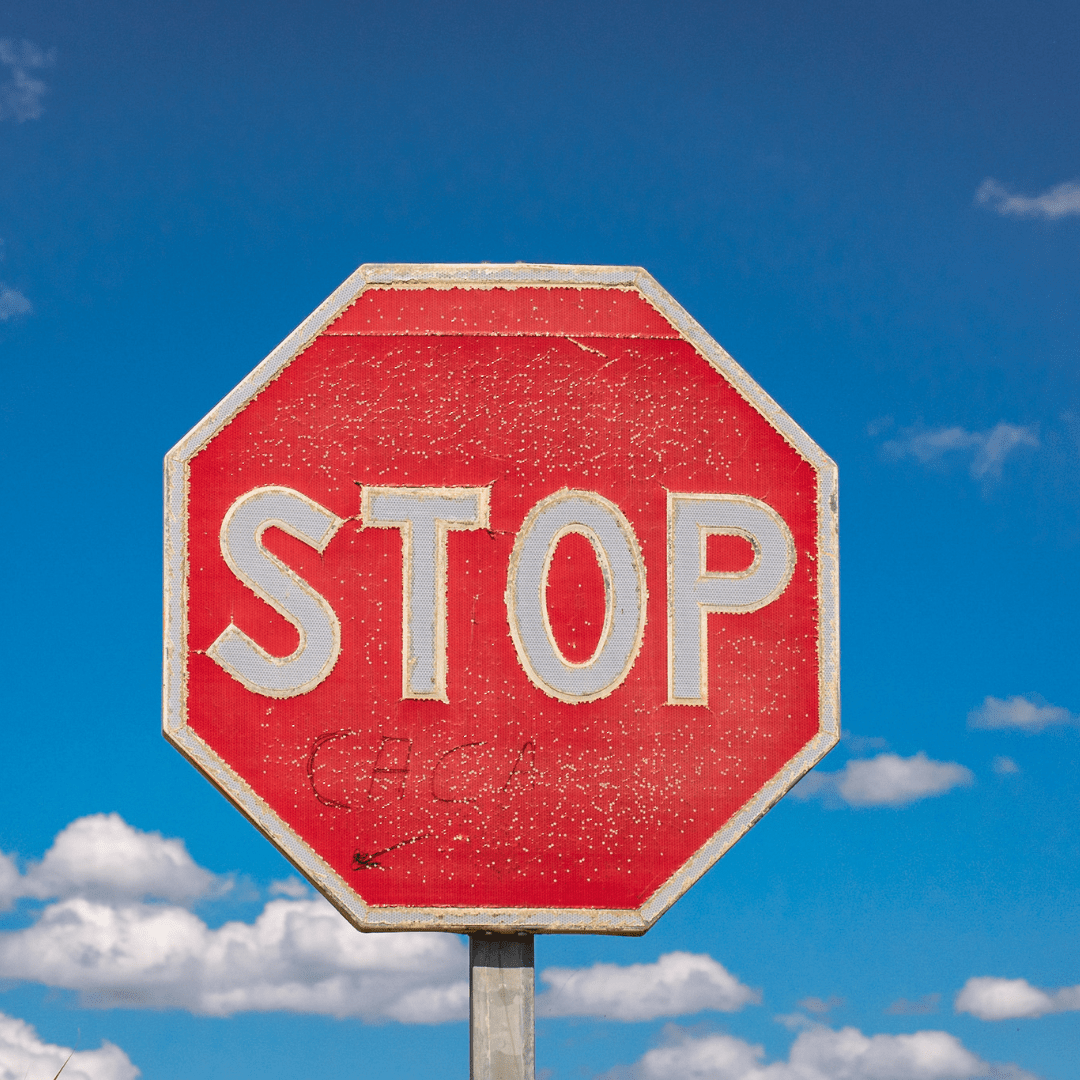
12. The rules are easy… but know them anyway
There aren’t many driving rules in Slovenia that will surprise you, but it’s worth familiarising yourself with the basics before you arrive.
- Drive on the right-hand side of the road and overtake on the left.
- Seatbelts are compulsory for everyone in the vehicle.
- Dipped headlights must be used at all times, even during daylight hours.
- The legal blood alcohol limit is 0.05%, although for new and professional drivers it’s lower. My advice? If you’re driving, don’t drink.
- Using a handheld mobile phone while driving is illegal. If you’re relying on Google Maps, make sure it’s mounted before you set off.
- Children must travel in an appropriate child seat suitable for their age and size.
- Winter tyres are compulsory during the winter season (typically from mid-November to mid-March), and if you’re heading into the mountains it’s sensible to carry snow chains too.
- If traffic comes to a standstill on the motorway, create an emergency corridor by moving to the side of your lane. Slovenian drivers are very good at this, so simply follow their lead.
- Carry your driving licence, passport or ID, vehicle registration and insurance documents, particularly if you’re driving your own vehicle.
Thankfully, Slovenia is one of those countries where common sense generally gets you a long way.
This list isn’t designed to be a comprehensive list of Slovenia’s rules and I recommend you do your own research before starting to drive in Slovenia.
13. You don’t need to be a racing driver
One of the nicest things about driving in Slovenia is that nobody expects you to be the next rally champion.
The mountain roads demand concentration, not speed.
Take your time, especially if you’ve never driven hairpin bends before. Drop into a lower gear for longer descents, let the engine do some of the work and don’t be afraid to use the passing places if somebody catches you up from behind.
I actually found that the slower I drove, the more I enjoyed it.
Not because I was nervous, but because it gave me a chance to appreciate where I was.
After all, there’s very little point driving through one of Europe’s most beautiful countries if you’re too busy trying to get to the next destination to notice it.

14. The drive is the attraction
Before visiting Slovenia, I’d always thought of driving as the bit that happened between the highlights.
Slovenia completely changed that.
Some of my favourite memories weren’t standing beside a famous lake or reaching the top of a mountain pass. They were the moments in between.
Driving back towards Kranjska Gora one evening, the setting sun turned the mountains shades of pink and gold while farmers stacked firewood outside tiny wooden houses. Cows grazed quietly in the fields and smoke drifted lazily from chimneys as another perfect day came to an end.
I remember wishing I could somehow capture the whole scene in a single photograph.
I couldn’t.
No camera could.
Instead, it’s simply printed in my memory.
Looking back, I think that’s why I loved driving in Slovenia so much. It wasn’t because it got me to incredible places.
It was because the journey itself became one of them.

15. Leave room for curiosity
When people plan a road trip, they often ask how many places they can fit into a day.
I think that’s the wrong question.
Instead, ask yourself how much time you’ve left for the unexpected.
Some of my favourite memories from Slovenia began with a sentence as simple as, “I wonder where this road goes…” Sometimes it led to a spectacular viewpoint. Sometimes it led to a tiny church sitting alone on a hillside. Occasionally it led absolutely nowhere.
And sometimes it just led to somebody’s house.
But I never regretted turning off to find out.
Looking back, I don’t remember exactly how many viewpoints I stopped at or how many waterfalls I visited. What I remember is the feeling of never quite knowing what waited around the next corner.
By the time I left Slovenia, I was already telling friends and family that I wasn’t coming home.
I was only half joking.
I genuinely think a small part of my soul is still somewhere in those hills, probably parked beside another impossibly turquoise river, wondering where the next little road might lead.

Frequently Asked Questions About Driving in Slovenia
Is driving in Slovenia difficult?
Not at all. In fact, I’d say it’s one of the easiest countries in Europe to drive in. The roads are in excellent condition, the signage is clear and Slovenian drivers are generally patient and courteous. The only roads that require a little extra confidence are the mountain passes and some of the narrow lanes leading to waterfalls, viewpoints and hilltop churches.
Is it safe to drive in Slovenia?
Yes. I always felt perfectly safe driving in Slovenia. The roads are well maintained and driving standards are generally very good. As with anywhere, take extra care on mountain roads, particularly after heavy rain or during the winter months, but overall it’s a wonderfully relaxed country to explore by car.
Do I need a vignette to drive in Slovenia?
If you’re using Slovenia’s motorways, yes.
If you’re hiring a car in Slovenia, the rental company will almost always have already sorted this for you. If you’re driving your own vehicle into the country, you’ll need to buy a valid vignette before using the motorway network.
Is the Vršič Pass dangerous?
No, but it deserves your respect.
The road is in excellent condition and the hairpin bends are well engineered, but it does require concentration. If you’re comfortable driving mountain roads and take your time, it’s likely to become one of the highlights of your trip.
Can tourists drive in Slovenia?
Absolutely. Visitors can legally drive in Slovenia provided they have a valid driving licence that’s recognised in the country. Most travellers from the UK and the EU can simply use their normal driving licence, although it’s always worth checking the latest requirements before you travel.
Is hiring a car in Slovenia worth it?
Without hesitation, yes.
Whilst you can visit Ljubljana and Lake Bled without one, hiring a car opens up an entirely different side of Slovenia. It gives you the freedom to explore the Soča Valley, drive spectacular mountain passes, chase waterfalls and discover the countless little places that rarely make it into guidebooks.

Final thoughts on driving in Slovenia
When I first started planning my trip, I thought driving would simply be the practical bit. The thing that got me from Lake Bled to Bovec, or from one attraction to the next.
I couldn’t have been more wrong.
Looking back, some of my favourite memories weren’t destinations at all. They were the roads that wound through alpine valleys, the conversations that never quite happened because I kept interrupting myself to admire the view, and the countless moments where curiosity got the better of me and I decided to see where another little road disappeared to.
By the end of the trip, I’d already messaged friends and family to tell them I wasn’t coming home.
I was only half joking.
So if you’re planning on driving in Slovenia, don’t make the mistake of trying to cram as much as possible into every day. Leave room for detours. Stop more often than you think you should. Take the scenic road over the fastest one whenever you get the choice.
Because Slovenia isn’t a country you simply drive through.
It’s one you experience from behind the wheel.
And if, somewhere between the Julian Alps and the Soča Valley, you find yourself wondering whether you could just stay a little longer…
Don’t worry. I had exactly the same thought.