
The Blog

Inside Europe’s Last Great Wilderness: Romania’s Wild Făgăraș Mountains
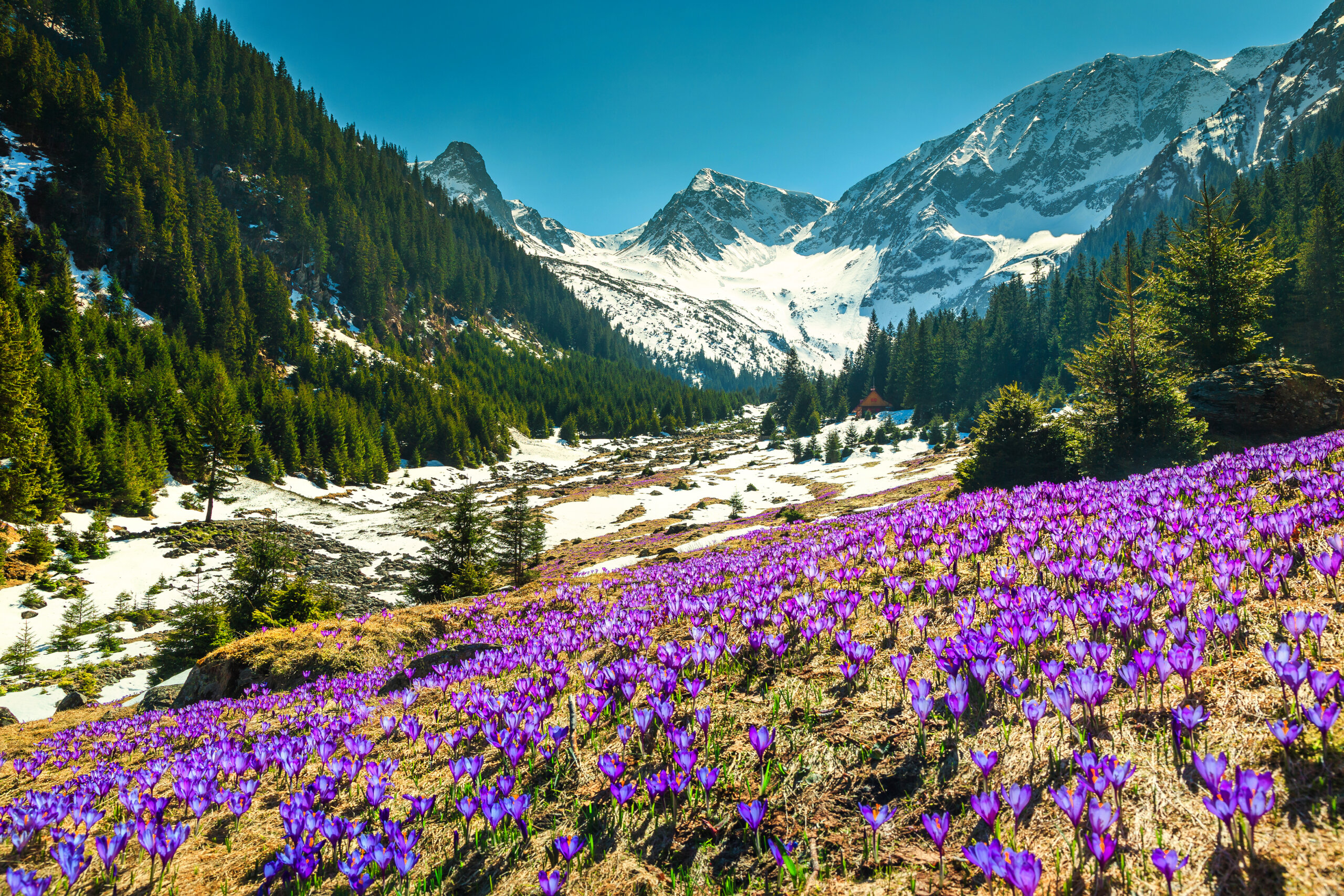
I arrived in Romania expecting beautiful scenery. What I didn’t expect was for the Făgăraș Mountains to quietly dismantle everything I thought I understood about wilderness, tourism, silence, and the strange modern discomfort of simply being left alone with my own thoughts.
Because Romania’s Carpathian Mountains are not dramatic in the way the Dolomites scream for your attention. They don’t perform like the Swiss Alps. They don’t arrive gift-wrapped with infinity spas, influencer swings, and €18 Aperol spritzes carefully colour-matched to your hiking outfit.
The Carpathians are older than all of that.
Wilder too.
I came to Romania with Travel Carpathia, the ecotourism arm supporting the wider work of Foundation Conservation Carpathia, an organisation attempting something wildly ambitious: protecting one of Europe’s last great wilderness areas while proving conservation and local communities can survive together.
Part of that experience involved hiking from one wildlife hide to another through the forests of the Făgăraș Mountains, sleeping deep in bear country while tracking wolves, bison, and lynx through landscapes that still function as genuine ecosystems rather than carefully managed fragments of nature.
On paper, it sounded relatively simple.
In reality, it became something much harder to explain.

Disclosure: This series was created following a hosted research trip with Travel Carpathia and Foundation Conservation Carpathia. Some articles contain affiliate links, meaning I may earn a commission if you book through them. All thoughts and experiences remain entirely my own, and I only recommend experiences I genuinely believe in.
What's in this post:
The seduction of wildness
The drive into the Făgăraș Mountains feels like travelling backwards through versions of Europe that much of the continent has already lost.
Villages stretch long rather than deep, single roads lined with houses whose gardens bleed into orchards, vegetable plots, and small barns. Chickens scratch lazily beside the road while elderly women in headscarves sit outside chatting beneath vines climbing the walls of their homes. Horse carts still trundle between cars. At dusk, cattle return home in loose herds from communal grazing land, somehow navigating themselves back to the correct gates with more confidence than most tourists manage in airport arrivals.
Nothing feels curated.
That was the first thing that struck me about Romania.
Not untouched. Not frozen in time. Simply uninterested in rearranging itself purely for outsiders.
As we climbed higher into the mountains, the roads narrowed and the forests thickened. Beech and silver fir swallowed the hillsides. Mist dragged itself lazily through the valleys. Occasionally, scars appeared where illegal logging had ripped through the landscape, sudden clearings that felt jarring after hours of uninterrupted wilderness.
Romania still contains some of the largest remaining virgin forests in Europe outside Russia, but seeing them in person changes your understanding of what wilderness actually looks like. It is not neat. It is not manicured. Trees collapse where they fall. Dead wood remains where it rots. Fungi burst through trunks in impossible shapes and colours while insects disappear into bark softening back into soil.
In many parts of Europe, forests feel managed.
Here, they still feel alive.

A forest that still behaves like a forest
One afternoon, our guide Sam led us into a section of virgin forest that Foundation Conservation Carpathia helps protect. Sam is a French biologist, now living in Romania with her Romanian boyfriend, and she possesses the rare gift shared by the best guides in the world: the ability to make people care about things they did not even realise they were looking at.
A less talented guide would simply have pointed at bear scat and announced the obvious.
Sam turned it into a story.
She explained how bears eat predominantly grass in spring, berries through summer, nuts and seeds in autumn. How their scat changes colour and consistency throughout the year. How flies indicate freshness. Suddenly, every pile of excrement scattered through the forest became a kind of ecological detective story.
And that was the genius of her guiding.
Nothing felt like a lecture. Every explanation invited curiosity instead.
The forest itself became increasingly fascinating the slower we moved through it. Sam explained how fungi connect with tree roots through underground mycelium networks, exchanging nutrients while effectively allowing forests to communicate below the soil.
She showed us horse hoof mushrooms growing from dying trunks, mushrooms once used for fire-starting because they burn slowly and hold embers for hours. We crouched beside woodpecker holes torn open by bears searching for larvae. Tiny mouse burrows widened into larger excavations where predators had attempted to dig them out.
At one point, she stopped beside a fallen tree and explained why dead wood is so important. In many commercial forests, dead trees are removed immediately for timber or firewood. Here, they are left to decompose naturally, feeding insects, fungi, birds, and eventually the soil itself.
It sounds simple.
It is also increasingly rare.

Walking differently
The strange thing about hiking in the Făgăraș Mountains is that the walking itself almost becomes secondary.
When people imagine wilderness trekking, they often imagine achievement. Long distances. Huge elevation gains. Gruelling physical effort rewarded by panoramic photographs and aching legs.
This felt entirely different.
We moved slowly because the entire experience depended on observation. Every few minutes, someone would stop to inspect tracks pressed into soft mud or identify birdsong echoing through the trees. The guides constantly interrupted the hike with stories, explanations, or sudden moments of silence where everyone instinctively paused to listen.
On our first day, we covered only a handful of kilometres across several hours.
And yet I found it more mentally immersive than hikes ten times longer.
Modern travel teaches us to consume landscapes quickly. Reach the viewpoint. Take the photo. Tick the experience off a list before moving on.
The Făgăraș Mountains resist that rhythm entirely.
Here, attention matters more than distance.
You begin noticing things that would normally disappear beneath the noise of everyday life: the sound waterproof trousers make brushing against wet grass, the sudden silence when birds detect movement nearby, the smell of rain arriving before the clouds break overhead.
Even the forest itself changes personality throughout the day. In sunshine, the mountains feel open and forgiving. Once the storms roll in and mist wraps itself around the trees, everything becomes quieter, denser, and faintly unsettling.

At night, inside the hides, that awareness sharpens even further.
The wilderness is never silent.
Wind rattles softly against the cabin walls. Tawny owls call somewhere beyond the darkness. Rain taps steadily against the roof while mice rustle through leaves outside sounding absurdly larger than they actually are.
And because there are real bears wandering through these forests, not hypothetical wilderness bears, but very real, very large animals moving invisibly beyond the windows, your senses remain permanently switched on.
The people inside the wilderness
One of the things that impressed me most about this experience was how inseparable the wilderness felt from the people living within it.
Conservation projects often market nature as though humans are the problem from which landscapes must be protected. But the Făgăraș Mountains tell a far more complicated story.
At Equus Silvania, where I stayed before heading deeper into the mountains, the food itself became part of that story. The cooks brought milk from their own cows and eggs from their own chickens. Vegetables came from nearby gardens. Meat was sourced locally and used sparingly, not because somebody in marketing had discovered sustainability branding, but because this is simply how many rural communities still eat.

Even the spreads laid out in the hides carried a story with them.
One evening, after arriving cold and damp from the rain, we opened jars of roasted pepper and aubergine spread made by a local woman named Maria. Through projects supported by Foundation Conservation Carpathia, Maria began hosting gatherings where women from surrounding villages shared traditional crafts, recipes, and skills that were slowly disappearing.
At first glance, it is easy to dismiss these details as charming additions to a wilderness holiday.
But they are far more important than that.
Because this is ultimately what conservation succeeds or fails on. Not just protecting forests. Protecting reasons for communities to remain connected to them.
The same philosophy ran throughout the entire experience. Most of the stable boys at Equus Silvania came from nearby villages. The women working in the kitchens and accommodation were overwhelmingly local. Even the guides spoke repeatedly about the importance of community support within conservation work.
Nothing about it felt tokenistic.
Instead, it felt deeply integrated into the wider mission.

Horses, hides, and the illusion of untouched wilderness
Before arriving in Romania, I assumed the wildlife would dominate my memories of the trip.
And to be fair, watching seven different bears emerge into a single clearing beneath the hide does leave a fairly strong impression.
Young males rummaged through dead trees searching for larvae while a huge dominant male charged another bear away at astonishing speed. Mothers appeared cautiously with cubs. One particularly enormous male, apparently around eighteen years old and weighing roughly 450 kilograms, wandered into view with the sort of confidence only apex predators possess.
But what stayed with me most was not the spectacle.
It was the ecosystem surrounding it.

These animals are not surviving in isolated pockets of wilderness created for tourism. They exist within functioning ecological systems that still support predators, scavengers, forests, wetlands, and migration corridors.
Foundation Conservation Carpathia has spent years restoring those systems. Beaver populations have been reintroduced after being hunted to extinction for fur and castoreum. European bison now roam sections of the mountains again after disappearing from the region centuries ago. Wolves and lynx move through forests where illegal logging once fragmented habitats.
Even the beavers themselves tell a larger story.
At the foundation’s visitor centre, we learned how the dams created by beavers slow flooding, create wetlands, filter water, and increase biodiversity throughout entire valleys. Their return changes landscapes far beyond the immediate area where they live.
The same could probably be said for every species here.
Everything affects everything else.
And perhaps that is what modern humans struggle to understand most.

Equus Silvania and the art of doing things properly
As somebody who grew up around horses, I can usually tell within minutes whether a riding operation genuinely prioritises horse welfare or simply performs it convincingly for guests.
Equus Silvania impressed me almost immediately.
The horses were mostly Arabians and Arabian crosses: athletic, forward-going, intelligent horses that felt far removed from the exhausted trekking horses many riding holidays quietly rely upon. They were responsive without being hot, beautifully cared for without becoming overmanaged.
The details mattered.
Loose nosebands. Eggbutt snaffles. Horses allowed to graze during stops. Midday untacking on longer rides so they could roll and rest properly while guests ate lunch. Mixed herd turnout. Staff who clearly knew every horse individually.
Even the riding reflected the wider philosophy of the place.
Nothing felt rushed.
The guides introduced each horse carefully to the entire group, explaining personalities, quirks, and sensitivities rather than simply assigning mounts like rental equipment.

One mare I rode was a head shaker, likely triggered by allergies. Instead of treating it as bad behaviour, the guides calmly explained the condition, how to ride her comfortably, and why she occasionally needed freedom through the rein.
That level of understanding says a great deal about how horses are viewed here.
And the riding itself was spectacular. Long canters through open meadows, forests alive with birdsong, distant mountain ridges rolling endlessly into mist.
But again, what lingered afterwards was not simply the scenery. It was the feeling that care existed everywhere you looked.
The uncomfortable truth about protecting paradise
It would be easy to romanticise the Făgăraș Mountains.
- The bears.
- The forests.
- The horse riding.
- The villages.
But spending time here also means confronting the uncomfortable reality of how fragile all of this actually is.
Illegal logging remains one of the greatest threats facing Romania’s forests. Driving through the mountains, you occasionally round a corner to find entire hillsides stripped bare, sudden wounds carved into otherwise untouched landscapes.
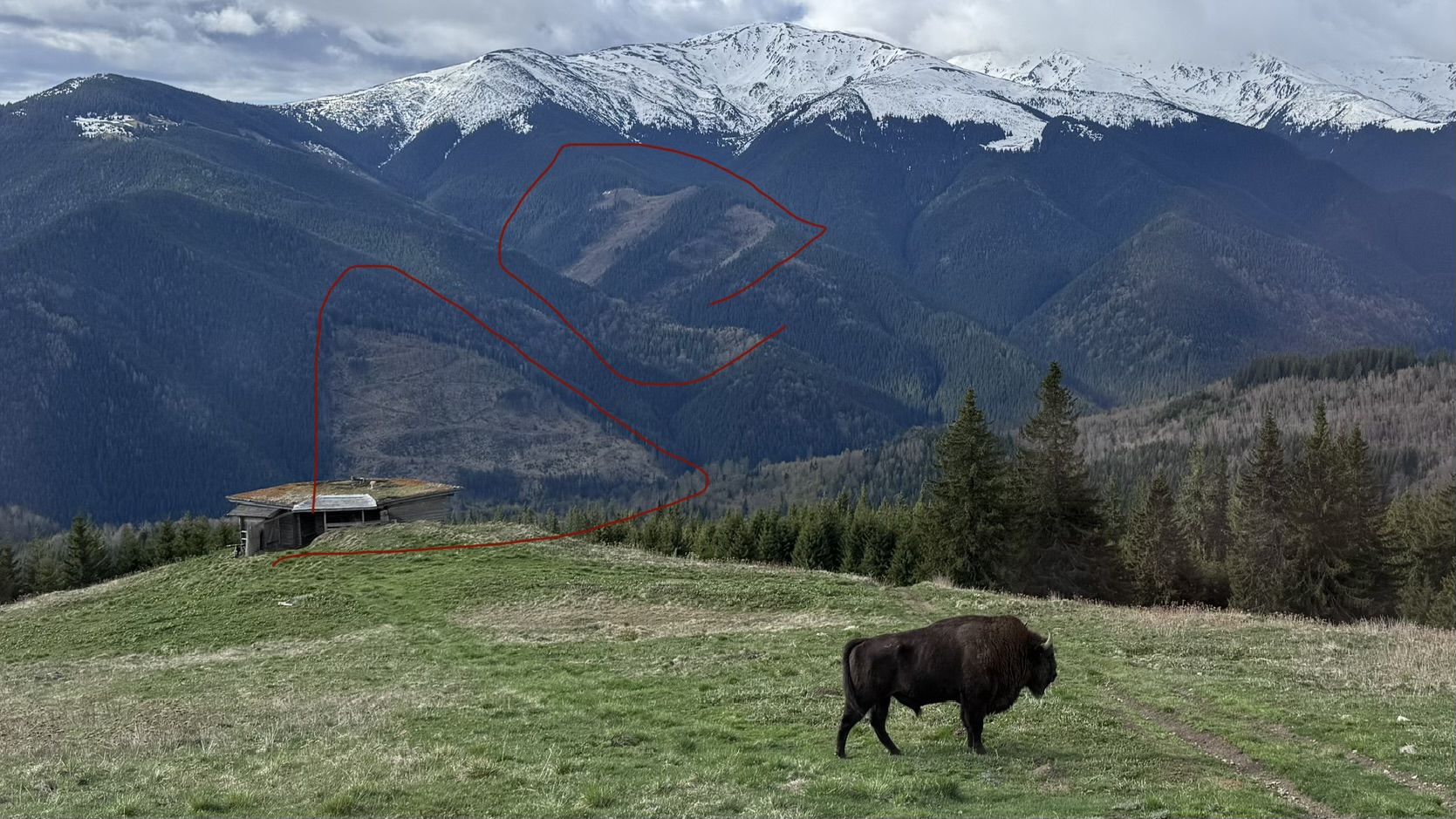
And the issue itself is deeply complicated.
Poverty still affects many rural communities. Logging companies often exploit vulnerable people, offering money or firewood in exchange for labour. Romania’s communist history also left complicated relationships around ownership, land use, and natural resources.
Foundation Conservation Carpathia openly acknowledges that conservation cannot succeed simply by protecting nature while ignoring people.
In the organisation’s early years, they focused heavily on ecological restoration but failed to communicate effectively with local communities. Fear and suspicion followed naturally. People worried about losing access to land or resources they depended upon.
Over time, the foundation shifted its approach.
Now, much of their work focuses on creating systems where conservation becomes economically valuable for local communities too. Tourism supports jobs. Nurseries employ local workers to grow native trees for reforestation projects. Producers like Maria gain new markets for traditional foods.
It is not perfect. Nor is it simple.
But that honesty makes the project feel far more credible.
Because wilderness alone is not enough. People have to believe protecting it is worthwhile too.

Why Foundation Conservation Carpathia matters
What Foundation Conservation Carpathia is attempting in the Făgăraș Mountains is, in many ways, astonishingly ambitious.
Their long-term vision involves creating a fully protected national park spanning one of Europe’s last truly wild landscapes. Some have referred to it as a future “European Yellowstone,” although the comparison only goes so far.
Unlike Yellowstone, people already live throughout this landscape.
Villages exist here. Livestock graze these valleys. Families have depended on these forests for generations.
And perhaps that is precisely why this story feels so important.
Because the future of conservation in Europe will likely depend less on creating empty wilderness and more on finding ways for humans and ecosystems to coexist sustainably.
That coexistence is already visible throughout the Făgăraș Mountains.
It exists in the local women preserving food traditions while using laptops inside village libraries. In the stable boys caring for horses beside forests filled with wolves. In the guides teaching visitors how mycelium networks connect trees beneath the soil while local communities simultaneously rebuild their own relationships with the land.
Everything here feels interconnected.
And perhaps that is why the mountains linger in my mind long after leaving them.

What the mountains leave behind
On my final morning in the hide, I woke before sunrise to movement outside the windows.
Another bear wandered slowly through the clearing, disappearing eventually into the trees. Not long afterwards, a bison emerged from the mist further down the valley.
For a while, nobody inside the cabin spoke.
The forest simply carried on around us.
And in that moment, I think I finally understood what had unsettled me so much about this trip.
The Făgăraș Mountains force you to confront how disconnected modern life has become from the systems that actually sustain us. Food arrives packaged. Nature becomes scenery. Wilderness exists mainly as something consumed briefly before returning to emails, deadlines, notifications, and concrete.

Here, the connections remain visible.
- Between forests and fungi.
- Between predators and prey.
- Between villages and landscapes.
- Between tourism and conservation.
- Even between people themselves.
Nothing in the Făgăraș Mountains feels isolated from the things around it. Perhaps that is why the wilderness here feels so emotionally powerful.
Not because it is untouched. But because it still functions.
And somewhere between the wolf tracks, the horse rides, the rain-soaked forests, and the endless conversations about bears, I realised something deeply uncomfortable.
Maybe the wild places we are really searching for are not disappearing from the planet. Maybe they are disappearing from us.

Comments will load here
Be the first to comment