
The Blog

I Took My Kids to the Zoo (And I Still Don’t Know If It Was the Right Thing to Do)
I didn’t think I’d ever willingly walk into a zoo again.
Not after watching lions stretch lazily across the golden plains of the Serengeti National Park. Not after sitting quietly in the presence of mountain gorillas in Bwindi Impenetrable National Park. And not after seeing elephants move like quiet tanks across landscapes that actually make sense for them.
Once you’ve seen wildlife like that, truly wild, unscripted, inconvenient and vast, it becomes very hard to accept anything less.
And yet… there I was. Standing in line at Madrid Zoo Aquarium, holding snacks, negotiating toilet breaks, and preparing myself to feel conflicted.
Because this time, it wasn’t about me.

Disclaimer! All of my blogs may contain affiliate links. This means that if you click on the link and make a purchase I may receive a small amount of commission for the referral at no extra cost to you. This commission is what allows me to continue creating guides to help travellers plan their next trip!
What's in this post:
I Took My Kids to the Zoo (And I Still Don’t Know If It Was the Right Thing to Do)
The Problem With Knowing Too Much
Here’s the uncomfortable truth: once you’ve seen animals in the wild, zoos don’t feel like education, they feel like compromise.
You don’t just see a bear; you see a bear that should be roaming forests in Romania. You don’t just see a lion; you see a lion that should be stalking prey across ecosystems that stretch for miles. You don’t just see a gorilla; you compare it, whether you want to or not, to the ones in Bwindi, where the forest breathes around them and your role is simply to be small, quiet, and respectful.
And suddenly, every enclosure feels smaller than it should be. Not because it is objectively tiny, but because your understanding has expanded beyond it.
But Then There Are Kids
Kids, it turns out, ruin your moral certainty in the most inconvenient ways.
They don’t have your reference points. They haven’t stood in the Serengeti. They haven’t watched the Great Migration unfold like a slow-moving miracle. And they haven’t felt that strange mix of awe and insignificance that comes when you realise nature doesn’t need you.
What they have is curiosity.
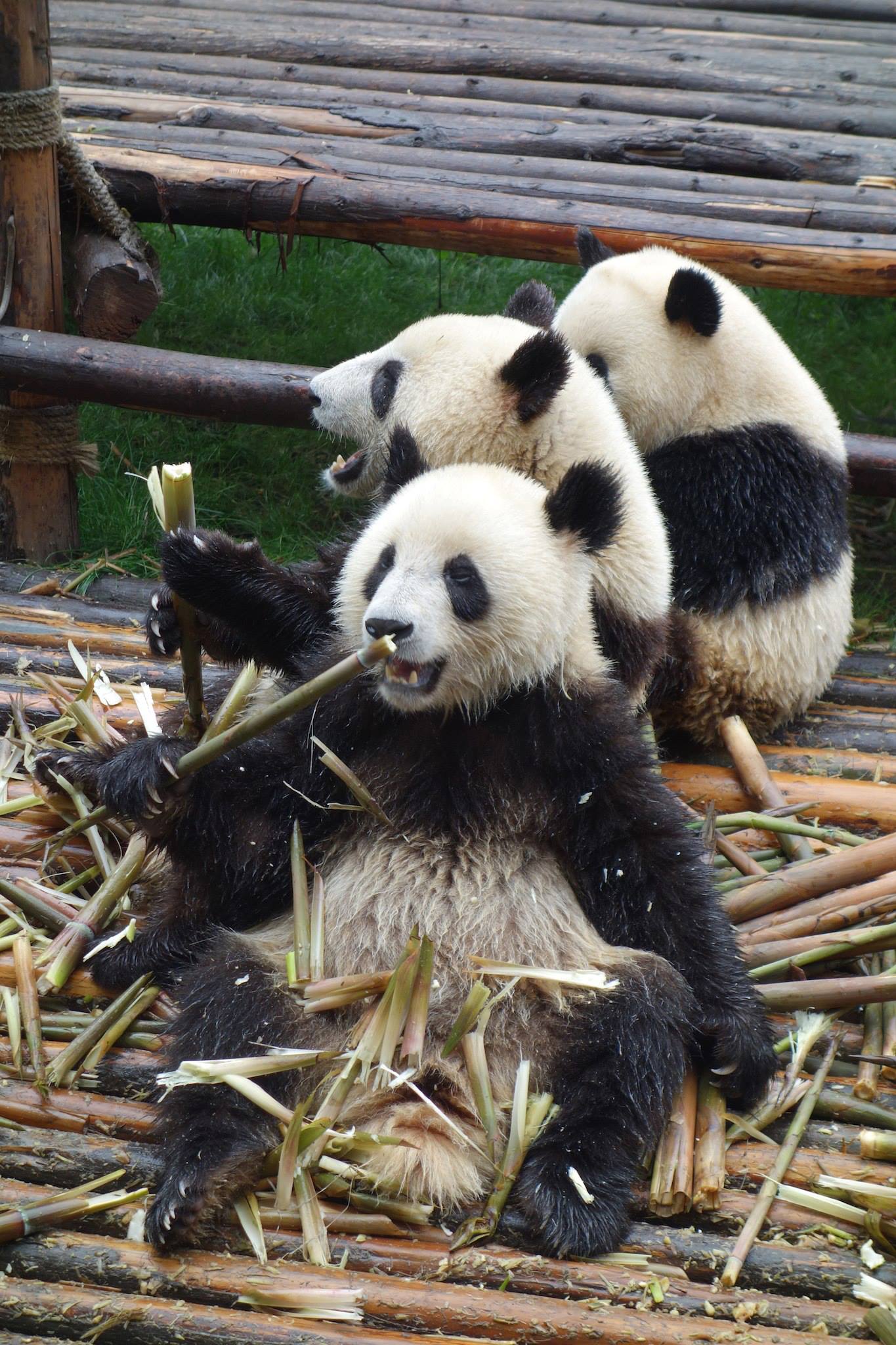
Jessie (8) loves pandas. Obsessed. And unless we suddenly decide to pop over to Chengdu for the weekend (tempting, but unlikely), this was her chance to see one in real life, however imperfect that version might be.
So we went.

And Here’s Where It Gets Messy
Because they loved it.
Genuinely loved it. They pointed, they asked questions, and they cared.
But what struck me most was that they didn’t just consume the experience, they processed it. And that wasn’t by accident.
They’re lucky, really lucky, that both Steve and I have spent time in the wild. We’ve been privileged enough to see animals as they are meant to be, and that perspective shapes the conversations we have with them. So when they saw an elephant in an enclosure, it wasn’t just “look at the elephant.” It became, “is this enough space?” “Do you think it’s happy?” “Where would it be in the wild?”
That context changes everything.
But Not Every Child Leaves With That
At one point, we overheard a little boy shouting “TOUCAN! TOUCAN!” while enthusiastically pointing at what was very clearly a southern ground hornbill. His dad, trying to help, corrected him by confidently telling him it was a pelican (rather than checking the placquard).
And that moment stayed with me far more than I expected.
Because suddenly the question wasn’t whether the zoo educated him, but what he had actually learned. If the takeaway is confusion dressed up as exposure, then what’s the value? Without context, without guidance, without someone helping bridge the gap between what you’re seeing and what it means, a zoo risks becoming nothing more than a place to look at animals you don’t understand.
And that feels dangerously close to entertainment.

The Bit I Can’t Shake: The Sea Lions
And then there was the show.
Two sea lions, clapping, balancing, performing on cue while the crowd lapped it up; kids laughing, phones out, applause at all the right moments. It was slick, well-timed, and, if I’m honest, genuinely entertaining. But as I stood there watching, I couldn’t quite shake the question sitting in the back of my mind: does this justify itself?
Zoos will tell you, and often rightly, that they fund conservation work. Breeding programmes, habitat protection, species recovery. And to be fair, this wasn’t just mindless entertainment. At one point, the show shifted into something more purposeful. The sea lions were “teaching” about recycling, selecting different items and placing them into the correct bins: plastic here, waste there. It was clever, engaging, and designed to make the audience care about protecting oceans.
For a moment, it felt like the justification I’d been looking for. Education through connection. Make people feel something, and maybe they’ll act differently.
Then the show ended.

What did we learn?
The crowd dispersed quickly, as it always does. Back to snacks, chatter, and the next enclosure. And I watched a woman walk over to the bins, holding an empty bottle of pop in one hand and the remains of a slightly tragic hot dog in the other. She paused briefly, just long enough to register that there were different compartments… and then dropped both into the wrong bin without another thought.
No hesitation. No correction. No second glance.
And I just stood there thinking: so did any of that actually land?
Because if the message doesn’t translate into action five minutes later, what are we really doing? Are we educating, or are we just wrapping entertainment in a thin layer of meaning so we can feel better about it?
And then there’s the bigger question I couldn’t quite shake. Do two sea lions putting on a show at Madrid Zoo Aquarium make up for the conservation work they do elsewhere? Does sacrificing a few to protect the rest make it worthwhile?
It’s not a neat equation. Because conservation isn’t free. It needs funding, attention, and public buy-in. And maybe, maybe, those sea lions are part of what keeps that system running.
But standing there, watching them perform, it didn’t feel like conservation. It felt like a trade-off.
And here’s the part I can’t quite reconcile: I enjoyed it. It was engaging. It held attention. It worked as a show.
But maybe that’s exactly the problem.
Because if what people remember is the performance rather than the purpose, then the whole equation starts to feel slightly off.

The Conversation That Broke My Brain
At one point, we asked the 8-year-old a question: would you rather be an animal in the wild, or in a zoo?
Without hesitation, she chose the zoo. “You get food and no one kills you.”
And honestly, it stopped me in my tracks.
Because she’s not wrong. It’s a very human answer. Safety over freedom. Certainty over risk.
We tried to explain that it would be like being locked in your room for the rest of your life. She still chose the zoo.
The 11-year-old understood the trade-off. She grasped the idea of freedom versus safety, of a life that’s real versus a life that’s controlled. But the younger one chose survival.
And suddenly, this wasn’t just about zoos anymore. It was about how we understand life itself.

Do Zoos Actually Educate?
This is the question I can’t neatly answer.
Because yes, technically, they do. Kids learn names, habitats, behaviours. But is that the same as understanding? Or does understanding only happen when someone helps you connect the dots?
Our girls left with something positive, but not simply because they saw animals. They left with something because they were guided through what they were seeing. Because we asked questions. Because we challenged what was in front of us.
And I’m not convinced every child leaves with that same awareness.
The VR Argument (And Why It’s Not That Simple)
We now live in a world where VR can put you face-to-face with a lion without ever leaving your sofa. No captivity, no compromise, no ethical grey areas.
So why do zoos still exist?
Because, frustratingly, VR doesn’t hit the same. You don’t feel the scale. You don’t feel the presence. You don’t feel that quiet, instinctive awareness that you are standing near something powerful and alive.
Even in a zoo, that feeling exists, diminished, yes, but still there. And maybe that feeling is what sparks something deeper.

The Conservation Argument (The One Zoos Lean On)
Zoos will tell you they play a crucial role in conservation, and in some cases, they do. There are species that exist today because of captive breeding. There are individuals that cannot be returned to the wild.
But not all zoos are created equal.
There is a difference between a conservation-led facility and a place that simply displays animals. And as a visitor, it’s not always obvious which is which.
The Comparison I Can’t Ignore
Because I’ve also seen alternatives.
Places like panda conservation centres in Chengdu, where the focus is rehabilitation and breeding with the goal of release. Sanctuaries. Rewilding projects. Private reserves where animals still live as animals, not exhibits.
Once you’ve seen those, the standard zoo becomes harder to justify.

So… Was It the Right Thing to Do?
I wish I had a clean answer.
Something decisive, slightly controversial, but ultimately reassuring.
I don’t.
Because the reality is that my kids left loving animals more than when they arrived. They asked better questions. They saw beyond the enclosure.
But that didn’t happen by default. It happened because of the lens we gave them.
And I’m not convinced every child walks out with that same perspective.
Where I’ve Landed (For Now)
I don’t think zoos are black and white.
They sit in an uncomfortable middle ground between education and entertainment, conservation and captivity, inspiration and exploitation.
And maybe the responsibility shifts to us, not just to visit or not visit, but to add context, to question what we’re seeing, and to turn observation into understanding.
Because without that, it’s just animals in cages.

Final Thought
If you’d asked me a few years ago, I would have said I would never take my kids to a zoo.
Now, I did.
And the only reason I can almost sit with that decision is because we didn’t just show them animals, we helped them question what they were seeing.
Even if I’m still not entirely sure where I stand on the rest.

Comments will load here
Be the first to comment