
The Blog

Is Camargue Worth Visiting? The Wild, The Disappointing & The Unexpected Magic
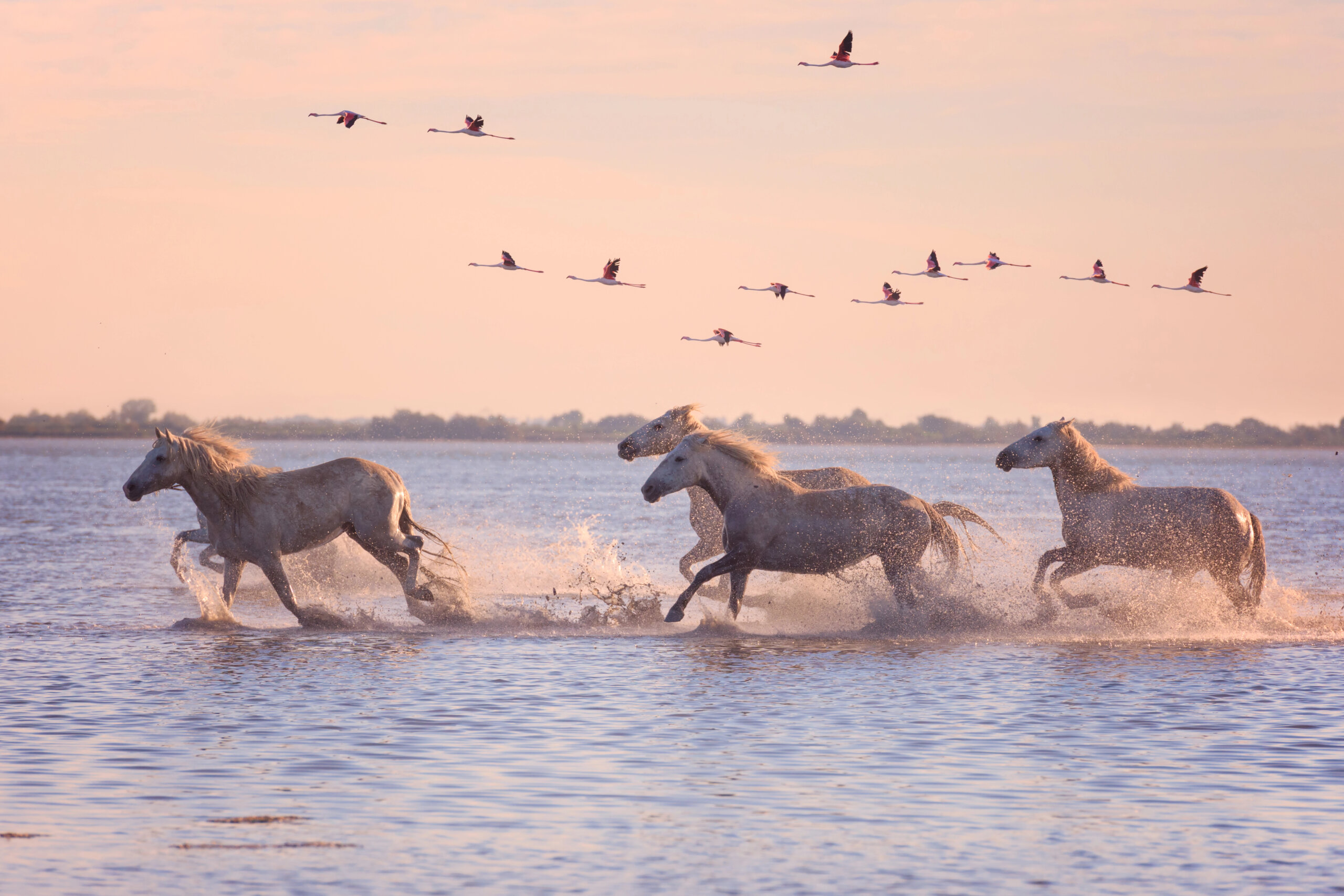
If you’re wondering is Camargue worth visiting, you’re probably picturing wild horses charging through water. That’s exactly what I had in mind when I arrived in Camargue; horse girl dreams fully activated, camera ready, expectations sky high.
And yet, the one thing I didn’t see in Camargue… was a single wild horse.
What I did find instead was something quieter, subtler, and, annoyingly, far more interesting than I’d planned for. Flamingos that rival anything I’ve seen in Africa. Landscapes that feel more like a mood than a destination. And a reality check on what Camargue actually is versus what Instagram would have you believe.
So, is Camargue worth visiting? Yes.
But probably not for the reasons you think.

Disclaimer! All of my blogs may contain affiliate links. This means that if you click on the link and make a purchase I may receive a small amount of commission for the referral at no extra cost to you.
What's in this post:
What Is Camargue (And Why Everyone Thinks They Should Go)
Camargue sits in the Rhône delta in southern France, a vast wetland where river meets sea, and where the landscape seems to stretch endlessly in every direction. It’s flat, windswept, and at first glance… almost underwhelming.
No dramatic cliffs. No towering mountains. No obvious “wow” moment. And yet, it’s one of the most unique ecosystems in Europe.
Think salt flats that glow pink under the right light. Shallow lagoons dotted with flamingos. Marshlands where horses, bulls, and birdlife coexist in a delicate, ever-shifting balance. It’s wild, but not in the way most people expect.
Because here’s the thing no one really tells you: Camargue isn’t a spectacle. It’s a feeling.

Is Camargue Worth Visiting for Wild Horses? (Let’s Talk About It)
Let’s address the elephant, or rather, the horse, in the room. If you’re coming to Camargue purely to see wild horses roaming freely across the landscape, you may be disappointed.
I was.
Despite driving through the region, scanning every field like a slightly obsessive wildlife tracker, I didn’t spot a single one in the wild. Not one. And trust me, I was looking.
Part of the reason is expectation. Those iconic images? They’re often taken in very specific conditions, sometimes with managed herds, guided experiences, or a bit of photographic luck thrown in.
The horses exist. They’re very real. But they’re not just casually hanging out by the roadside waiting for you to roll down your window and have a moment.

And then there was the ranch.
I had booked what was supposed to be the highlight of my trip, a gallop along the beach. Wind in my hair, horse beneath me, cinematic main character energy fully activated.
Instead, I arrived to be told I hadn’t booked anything at all.
A classic case of my overly confident, deeply questionable French meeting a miscommunication that neither side was willing to claim responsibility for. I was left standing in a car park in my riding gear, wondering how exactly I’d managed to mess that up. Not my finest hour.
But also, strangely, one of the most honest parts of the experience. Because it forced me to reassess what I thought Camargue was… and what it actually offers.
Camargue horses exist, but you don’t just stumble across them like a Disney film.
So how do you actually see them?
- Book a reputable horseback experience through a booking platform so you know it is guaranteed!
- Look for guided wildlife or photography tours
- Visit ranches where horses are part of the cultural landscape
If seeing horses is non-negotiable for you, plan for it intentionally. Don’t rely on luck.

The Unexpected Highlight: Flamingos
Now, let’s talk about the real star of the show: flamingos.
I’ve seen flamingos in some of the most well-known spots across Africa. Places where they gather in their thousands, where the scale alone is enough to take your breath away.
And yet, one of my best flamingo photos?
Taken in Camargue. From my car. Without even getting out. While stopped somewhere I was very much not supposed to be stopped.
It was one of those moments that travel occasionally hands you on a silver platter. You’re not chasing it. You’re not forcing it. You just happen to be in the right place, at the right time, with the right light… and suddenly everything clicks.
Camargue is full of those moments, if you slow down enough to notice them.
If you want a more structured experience, the Parc Ornithologique du Pont de Gau is one of the best places to see flamingos up close. But honestly? Some of the best sightings happen just by driving through the region and keeping your eyes open.

What Camargue Actually Feels Like
Camargue is not high-energy. It doesn’t throw landmarks at you every five minutes. Instead, it unfolds slowly.
It’s the kind of place where:
- The wind shapes the experience as much as the landscape
- The light changes everything
- The silence feels… intentional
You don’t “do” Camargue in the traditional sense. You move through it. And depending on who you are, that will either feel magical… or slightly boring.

Things to Do in Camargue (What’s Actually Worth Your Time)
Explore Saintes-Maries-de-la-Mer
This is the main town in Camargue, and yes, it’s a little touristy. But it’s also charming in a slightly chaotic, seaside kind of way.
Whitewashed buildings. Sandy streets. A steady rhythm of people drifting between cafés, shops, and the beach.
And then there was the strawberry.
I visited during strawberry season (April-June), which meant market stalls overflowing with perfectly red, impossibly juicy-looking punnets. The kind that make you forget all logic and suddenly believe you could absolutely eat your body weight in fruit.
I cannot. Not without consequences at least.
But I wanted one. Just one.
So instead of helping myself like a certain entitled wedding guest (missed that email? Sign up), I did the very British thing and politely asked the seller if I could buy a single strawberry.
She laughed. Not at me, but with me. That warm, slightly amused laugh that says, “You’re overthinking this.”
“No,” she said, waving her hand dismissively. “Just try one.”
So I did. A big, perfectly ripe, unapologetically juicy strawberry. And it was, without exaggeration, one of the best I’ve ever tasted.
I did buy something else from her stall afterwards, because I’m not completely unhinged, but that moment stuck with me. Not just because of the strawberry, but because of the interaction.
Simple. Human. Unscripted.
Camargue in a nutshell.

Visit Aigues-Mortes
If Camargue is all about nature, Aigues-Mortes is its historical counterpoint.
A perfectly preserved medieval town surrounded by imposing walls, sitting right on the edge of the salt flats. Walk along the ramparts, and you’ll get sweeping views of the surrounding landscape: flat, expansive, and tinged pink in places thanks to the salt production.
It’s touristy, yes. But it’s also genuinely impressive.

Go Birdwatching (Even If You’re Not a Twitcher)
You don’t need to be a hardcore birdwatcher to appreciate Camargue’s wildlife. Flamingos, herons, egrets… they’re all here. And they’re often closer than you expect.
If you’d rather see them with an expert then you can always book onto a “safari”.
Cycle Through the Wetlands
Camargue is flat. Gloriously, unapologetically flat. Which makes it perfect for cycling. There are plenty of quiet roads and trails that let you explore at your own pace, away from the main tourist spots.
You can opt for renting a bike and getting lost or choosing a guided bike tour!
Horse Riding (With Realistic Expectations)
Yes, it’s worth doing. No, it won’t necessarily be the cinematic gallop of your dreams.
But it will give you a deeper connection to the landscape, and a second chance to get the experience I very much did not get.
Sunset will offer some of the best chances to capture good photos and videos as the light can be fantastic in Camargue.
If your French is as lacking as mine, I recommend booking through an online platform to avoid misunderstandings on days and timings!

When Camargue Is NOT Worth Visiting
Let’s be honest. Camargue isn’t for everyone.
It might not be worth visiting if:
- You want guaranteed wildlife sightings
- You’re short on time and looking for big, obvious highlights
- You prefer fast-paced, attraction-heavy destinations
- You visit in bad weather (the wind alone can change everything)
When Camargue IS Worth Visiting
On the flip side, you’ll likely love it if:
- You enjoy slow travel
- You appreciate subtle, atmospheric landscapes
- You like photography
- You’re on a road trip and can explore freely

Where to Base Yourself
Stay in Arles → best for convenience and culture
If you want restaurants, atmosphere, and something to do in the evenings, Arles is the easiest base. You get all the charm of a historic city, plus straightforward access to Camargue by car.
A great option here is Hôtel Jules César Arles – MGallery, a former convent turned boutique hotel with a slightly quirky, artistic edge that fits the city perfectly. It’s central, comfortable, and ideal if you want to explore Arles on foot before heading out into the wetlands.
Stay in Saintes-Maries-de-la-Mer → immersive but busier
This is the heart of Camargue. You’re closer to the wildlife, the beaches, and the overall experience, but you’ll be sharing it with other visitors, especially in summer.
For something that balances location with a more authentic feel, look at Mas de la Fouque. Set right in the wetlands, it feels worlds away from the town centre, with horses, nature, and a calm, almost retreat-like atmosphere.
Stay rural → most authentic, but you’ll need a car
If you want to feel Camargue rather than just visit it, this is the move. Out here, it’s quieter. Slower. More connected to the landscape.
A standout option is Le Mas de Peint, a traditional Camargue farmhouse surrounded by nature. It’s the kind of place where you wake up to birds, not traffic, and where the experience feels far more rooted in the region.

Practical Tips for Visiting Camargue
You need a car. Public transport won’t cut it.
Camargue is not a place that’s been designed around convenience.
It’s spread out, flat, and quietly vast, which is exactly what makes it special, but also what makes it frustrating without your own transport. The best moments happen between places, not at them. Flamingos in the distance, a sudden stretch of water glowing pink, a road that looks like it leads nowhere but somehow feels worth following.
You won’t access that on a bus.
If you are renting one, use DiscoverCars to compare the best options, and don’t automatically default to the big international brands. Local providers are often cheaper, more flexible, and come with far less administrative theatre.
Just make sure you:
- Take photos of the car before you drive off
- Check fuel policies (they love a full-to-empty situation)
- And brace yourself for narrow roads and the occasional questionable parking decision

Best time to visit: spring or autumn
Camargue is a place that changes dramatically with the seasons.
Spring and autumn are the sweet spots. Temperatures are comfortable, wildlife is active, and the landscape feels alive without being overwhelming.
Summer?
Hot. Bright. Busy. And very, very buggy.
If you do visit in summer, bring mosquito spray. Not as an afterthought. Not as a “just in case.”
As a survival tool.
My go-to is incognito®, because after testing it across Africa, I’ve learned the hard way that not all repellents are created equal. Camargue might not be a malaria zone, but the mosquitoes clearly didn’t get the memo.

Allow 1–2 days (and resist the urge to overfill them)
Camargue isn’t a place that rewards rushing.
You could technically “see” it in a day, drive through, tick off a few stops, take a couple of photos, and leave.
But you’d miss the point.
This is a place that reveals itself slowly. It’s in the in-between moments:
- The unexpected wildlife sighting
- The change in light
- The pause you didn’t plan but end up appreciating most
One day is enough to get a feel for it. Two days is where it starts to make sense.
Stop often, but maybe slightly more legally than I did
One of the best things to do in Camargue is also the simplest: Stop the car.
Not just at designated viewpoints, but when something catches your eye. Because the landscape doesn’t present itself in neat, signposted moments. It appears quietly, unexpectedly, and often fleetingly.
That said… Try to be a little more responsible than I was.
Pull over safely. Avoid blocking narrow roads. And resist the temptation to stop exactly where you shouldn’t, even if the flamingos are perfectly positioned and the light is doing something magical.
It’s a balance.

Don’t rely on Google Maps alone
Google Maps will get you from A to B. But Camargue isn’t about A to B.
Some of the best roads, the quietest stretches, and the most memorable moments happen when you go slightly off-route. Not recklessly, but with a bit of curiosity.
If a road looks interesting, take it. If it leads nowhere, at least you’ll have seen something different.
Set expectations (this isn’t a safari)
This is probably the most important tip. Camargue is wild, but it’s not dramatic.
You’re not guaranteed to see horses. Flamingos might be far away. Wildlife doesn’t perform on cue.
And yet… When it does come together, it feels far more rewarding precisely because it wasn’t handed to you.
Bring patience (and a little openness)
Camargue isn’t going to try and impress you.
It’s not polished. It’s not obvious. And it doesn’t care if you “get it” straight away.
But if you give it time: if you slow down, look a little closer, and let go of what you thought it would be, it has a way of surprising you.
Quietly.

Final Verdict: Is Camargue Worth Visiting?
Camargue didn’t give me what I came for.
No wild horses. No beach gallop. No cinematic moment of wind-in-my-hair perfection.
But it gave me something else.
Flamingos in golden light. Quiet roads stretching into nowhere. A strawberry I still think about far more often than is reasonable.
It also gave me space. And sometimes, that’s worth more than the thing you thought you wanted.
So yes, Camargue is worth visiting. Just don’t expect it to perform for you. Because when it does show up… it does so on its own terms.

Comments will load here
Be the first to comment