
The Blog

Kenya vs Tanzania Safari: An Honest Comparison from Someone Who’s Done Both Multiple Tims
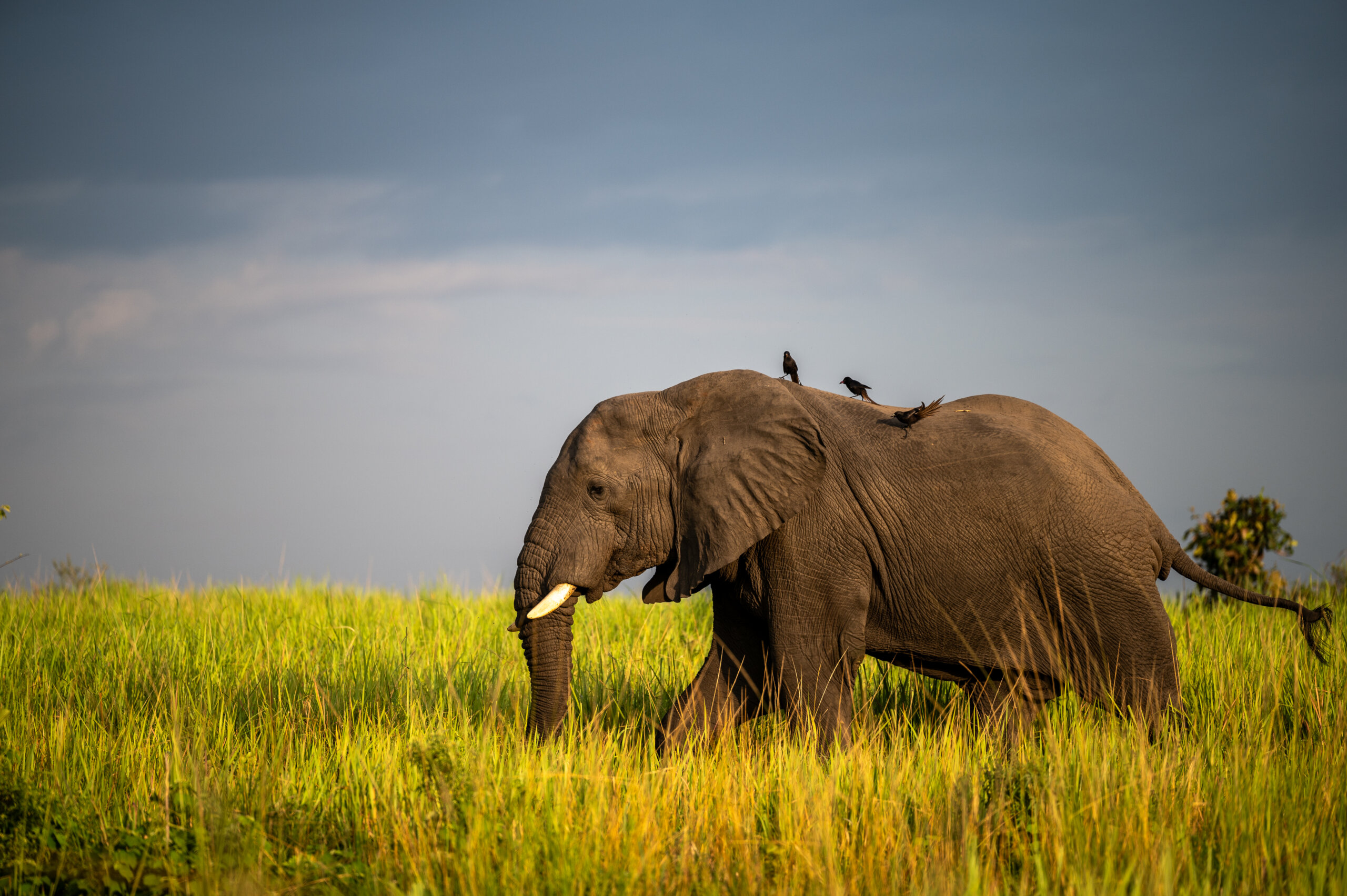
If you’re trying to decide between a Kenya vs Tanzania safari, welcome to the club. These two countries dominate every safari bucket list, and on paper, they look almost identical: big cats, epic landscapes, iconic parks, and enough once-in-a-lifetime moments to fill several memory cards. But after experiencing both (multiple times), I can tell you this, the feel of a safari in Kenya is very different to a safari in Tanzania, and which one is “better” depends entirely on the kind of traveller you are.
This guide is an honest, experience-led comparison of Kenya vs Tanzania safaris, not a brochure pitch, not a tick-box list, and definitely not a “you can’t go wrong” cop-out. I’ll break down what actually matters: wildlife encounters, crowd levels, accessibility, guiding, cost, and those little details that can quietly make or break a safari.
You’ll notice I’ve popped Uganda in here too, not as a direct competitor, but as a wild card. Uganda plays a completely different game, and for the right traveller (hello, gorillas), it can be extraordinary. But if you’re choosing between Kenya or Tanzania for that dream safari, this article is here to help you make the call.
Disclaimer: This post may include affiliate links. If you click on the link and make a purchase, I will receive a small commission at no extra cost to you. Affiliate links help cover the cost of running my website so that I can continue inspiring my readers to explore the world.
What's in this post:
Quick verdict (TL;DR): Kenya vs Tanzania Safari
If you want the short answer before diving into the detail, here it is:
- Choose Kenya if it’s your first safari, you value ease and accessibility, and seeing rhinos up close matters to you.
- Choose Tanzania if you want a deeper sense of wilderness, fewer vehicles around sightings, and the most immersive version of the Great Migration.
Both deliver unforgettable wildlife encounters. The difference isn’t what you’ll see, it’s how it feels when you’re there.
Kenya vs Tanzania safari at a glance
| Category | Kenya | Tanzania |
|---|---|---|
| First-time safari | ⭐⭐⭐⭐⭐ | ⭐⭐⭐⭐⭐ |
| Ease of access | Excellent (direct flights, short transfers) | Longer travel time and less direct flights |
| Crowd levels | High visitor numbers | Can also be busy but the right guide will avoid the crowds |
| Wildebeest Migration | Seasonal | Excellent year round |
| Rhino sightings | Excellent | Much harder to spot |
| Predator sightings | ⭐⭐⭐⭐⭐ | ⭐⭐⭐⭐⭐ (Serengeti has Africa’s highest lion density) |
| Overall wilderness feel | Guide-dependent | Guide-dependent |
| Cost | More budget-friendly camps | Higher cost usually |
| Guiding style | Strong but variable | Exceptional with Migration Tanzania Safari |
| My personal lean | — | ❤️ |
The biggest takeaway? A great guide can elevate either destination. A poor one can flatten both.
Now that you’ve seen the high-level differences, let’s look at Kenya vs Tanzania in more detail, starting with Kenya.
Kenya
Before I started travelling in Africa, I always thought of Kenya as THE safari capital of the world. I don’t know how true this is or not, but a quick Google tells me I’m not alone in thinking that. Perhaps it is the proximity of the parks to the capital, or maybe the fact that there are direct flights to Nairobi from London that make it much more accessible than other countries. But whatever the reason, Kenya has always been synonymous with safaris for me. But is Kenya better than Tanzania as a safari destination?

Pros of a Kenyan Safari
Easy to get to
When comparing a Kenya vs Tanzania safari, ease of access is one area where Kenya often has the edge. From London, Kenya has direct flights into Nairobi with British Airways, making it possible to land and be on safari within a single day. That simplicity really matters, especially if you’re short on time or this is your first safari.
In contrast, reaching Tanzania often involves at least one stop. I’ve travelled via Istanbul, Doha, and Ethiopia, which adds time and fatigue to the journey. It’s not a deal-breaker by any means, but if convenience is a priority, Kenya’s straightforward access is a definite plus.
Affordable
I visited Kenya on a group tour, which always brings the cost down. However, when I have looked into private tours in Kenya, these do appear to be more affordable than in Tanzania. Why? Kenya is the wealthiest country of the three and therefore has better infrastructure. This attracts more tourists (500,000 more visitors each year than Tanzania), which in turn brings about more competition, more availability of good quality accommodation, and lower prices. That does not however correlate to better service or a better experience.
Nairobi National Park
Nairobi is the only capital city in the world that has a National Park within its city limits. I wasn’t expecting much from Nairobi National Park. Maybe a glorified city park? I could not have been more wrong! The first animal we spotted during our game drive was a Black Rhino, one of the hardest to spot and most endangered species in the world! Not long after, we spotted a White Rhino crossing the track with its baby! Rhinos are the one animals that have eluded me during my safaris, so to get to see them in the wild with a cityscape as a backdrop was somewhat surreal!
In addition to rhinos, we also saw zebra, hippos, giraffes, wildebeest, ostriches, and several different types of gazelle and antelope. The rhinos stole the show for me though!

Rhinos
I know I’ve mentioned them already, but when it comes to Kenya vs Tanzania safaris, rhinos are a massive bonus for Kenya. Not only did we see them in Nairobi National Park, but we spotted them multiple times in Nakuru National Park too. In fact, we saw so many that they lost their novelty. Whereas in Tanzania, the only real place you are likely to spot rhinos in the wild is Ngorongoro National Park, and often, when you do, you will need binoculars! I didn’t find this to be the case in Kenya.

The opportunity to experience real life
I love wildlife. But I love people more. My most memorable memories from any trip always happen as a result of throwing myself headfirst into everyday life to try and understand the destination that little bit better. Because most Kenya safari start in Nairobi, it gives you the perfect excuse to mix culture and wildlife. Indy Escapes arranged for us to spend two days working with NGOs within the slums of Nairobi. Our first day was spent at the Ruben Centre, in the Mukuru slum, where we got to see first-hand the amazing work they do in providing access to education to 3,500 children who otherwise would not be able to go to school.

The second NGO we worked with was the Edmund Rice Centre, based in the Kibera slum. They provide education to the most marginalized and vulnerable children: those with disabilities. As part of our day with ERC, we took a walk right into the heart of Kibera slum to experience firsthand the struggles that parents with disabled children faced. Of all the travel I have done, and all the places I have visited, my day with ERC in the Kibera slum stands out as one of the most poignant yet inspiring of them all.

I also joined a really interesting tour of Downtown Nairobi run by former street children. The tour is organised by Nai Nami, an organisation helping those living on the street change their life around. You can read about my experience here.
Safari by bike
In Hell’s Gate National Park, Naivasha, it is possible to ditch the truck and explore the wildlife on a bike instead since there are no predators. It is rather special to pedal among zebra, buffalo, eland, hartebeest, Thompson gazelle, and baboons! I passed several gazelle and zebra close by, but I am glad the buffalo were away in the distance as they can be vicious and revengeful! As well as cherishing the freedom, it was also nice to exercise, as it can be quite sedentary sitting in a truck all day!
Sheldrick Wildlife Trust
The Sheldrick Wildlife Trust operates the most successful elephant rescue and rehabilitation program in the world. They have successfully raised 320 orphan elephants, and of the elephants they have rewilded, 55 have given birth in the wild! They have also successfully hand-raised 17 rhinos. The Sheldrick Wildlife Trust open their doors twice a day to give visitors the chance to interact with some of the orphan elephants ethically and sustainably while also providing information about the great work that they do. A truly incredible experience!

The Giraffe Centre
If you are on Instagram, then I am sure you have seen footage of the Giraffe Manor, where giraffes pop their heads in through the windows while you have breakfast. You are probably also aware of the price tag! Did you know you can feed those same giraffes for only $20!? That’s right. The Giraffe Manor is connected to the Giraffe Centre, which opens daily for visitors to learn about the conservation work that they do. While there, you also get the chance to feed and take photos with the giraffe in an ethical way.

The perfect group tour
Being able to experience Kenya alongside 14 other like-minded people who genuinely made my heart smile was priceless. Indy Escapes arranged the trip and created the perfect itinerary that balanced culture, wildlife, and adventure. If you are looking to explore Kenya with a group, then I recommend you book with Indy Escapes!

Cons of a Kenya Safari
Lots of trucks
Unlike Tanzania, where our guide Malaki went out of his way so that it felt like we had the park to ourselves, in Kenya we were always with others. For every amazing animal sighting we had, there were usually at least 3 or 4 other trucks there too, sometimes even 20! We were there in October, which isn’t even peak time, so I imagine that July, August, and September would be worse! The reason this happens is that guides use the walkie-talkies to tell each other where the animals are, meaning they all race to descend on that spot before the animals move on. Although this is true for Tanzania too, I have found the perfect guide there, which doesn’t need to rely on walkie-talkies to spot the wildlife!
Kenya Overview
Kenya is certainly a strong contestant in the Kenya vs Tanzania safari contest, and I can’t think of any reasons why I would not recommend Kenya as a safari destination. It also makes for a great first visit to Africa, as it is safe, friendly, and everyone speaks good English.
Tanzania
Often overshadowed by Kenya, I genuinely believe that Tanzania is the true gateway to East Africa’s wilderness. Tanzania is home to 20% of Africa’s mammal population and is often synonymous with the Great Wildebeest Migration, considered one of the “7 Wonders of the Natural World”. Yes, the Great Migration also passes into the Maasai Mara in Kenya, but it spends the majority of the time moving through Tanzania.
Tanzania was my first safari experience, and I have now been back nine times. I even run tours there! I have also been lucky enough to spot the great migration crossing the Mara River five times, and I have found the best guide in Malaki. So it is fair to say that Tanzania is very close to my heart, and I really want it to win the Kenya vs Tanzania safari battle. But I will be honest with my pros and cons and let you make your own mind up!

Pros of a Tanzania Safari
Malaki
A guide can make or break your trip, and I honestly believe Malaki is the best in the business. After my first safari, I knew he was good, but I had nothing to benchmark him against, so I also naively thought that all the other guides were equally as good. Now that I have spent more than 80 days on safari across 6 countries with different guides, I am sure that he is the best.
He is incredibly knowledgeable about the flora and fauna that you come across while on safari, but at the same time, he is not scared to admit when he doesn’t know something. In fact, he carries a couple of big books with him so that if you ask a question he doesn’t know the answer to, he can look it up. I have yet to find this to be the case with others. One of the guides we had in Kenya blatantly didn’t know the answer to my question, so made it up. A Google search later (which I then corroborated with Malaki) suggested he had been wrong!

Following the animal footprints, not the car tyres
The other thing I like about Malaki is that he doesn’t follow the crowd. Yes, there are times when we end up watching an animal alongside a bunch of other trucks. But more often than not, we are on our own because he rarely relies on the walkie-talkie, instead choosing to track and find the animals for himself. He also has an uncanny knack for reading the animal’s behaviour. He therefore positions himself in a spot far away from the action, only for the action to unravel right by us! From lions walking past our car and spraying the bonnet as they passed, to elephants choosing to munch on the shrub closest to us. Even ordinarily shy animals like Serval Cats never seem intimidated by Malaki’s truck, probably because he is never chasing after them!
But the other thing Malaki is great at is entertaining the clients while on the go. Sometimes it takes a while to spot an animal, especially when doing it correctly and not chasing every other guide down. But rather than sitting in silence, he uses that time to explain the ecosystem, the challenges the climate change is creating in the Serengeti, or to teach us the Jambo song! There is never a dull moment with Malaki!

The Great Wildebeest Migration
Who doesn’t want to see one of the “7 Wonders of the Natural World”? More than 1.5 million wildebeest migrate in a loop every year in search of greener pastures. In January, February, and March, you will find the herds grazing in the southern Serengeti. By April, the herds start moving North, first through the Seronera areas and then in May through to the Western Corridor of the Serengeti. In June, the herd mass together in the Western Corridor before they start the first of the river crossings, this time across the Grumeti River. Throughout July and August, they continue moving north, ready for a much bigger challenge: crossing the Mara River!
September is when the majority of the migrating wildebeest cross the Mara River, heading North to Kenya to graze in the Maasai Mara before doing a 180 and starting their journey south once more from October onwards.

A real world wonder
Seeing the vast herds of wildebeest and their accompanying zebras is a sight to behold! It wasn’t until I saw it with my own eyes that I could comprehend just how many wildebeest there were. The last of the river crossings that we saw lasted the better part of an hour, with wildebeest continuously crossing like there was no end to them. I can see why it is considered a world wonder!

Ngorongoro Crater
This is my favourite park, although strictly speaking, it is not a national park but instead a Conservation Area. Whatever we want to call it though, it is, in my mind, the most beautiful view in Tanzania (and East Africa, for that matter). Standing on the edge of the only intact caldera in the world, looking down on Ngorongoro is truly special. If you have ever watched “The Land Before Time”, you will likely remember the final scene when they finally reach the promised land. I am sure that the inspiration for that scene has to have come from Ngorongoro.
The caldera is a wildlife haven, and because of its relatively small size, there are animals everywhere! No long waits between sightings! No. Here, you will find animals every which way you look. It is also the most likely place for spotting wild rhinos in Tanzania. Although I’ve been lucky enough to spot them, they were too far to capture on my camera.

The Maasai experience
As I said above, I love meeting people, and the more I can immerse myself in the culture, the better. Osiligiliai Lodge provides you with an immersive experience into Maasai life. Not only do you spend the afternoon learning about their culture, but you also get to spend the night in a traditional Maasai hut made of mud and cow dung! Fear not though, these huts have been adapted to meet Western necessities and include some home comforts!
I run multiple tours a year in Tanzania, and my guests always vote Osiligiliai as their favourite night stay. I don’t think it was so much the comfort of the beds that won their vote, but rather the whole experience of dancing and chanting with the Maasai warriors while the sun set over Mount Meru and waking up in the morning to watch the sun rise over Mount Kilimanjaro. We also threw spears, went for a nature walk and sat around the campfire BBQ-ing goat meat while listening to Maasai stories.

Hot Air Balloon over the Serengeti
I have been lucky enough to do a hot air balloon ride over the Maasai Mara and the Serengeti. I would recommend them both. However, seeing the Great Wildebeest Migration crossing the Mara River from the air while the sun rose over the Serengeti plains is hard to beat! We also saw crocs and hippos, as well as large herds of wildebeest and zebra crossing the planes, a big pack of baboons causing mischief, and a plethora of other wildlife.
The hot air balloon ride over the Maasai Mara was also special, and the sunrise was equally as stunning. If you can afford to do them both, then do! You won’t regret it, but if you have to choose one, then I recommend doing it in Northern Serengeti.
If cost is a consideration though, it was $150 less to do the hot air balloon ride in the Maasai Mara!

Travel back in time when you meet the Hadzabe Tribe
The interactions I had with people in Kenya were powerful because I was interacting with individuals who were trying to lead a similar lifestyle to me (school, work, grocery shopping). Meeting the Maasai and the Hadzabe tribes was eye-opening because their way of life was so different to mine, and none more so than the Hadzabe tribe, who still very much live like our ancestors did: as hunter-gatherers! The men hunt daily and bring back whatever meat they can while the women gather fruits and wood. It was certainly an eye-opening experience!

Lion encounters in the Serengeti
We saw lots of lions in the Maasai Mara, and we even saw a successful hunt, which I hadn’t seen before, but nothing beats the lion encounters I’ve had in the Serengeti. From baby cubs walking past the truck to a male lion spraying our bonnet! We saw lions on honeymoon, lions hunting, lions walking, and lions sleeping. Malaki certainly has a nose for sniffing them out while they are active, which certainly makes the encounter more interesting!

Elephant Paradise
If you like elephants, then you want to visit Tarangire National Park, also known as Elephant Paradise. It is the best place to see wild elephants up close, and we were lucky enough to have a baby elephant walk right by our window. I never cease to be amazed by how much closer you can get to wildlife on safari than in the zoo! And it is always the animal’s choice!

Cons of a Tanzania Safari
Getting there
At the time of writing this article, there were still no direct flights from the UK to Kilimanjaro International Airport, which does make getting there a little more inconvenient. I did however turn this into a positive by opting to have a 25-hour layover in Doha, which allowed me to explore a new country! Shorter layovers were available!
Rhinos
Seeing rhinos in Tanzania is significantly more challenging than in Kenya, where we were at risk of saying “Oh, it’s just another rhino”. It is possible to see rhinos in the Serengeti and Ngorongoro but chances are you will need binoculars! If you really want to see rhinos then I recommend visiting Mkomazi where they have a breeding program and therefore chances of spotting them are much higher!
Uganda (The Wild Card)
If your safari dreams include gorillas, then Uganda immediately changes the conversation. You won’t see them in Kenya or Tanzania, which is why Uganda often appears on people’s radar as an add-on after a classic East African safari. But that framing sells Uganda short.
Uganda is a genuinely strong safari destination in its own right. It’s home to 10 national parks, 12 wildlife reserves, and 13 wildlife sanctuaries, and while it doesn’t deliver wildlife in the same concentrated way as Kenya or Tanzania, it offers something different: space, variety, and a far more untamed feel. You can see the Big Five here, with the exception of wild rhinos, these are currently protected within Ziwa Rhino Sanctuary, a vast semi-wild enclosure designed for conservation and future reintroduction.
Uganda isn’t the obvious choice for a first, classic safari, but for travellers craving adventure, primates, and a sense of discovery, it plays a completely different (and very compelling) game.

We only had one day of safari in Uganda despite being there for 12 days. We saw some incredible wildlife, but having spent five days in both Tanzania and Kenya, I don’t feel I can do Uganda justice when it comes to wildlife spotting, since more game drives would have led to more sightings. Despite our limited time though, we did spot lions, elephants, and buffalo, as well as a plethora of other wildlife like giraffes, hartebeest, waterbucks, warthogs, and lots of hippos! The highlight for me in Uganda (aside from the gorillas, of course) was seeing a newborn baby hippo!

Pros of a Uganda Safari
Gorillas
There are only two other places in Africa where you can see mountain gorillas: Rwanda and DRC. The area in which you can see mountain gorillas in DRC is currently experiencing high conflict levels, and as such, it is not advisable you visit. On the other hand, seeing gorillas in Rwanda will cost you double the money. With this in mind, I don’t think you will find a better place to spot mountain gorillas than Uganda!

It is much more wild!
Our one and only game drive was in Murchinson Falls National Park, and it felt like we had the entire park to ourselves! We only saw a couple of other trucks all day, and we didn’t share an animal sighting with anyone else! In contrast, you might find yourself next to 20 trucks in Kenya or Tanzania, making it feel less special. We visited Uganda in August, which is high season, so I can only assume that during shoulder season, you will be there on your own!
The scenery!
Uganda certainly had the best scenery of the three (in my humble opinion!). It is known as the Pearl of Africa because of the lush green landscape. Driving through the park during golden hour was breathtaking. I’d class it as one of the most beautiful drives I have ever done. It also made an excellent backdrop for the photos.
However, this can also be classed as a con. Tall grass can make spotting animals much harder!

Cons of a Uganda Safari
It is much more of an adventure!
The lack of other trucks does mean that animals are much less accustomed to humans, which means they don’t come as close to you as they might do in Kenya or Tanzania. I wasn’t sure whether to put this as a pro or a con. For me, it is a positive, as it makes the experience much more authentic. After all, you don’t fly to Africa to feel like you are in an open-air zoo! But others, especially if this is your once-in-a-lifetime safari, it might be a con.
As much as I loved the sense of adventure that comes from searching for wildlife, I have to admit that I prefer the excitement of a baby elephant walking right by the window or a lion stopping to spray the truck bonnet. In Tanzania and Kenya, I captured most wildlife on my iPhone, whereas in Uganda, with the exception of a herd of elephants, we had to rely solely on the big camera for good shots.

Long drives between parks
There is no denying that whether you visit Uganda, Kenya, or Tanzania, you will be doing a lot of driving. However, the journeys in Uganda felt even longer. Perhaps it is the way Sail Adventures designed our itinerary, or perhaps there is no getting away from it, but we certainly spent more time driving than we did seeing. At least in Kenya we still managed to fit activities in at the end of a long drive. And in Tanzania, Malaki plans the days so that you still get a half-a-day game drive before moving on to the next destination so that you never feel like you had a wasted day!
Lots of hands to feed
In Tanzania and Kenya, you will have a guide that will act not only as a guide but also as your driver, spotter, entertainer, font of all knowledge, and most likely, by the end of the week, will be your best friend too. This is someone who you will undoubtedly want to tip generously by the time you say farewell at the airport on your last day.
In Uganda, a lot more people play a part in your experience. This is both good and bad. Your money will have a greater impact on the local economy. However, it can also become rather taxing, especially when extra people appear that you weren’t expecting and that you hadn’t budgeted for!
A prime example of this was when we did our gorilla trek. Our driver and guide for the trip dropped us off at the centre, where we were handed over to a local guide. The local guide was joined by two armed rangers. We also had a porter each to help us with our backpacks. When we reached the gorillas, there were three trackers there too. Suddenly, we faced the reality that nine people were expecting tips. We had taken enough cash for 2!
Having spoken to friends who have also travelled in Uganda, they have also had similar experiences.

Uganda Overview
I loved Uganda, and I particularly enjoyed exploring Uganda beyond the safaris. However, if you were to ask me as a first-time safari goer to pick a destination for you, my recommendation would be Tanzania or Kenya. That is not to say I don’t recommend Uganda. On the contrary, I would encourage everyone to visit, especially if you are a seasoned traveller! And if you have the time, visit all three countries! But if you are short on time and want to guarantee it will be an unforgettable experience, then the real question is: Kenya vs Tanzania safari!
If Uganda is the wild card that’s speaking to you, especially for gorillas or a more adventurous safari, then who you travel with matters even more here. Uganda is less plug-and-play than Kenya or Tanzania, and a strong local operator makes all the difference.
I’d recommend booking with Wild Roads Uganda, run by Dennis Mugume. Dennis knows how to balance wildlife, logistics, and real local experience without the chaos that can sometimes come with Uganda travel. You can reach Dennis on WhatsApp on +256701308460.
Kenya vs Tanzania Safari, the final verdict!
If you’ve read this far, you’ve probably realised there’s no such thing as a bad safari in East Africa, but there is a safari that suits you better than the others.
If seeing gorillas is non-negotiable, Uganda stands alone and deserves to be part of your plans. But for a classic safari experience, the real decision most travellers face is Kenya vs Tanzania, and the truth is, both deliver extraordinary wildlife.
Kenya wins on ease and accessibility. It’s a brilliant first safari destination, especially if time, logistics, and seeing a wide range of wildlife efficiently are high on your priority list. Tanzania, on the other hand, offers something harder to quantify: space, scale, and immersion. When it’s done well, it feels less like ticking off sightings and more like stepping into a living ecosystem.
My heart still leans toward Tanzania, not because the wildlife is better, but because the experience feels deeper. With the right guide, it’s quieter, more considered, and endlessly rewarding. That said, the best answer might not be choosing one over the other at all. A thoughtfully planned itinerary that combines both Kenya and Tanzania can be the perfect way to experience the full spectrum of what East Africa has to offer.
Just one piece of advice: wherever you go, who you travel with matters more than the country itself. A great guide elevates the experience beyond recognition, and if Tanzania is part of your journey, I genuinely don’t believe you’ll find a better one than Malaki.

3 Comments on Kenya vs Tanzania Safari: An Honest Comparison from Someone Who’s Done Both Multiple Tims
Be the first to comment