
The Blog

Uganda vs Rwanda Gorilla Trekking: Which Experience Is Actually Right for You?

If you’re trying to choose between Uganda vs Rwanda gorilla trekking, here’s something that often gets lost in the comparison: the moment you’re actually standing with a gorilla is the same in both countries.
The rules are the same. The distance is the same. The one-hour limit is the same. And the feeling, that quiet, stomach-flipping awareness that you’re in the presence of something extraordinary, doesn’t change depending on which side of the border you’re on.
What does change is everything that leads up to that moment.
On paper, the difference between Uganda and Rwanda looks simple. Rwanda is close to the airport, slick, efficient, and famously expensive. Uganda is cheaper, greener, more rugged, and usually described with words like “adventurous”. Most articles stop there, throw in a price table, and call it a day.
But gorilla trekking isn’t a box-ticking activity. It’s one of the most emotional wildlife experiences you can have, and how it feels is shaped long before you ever see a gorilla. The drives, the pacing, the forest you walk through, the people guiding you, and how the whole trip is stitched together all matter more than most travellers realise.
This guide breaks down Uganda and Rwanda gorilla trekking by focusing on those differences, not to tell you which is “better,” but to help you understand which one will feel right for you. Because when you finally step into the forest and lock eyes with a mountain gorilla, you’ll want to know you chose with intention, not assumption.

Disclaimer! All of my blogs may contain affiliate links. This means that if you click on the link and make a purchase I may receive a small amount of commission for the referral at no extra cost to you. This commission is what allows me to continue creating guides to help travellers plan their next trip!
What's in this post:
Uganda vs Rwanda Gorilla Trekking – The Quick Overview
If you’re skimming (no judgement, we all do it), here’s the high-level breakdown. This isn’t the full story, but it gives you enough context to understand why the decision isn’t as black-and-white as it first appears.
Where gorilla trekking happens
- Rwanda
Gorilla trekking takes place in Volcanoes National Park, in the Virunga Mountains. It’s compact, well-organised, and close to Kigali, which makes logistics very straightforward. - Uganda
Trekking is primarily done in Bwindi Impenetrable National Park (with a small number of permits also available in Mgahinga). Bwindi is vast, deeply forested, and divided into several trekking sectors, which allows for much more variation in experience.
Typical trip length and style
- Rwanda:
Often done as a short, high-impact trip, sometimes just 2–3 nights in the country. It’s common to fly into Kigali, drive a few hours, trek the next day, and leave shortly after. Efficient, polished, and time-friendly. - Uganda:
Usually part of a longer itinerary. The distances are greater, the forest is more immersive, and trips tend to unfold at a slower pace. Gorilla trekking is often combined with safaris, chimp trekking, or time around local communities. It can also be done as a short high impact trip, but this usually requires return bush flights from Entebbe.

Who each option tends to suit best
- Rwanda is well suited to travellers who:
- Have limited time
- Want very smooth logistics
- Are happy paying a premium for simplicity
- Prefer a highly controlled, predictable experience
- Uganda is better suited to travellers who:
- Want a deeper sense of journey and immersion
- Care about value without cutting ethical corners
- Enjoy travel that feels less polished and more real
- Are open to flexibility and a bit of physical challenge
The key thing to understand is this:
the Uganda vs Rwanda gorilla trekking debate isn’t about which country is better, it’s about which experience fits you.
In the sections that follow, we’ll unpack why these differences exist, how they affect your experience on the ground, and what actually matters when you’re planning a trip around one of the most powerful wildlife encounters on Earth.

Where Gorilla Trekking Takes Place in Uganda and Rwanda
One of the biggest differences in the Uganda vs Rwanda gorilla trekking debate is simply where the experience happens, and that shapes far more than most people realise. The landscape, scale, and accessibility of each park quietly influence everything from logistics to atmosphere.
Gorilla Trekking in Rwanda
In Rwanda, all gorilla trekking takes place in Volcanoes National Park, part of the Virunga mountain range that stretches across Rwanda, Uganda, and the DRC.
This is a relatively compact park, dominated by dramatic volcanic peaks and bamboo forest. It’s extremely well managed, tightly controlled, and deliberately positioned as a premium wildlife experience. One of its biggest advantages is proximity: Volcanoes National Park is only around 2.5–3 hours’ drive from Kigali, which makes Rwanda particularly appealing for travellers short on time.
Because the park is small and access is efficient, the overall experience tends to feel streamlined. You’re rarely travelling far between lodges, briefing points, and trailheads and therefore everything runs like clockwork.
That efficiency is a major selling point. It’s also part of why Rwanda gorilla trekking often feels more structured and predictable.
Gorilla Trekking in Uganda
Uganda’s gorilla trekking experience is centred on Bwindi Impenetrable National Park, and the name alone gives you a clue as to what to expect.
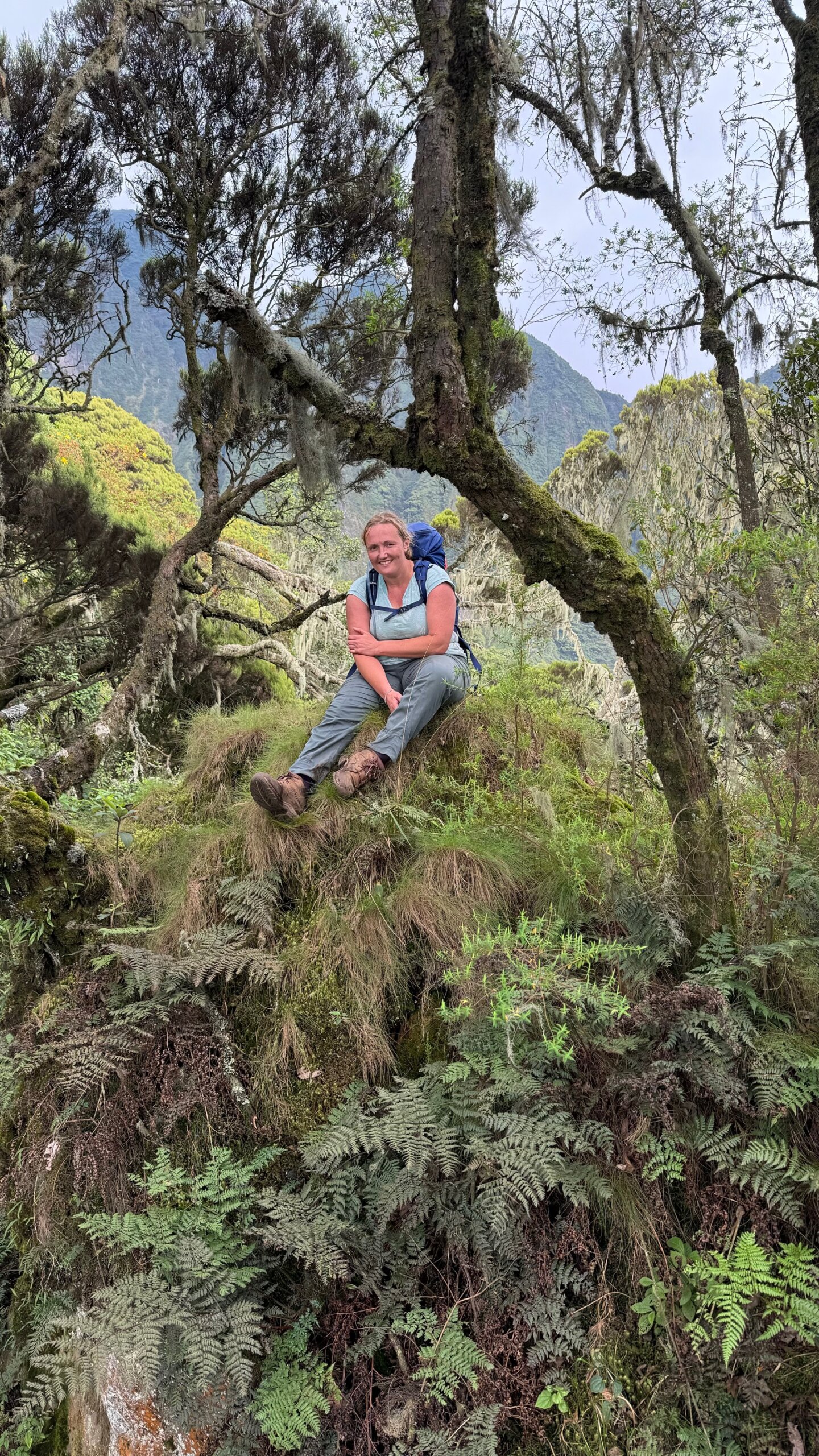
Bwindi is vast, ancient rainforest, steep, dense, and gloriously untamed. Rather than one central trekking area, the park is divided into multiple sectors, including Buhoma, Rushaga, Ruhija, and Nkuringo. Each sector has its own feel, terrain, and gorilla families.
What this means in practice is variety. The forest is bigger, the experience more dispersed, and itineraries can be tailored depending on fitness level, travel route, and what else you’re combining with your trip.
The trade-off is distance. Bwindi is remote, and getting there takes time, whether that’s by road or domestic flight. But for many travellers, that sense of journey is part of the appeal. You don’t just arrive at the forest; you travel into it.

Why this matters more than you think
The moment you’re standing with a gorilla is the same in both countries. The park rules are the same. The one-hour limit is the same. The awe is the same.
What’s different is the context.
Rwanda offers a beautifully managed, highly accessible setting that fits neatly into a short itinerary. Uganda offers a deeper, more layered journey into the forest, where the trek feels like the culmination of everything that came before it.
And that’s why, when comparing gorilla trekking in Uganda vs Rwanda, the question isn’t which park is better, it’s which environment, pace, and sense of journey you want surrounding that once-in-a-lifetime encounter.
Trek Difficulty – Uganda vs Rwanda Gorilla Trekking
Trek difficulty is one of the most misunderstood parts of the Uganda vs Rwanda gorilla trekking conversation, largely because it gets boiled down to an unhelpful myth: Rwanda is easy, Uganda is hard.
In reality, that simply isn’t true.
The difficulty of a gorilla trek depends on far more than the country you choose. It’s influenced by the specific park, the trekking sector, where the gorilla family happens to be that day, and how the trek is managed on the ground. Two people trekking on the same morning can have very different experiences.

My experience on the ground
Personally, I found Volcanoes National Park in Rwanda to be significantly steeper than parts of Bwindi, particularly when compared to the Buhoma sector of Bwindi Impenetrable National Park.
Now this always surprises people when I tell them. Why? Because Rwanda is described as accessible. But it’s not the gorillas that are accessible, it’s getting to the start of the trek that is accessible!
Volcanoes National Park sits on the slopes of the Virunga volcanoes, and that topography shows up immediately. The climbs can be short but sharp, with sustained inclines that feel relentless rather than technical. It’s not unsafe, but it can be surprisingly physical, especially if you’re expecting something gentle because Rwanda is often marketed as the “easier” option.
Buhoma, by contrast, felt less steep overall. The forest is dense and humid, yes, but the gradients were more forgiving than I’d anticipated. That doesn’t mean all of Bwindi is like this, far from it, but it does highlight how misleading blanket statements about difficulty can be.
Why difficulty varies so much
In both Uganda and Rwanda, gorilla families are not fenced in or fixed to neat locations. Rangers track them daily, and where they nest overnight dictates how long your trek is going to be.
That means:
- A “short” trek can turn long
- A “moderate” hike can suddenly get steep
- And an “easy” route can involve mud, roots, and sudden elevation gain
In Uganda, the variation is amplified because Bwindi is divided into multiple sectors, each with its own terrain. Some areas are gentler, others are undeniably tough, and unless someone understands the differences between them, it’s easy to misjudge what you’re signing up for.

What actually matters more than fitness
Fitness helps, of course. But what matters more is:
- Honest expectations
- Proper pacing
- And having the right people organising the trek
Good operators communicate clearly, avoid overselling “easy” treks, and work with rangers to match trekkers to appropriate groups wherever possible. They also allow enough time around the trek so you’re not doing it while exhausted from long drives or rushed schedules.
That’s why trek difficulty shouldn’t scare you off either country, but it should influence how you plan your trip and who you trust to plan it for you.
Gorilla Permit Costs – Uganda vs Rwanda Explained Properly
When people search Uganda vs Rwanda gorilla trekking, what they’re usually asking is: Why is one almost twice the price of the other?
On paper, the difference looks dramatic.
- Rwanda gorilla permit: $1,500 per person
- Uganda gorilla permit: $800 per person (for foreign non-residents)
That’s a $700 difference for what appears to be the same one-hour experience with mountain gorillas.
So what’s actually going on?

Why Rwanda Costs More
In Rwanda, gorilla trekking takes place exclusively in Volcanoes National Park, and the country has intentionally positioned itself as a premium, high-end conservation destination.
The higher permit fee is part of that strategy. Rwanda limits visitor numbers, focuses on luxury lodges, and markets the experience as exclusive. The revenue supports conservation, park management, and community initiatives, but it also aligns with Rwanda’s broader tourism model: fewer visitors, higher spend.
The result?
Polished logistics, close proximity to Kigali, and a streamlined, premium-feeling experience.
Why Uganda Costs Less (Without Being “Lower Quality”)
In Uganda, gorilla trekking happens primarily in Bwindi Impenetrable National Park. The permit costs $800, nearly half the price of Rwanda’s.
This lower cost doesn’t mean:
- Fewer conservation standards
- Less time with the gorillas
- Or a diluted experience
The one-hour rule is the same. Ranger training standards are high. Visitor numbers are controlled. Conservation remains central.
The difference lies more in national tourism positioning and overall operating costs than in the quality of the wildlife encounter itself.

What the Permit Price Doesn’t Tell You
Here’s where the Uganda vs Rwanda gorilla trekking comparison gets more interesting.
The permit is only part of the total cost.
You also need to factor in:
- Transfers and travel time
- Accommodation (which varies widely in both countries)
- Domestic flights (if using them)
- The pace of the itinerary
In Rwanda, the higher permit is often offset slightly by shorter transfer times. In Uganda, the lower permit cost can allow you to invest in:
- More nights
- Better lodge choices
- Additional activities like chimp trekking or a safari
So the real question isn’t just “Which permit is cheaper?”
It’s: Where do you want your budget to go?
More polish and convenience?
Or more days, more variety, and potentially a deeper journey?

A Reality Check on “Value”
When comparing Uganda vs Rwanda gorilla trekking, value is not purely financial.
Some travellers happily pay Rwanda’s premium because they want efficiency and time-saving. Others see Uganda’s lower permit cost as a way to extend their trip or diversify their experience.
Neither approach is wrong.
But if budget plays a meaningful role in your decision, and for most people it does, Uganda offers significantly more flexibility without compromising the actual gorilla encounter.
Group Size, Time with Gorillas & Overall Atmosphere
One of the reassuring things about comparing Uganda vs Rwanda gorilla trekking is this: the core rules are the same in both countries.
And that’s important.
Permit limits and group size
In both Rwanda and Uganda, each habituated gorilla family can be visited by a maximum of eight trekkers per day.
That’s it.
Eight humans, one ranger team, one gorilla family.
This limit exists to:
- Protect the gorillas from stress and disease
- Minimise behavioural disruption
- Preserve the integrity of the experience
So in terms of group size, neither country has an advantage. You won’t be standing in a crowd of fifty people with selfie sticks. The encounter remains intimate, regulated, and carefully managed.

The one-hour rule
Whether you trek in Volcanoes National Park or Bwindi Impenetrable National Park, you are allowed one hour with the gorillas once they are located.
The clock starts when the trackers signal that your group can approach.
That hour can feel:
- Blindingly fast
- Strangely elastic
- Or emotionally overwhelming
But it is fixed. No country offers “longer time” on a standard permit, and no operator can bend that rule.
So if you’re choosing between Uganda vs Rwanda gorilla trekking based on the belief that one gives you more time with the gorillas, it doesn’t.

Where the experience starts to feel different
And yet, two treks can follow identical rules and still feel completely different on the ground.
Why?
Because atmosphere isn’t created by a stopwatch.
It’s shaped by:
- The energy of the park
- The tone of the briefing
- The way you’re welcomed
- The feeling in the forest
In Bwindi Impenetrable National Park, my experience was anything but chaotic or rough around the edges. We stayed at Buhoma Lodge, right next to the starting point. We arrived to singing and dancing. There was a structured briefing, clear group allocation, professional rangers, and a smooth departure into the forest. Some groups trekked short distances, others further. Ours was medium-length. It was organised, efficient, and well managed.
It did not feel less professional.
If anything, what stood out was warmth. The sense of community. The human energy around it.
In Volcanoes National Park, the organisation was similarly smooth: temperature checks, registration, clear process. Rwanda runs an efficient system. It’s very well structured.
But if I’m honest? It felt different emotionally.
I really enjoyed Rwanda. But it felt… more curated. More streamlined. Slightly less textured.
Uganda, for me, had more soul.
Now, maybe part of that was the setting. Maybe part of it was the slower build-up. And maybe, if I’m being completely transparent, part of it was because in Uganda I had Dennis guiding and organising the experience, and in Rwanda I didn’t.
Because here’s the thing: when comparing Uganda vs Rwanda gorilla trekking, the park rules may be identical, but the person shaping your journey isn’t.
And that can quietly change everything.

Wildlife Ethics & Conservation – A Quiet but Crucial Difference
If you’re comparing Uganda vs Rwanda gorilla trekking, at some point you have to ask the question that really matters:
Are the gorillas actually protected?
The good news is this: both countries take conservation seriously. Mountain gorillas are one of Africa’s greatest conservation success stories, and neither Uganda nor Rwanda treats trekking lightly.
But the nuance, as always, lies in how conservation is funded, enforced, and experienced on the ground.
Because Uganda vs Rwanda comparisn isn’t about which country cares more, it’s about how that care shows up in practice.
Habituation practices
Gorillas are not domesticated. They are habituated.
Habituation is a slow, careful process where wild gorilla families are gradually accustomed to the presence of humans over several years. Rangers and trackers spend extensive time with them, ensuring that tourism does not fundamentally alter natural behaviour.
Both Uganda and Rwanda follow strict habituation protocols.
Families open to tourism are carefully selected. Numbers are limited. Monitoring is ongoing. If a family shows signs of stress, access can be restricted.
In Uganda, there is also a separate “gorilla habituation experience” permit that allows longer time in the forest under controlled conditions, but that is distinct from the standard one-hour trek and still tightly managed.
The key takeaway?
You are not entering a circus. You are stepping into an active conservation landscape.

Group management and permit limits
In both countries:
- A maximum of eight visitors per habituated gorilla family per day
- One hour allowed once contact is made
- Rangers and armed escorts accompany every group
This is not flexible. No lodge, no operator, no matter how persuasive, can alter these rules.
That consistency is deliberate. It protects the gorillas from overexposure and reduces the risk of disease transmission.
Distance rules and behaviour
When you are with the gorillas, there are clear behavioural expectations:
- Maintain a minimum distance (typically seven metres, though curious juveniles sometimes ignore this)
- No flash photography
- No eating near the gorillas
- If you’re sick, you should not trek
- If a gorilla approaches, you remain calm and follow ranger instructions
In both Uganda and Rwanda, rangers take these rules seriously. Briefings are clear. Non-compliance is not tolerated.
And here’s something people rarely mention: the rangers are deeply proud of what they do. This isn’t just a job. It’s guardianship.

How conservation is funded and experienced
Where the countries diverge slightly is in tourism model and funding structure.
In Rwanda, the high permit cost aligns with a high-spend, lower-volume tourism strategy. Fewer visitors, higher revenue per person. This creates strong funding streams but also reinforces Rwanda’s premium positioning.
In Uganda, the lower permit price opens the experience to a slightly wider audience while still maintaining strict controls. Revenue supports park management and community initiatives around Bwindi Impenetrable National Park, where local livelihoods are closely linked to tourism.
Neither system is careless. Neither is lax.
But they feel different.
In Rwanda, conservation often feels structured and nationally branded. In Uganda, it can feel more interwoven with surrounding communities and local identity, particularly in places like Bwindi, where you see firsthand how tourism connects to real people living alongside the forest.
And that’s worth understanding.
Because when you weigh up gorilla trekking in Uganda vs Rwanda, you’re not just choosing a location. You’re participating in a conservation model. You’re voting, in a small way, for the system you want to support.

Time, Pacing & Trip Design – The Part Most People Underestimate
When people compare Uganda vs Rwanda gorilla trekking, they tend to focus on permits and park names.
Far fewer ask: How is the entire trip structured around the trek?
And yet, this is often what determines whether the experience feels magical or mildly overwhelming.
Because gorilla trekking doesn’t exist in isolation. It sits inside an itinerary. And that itinerary either supports the moment, or rushes you into it slightly breathless.
Rwanda: Efficient and Compact
One of Rwanda’s biggest advantages is proximity.
From Kigali, you can reach Volcanoes National Park in roughly 2.5–3 hours. That makes short trips possible, even 3-night itineraries built entirely around the trek.
For travellers with limited annual leave or tight schedules, this is a genuine strength. You can:
- Fly into Kigali
- Transfer to the park the same day
- Trek the following morning
- Depart shortly after
It’s streamlined. It works.
But that efficiency also means the trek can sometimes feel like the headline event in a tightly compressed schedule.
Uganda: More Travel, More Layers
Getting to Bwindi Impenetrable National Park in Uganda typically involves a longer journey, either a full-day scenic drive or a domestic flight plus road transfer.
That additional travel time naturally stretches the itinerary.
But here’s where the difference becomes interesting.
Because Uganda is geographically larger and often combined with other experiences like a safari in Queen Elizabeth National Park, chimp trekking in Kibale, community visits around Bwindi, the gorilla trek often feels like a chapter in a broader story, not a standalone headline.
The slower build-up can create:
- Anticipation
- Context
- A sense of immersion before you ever enter the forest
For some travellers, that depth enhances the entire encounter.

Why pacing matters more than you think
Gorilla trekking involves:
- An early start
- Physical exertion
- Emotional intensity
- Changing weather conditions
If you arrive exhausted from long transfers the previous day, the experience feels different. If you’ve had time to settle, sleep well, and absorb where you are, it feels different again.
This is where the Uganda vs Rwanda gorilla trekking decision moves beyond geography and into design.
Because the trek itself is fixed, but the way your days are structured around it is not.
And this is why choosing the right operator becomes quietly crucial. Someone who understands pacing won’t try to squeeze gorilla trekking into the tightest possible window just because it’s technically feasible. They’ll design the itinerary so you arrive rested, present, and ready.
In Uganda, I saw firsthand how much that matters. Dennis didn’t just “slot in” a gorilla permit. He structured the journey so we arrived in Bwindi settled, not shattered. He knew which sector worked best for the broader route. He was realistic about timing. He understood that this wasn’t just another wildlife activity, it was the reason we were there.
And that level of thoughtfulness doesn’t show up on a price list.
It shows up in how the experience feels.

Uganda vs Rwanda Gorilla Trekking – Which One Should You Choose?
By now, you’ve probably realised that the Uganda vs Rwanda gorilla trekking decision isn’t about which country “does it better.”
It’s about which experience fits your time, budget, personality, and travel style.
Here’s the simplest way to frame it.
Choose Rwanda If You:
You have very limited time.
Rwanda’s proximity to Kigali makes it possible to build a short, efficient itinerary. If you’re adding gorilla trekking onto a wider trip, or only have a few days available, the streamlined logistics genuinely work in your favour.
You want straightforward, predictable transfers.
The infrastructure is smooth, the drives are shorter, and the system runs tightly. If ease is a priority, Rwanda delivers that.
You’re comfortable paying a premium for simplicity.
The higher permit price buys you time efficiency and a polished framework. For some travellers, that trade-off is worth every dollar.
If you want to land, trek, and depart with minimal logistical friction, Rwanda is an excellent choice.

Choose Uganda If You:
You want deeper immersion.
Getting to Bwindi Impenetrable National Park takes longer, but that journey builds context. The forest feels vast. Ancient. Properly wild.
You care about value and flexibility.
The lower permit cost gives you breathing room. You can extend your stay, upgrade your lodge, or add chimp trekking or safari without doubling your overall budget.
You’re happy trading polish for authenticity, but not professionalism.
Uganda is not chaotic. It is well organised. But it feels lived-in, layered, and human. There’s texture to the experience.
You want more say in how your trip is paced.
Bwindi’s different sectors allow for flexibility in planning. With the right guidance, you can match terrain, route, and accommodation more intentionally.
If you see gorilla trekking not just as a headline event but as part of a broader story, Uganda often delivers that story more fully.
The truth is, the Uganda vs Rwanda gorilla trekking debate only becomes difficult because both options are genuinely good.
The gorillas don’t change.
The rules don’t change.
The feeling when you’re standing metres from a silverback doesn’t change.
But the journey surrounding that hour absolutely does.

Why Many Travellers Ultimately Choose Uganda (Including Me)
After weighing up the options, many travellers, myself included, lean towards Uganda.
Not because Rwanda is lacking.
But because Uganda feels layered.
The forest in Bwindi doesn’t feel curated. It feels ancient and sprawling. You’re not just trekking up a slope, you’re entering a rainforest that swallows sound and light in a way that makes the encounter feel cinematic without trying.
There’s also something about the longer sense of journey. The anticipation builds over days rather than hours. By the time you step into the forest, you’ve already travelled into it emotionally.
And then there’s the human side.
In Uganda, the interaction with trackers and rangers felt unhurried and deeply personal. The welcome at the lodge. The singing. The pride. The stories. It felt connected, not just to conservation, but to community.
Maybe part of that was having Dennis organising the experience. Maybe part of it was the rhythm of the itinerary. But when I look back on my own Uganda vs Rwanda gorilla trekking comparison, Uganda is the one that stayed with me.
Not louder.
Not flashier.
Just deeper.

Choosing the Right Operator in Uganda – Why It Matters More Than the Country Itself
So once you’ve chosen Uganda or Rwanda, what actually determines whether your experience feels seamless, meaningful, and well-paced?
The answer is simple.
The person designing it.
Why an operator matters more in Uganda
Rwanda’s compact geography means there are fewer moving parts. Transfers are short. The park is centralised. The structure is tight.
In Uganda, especially when trekking in Bwindi Impenetrable National Park, the variables increase:
- Which sector you trek in
- How it fits into your wider route
- Whether you drive or fly
- How many nights you spend in the area
- How your gorilla permit timing aligns with transfers
None of these are complicated on their own. But together, they shape the rhythm of your trip.
And rhythm matters.
Arriving exhausted after a punishing drive feels different from arriving settled. Being placed in a sector that suits your broader itinerary feels different from being slotted wherever permits were available. Having someone honest enough to tell you when something doesn’t make sense feels different from being sold the easiest headline.

Why I recommend Dennis from Wild Raw Uganda
I don’t recommend people lightly.
Dennis didn’t just secure a permit and send an invoice. He thought about the journey. He considered pacing. He understood that gorilla trekking isn’t just another safari activity; it’s the emotional centrepiece of the trip.
He was realistic about distances. Clear about timing. Honest about what to expect. And when you’re planning something as significant as meeting mountain gorillas in the wild, that honesty is invaluable.
There was no overselling of “easy hikes.”
No rush to compress days.
No unnecessary friction.
Just thoughtful design and deep local knowledge.
And that’s the difference.
Because when you’re standing in the forest, breathing quietly while a silverback shifts his weight a few metres away, you don’t want to be thinking about logistics mistakes or schedule stress. You want to be present.
The right operator makes that possible.
If you would like Dennis to share a proposal for you, so you can see what your Uganda adventure could look like, send him an email on wildroarsugandasmclimited@gmail.com or drop him a WhatsApp on +256701308460.

Final Thoughts on Uganda vs Rwanda Gorilla Trekking
If you’re choosing between Uganda vs Rwanda gorilla trekking, know this:
You can have an extraordinary experience in either country.
The real decision is about:
- Time
- Budget
- Atmosphere
- And how you want the journey to unfold
If Rwanda fits your schedule and you value efficiency above all else, it’s a fantastic choice.
If Uganda calls to you, for its forest depth, its slower build-up and its layered atmosphere, then choosing someone who understands that rhythm is just as important as choosing the country itself.
And if you want that experience designed with care, honesty, and genuine local insight, Dennis is a very good place to start.

Comments will load here
Be the first to comment