
The Blog

Best eSIM for International Travel: The Providers I Actually Use (2026)
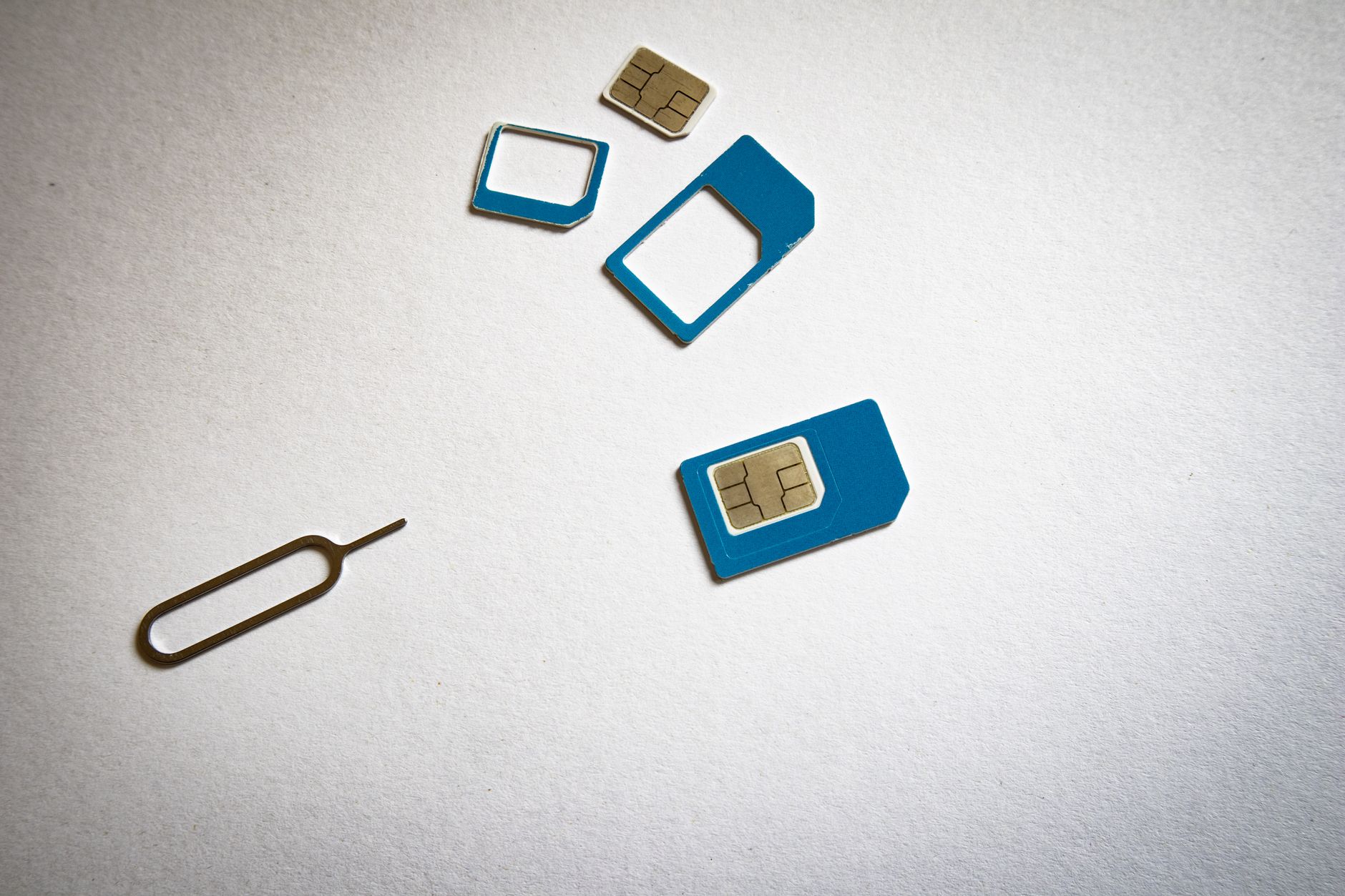
The first time I travelled to Tanzania, I landed with an electronic visa that I’d paid for but never actually received. Not even a reference number. I needed to contact my guide, Malaki, to work out what to do next, but the airport Wi-Fi was down. Fortunately, I’d installed an Airalo eSIM before leaving home, and within moments I could message him and start sorting everything out.
That experience pretty much sums up why I rarely travel without an eSIM these days.
Over the past three years, I’ve used travel eSIMs across Europe, Africa and Asia, from the streets of Istanbul to the Serengeti, and from China to the beaches of Sierra Leone. I’ve tested Airalo, Holafly, Simify, Simbye and NXTL Mobile, sometimes running two providers on the same trip to see how they compare.
And despite what some eSIM companies might have you believe, none of them can magically give you internet access in the middle of nowhere.
So, which is the best eSIM for international travel? After three years of travelling with Airalo and more recently testing Holafly, Simify, Simbye and NXTL Mobile, I’ve discovered that the provider I know best is still one of the most competitive. I’ll share how they compare on price, performance and customer service, when a local SIM makes more sense, and why I always travel with two eSIMs when exploring somewhere unfamiliar on my own.

Affiliate disclosure: This article contains affiliate links, which means I may earn a small commission if you purchase through them, at no extra cost to you. Airalo is a provider I’ve used independently for several years. Holafly, Simify, Simbye and NXTL Mobile provided complimentary eSIMs for testing. All opinions and experiences are my own.
What's in this post:
Best eSIM for International Travel: My Recommendations
If I had to recommend just one international eSIM provider, it would be Airalo. I’ve relied on it for three years across 19 countries, used it extensively for hotspotting, and experienced firsthand just how helpful its customer service can be when something goes wrong. And having compared the latest prices, I’ve discovered that it’s also one of the most competitive options for unlimited data.
That doesn’t mean the other providers aren’t worth considering. I’ve had excellent experiences with Holafly, Simify, Simbye and NXTL Mobile, and there are situations where I’d choose one of them instead. But I wouldn’t necessarily pay considerably more for an unlimited package with another provider when I know Airalo works well for me.
Holafly and Simify remain excellent alternatives for unlimited data, particularly when their regional packages or promotional prices work out cheaper. Simbye is especially interesting because of its affordable packages and the option of a telephone number, while NXTL Mobile offers something genuinely different: prepaid credit that doesn’t disappear when your holiday ends.
My biggest advice is to compare the actual price for your destination, rather than assuming one provider is always the cheapest. To demonstrate why, I’ve compared unlimited and 10GB packages for Spain, Tanzania and Thailand using prices checked in November 2026.
Unlimited eSIM Price Comparison: November 2026
All prices are in GBP (£) and based on a 7-day unlimited data plan.
| eSIM Provider | Spain | Tanzania | Thailand |
|---|---|---|---|
| Airalo | £17.96 | £27.52 | £16.05 |
| Holafly | £21.00 | £30.00 | £22.00 |
| Simify | £28.90 | £42.81 | £28.90 |
| Simbye | £15.00 | Not available | £17.00 |
| NXTL Mobile | Not available | Not available | Not available |
Bold indicates the cheapest unlimited plan for each destination.
10GB eSIM Price Comparison: November 2026
All prices are in GBP (£).
| eSIM Provider | Spain | Tanzania | Thailand |
|---|---|---|---|
| Airalo (7 days) | £9.94 | £18.35 | £7.64 |
| Simbye (30 days) | £10.00 | £37.00 | £10.00 |
| NXTL Mobile (pay-as-you-go) | £5.27 | £42.11 | £8.29 |
Important: NXTL Mobile charges per GB rather than selling a conventional 10GB package. Its prices show the estimated cost of consuming 10GB, however unused prepaid credit carries over to future trips. Airalo’s packages last 7 days, whereas Simbye’s last 30 days.
Prices checked in November 2026 and converted to GBP using exchange rates from 24 November 2026. Prices may change and exclude promotional discounts, including Holafly’s 5% discount and Airalo’s referral reward.
The results are revealing. Airalo offers the cheapest unlimited package in Tanzania (£27.52) and Thailand (£16.05), while Simbye takes the lead in Spain (£15). NXTL Mobile is particularly competitive for smaller amounts of data in Spain, where 10GB would cost approximately £5.27 at its quoted pay-as-you-go rates.
Of course, price isn’t everything. Coverage, hotspot allowances, access to a telephone number and customer support can all influence which provider is best for a particular trip. But having tested all five, I’m comfortable recommending them based on my experiences. In many cases, my final decision would simply come down to which offers the best deal for the destination I’m visiting.

Are Regional Africa eSIMs Better Value?
If you’re visiting more than one country within a given region, I would seriously consider a regional eSIM rather than buying separate packages for every destination. I regularly travel between countries, whether that’s combining Kenya and Tanzania on the same trip, visiting Uganda and Rwanda, or stopping in Addis Ababa on my way elsewhere.
The same applies to my West Africa tours, which take travellers through Senegal, The Gambia and Sierra Leone. Having one eSIM that continues working as we cross borders makes life considerably easier, particularly when I’m responsible for coordinating accommodation, guides and other arrangements.
But regional packages are not always the bargain they initially appear to be. When I compared seven-day Africa packages in November 2026, Airalo offered 5GB for £25.61, Holafly offered unlimited data for £35, and Simify offered unlimited data for £42.81. For somebody like me who regularly uses 10GB or more a week, paying an additional £9.39 for Holafly’s unlimited package could be worthwhile.
Africa Regional eSIM Price Comparison: November 2026
| eSIM Provider | 7-Day Price | Data Allowance |
|---|---|---|
| Airalo | £25.61 | 5GB |
| Holafly | £35.00 | Unlimited* |
| Simify | £42.81 | Unlimited* |
Prices supplied for November 2026, converted using the exchange rate of 24 November 2026. Unlimited plans may be subject to fair-use, speed and hotspot restrictions.
However, there’s another consideration that’s arguably even more important than price: which countries are actually included. Just because an eSIM is advertised as covering Africa doesn’t mean it works across the entire continent. Ultimately, I’d rather pay a little more for one package that works throughout my trip than save a few pounds and discover it stops working the moment I cross a border.
Airalo: My Best Overall eSIM for International Travel
Airalo was my introduction to eSIMs, and after three years of using it across 19 countries, it remains one of my first choices for international travel. When I started travelling full-time and cancelled my UK mobile contract, Airalo became my way of staying connected wherever I happened to be. It accompanied me through Europe, Asia and Africa, often in places where a reliable connection was considerably more important than simply being able to scroll through Instagram.
And I really did put it through its paces. I’ve used Airalo in the UK, Spain, Turkey, Qatar, Ethiopia, Indonesia, China, Kazakhstan, Georgia, Hong Kong, Tanzania, Kenya, Uganda, Rwanda, Senegal, The Gambia, Sierra Leone and South Africa. I’ve also regularly used it to hotspot my laptop, working on itineraries, responding to clients and managing my businesses without any particular problems sharing the connection.
This year I’ve used Airalo less frequently, but that’s largely because I’ve been deliberately testing other eSIM providers. I wanted to see whether I could find better unlimited-data packages, particularly for travelling through Africa. Some of those alternatives have been excellent, but comparing their prices has reminded me that Airalo is still extremely competitive, even for unlimited data.
And while it hasn’t always been perfect, there’s another reason I’ve remained loyal: whenever I’ve experienced a problem, its customer service has been superb.

What I Like About Airalo
Airalo makes purchasing international mobile data remarkably straightforward. You choose your destination, select a package, install the digital SIM and connect when you arrive. There are country-specific, regional and global eSIM packages, making it useful whether you’re spending a week in Turkey or moving through several countries.
Most packages have a fixed data allowance, although unlimited options are also available in selected destinations. Some global packages, such as Discover+, include calls and texts, so don’t assume every Airalo plan is data-only.
The app is particularly convenient for monitoring your usage and buying top-ups. It sends warnings as you approach your limit, something I learned to appreciate after repeatedly discovering I’d used considerably more data than expected.
Another advantage is that I’ve been able to use Airalo as a hotspot throughout the three years I’ve travelled with it. That’s particularly useful when I’m working somewhere with unreliable Wi-Fi, whether I’m preparing safari itineraries or answering emails from a hotel room. Being able to connect my laptop through my phone means I can keep working even when the accommodation’s internet isn’t particularly good.
I’ve also reused eSIMs on subsequent trips where the package allowed it, rather than needing to install a completely new one every time.
Airalo Airmoney: How I Earn Free eSIMs
Another thing I really like about Airalo is its loyalty programme, which rewards you with something called Airmoney. It’s essentially cashback that you can put towards future eSIM purchases. You start by earning 5% back, with the percentage increasing as you spend more, up to 10%. Not every purchase qualifies, particularly when using certain promotional discounts, but over time it can add up.
Personally, I never rush to spend my Airmoney. I let it accumulate until I’ve got enough to cover the cost of an entire eSIM, which means I occasionally get one completely free. When you’re travelling as regularly as I do, it’s a lovely little bonus, and another reason I’ve remained loyal to Airalo for so long.
You can also earn Airmoney by recommending Airalo to other travellers. If you sign up using my referral code BEA5583, you’ll get $3 off your first purchase, and I’ll receive $3 in Airmoney. Once you’ve created your own account, you’ll also get a referral code you can share with friends. Every time somebody uses your code to make their first purchase, you’ll earn $3 in Airmoney too.
It’s a rather nice arrangement, particularly if you have friends who travel regularly. And if you’re anything like me, you’ll find yourself saving those rewards until you’ve got another free eSIM waiting for your next adventure.
Airalo referral code: BEA5583 = $3 off your first purchase.

Airalo’s Customer Service Has Kept Me Coming Back
I’ve had several problems with Airalo over the years, including occasions when my phone simply wouldn’t connect to mobile data.
The worst was in South Africa, where we experienced a particularly bad loss of connectivity while travelling between destinations. We couldn’t get Google Maps working and didn’t have traditional road maps to fall back on. I’d also got complacent and hadn’t download the maps in advance! I eventually had to resort to buying a local SIM card, and Airalo refunded me.
Another time, my data allowance appeared to be disappearing at an alarming rate. I couldn’t explain why, and neither could Airalo establish whether the problem was with my phone or the eSIM. Nevertheless, they provided complimentary top-ups to help resolve the situation.
That sort of service matters to me enormously.
I don’t expect any technology to work perfectly all the time, particularly when travelling through remote parts of Africa. What I do expect is for a company to take responsibility when something goes wrong, and Airalo has consistently done that.

Where Airalo Falls Short
Although Airalo remains my overall favourite, it hasn’t been without frustrations. I’ve occasionally struggled to get my phone connected on arrival, and there have been times when I’ve run out of data before remembering to top up. Fortunately, the company sends notifications when you’re approaching your allowance, although they’re only useful if you actually act on them!
Historically, I’ve also found Airalo expensive in certain African countries. In Rwanda, Senegal and Sierra Leone, I sometimes bought just 1GB to get connected on arrival, then purchased a cheaper local SIM for the remainder of my stay. That was one of the reasons I started experimenting with other providers, particularly regional unlimited packages that seemed to offer better value.
Having compared current prices, I can see why I found some destinations so expensive. In November 2026, seven days of unlimited data with Airalo cost £40.90 in Rwanda and a whopping £64.59 in Sierra Leone. To put that into perspective, the same Airalo allowance cost just £16.05 in Thailand. That’s an enormous difference depending on where you’re travelling.
However, this is where comparing providers becomes particularly important. In Rwanda, Airalo was actually the cheapest unlimited option among the providers I checked, narrowly beating Simify and Holafly. But in Sierra Leone, Simify offered the same seven-day unlimited duration for £42.81, almost £22 cheaper than Airalo. That’s a substantial saving, particularly when I’ve personally used Simify in Sierra Leone and been happy with its performance.
Unlimited eSIM Price Comparison: Rwanda and Sierra Leone (November 2026)
| eSIM Provider | Rwanda | Sierra Leone |
|---|---|---|
| Airalo | £40.90 | £64.59 |
| Holafly | £45.00 | £67.00 |
| Simify | £42.81 | £42.81 |
| Simbye | Not available | Not available |
| NXTL Mobile* | £4.29/GB | £4.21/GB |
All unlimited plans are for seven days. Prices were checked in November 2026 and converted to GBP using exchange rates from 24 November 2026.
* NXTL Mobile does not offer an equivalent unlimited package. Its prices are shown per GB to illustrate the alternative pay-as-you-go model. For comparison, using 10GB would cost approximately £42.95 in Rwanda or £42.11 in Sierra Leone. Unused prepaid credit carries over to future trips.
NXTL Mobile offers another alternative, although its pricing works differently. Rather than offering an unlimited package, it charges for the data you actually use. At approximately £4.29 per GB in Rwanda and £4.21 in Sierra Leone, it could be worth considering if you only need a small amount of data. However, for someone like me who regularly uses 10GB or more a week, an unlimited package may represent better value.
It’s a good reminder not to assume that the provider offering the best price in one country will be equally competitive somewhere else. Airalo remains one of the first companies I check, but I now compare prices before buying, especially when travelling to destinations where mobile data can be surprisingly expensive.
Using Airalo in China
I used Airalo while travelling in China in 2025, and the mobile data itself worked well.
My biggest difficulty wasn’t the eSIM. It was trying to use one of the local messaging apps without a Chinese phone number. I never managed to get that particular problem resolved, which was frustrating when trying to communicate locally.
China deserves a little additional preparation because internet restrictions and app requirements differ from what we’re used to elsewhere. Airalo currently states that its China travel eSIM can access international websites without an additional VPN, although that doesn’t remove the need for a Chinese number where an individual service requires one.
If you’re heading there, my guide to things to do in Chengdu will help you make the most of your visit.
My verdict: Airalo is my overall recommendation for international travel. I’ve tested it more extensively than any other provider, regularly used it for hotspotting, and found its customer service exceptional when I’ve encountered problems. Its prices are also surprisingly competitive for unlimited data, particularly in Tanzania and Thailand. Although I’m happy to use other providers when they offer better value, Airalo remains one of my first choices rather than simply a backup.
Holafly: Reliable Unlimited Data, but Is It the Best Value?
If you use your phone anything like I do, unlimited data can be a game changer.
I’m often travelling for work, which means answering emails, creating itineraries, dealing with tour enquiries, editing videos and uploading content to social media. Sometimes I’m doing all that while sitting in a safari camp where the mobile connection is faster than the Wi-Fi.
I tested Holafly in Tanzania alongside NXTL Mobile, and my experience was excellent. I chose an unlimited package and didn’t encounter any problems with the service itself.
In Arusha and Dar es Salaam, Holafly worked brilliantly. I could use my phone normally without constantly checking how many gigabytes I had left, which is precisely what I want when I’m working abroad.
Is Holafly Really Unlimited?
Holafly is best known for its unlimited-data plans, which are generally priced according to how many days you need rather than the quantity of data you expect to consume.
For someone who regularly uploads Instagram content or uses their phone for work, that’s an appealing arrangement. Instead of estimating whether you’ll need 5GB, 10GB or 20GB, you choose the number of days and get on with your trip.
However, unlimited doesn’t necessarily mean unrestricted high-speed data under every circumstance.
Holafly explains that local network operators may temporarily reduce speeds under fair-use policies. Hotspot allowances can also be limited, even when data usage on the phone itself is unlimited.
That’s particularly important if, like me, you’re planning to connect a laptop to your mobile data. Always look at the hotspot allowance for the destination you’re visiting rather than assuming unlimited phone data means unlimited tethering.
Most Holafly destination plans are data-only, so calls to conventional phone numbers may still need your home SIM or another calling service.

What Happened When I Tested Holafly on Safari?
Tanzania is an excellent place to test an eSIM because there’s a considerable difference between being in a city and being somewhere genuinely remote.
In Arusha and Dar es Salaam, I had no problems. But in the Southern Parks, where mobile coverage is extremely limited, there were long stretches when both Holafly and NXTL Mobile had no signal.
That wasn’t necessarily a failure of either provider. They both rely on local mobile networks, and if those networks don’t reach where you’re standing, an eSIM cannot create coverage out of thin air.
I’ve travelled with Malaki, my Tanzanian guide, who carries three phones with three different network providers because each works better in different parts of the Serengeti. If somebody who spends his life navigating Tanzania needs three networks, I don’t think it’s particularly realistic to expect one international eSIM to work everywhere.
For more about the destinations themselves, see my 10-day Tanzania itinerary.
Who Should Choose Holafly?
I’d happily recommend Holafly to content creators, remote workers and anybody who uses significant amounts of data while travelling. My experience in Tanzania was excellent, particularly in Arusha and Dar es Salaam, where I could work and upload content without worrying about running out of data. I also found the unlimited package convenient because I didn’t have to keep monitoring my usage.
However, having compared prices across several destinations, I wouldn’t automatically choose Holafly over Airalo or Simify. In November 2026, Holafly’s seven-day unlimited package cost £30 for Tanzania, compared with £27.52 for Airalo. The difference isn’t enormous, but if I’m already confident using Airalo, there needs to be a good reason to pay more.
I’d compare all three providers before deciding, paying particular attention to hotspot allowances, since these can vary. Don’t forget to apply the 5% discount below when making the comparisons as it could change the verdict! Ultimately, I’m happy with the service I’ve experienced, and if Holafly offers the best overall value for my next destination, I’d have no hesitation using it again.
Reader discount: Receive 5% discount using this link.

Simify: A Great eSIM for Multi-Country African Travel
Simify was one of the most useful discoveries I made while travelling through Africa in 2026.
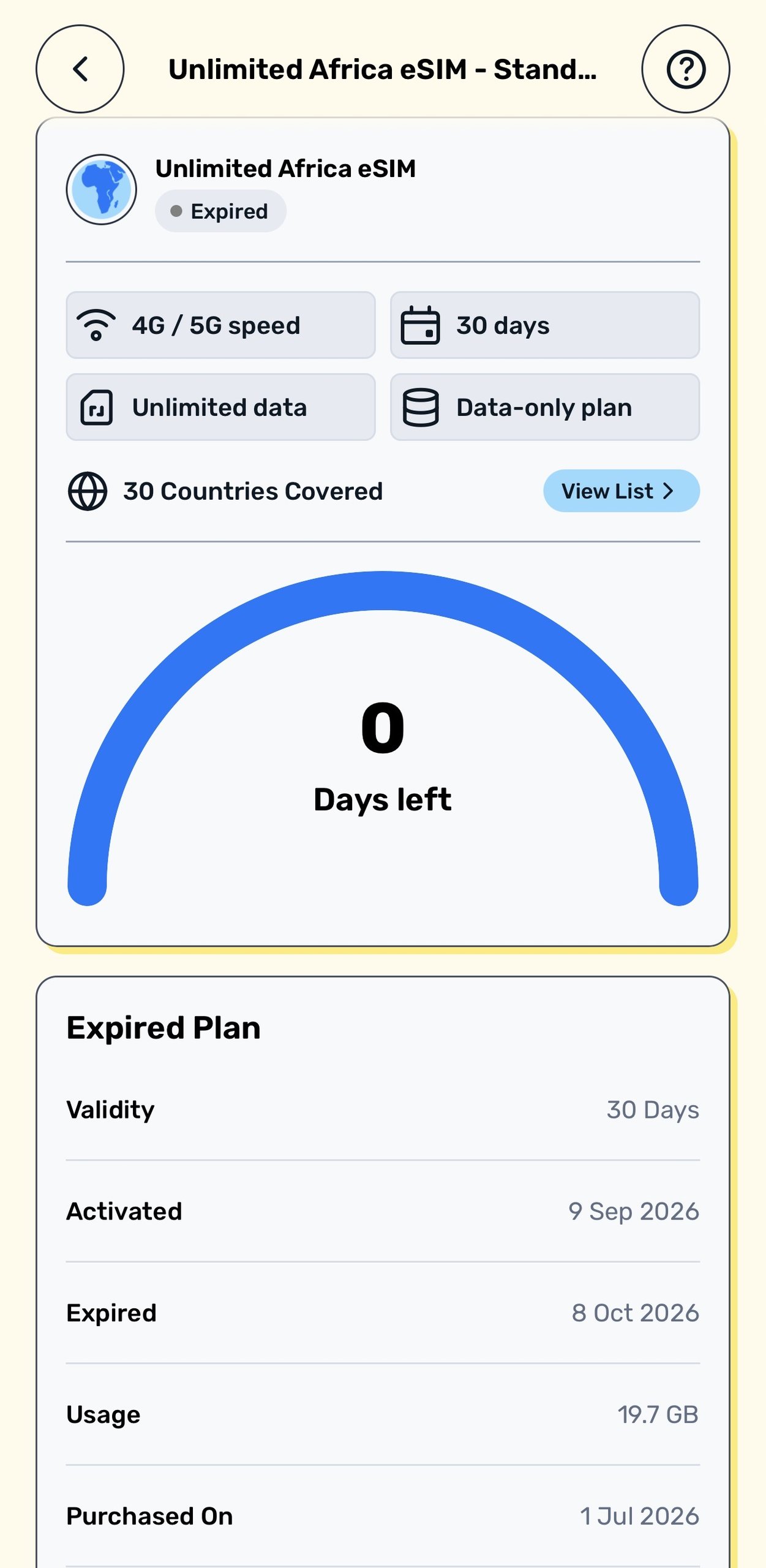
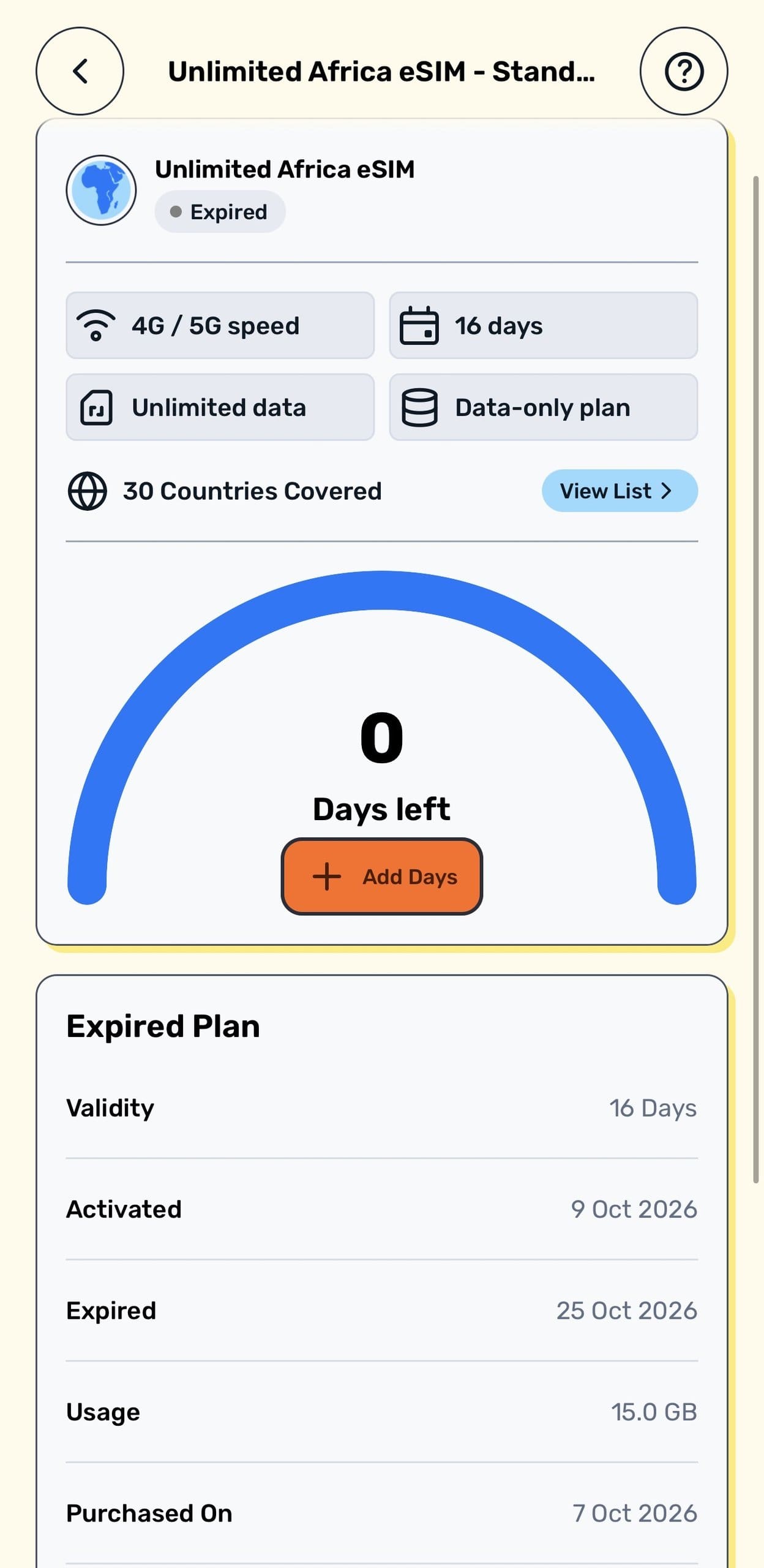
I chose its unlimited Africa eSIM and used it in Tanzania, Senegal, The Gambia and Sierra Leone. Previously, I’d relied on Airalo in these destinations, often buying tiny packages because larger allowances were expensive.
Simify offered a much more attractive option for the amount of data I needed, particularly while moving between several countries.
And, importantly, I could use my phone as a hotspot.
How Did Simify Perform in Africa?
For most of my trip, very well.
I regularly connected my laptop to my phone to work, and hotspotting was straightforward. This is a huge advantage for me because travelling doesn’t mean my businesses stop operating. I still need to prepare quotations, respond to enquiries and keep everything running.
There was, however, one rather badly timed incident in Senegal.
A client messaged me to say they had arrived at their hotel and couldn’t find their reservation. Just as I was trying to resolve the problem, my phone decided it had no signal.
Naturally.
Fortunately, I was travelling with somebody else who also had Simify, and her connection was working perfectly. She shared her hotspot with me, and I was able to get back online.
This happened a couple of times during the Senegal trip, but I didn’t experience the same problem elsewhere. Given that another Simify user had a working connection in the same place, I can’t say whether the issue was my phone, its settings or the eSIM.
And that’s worth bearing in mind when reading any eSIM review. If somebody tests one provider for three days and another for three months, the second provider has had far more opportunities to develop a problem. It’s not necessarily a fair comparison.
What About Rural Coverage?
There were locations where mobile coverage was limited or nonexistent, but that is true for local networks too.
One place where Simify didn’t connect at all was Monrovia airport in Liberia. Elsewhere, including much of my journey through Senegal, The Gambia and Sierra Leone, it proved very useful.
I wouldn’t describe the occasional disconnections in Senegal as evidence that Simify is unreliable. Overall, I was pleased with the service and would use it again.
The ability to buy an Africa-wide unlimited package rather than juggling individual country plans was particularly attractive.
For anybody planning a similar journey, my guides to things to do in Dakar and travelling through Sierra Leone will help you understand just how varied these destinations are.
Simify vs Holafly and Airalo: Which Is Better?
Having tested all three, I’d happily use any of them again. Airalo and Simify have both worked well for hotspotting my laptop, while Holafly performed brilliantly in Tanzania. So rather than declaring one outright winner, I now compare prices, data allowances and country coverage for each trip.
For individual country packages, Airalo surprised me. In November 2026, seven days of unlimited data in Tanzania cost £27.52 with Airalo, compared with £30 for Holafly and £42.81 for Simify. Airalo was also cheapest in Thailand at £16.05. Given my three years of experience with Airalo and its excellent customer service, I’d struggle to justify paying considerably more elsewhere.
However, regional Africa packages tell a different story. Airalo costs £25.61 for 5GB over seven days, while Holafly offers unlimited data for £35 and Simify for £42.81. I typically use around 10GB a week, so two Airalo packages would cost £51.22, assuming both can be purchased and used. Suddenly, Holafly offers considerably better value.
Coverage and hotspot allowances also matter. Airalo’s regional package covers 36 countries, Simify’s 30 and Holafly’s 28, but what really matters is whether your destinations are included. I’ve personally used Simify across Senegal, The Gambia and Sierra Leone, regularly hotspotting my laptop without issues. Holafly’s Africa package has hotspot restrictions, which could be limiting for somebody like me.
My verdict: For a single-country trip, Airalo would probably be my first choice if its price is competitive. For multi-country African travel, Holafly offers excellent value for unlimited data, while Simify could justify the extra cost for hotspotting and proven coverage. Ultimately, I’d choose whichever package best suits my particular trip.

Simbye: The eSIM I’d Consider When I Need a Phone Number
One of the biggest misunderstandings about travel eSIMs is that they all work like conventional mobile phone contracts.
Most don’t.
A data-only eSIM lets you use WhatsApp, browse the internet, send emails and make internet calls. But it doesn’t necessarily give you a telephone number for calling a restaurant, accommodation provider or somebody’s landline.
That’s where Simbye becomes interesting.
I tested Simbye in Spain and Tanzania. In Tanzania, I used a data package, which worked well. In Spain, I tested a plan that included an actual phone number.
The Advantage of Having a Phone Number
The interesting thing about my Spanish Simbye package was that the number wasn’t Spanish. It was French!
That might seem slightly peculiar, but it worked perfectly well for making ordinary telephone calls.
And there’s a real advantage to that.
I generally use WhatsApp for almost everything, particularly when travelling internationally. It’s how I communicate with guides, accommodation providers, family and clients. But not everybody uses WhatsApp, and sometimes you need to call a conventional landline.
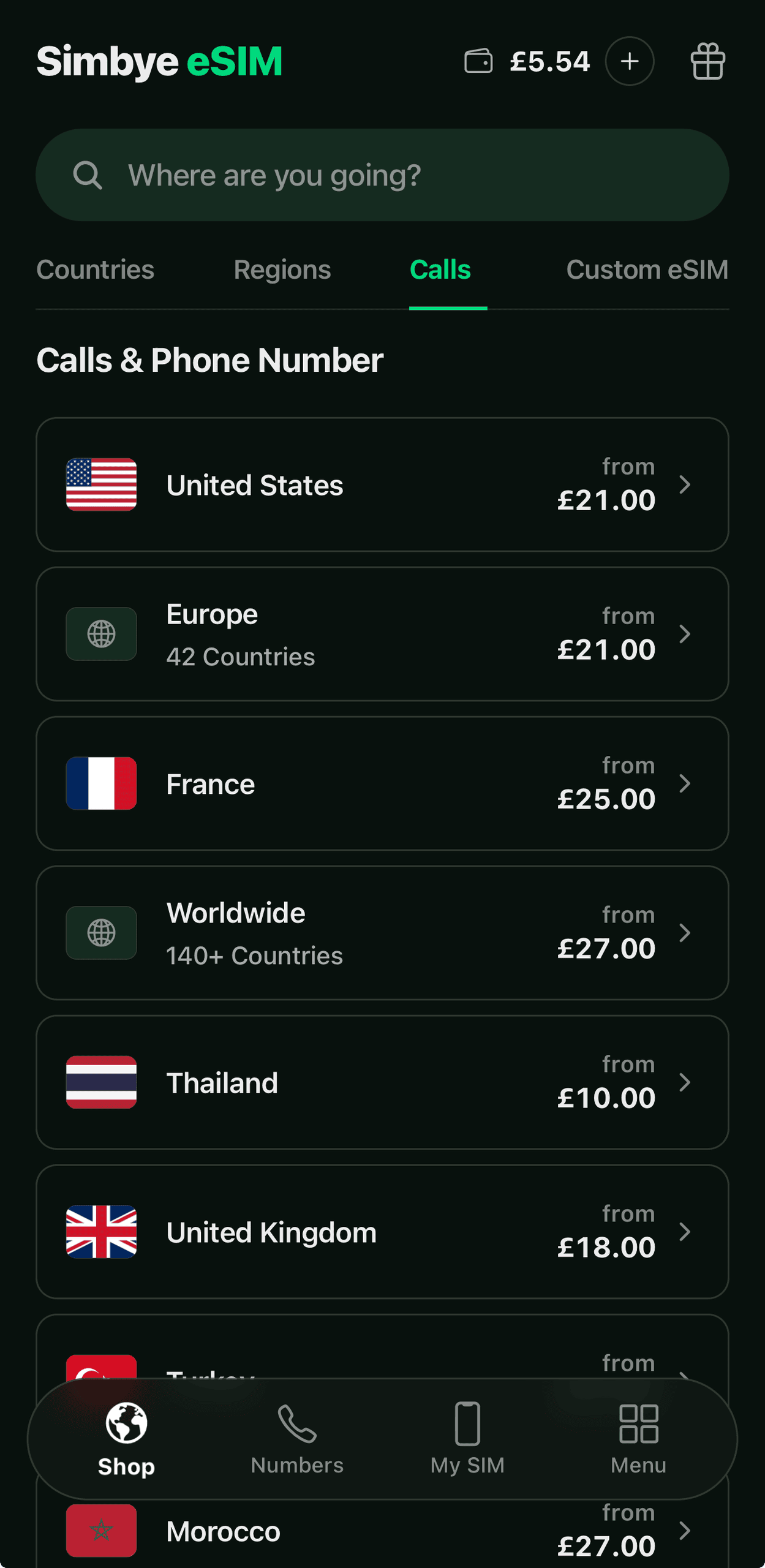
Simbye offers selected plans with a telephone number alongside the data allowance. Its Europe package currently includes a French +33 number, while other qualifying plans offer different country numbers.
Not all Simbye products include calls and texts, so choosing the correct package matters.

Is Simbye Better Than Other eSIM Providers?
Having tested Simbye in Spain and Tanzania, I was pleased with its performance, although I wouldn’t say the mobile data itself was noticeably better than the other providers I’ve used. Its biggest advantage for me was the option of having a conventional telephone number, which is particularly useful when you need to call businesses that don’t use WhatsApp.
But after comparing prices, I’ve discovered that Simbye is also surprisingly competitive for unlimited data. In Spain, its seven-day unlimited package cost just £15 in November 2026, making it the cheapest of the four providers offering an unlimited option in my comparison. That’s excellent value, especially considering how well the service worked when I tested it.
Thailand is another interesting example. Simbye offered seven days of unlimited data for £17, just 95p more than Airalo. It also offered a Thailand Plus Calls package at the same price, including a local telephone number. If I needed conventional calls during my trip, that could easily make Simbye the better choice.
It’s worth remembering that not every Simbye package includes a number, and the number supplied may not be local to the country you’re visiting. In Spain, for example, my package included a French number. Nevertheless, the combination of competitive pricing and calling options makes Simbye a provider I’d certainly consider again.
My verdict: Simbye offers some excellent-value packages, particularly its unlimited plan in Spain. Its calling options also make it appealing when I need more than just mobile data. Having tested it in both Spain and Tanzania, I’d happily use it again, especially when its prices are competitive.
Want to give Simbye a try? You can get 15% off your eSIM using my discount code BEA15. Simply enter the code at checkout to receive your discount.

NXTL Mobile: A Flexible Alternative Worth Considering
NXTL Mobile was another provider I tested in Tanzania, at the same time as Holafly.
My experience was very positive. The eSIM was easy to use, communication from the company was excellent, and I found the service affordable.
As with Holafly, the biggest challenges came from being somewhere with very limited network coverage rather than any particular difficulty with the eSIM.
How Does NXTL Mobile Work?
What I particularly like about NXTL Mobile is that your unused balance doesn’t disappear at the end of your trip. Unlike traditional eSIM packages, where you purchase a set amount of data for a fixed period, NXTL operates on a prepaid, pay-as-you-go basis. You add credit to your account, use what you need, and whatever remains is available for your next adventure.
This solves one of my biggest frustrations with buying travel eSIMs: trying to predict how much data I’ll need. It’s a fine balancing act. Buy too little, and you risk losing your connection at an inconvenient moment. Buy too much, and you can end up returning home with 5GB or more of perfectly good data that expires before you’ve had a chance to use it.
I’ve made that mistake more than once, and it’s particularly annoying when you’ve paid extra for data you never needed. With NXTL, I don’t have to worry about getting the allowance exactly right. If I return home with credit remaining, I can simply use it on my next trip, rather than watching it disappear.
For somebody who travels regularly, especially between different countries, that’s a considerable advantage. It also makes NXTL an appealing option as a backup eSIM, because I’m not wasting money on a data package that might never get used.

Would I Use NXTL Again?
Absolutely. I had a very positive experience testing NXTL Mobile in Tanzania, and I was particularly impressed by its ease of use, affordable rates and excellent communication from the company.
What makes NXTL different is its pay-as-you-go pricing and the fact that your unused balance doesn’t expire simply because your holiday has ended. I’ve lost count of the times I’ve returned home with several gigabytes left on a conventional eSIM, knowing I’d paid for data I would never use. With NXTL, the remaining monetary credit stays available for another trip.
And when I compared prices in November 2026, its rates in Spain were particularly impressive. At approximately £0.53 per GB, using 10GB would cost just £5.27. That’s significantly cheaper than the fixed-data packages I compared from Airalo and Simbye, although it doesn’t provide the same unlimited-data arrangement.
For somebody spending a week in Spain using maps, WhatsApp and occasional social media, NXTL could be a fantastic option. Its Spanish rate also makes me interested in comparing its prices across other European countries, although I wouldn’t assume they’re all equally inexpensive without checking.
My verdict: NXTL is one of my favourite options for flexible data usage, particularly for shorter trips and travellers who don’t need unlimited internet. Its competitive Spanish rates and reusable prepaid balance make it well worth considering, especially if you travel frequently.

Local SIM Cards: Sometimes the Cheapest Option Is Also an Adventure
Before eSIMs became part of my regular travel routine, I frequently bought local SIM cards. And I still do when the economics make sense.
In Rwanda, for example, Airalo was so expensive when I visited (this was before Airalo had an unlimited plan) that I bought a small 1GB package to get connected on arrival, then purchased a local SIM for the rest of my trip. I’ve taken a similar approach in Senegal and Sierra Leone, although the availability of better-value regional eSIMs has changed that calculation.
A local SIM can be substantially cheaper, particularly when staying in one country for several weeks. It may also provide a local number, which can be useful for booking accommodation, contacting businesses or using services that require domestic phone numbers.
But buying one isn’t always as straightforward as handing over a few coins.
Buying a Local SIM in Africa: An Experience in Itself
I genuinely think that buying a local SIM card from a tiny roadside stall somewhere in Africa is a rite of passage. Forget the organised airport kiosks with their counters and uniforms. I’m talking about somebody sitting on a plastic chair, or occasionally an upturned bucket, beneath an umbrella on the side of a chaotic street, often just metres from a bustling market.
I’ve bought SIM cards this way in Tanzania, Senegal and several other countries, and it’s usually an experience that involves a little patience, a considerable amount of trust and the occasional moment of wondering whether I’ve made a terrible decision.
In Moshi, Tanzania, I approached a man selling SIM cards from one of these roadside stalls. Everything was going reasonably well until he couldn’t get my iPhone to connect. After trying unsuccessfully to sort it out, he assured me he’d be right back, picked up my phone and disappeared into the busy market to find somebody who could help.
There I was, standing beside his stall, watching my £1,200 iPhone, quite possibly my most prized possession while travelling, disappear into a sea of people with a man whose name I didn’t even know. I’ll admit, I was beginning to question whether I should ever be giving travel advice. But true to his word, he returned with my phone, having found somebody who knew how to fix the problem. And, more importantly, it worked!

The Passport Experience in Senegal
In Senegal, the experience was slightly different but equally memorable. I approached a roadside SIM seller who was sitting on a plastic bucket, which appeared to be doubling as his office chair. As is often required when registering a local SIM, he needed my passport.
So, I handed over one of the most important documents I own to a complete stranger sitting beside a busy street.
He didn’t disappear with it, thankfully, but he did take a photograph of my passport using his personal phone. And while I understood that he needed the information to register the SIM, I couldn’t help wondering why he couldn’t simply enter the details directly into whichever system he was using. There I was, mentally listing all the personal information now sitting in a stranger’s photo gallery and wondering whether he’d delete it afterwards.
Of course, he was simply getting on with his job, and the SIM registration was sorted. But it was another reminder that some of the ordinary practicalities of travelling can feel quite different when you’re somewhere unfamiliar.
Would I Still Recommend Buying a Local SIM?
Absolutely, particularly when the price difference makes it worthwhile. In Sierra Leone, for example, I bought an Africell SIM at the airport, which was a much more organised experience. The SIM itself was inexpensive, although topping up later required help from my hotel staff, who went to a little kiosk, bought credit and then navigated a series of numbers, codes and hash symbols that completely defeated me.
But these experiences are also why I love having an eSIM installed before I arrive. I can get connected immediately and then decide whether buying a local SIM is worth the effort, without being entirely dependent on finding a seller who can get everything working.
And perhaps that’s what I love about travelling. The man in Moshi could have been an excellent cautionary tale, but instead he became another example of somebody going out of his way to help a stranger. It doesn’t mean I’d recommend handing your expensive phone and passport to just anybody, but it certainly reminds me that the world is full of good people, often in places we’ve been taught to approach with caution.
For more practical advice about travelling in West Africa, including mobile connectivity, see my complete guide to visiting Sierra Leone.

How Does an eSIM Work When You Travel?
An eSIM is simply a digital version of the physical SIM card that traditionally goes inside your phone.
Instead of buying a little piece of plastic and swapping it into your handset, you purchase a plan online and download the eSIM directly onto a compatible phone. Depending on the company, installation might involve scanning a QR code or following instructions inside an app.
Once installed, the travel eSIM connects to a supported mobile network at your destination.
The major convenience is that you can have multiple SIM profiles stored on your phone without physically swapping anything. You select which one handles mobile data, and on compatible devices you can keep your normal number available for calls or messages.
Can You Still Use WhatsApp?
Yes, and this is one of the biggest reasons travel eSIMs work so well for me. Your WhatsApp account can continue using your existing phone number, even when the internet connection comes from a different eSIM.
You can send messages, make WhatsApp calls, share photographs and communicate with everyone exactly as you normally would.
What you generally can’t do with a data-only package is make traditional phone calls or receive conventional SMS messages through that eSIM. For those, you need a plan with a telephone number or access to your home SIM.

Is an eSIM Cheaper Than International Roaming?
Often, yes, particularly when travelling outside the countries included in your home mobile contract.
International roaming charges vary enormously depending on your provider and destination. Some contracts include generous roaming allowances, while others charge substantial daily fees or per-megabyte rates.
Since I cancelled my UK contract when I started travelling full-time, using eSIMs became my normal way of staying connected.
But I wouldn’t automatically assume an eSIM is cheaper for every European holiday. If your existing contract already includes roaming in the destination you’re visiting, you might not need to purchase anything.
For more practical ways to make your phone useful abroad, have a look at my phone hacks I swear by when travelling.
How To Choose an eSIM for Your Trip
There are several things worth comparing before buying an international eSIM, but I wouldn’t get too hung up on technical specifications.
For me, the most important questions are whether the provider covers my destination, how much data I’m likely to need, whether I can share it with my laptop, and how easily I can get help when things go wrong.
Coverage: Where Will You Actually Have Signal?
Country coverage and actual network coverage are two different things.
An eSIM company might advertise coverage in Tanzania, but that doesn’t mean you’ll get a signal throughout the Serengeti. Most international eSIM providers connect through existing local mobile networks, and coverage is only as good as those networks in a particular location.
When comparing plans, look at the local network partners and the areas you’re visiting, particularly if you’re heading somewhere remote.

How Much Data Do You Really Need?
I’m probably not the average holidaymaker.
On a typical week, I might use around 10GB of data, sometimes more. Instagram uploads, editing videos, hotspotting a laptop, answering emails and creating travel itineraries all add up.
If you’re mostly using WhatsApp, maps, accommodation searches and occasional social media, you can often get away with considerably less.
A reasonable starting estimate might be 3–5GB for a light-use week, with more if you regularly watch videos or upload content. For my own travel habits, I increasingly choose unlimited data rather than trying to predict exactly what I’ll need.
Unlimited vs Fixed Data Packages
A fixed-data package is often cheaper if you know you’re unlikely to use much internet.
Unlimited packages make more sense for people who work remotely, stream content or upload large files.
However, unlimited isn’t always synonymous with unrestricted. Some providers apply fair-use policies that can temporarily reduce speeds, and hotspot allowances may be different from phone-data allowances.
That distinction is worth understanding before buying.


How Long Is Your eSIM Valid?
One thing that can catch people out is when the validity period starts.
Some eSIMs begin their countdown when they connect to a supported network at your destination, while others may activate at installation or according to a different policy.
I always install my travel eSIM before leaving home, but I first check when the package becomes active.
There’s no point paying for seven days of data and accidentally using up half the validity period before you’ve even boarded the plane.
Do You Need Calls and Texts?
If WhatsApp covers almost everything you need, a data-only package will probably be sufficient.
However, if you need to call a landline, receive SMS verification codes through the travel SIM or have a number for local bookings, look specifically for an eSIM with a phone number.
Simbye is particularly interesting here, although selected Airalo packages also include calling and texting.
Will You Need a Hotspot?
This is a big consideration for me.
I regularly connect my laptop to my phone to prepare quotations, respond to clients or work on itineraries. When travelling in Africa, mobile data can sometimes be more reliable than accommodation Wi-Fi.
Simify worked particularly well for this during my West Africa trip.
With other providers, check whether hotspotting is allowed and whether there’s a separate sharing allowance.
Can You Top Up Easily?
Running out of data isn’t especially enjoyable when you need the internet to buy more.
Airalo warns you as you approach your allowance, which is helpful, but you still need an internet connection to arrange a top-up.
I now prefer to buy slightly more data than I think I’ll need, or choose unlimited data when the price difference is reasonable.
What Happens When Something Goes Wrong?
This is the factor I’d encourage travellers not to overlook.
Airalo has impressed me repeatedly with its customer service, including issuing refunds and complimentary top-ups when I experienced problems.
I’ve also been pleased with the communication and support from NXTL Mobile.
Saving a few pounds is great, but responsive customer service becomes considerably more important when you’re standing in an airport with no connection.
Is Your Phone eSIM Compatible?
Before purchasing anything, make sure your phone supports eSIM technology and is unlocked for use with other mobile networks.
Most recent flagship smartphones support eSIMs, including many iPhone, Samsung Galaxy and Google Pixel models, but compatibility can depend on the exact model and the country where it was purchased.
On an iPhone, go to Settings → General → About and look for the carrier-lock information. If it says No SIM Restrictions, your phone is unlocked. You can also check the mobile settings for the option to add an eSIM.
On many Android phones, the relevant option appears under Settings → Connections → SIM Manager or Settings → Network & Internet → SIMs. The wording varies by manufacturer.
Be aware that some phones sold in China, Hong Kong or other markets have different SIM configurations, and recent US-market iPhones use eSIM-only designs.
I would check the specific model against your chosen provider’s compatibility list before paying, rather than assuming that because your phone is relatively new, it must be compatible.

Best eSIM by Region: What Would I Choose?
Having used eSIMs across Europe, Africa and Asia, I’ve found that the best choice often depends more on the destination than the brand.
Best eSIM for Europe
For European trips, I wouldn’t automatically choose one provider over another. I’d start by checking whether my existing phone contract already includes roaming, then compare prices between Airalo, Holafly, Simbye and NXTL Mobile. I’ve personally used Airalo in several European countries, as well as Simbye in Spain, and both have worked well for me.
The November 2026 comparison showed how much value can vary. Simbye offered the cheapest seven-day unlimited package for Spain at £15, while NXTL worked out at approximately £5.27 for 10GB of usage. That’s particularly attractive for somebody who doesn’t need unlimited data. Airalo also remained competitive at £17.96 for seven days of unlimited access, and I know from experience that its hotspot feature works well.
Best eSIM for East Africa
For Tanzania, Kenya, Uganda and Rwanda, Airalo remains one of my first choices, particularly given how extensively I’ve used it across the region. Its customer service has repeatedly impressed me, and the November 2026 price comparison showed that its seven-day unlimited Tanzania package was cheaper than Holafly and Simify.
That said, I was also very happy with Holafly and NXTL Mobile when I tested them in Tanzania, and Simify’s regional Africa package worked well during my travels. For a multi-country safari, I’d compare regional packages rather than simply looking at individual country prices. And in places such as Rwanda, a local SIM can still be worth considering, especially for longer stays.

Best eSIM for Asia and China
Airalo would be one of my first choices for travelling in Asia, having used it successfully in Indonesia, China and Hong Kong. Its prices can also be extremely competitive. In Thailand, for example, Airalo offered seven days of unlimited data for £16.05 in November 2026, making it the cheapest unlimited option in my comparison.
However, Simbye was only 95p more expensive and also offered a Thailand Plus Calls package with a local number for £17. If I needed conventional telephone calls during my trip, that could make Simbye the more practical option. For China specifically, I’d also pay attention to internet restrictions and app requirements, as some services require a Chinese phone number even when your mobile data works perfectly.
Best eSIM for the USA and Canada
I’ve used Airalo in North America, and it would still be on my shortlist, particularly for a shorter trip or fixed-data package.
If I were doing a longer road trip while working and uploading social media content, I’d also compare unlimited plans from Holafly and Simify.
One thing I’d consider carefully on an American road trip is the partner network. There’s a considerable difference between mobile coverage in a major city and somewhere remote, particularly if you’re relying on Google Maps.
My tips for driving in the USA cover more of the practicalities of exploring by car.
How To Set Up an eSIM Before You Travel
I always arrange my eSIM before leaving home.
There’s something reassuring about knowing that, as soon as the plane lands and I’m allowed to reconnect my phone, I should be able to contact whoever I’m meeting or find my way to the accommodation.
Here’s the process I follow.
- Check your phone: Make sure it’s unlocked and compatible with your chosen eSIM provider.
- Buy the package: Select the country or regional plan, data allowance and validity period you need.
- Install it on Wi-Fi: Follow the provider’s installation instructions before leaving home, having checked when the validity period begins.
- Label your SIMs: I give my travel eSIMs recognisable names so I know which provider I’m using.
- Select your travel eSIM on arrival: Set it as the mobile-data line and enable data roaming for that eSIM where the provider requires it.
- Protect your home SIM: Keep data roaming disabled on your usual SIM to avoid unexpected charges, and be careful with automatic data switching.
If the eSIM doesn’t connect immediately, don’t assume it has failed.
I usually start by checking that the correct line is active, that mobile data and the appropriate roaming settings are enabled, and that my phone has finished connecting to a local network. Restarting the phone can help too.
If that doesn’t work, I follow the provider’s instructions for selecting a network manually.
And having a second eSIM installed means I can often switch to another connection rather than being completely stranded.

My Tips for Using an eSIM Abroad
After three years of using travel eSIMs, I’ve developed a few habits that make travelling considerably easier.
Some came from experience. Others came from making the same mistake more than once, which apparently is how I prefer to learn.
Always Have Two eSIMs When Travelling Solo Outside Europe
This is probably my most important recommendation, and it’s something I rarely see mentioned in eSIM reviews.
When I’m travelling solo outside Europe, I generally install two eSIMs from different providers before leaving home.
One is my main data connection, usually an unlimited package from Holafly or Simify. The other is a backup, often Airalo, with enough data to contact somebody, navigate or sort out a problem if the main connection fails.
I don’t need both connections running constantly. I just want another option available when something goes wrong.
The situation in Senegal, when my Simify connection disappeared just as a client needed assistance, was a perfect reminder of why this matters. Fortunately, another traveller was able to share her connection, but I don’t like depending entirely on somebody else being nearby (and on that ocasion I didn’t have a backup installed).
Having two eSIMs doesn’t guarantee coverage, particularly if both rely on the same local network. But choosing providers with different network partners where possible gives me another opportunity to connect.
For solo travellers, I consider that additional peace of mind well worth the relatively small cost of a backup package.

Mobile Data Can Make a Genuine Difference to Your Safety
I don’t think you need to be permanently online to travel safely, and I certainly don’t spend my holidays staring at my phone. But there are moments when having an internet connection makes an enormous difference.
I experienced one in Egypt, when a taxi driver began behaving inappropriately. Being able to see on Google Maps that he was taking me in the wrong direction was incredibly important. I then video-called my partner, Steve, and the driver’s behaviour changed.
I’ve also relied on mobile data when I couldn’t find an airport pickup, when I needed to translate conversations in Turkey and when I was trying to work out how to reach accommodation in an unfamiliar place.
For me, staying connected isn’t simply about being able to post on Instagram. It’s about having access to information and the people who can help when I need them.
If you’re planning your first solo adventure, my guide to the safest countries for solo female travellers might also be useful.
Download Offline Maps Anyway
Even with two eSIMs installed, there are places where neither will work. Remote safari regions, isolated islands and mountainous areas can all have limited mobile coverage.
After the experience of losing Google Maps while travelling through South Africa, I make a point of downloading offline maps for journeys where navigation might be difficult.
They’re not a replacement for having mobile data, but they provide another useful fallback.

Keep Your Home Number Available for Banking Codes
One of the biggest advantages of eSIM technology is that I don’t have to remove my original SIM every time I visit another country. I normally keep my home line switched off or disable its roaming functions to avoid unwanted charges, but occasionally I need to reactivate it to receive a banking authentication code.
This used to be considerably more annoying when travelling with physical SIM cards.
Thankfully, more services now support authenticator apps, which reduces my reliance on conventional SMS messages. But I still like knowing I can access my normal number when necessary.
Just remember that switching a home SIM back on can incur charges depending on your contract and location.
Don’t Delete Your eSIM Unless You’re Finished With It
I’ve made this mistake. I deleted an eSIM because I thought I no longer needed it, only to discover that I could have reused it on a subsequent trip. Getting everything working again involved additional steps that could easily have been avoided.
Some providers allow you to retain the same eSIM profile and top it up or reuse it for future journeys. Before deleting anything, I now establish whether it’s genuinely finished or simply waiting for another package.
Top Up Before You Run Out
This sounds painfully obvious, but I’ve managed to get it wrong often enough that it deserves mentioning. If your eSIM runs out of data entirely, you might not be able to purchase another package until you find Wi-Fi.
Airalo sends warnings when your allowance is running low, but I still have to remember to act on them. Of course, that is one of the advantages of unlimited data.

Is an eSIM Better Than a Local SIM Card?
For most of my trips, yes. The convenience of being connected as soon as I land is worth a great deal to me. I don’t have to find an airport kiosk, hand over my passport, work out which local provider to choose or spend the first hour of a trip organising internet access.
But in certain countries, especially for longer stays, a local SIM can still be cheaper. It may also be more useful if you need a domestic phone number, local mobile-money services or access to a particular network.
I certainly wouldn’t rule local SIMs out, particularly in parts of Africa where the difference in price can be substantial. The important thing is understanding what you’re paying for.
With a travel eSIM, you’re often paying a little extra for convenience, flexibility and the ability to arrange everything before departure. For me, those benefits are frequently worth it.
Final Verdict: Which Is the Best eSIM for International Travel?
After three years of travelling with Airalo and testing Holafly, Simify, Simbye and NXTL Mobile, Airalo remains my overall favourite eSIM provider for international travel. I’ve used it in 19 countries, regularly hotspotted my laptop, and experienced firsthand how helpful its customer service can be when things go wrong. Its competitive unlimited-data packages make it an even stronger choice.
That doesn’t mean I wouldn’t recommend the others. Holafly and Simify have both performed well during my travels in Africa, Simbye offers affordable packages and useful calling options, while NXTL’s prepaid credit that carries over between trips solves one of my biggest frustrations with traditional eSIMs.
The biggest lesson from comparing all five providers is that there isn’t one company offering the cheapest eSIM everywhere. Airalo was the most affordable unlimited option in Tanzania and Thailand in my November 2026 comparison, while Simbye came out ahead in Spain. For multi-country African travel, Holafly and Simify can offer better value, particularly for heavier data users like me.
My recommendation is to compare prices, data allowances and coverage for your destination rather than choosing purely by brand. And if you’re travelling solo outside Europe, I’d strongly consider installing two eSIMs from different providers. I nearly always do, because having a backup connection gives me extra peace of mind.
Ultimately, I don’t travel to spend my time staring at my phone. I travel to discover new places, meet people and have experiences I’d never have at home. Having reliable internet simply makes those adventures easier, knowing that when I need directions, information or somebody to call, help is usually just a few taps away.

Frequently Asked Questions
Which eSIM is best for international travel?
For my style of travel, Holafly and Simify are excellent choices for unlimited data, while Airalo is one of my most trusted providers for shorter trips and backup connectivity. The best option depends on your destination, trip length, data requirements and whether you need conventional calls.
Can I use one eSIM in multiple countries?
Yes, if you purchase a regional or global package that includes all the countries you’re visiting. Some providers offer packages designed specifically for Europe, Africa or worldwide travel. Check the actual country list rather than assuming every country within a region is included.
Can I use an eSIM and my normal SIM at the same time?
On compatible phones, yes. You can often keep your usual SIM available for calls and texts while using a travel eSIM for mobile data. Some phones also support multiple active eSIMs. The exact arrangement depends on your handset and network settings.
Do I need a VPN with a travel eSIM in China?
Not necessarily. Some international eSIMs route data in ways that allow access to websites restricted on local Chinese networks. Airalo currently says its China eSIM doesn’t require an additional VPN for this purpose. However, local Wi-Fi and different eSIM providers may behave differently, so the answer depends on how you’re connecting.
Can I make phone calls with a data-only eSIM?
You can make calls through internet services such as WhatsApp, FaceTime Audio and other calling apps. However, a data-only eSIM won’t generally let you call a conventional landline through your phone’s normal dialler. For that, you’ll need a plan with calling capabilities, like certain Simbye or Airalo packages.
Should I buy an eSIM before travelling?
I always do. Installing it at home over reliable Wi-Fi means I don’t have to worry about finding an internet connection after landing. Just make sure you understand when your particular package’s validity period starts.
Is unlimited eSIM data really unlimited?
Unlimited generally means you don’t have a fixed total data allowance that stops working once it’s used up. However, fair-use policies can temporarily reduce speeds, and hotspot sharing may have a separate limit. The specific rules depend on the provider, package and destination.
Are two eSIMs better than one?
For solo travel outside Europe, I prefer having two installed: one main package and another as backup. It doesn’t guarantee continuous coverage, but it gives me an alternative if one provider experiences a problem. I consider that especially useful when travelling somewhere unfamiliar or managing work remotely.

Comments will load here
Be the first to comment