
The Blog

Irati Forest: Exploring Navarra’s Wildest Landscape
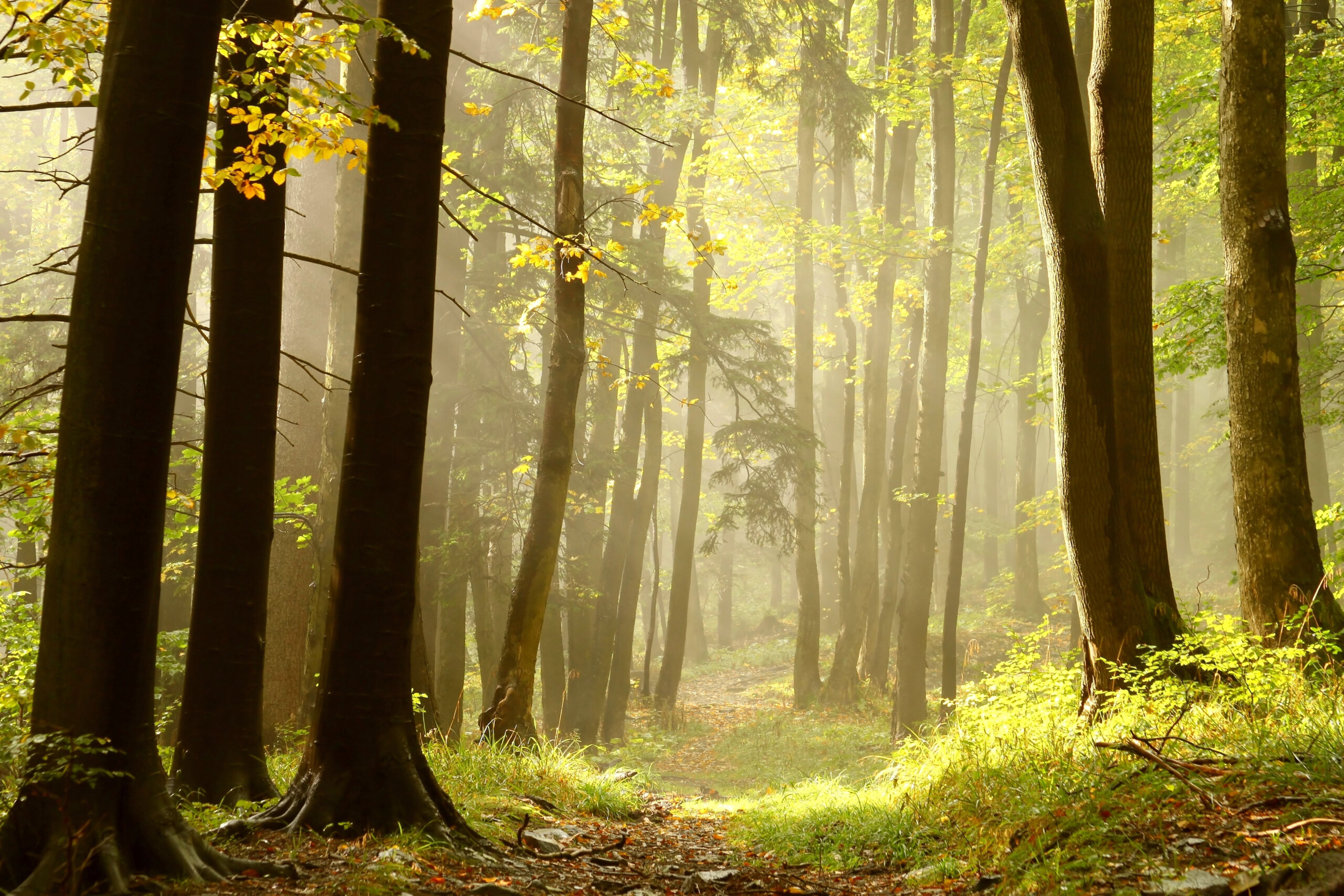
Most people visit the Irati Forest for the trees.
And fair enough. The Selva de Irati is one of the largest and most beautiful beech and fir forests in Europe, famous for its fiery autumn colours, peaceful walking trails, and endless green valleys spilling across the Pyrenees.
But after spending several days exploring this corner of Navarra, I realised the Irati Forest is about far more than scenery.
This is a landscape shaped by mythology, iron, isolation, smuggling routes, abandoned industrial ambition, and forests so dense and ancient-feeling that you begin to understand why the Basques created stories about creatures living deep within them.
It’s also one of those rare destinations that still genuinely feels wild.
Not untouched as humans have lived and worked here for centuries, but untamed enough that you can spend hours in the mountains without seeing another person, navigating valleys where there are no paths, no phone signal, and no convenient signs reassuring you that you’re definitely going the right way.
In other words: exactly my kind of place.

What's in this post:
What Is the Irati Forest?
The Irati Forest sits in the eastern Pyrenees of Navarra, close to the French border, covering around 17,000 hectares of beech and fir woodland.
It’s often described as the second-largest and best-preserved beech and fir forest in Europe after Germany’s Black Forest, although technically it isn’t a virgin forest. Humans have used this landscape for centuries:
- shepherding,
- charcoal production,
- timber,
- ironworking,
- and farming.
In fact, the forest directly powered the nearby arms factory through charcoal production for the furnaces.
But despite that long relationship with humans, the Irati Forest still feels remarkably wild. Especially once you move beyond the most accessible viewpoints and trails.
One thing that struck me repeatedly while hiking here is how appropriate the word selva feels. (Selva meaning jungle in Spanish).
Because from above, this doesn’t look like a tidy woodland. It looks immense. A thick green ocean pouring across valleys and mountain ridges in every direction.

Why Visit the Irati Forest?
Because it feels different.
There are prettier mountain regions in Europe. More dramatic peaks. More famous hiking destinations. More polished tourist infrastructure.
But very few places combine wilderness, mythology, hidden history and solitude quite like this part of Navarra.
You can spend the morning wandering through the ruins of an abandoned weapons factory reclaimed by moss and forest, the afternoon navigating unmarked valleys towards a cave tied to Basque folklore, and the evening drinking wine in a tiny mountain village where life still feels shaped more by the seasons than tourism.
That combination is rare.
Best Things to Do in the Irati Forest
Explore the Fábrica de Armas de Orbaizeta
Hidden beside the forest near the tiny village of Orbaizeta are the haunting ruins of the old Royal Arms and Ammunition Factory.
And honestly? Without context, you might wander around for ten minutes and think: “Not sure what all the fuss is about.”
This is one of those places that absolutely rewards curiosity.
Built in the late 1700s under King Carlos III, the factory became one of the Spanish Crown’s most ambitious industrial projects, producing weapons and ammunition deep in the Pyrenees using local iron, river power, and charcoal produced from the surrounding forest.
The location wasn’t accidental sine the forest was the fuel source and the rivers powered machinery. Meanwhile the mountains provided isolation and protection.
Today, the moss-covered ruins feel almost post-apocalyptic, particularly in mist or rain. Massive arches rise above the river, trees grow through old stone walls, and nature is slowly reclaiming what humans once tried so aggressively to control.
Before exploring the ruins themselves, I’d strongly recommend visiting the interpretation centre just above the site. Entry costs €4, and honestly, I’d consider it essential rather than optional.
Without understanding the history, it can feel underwhelming. With context, it becomes fascinating.
There’s also free Wi-Fi there, useful because signal throughout much of the area is extremely limited.

Hike to Cueva de Harpea from the Spanish Side
Most people visit Harpea Cave from France and after hiking there from the Spanish side, I completely understand why.
The French routes are far easier, with options ranging from a scenic 14km loop to a very accessible walk where you park nearby and only tackle a short stretch of trail to reach the cave.
We did not choose the easy option.
Instead, we approached from the Irati side on a completely unmarked route involving:
- route-finding,
- steep terrain,
- animal tracks masquerading as trails,
- forest navigation,
- and a significant amount of sweating.

It was brilliant.
The route climbs steadily through rolling pasture where massive Percheron horses graze with their foals before eventually reaching a col marked by a GR signpost. From there, you descend into a valley with no defined path whatsoever, following streams and navigating through wonderfully untouched-feeling forest.
This isn’t technically virgin forest, but it feels wonderfully alive. Fallen trees are left to decompose naturally beneath enormous fungi, moss coats the forest floor, and the silence feels strangely heavy.
Eventually, after one final steep descent, you reach Harpea Cave itself. Although “cave” perhaps isn’t entirely accurate. It’s more like a gigantic fold in the mountain; an enormous rocky crease curving dramatically above the stream below.
And it’s immediately obvious why mythology became attached to this place.
According to Basque folklore, caves like this were associated with the lamiak, mysterious female beings said to inhabit rivers, forests and mountain springs throughout the Basque Country. Stories describe them combing their hair beside streams with golden combs, seducing travellers, helping or tricking humans, and retreating deeper into the wilderness as Christianity spread across the mountains.
Standing beneath Harpea’s cliffs, it all feels strangely plausible.
In most places, mythology feels separate from the landscape. Here, it feels inevitable.
You can read the full route guide here.

Visit Mirador de Zamariain
If you want to understand the scale of the Irati Forest, go to Mirador de Zamariain.
This relatively easy hike offers one of the best panoramic views in the region, looking out across endless layers of forested mountains and deep valleys.
And from here, something finally clicked for me.
Looking across the landscape, I realised why this place is called the Selva de Irati (Irati Jungle) rather than simply the Bosque de Irati (Irati Forest).
“Forest” somehow feels too tidy. Too controlled.
From above, Irati feels immense and untamed, stretching across the mountains like a living thing. It’s also a fantastic place for sunrise or sunset, when the shifting light turns the valleys almost impossibly green.

Basque Mythology and the Irati Forest
One of the things that makes the Irati Forest feel so distinctive is how deeply mythology remains tied to the landscape.
In many places, folklore has become detached from geography; charming stories told in museums or tourism brochures. But here, the mountains themselves still feel mythological.
This is the territory of the Basajaun, the “Lord of the Forest” in Basque mythology.
Usually described as a huge hairy wild man living deep in the woods, the Basajaun was believed to protect flocks, guard the forest, and possess ancient knowledge humans didn’t yet understand.
And honestly, if there’s anywhere that feels like the natural home of an ancient forest spirit, it’s Irati.
Especially on misty days when visibility disappears between the trees and the forest suddenly becomes very, very quiet.
If you are interested in reading more about Basque mythological creatures, check out my Basque Mythology blog post.

Practical Tips for Visiting the Irati Forest
Mobile Signal Is Limited
Do not rely on having signal.
Download:
- offline maps,
- GPX routes,
- accommodation details,
- and directions beforehand.
Several of the hikes and roads in the region have little to no reception.
Be Realistic About Hiking Difficulty
Many routes around the Irati Forest are gentle and accessible.
Others absolutely are not.
The Spanish-side Harpea route, for example, is physically demanding not because of distance, but because there is no marked trail, the terrain is steep, and navigation slows progress significantly.
Read route descriptions carefully before setting off.

Ticks Are Common
We encountered a lot of ticks during our hikes, especially around long grass and forest edges.
Wear:
- repellent,
- long trousers where possible,
- and thoroughly check yourself afterwards.
Tiny black dots that look like dirt are sometimes very much not dirt.
Bring Water
Even relatively short hikes can feel surprisingly demanding here, especially in summer.
We hiked in temperatures around 30°C, and several climbs felt significantly harder than expected because of the heat and uneven terrain.

Where to Stay Near the Irati Forest
The villages around the forest are part of the charm.
Places like:
- Orbaizeta,
- Garaioa,
- and the wider Aezkoa Valley
feel wonderfully remote and deeply connected to the landscape around them.
Expect traditional stone architecture, mountain food, quiet roads, and a pace of life that feels refreshingly disconnected from modern tourism.
This is not a destination for nightlife or luxury shopping.
It’s a destination for:
- hikers,
- photographers,
- nature lovers,
- and people who enjoy places that still feel slightly undiscovered.
Where We Stayed
Since we live an hour or so from the area, we often visit on a day trip, which is something you can do too, as we rent out individual rooms in our home, and our entire home for larger groups! You can always contact me directly if you would like to stay.
If you want to stay in the heart of the Aezkoa Valley then these are the places I would recommend:
Irati Cabins: Something between a bungalow and tree house, these cabins offer a wonderfully immersive stay in nature
Irati Barnean: If you fancy something a little different then check out the Irati Igloos. The best place to stay if you want to enjoy the Navarran night sky.

When to Visit the Irati Forest
Autumn is the most famous time to visit the Irati Forest thanks to the spectacular colours. And yes! It’s beautiful! But personally, I loved it in late spring.
Everything was intensely green, wildflowers covered the hillsides, birds of prey circled overhead, streams rushed through the valleys, and the forest felt alive in a way that autumn foliage sometimes doesn’t.
Summer is excellent for hiking, although temperatures can become surprisingly hot on exposed slopes.
Winter brings snow and a completely different atmosphere altogether.
Final Thoughts on the Irati Forest
The Irati Forest isn’t dramatic in the obvious Instagram sense. There are no impossibly turquoise lakes. No cable cars delivering tourists neatly to viewpoints. And there is no perfectly curated “must-see” itinerary either.
Instead, this is a landscape that reveals itself gradually… in the mist hanging between the trees, the abandoned factories hidden deep in the valleys, the caves woven into ancient mythology, and the unmarked hikes that force you to slow down and pay attention to the mountain itself. And perhaps that’s exactly what makes it so memorable.
The Irati Forest doesn’t try very hard to impress you. Which somehow makes it all the more impressive when it does.

Comments will load here
Be the first to comment