
The Blog

Carpathian Wildlife Tours in Romania: What to Expect in Europe’s Last Great Wilderness
The first thing you notice about the Făgăraș Mountains is not the wildlife. It is the feeling that the landscape does not particularly care whether you are there or not.
Modern tourism has conditioned many of us to expect destinations to perform for visitors. Mountains are supposed to reveal themselves dramatically around corners. Wildlife should appear conveniently beside roads. Nature, increasingly, arrives packaged into viewpoints, itineraries, and carefully edited social media moments.
The Carpathians resist that entirely.
Mist drifts slowly through ancient forests while wolves move invisibly through valleys below. Bears leave tracks in the mud hours before dawn and disappear again long before humans arrive. European bison graze somewhere beyond the tree line without the slightest interest in whether tourists ever manage to find them.
And perhaps that is exactly why a Carpathian wildlife tour in Romania feels so extraordinary.
Because this is not wilderness recreated for tourism. It is wilderness still functioning largely on its own terms.
I travelled into the Făgăraș Mountains with Travel Carpathia, the ecotourism arm supporting the wider conservation work of Foundation Conservation Carpathia, expecting a beautiful wildlife trip through one of Europe’s last remaining wild landscapes.
What I did not expect was how emotionally immersive the experience would feel.
Not because the itinerary was extreme. In many ways, it is surprisingly accessible.
But because spending several days moving slowly through forests alive with tracks, sleeping in remote wildlife hides, and listening to tawny owls calling through the darkness quietly changes your relationship with nature itself.

Disclosure: This series was created following a hosted research trip with Travel Carpathia and Foundation Conservation Carpathia. Some articles contain affiliate links, meaning I may earn a commission if you book through them. All thoughts and experiences remain entirely my own, and I only recommend experiences I genuinely believe in.
What's in this post:
What is the extended wildlife tour in Romania?
At its core, this itinerary is an immersive wildlife and conservation journey through the Făgăraș Mountains, combining guided hikes, wildlife tracking, remote mountain hides, conservation experiences, and traditional village life.
Over seven days, the tour moves gradually deeper into Romania’s Carpathian wilderness. Guests spend time exploring UNESCO-listed virgin forests, tracking reintroduced European bison, observing beavers at dusk, birdwatching across flower-rich meadows, and sleeping in remote hides where bears, deer, wild boar, foxes, and occasionally wolves or wildcats still move through the surrounding forests.
But unlike many wildlife-focused itineraries, the experience is not built around chasing sightings from dawn until dusk.
The emphasis is slower than that. More observational. More immersive.
The wildlife becomes part of a much larger story about ecosystems, coexistence, conservation, and the complicated relationship between humans and wilderness in modern Europe.
And that slower rhythm begins almost immediately.

Arriving in the foothills of the Carpathians
The journey from Bucharest into Transylvania takes roughly two and a half to three hours depending on traffic, although the shifting scenery makes the drive feel shorter.
Villages stretch along winding roads lined with orchards, hay carts, vegetable gardens, and houses painted in faded blues and soft peach tones. Storks nest atop electricity poles while cattle wander slowly home through the villages each evening from communal grazing land.
Romania’s countryside still feels deeply connected to the land.
That connection matters because the wildlife experience itself never feels isolated from the communities living around it.
Your first stop is Șinca Nouă, home to Equus Silvania, a wilderness and horse-riding centre surrounded by rolling hills and forests beneath the Carpathian Mountains.
This first evening acts almost as a gentle introduction to the landscape before the journey moves deeper into the wilderness.
As dusk settles, guests visit a nearby beaver dam where, if you are lucky, the beavers emerge quietly from the water to begin their nightly work.
The experience is wonderfully understated. There are no crowds. No artificial lighting. No guarantees.
Just the soft sound of water moving through reeds while the forest slowly transitions into night.

The wildlife starts before you realise it
One of the surprising things about this tour is how quickly your awareness shifts.
Initially, most people arrive hoping for the obvious highlights.
- Bears.
- Bison.
- Wolves.
But within a day or two, you begin noticing entirely different things instead.
- Birdsong.
- Tracks.
- Flowers.
- Changes in the forest itself.
During guided walks around Șinca Nouă, the landscape reveals layers that would normally disappear beneath hurried tourism. Bee-eaters flash bright colours across open meadows while lesser spotted eagles circle above the hills. Wildflowers spill through grasslands in astonishing density during spring and early summer.
And the guides are exceptional at bringing the ecosystem alive.
Rather than overwhelming guests with endless scientific information, they gradually teach you how to notice.
- Bear claw marks torn into bark.
- Fresh tracks pressed into mud.
- The difference between bird calls.
- Signs of beavers along waterways.
By the time you finally see larger wildlife, the sightings feel connected to the wider ecosystem rather than isolated moments of spectacle.

Is the hiking difficult?
This is probably one of the biggest misconceptions people have before arriving.
The word “wildlife tour” often makes people imagine either gruelling expedition trekking or highly passive jeep-based tourism.
In reality, this experience sits somewhere comfortably in the middle.
You do need a reasonable level of fitness.
There are uphill sections, uneven terrain, and longer periods walking through forested mountain landscapes carrying daypacks or overnight belongings depending on the section of the itinerary.
However, this is not an extreme trekking holiday.
The pace remains intentionally slow because the entire experience revolves around observation and interpretation.
On some days, you may only cover a few kilometres over several hours because the guides stop constantly to explain tracks, plants, birdlife, fungi, or ecological relationships within the forest.
Ironically, one of the more difficult aspects is actually temperature regulation.
Because you stop so frequently, you move constantly between warming up during uphill sections and cooling down again whenever the group pauses.
Layering becomes essential.
I found myself repeatedly taking jackets on and off throughout the day while trying to avoid both sweating excessively uphill and freezing during longer stops.
Good waterproofs, breathable clothing, and proper hiking boots make an enormous difference.
But overall, most moderately fit travellers should manage the hiking comfortably.

Following the footsteps of bison
By the third and fourth days, the tour begins moving deeper into the Făgăraș Mountains themselves.
The transition is gradual. Roads narrow. Forests thicken. Villages disappear.
Eventually, the landscape starts feeling genuinely remote.
One of the most fascinating parts of the itinerary involves tracking European bison through the mountains around Poiana Tămaș.
Foundation Conservation Carpathia has been reintroducing bison into the Făgăraș ecosystem after centuries of absence, and the animals are now slowly re-establishing themselves within the wild landscape.
Tracking them feels very different from conventional safari tourism. There are no vehicles driving directly toward sightings.
Instead, guides search patiently for signs.
- Tracks.
- Dung.
- Flattened vegetation.
- Occasional movement through trees.
And because the bison are genuinely free-ranging, every encounter feels uncertain in the best possible way.
At one point during our hike, we found ourselves scanning quietly across the edge of a clearing when movement appeared between the trees.
A huge dark shape.
Watching European bison move silently through mist-covered forest in Romania feels faintly surreal.
These are animals many people associate with prehistoric Europe rather than modern-day reality. And yet here they are again, slowly reclaiming landscapes they once disappeared from entirely.

The hides are far more comfortable than you expect
Before arriving, I had imagined the wildlife hides would feel basic in the traditional mountain-hut sense.
- Functional.
- Cold.
- Perhaps mildly character-building.
The reality was entirely different.
Both Bunea Hide and Comisu Hide somehow managed to feel rustic and deeply comfortable simultaneously.
Yes, they are remote mountain hides. There are outdoor compost toilets, limited facilities, and no luxury spa waiting for you afterwards.
But inside, everything feels thoughtful.
- Thick duvets.
- Warm blankets.
- Soft lighting.
- Wooden interiors smelling faintly of pine and smoke.
- Large windows opening directly onto the surrounding forest.
There was wine waiting for us.
- Local cheeses.
- Fresh bread.
- Homemade spreads produced by local women working alongside the wider conservation initiative.
And perhaps most importantly, there was warmth.
Not only physically. Emotionally too.
The hides never felt like survival experiences.
They felt like invitations to temporarily live within the landscape rather than simply observing it from a distance.

Do you actually see bears?
Probably. But not necessarily.
And honestly, that uncertainty is part of what makes the experience feel genuine.
The bears around Bunea and Comisu are fully wild. They are not baited. They are not fed.
The hides simply sit within natural wildlife corridors and clearings frequently used by bears and other animals moving through the forest.
That distinction matters enormously. Because the behaviour you witness feels entirely natural.
At Bunea Hide, we watched several bears emerge gradually from the forest over the course of an evening and following morning. One young male spent long periods tearing apart a fallen tree searching for larvae hidden inside the wood. Larger bears moved cautiously through the clearing, immediately displacing smaller individuals when they approached too closely.
Nothing about the encounters felt staged.
The bears were simply existing within their ecosystem while we happened to be quiet enough not to disturb them.
At Comisu Hide, however, we saw no bears at all.
And that too is part of the experience. Wildlife here arrives entirely on its own terms.
Instead of guarantees, the hides offer something far more valuable: authenticity.

Is it dangerous?
This is probably the question most people secretly ask themselves before sleeping in a bear hide deep in the Carpathian Mountains.
The short answer is no. The experience feels surprisingly safe throughout.
The hides themselves are secure, professionally managed, and guided by highly experienced staff who understand both the landscape and the wildlife behaviour intimately.
At no point did I feel unsafe.
That said, there is still an emotional difference between knowing bears exist in theory and hearing branches crack outside your cabin in the middle of the night while fully aware that several hundred kilograms of apex predator may well be wandering nearby.
And strangely, that awareness becomes part of the magic.
Not fear exactly. More heightened attention.
The wilderness never quite allows you to switch off completely. You remain aware of your place within the ecosystem rather than separate from it.
And perhaps that feeling is increasingly rare in modern travel.

The food becomes part of the experience
One of the things that surprised me most throughout the tour was how important the food felt to the wider story.
At Equus Silvania, meals were largely built around local produce sourced from nearby villages and small producers. Eggs came from staff chickens. Milk from their own cows. Vegetables from surrounding gardens.
Even in the hides, guides carried fresh produce deep into the mountains so meals still felt thoughtful and genuinely enjoyable rather than functional hiking food.
After long wet walks through mist-covered forest, arriving back at the hide to the smell of freshly cooked mushroom stew felt almost absurdly comforting.
The food quietly reinforced the same philosophy running through the entire trip.
- Connection.
- Locality.
- Intentionality.
- Nothing felt mass-produced.
And increasingly, that matters. Because modern tourism often disconnects people from the places they visit.
This experience seemed determined to reconnect those relationships instead.

The guides make an enormous difference
The quality of guiding on this tour genuinely elevates the entire experience.
Many wildlife holidays rely heavily on scenery or sightings while underestimating how much guides shape people’s emotional understanding of a place.
Here, the guides are exceptional.
Not simply knowledgeable.
- Engaging.
- Curious.
- Patient.
One guide, Sam, somehow managed to transform every walk into an unfolding ecological story. Bear scat became lessons about seasonal diets and forest ecosystems. Fungi opened conversations about underground mycelium networks connecting entire forests beneath the soil.
Nothing felt scripted.
The guides clearly cared deeply about the landscape itself. And that passion becomes infectious surprisingly quickly.
By the end of the week, everyone in the group found themselves instinctively scanning muddy trails for tracks and stopping to listen whenever birds suddenly fell silent.
The wilderness teaches you how to pay attention. The guides simply help accelerate the process.

What wildlife might you see?
The Făgăraș Mountains support extraordinary biodiversity.
Although sightings always depend on luck, season, and weather, possible wildlife includes:
- Brown bears
- European bison
- Red deer
- Wild boar
- Foxes
- Beavers
- Wolves
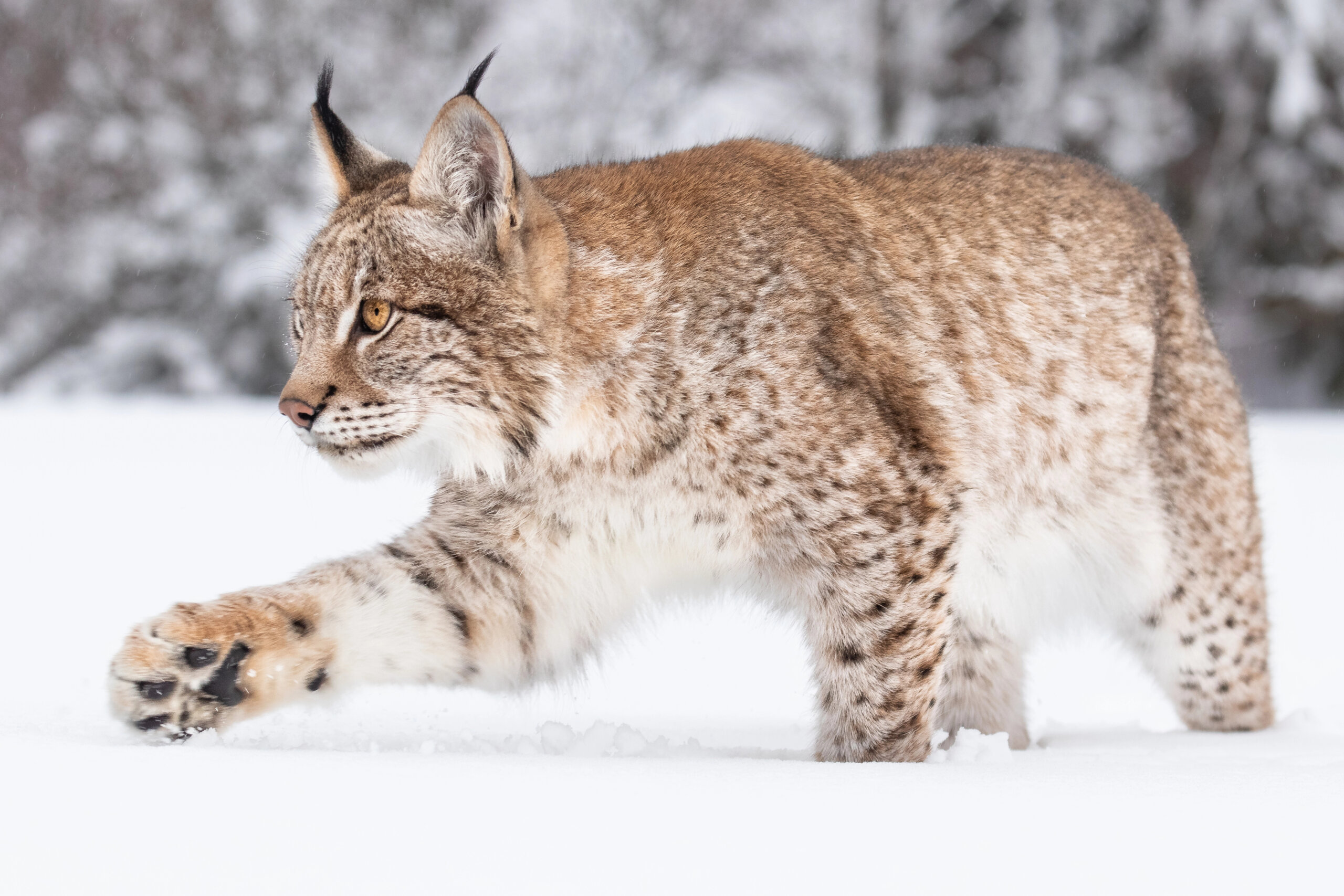
- Lynx
- Wildcats
- Numerous bird species including hoopoe, bee-eaters, black woodpecker, lesser spotted eagle, turtle doves, Ural owl, and red-backed shrike
But perhaps the most important thing to understand is that the wildlife experience here is not only about “seeing animals.”
It is about understanding ecosystems. Tracks become as exciting as sightings. Bird calls become clues. The forest itself becomes part of the experience.
And gradually, your relationship with nature shifts from consumption toward observation.

What should you pack?
The Carpathian Mountains are wonderfully unpredictable. Weather can shift dramatically within hours, especially once storms roll through the valleys.
Layers are therefore essential.
I would strongly recommend:
- Good waterproof jacket and trousers
- Breathable hiking layers
- Warm mid-layers for evenings
- Proper hiking boots
- Gloves and hat depending on season
- Binoculars
- Head torch
- Reusable water bottle
- Small backpack
- Camera with decent zoom if photography matters to you
And perhaps most importantly:
Patience.
Because this is not a fast-moving wildlife experience.
The magic lies precisely in the slowness.

Why this wildlife tour feels different
The longer I spent in the Făgăraș Mountains, the more I realised the trip succeeds because it never treats wildlife as entertainment disconnected from the surrounding landscape.
Everything feels interconnected.
- The forests.
- The villages.
- The guides.
- The food.
- The conservation work.
- The wildlife itself.
Foundation Conservation Carpathia is not simply protecting animals.
It is attempting something much larger: preserving one of Europe’s last functioning wilderness ecosystems while creating reasons for local communities to support that protection long-term.
Tourism becomes part of that system. Not separate from it.
And perhaps that is what makes this experience feel emotionally heavier than many conventional wildlife holidays.
The wilderness here does not feel curated.
It feels alive. Fragile. Complicated. And above all, real.

Final thoughts on this Carpathian wildlife tour in Romania
Before arriving in Romania, I thought this trip would be about wildlife sightings. In reality, it became much more about attention.
About slowing down enough to notice how forests function. How landscapes shape communities. How silence is never truly silent once you begin listening properly.
Yes, the bears were extraordinary. So were the bison.
But what stayed with me most were the quieter moments instead.
Mist moving through ancient beech forest. Watching rain drift across the mountains from inside a wooden hide. Listening to owls calling somewhere beyond the darkness while knowing bears might be moving silently through the valley below.
The Făgăraș Mountains force you to remember that wilderness still exists in Europe.
Not as a performance. Not as nostalgia.
But as something living.
And perhaps that is ultimately what makes this wildlife tour so special. It does not simply show you nature. It allows you, briefly, to feel part of it again.
If you are considering travelling with Travel Carpathia mention Bea Adventurous for a 5% discount.

Comments will load here
Be the first to comment