
The Blog

Worldschooling vs Homeschooling: How Travelling Families Can Combine Both
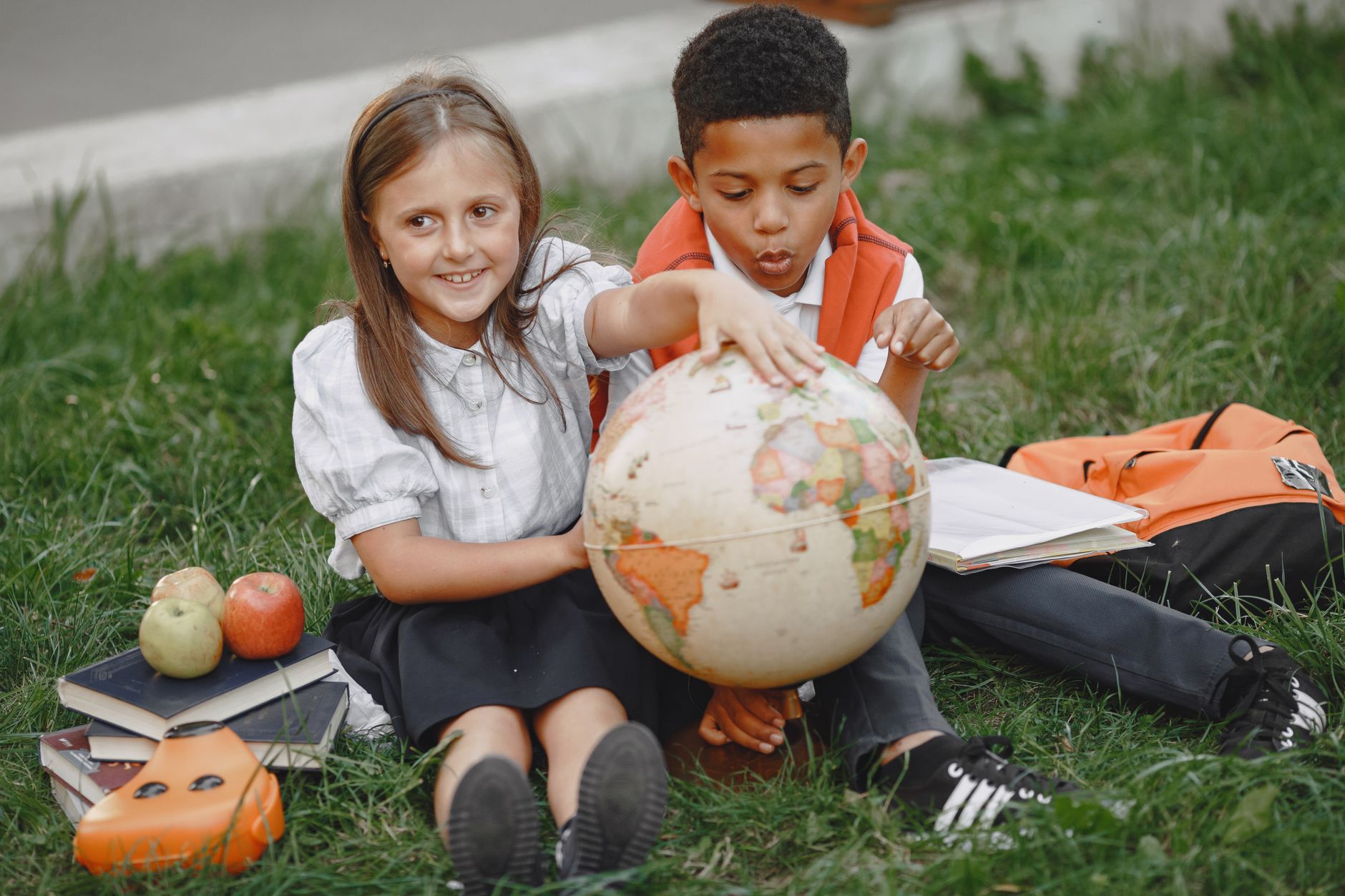
Worldschooling vs homeschooling can sound like a choice between two completely different approaches to education. In reality, there can be a lot of overlap between them.
Homeschooling generally provides the structured part of a child’s education away from a traditional school environment. Worldschooling takes learning beyond lessons and textbooks, using travel, different cultures and everyday experiences as opportunities to understand more about the world.
For families who travel regularly or spend months at a time abroad, the answer doesn’t necessarily have to be one or the other. A child might follow a structured maths programme in the morning, practise another language ordering lunch, learn about history at an archaeological site in the afternoon and spend the evening figuring out how much something costs in another currency.
Travel can be an incredible education. But it also doesn’t magically teach children everything they need to know.
That is where combining worldschooling with more structured learning can make a lot of sense.

Disclaimer! All of my blogs may contain affiliate links. This means that if you click on the link and make a purchase I may receive a small amount of commission for the referral at no extra cost to you. This commission is what allows me to continue creating guides to help travellers plan their next trip!
What's in this post:
Worldschooling vs Homeschooling: What’s the Difference?
Homeschooling is an alternative to attending a conventional school. How it works varies enormously between families: some follow a formal curriculum, some use online programmes, some employ tutors and others take a much more flexible approach.
Worldschooling is slightly different because it is more of an educational philosophy than a curriculum.
The idea is that children can learn from the places, people and experiences around them. Travel naturally creates plenty of opportunities for that.
A history lesson feels very different when you are standing inside a castle rather than looking at a picture of one. Geography becomes considerably less abstract when you are crossing borders, following rivers and seeing landscapes change. Languages suddenly have an immediate purpose when you need to communicate with the people around you.
But that doesn’t mean worldschooling has to replace more conventional education.
In fact, the two can complement each other extremely well.
What Travel Can Teach Brilliantly
One of the biggest advantages of worldschooling is context.
A child can learn that Romania has a complicated history from a textbook. Travelling through the country, however, allows them to visit medieval towns, fortified churches, castles and villages while seeing how geography, culture and history connect.
Even a family trip following a Romania itinerary can create conversations about everything from communism and migration to architecture, religion, wildlife and the differences between rural and urban life.
The same applies almost anywhere in the world.
Markets introduce different foods, currencies and ways of shopping. National parks create opportunities to talk about ecosystems and conservation. Public transport teaches children to navigate unfamiliar places. Museums bring history, art and science into the real world.
Perhaps most importantly, travelling exposes children to people whose lives may look very different from their own.
That doesn’t require turning every interaction into a formal lesson. Sometimes experiencing a different way of life and being curious about it is enough.

What Travel Doesn’t Automatically Teach
There can be a temptation to romanticise worldschooling and suggest that everything a child needs to learn will simply happen through travel.
I’m not convinced it is quite that simple.
Buying fruit at a market can involve maths. Working out an exchange rate involves maths. Dividing a restaurant bill involves maths.
But none of those experiences necessarily provides the systematic progression that children need to understand increasingly complicated mathematical concepts.
The same can apply to reading and writing. Travel provides endless subjects to read about and experiences to write about, but children may still benefit from structured support that makes sure important skills aren’t being missed.
That is why worldschooling doesn’t have to mean abandoning lessons, worksheets or curricula. The experiential part of education can sit alongside them.
Keeping Core Subjects on Track While Travelling
Core subjects are probably where some form of structure becomes most valuable.
Maths is an obvious example because concepts tend to build upon one another. Understanding multiplication helps with division. Fractions become important when learning decimals and percentages. Missing one fundamental concept can make the next one considerably harder.
Parents also don’t necessarily feel confident teaching every subject themselves, and travelling doesn’t suddenly turn you into a maths teacher.
Depending on the child and the family, structured learning could involve workbooks, an online homeschooling programme, educational apps or individual tuition. Families wanting additional support can also learn more about using a 1:1 online tutor alongside their own approach.
The important thing is that the tool fits the child rather than building the entire travel experience around the tool.
If you are travelling long-term, flexibility is going to matter.

Using Online Learning Without Spending the Trip Behind a Screen
One of the advantages of online education is that it can travel with you.
A child can continue working through the same programme whether the family happens to be in Spain, Tanzania or Thailand. A tutor can also provide continuity when everything else around them is changing.
That doesn’t mean every day needs to involve hours in front of a laptop.
There is little point travelling halfway around the world only to recreate a conventional classroom inside a hotel room.
Instead, families can decide which subjects benefit most from structured teaching and which can be supported naturally through travel.
If maths requires more consistency, for example, families might use an online programme or tutor a few times each week while allowing subjects such as geography, history or languages to be influenced much more heavily by where they happen to be.
Parents looking specifically for additional maths support can explore more about online tutoring options that can be used while travelling.
The aim isn’t necessarily to choose between screens and real-world learning. It is to use each where it works best.

What Could a Worldschooling Week Look Like?
There is no reason a travelling family’s school week needs to resemble Monday to Friday in a conventional classroom.
More importantly, there isn’t one worldschooling timetable that will suit every family.
A family staying in one place for a month might find it easy to establish regular study periods. A family moving every few days will probably need considerably more flexibility.
Instead of insisting that maths happens at 9am every Monday, Wednesday and Friday, it may be easier to think in terms of weekly goals.
Perhaps there are three maths sessions to complete, a certain amount of reading and one piece of longer writing. Those can then fit around the experiences that made the family want to travel in the first place.
If Wednesday is the perfect day to visit a national park, you can go to the national park.
The maths lesson isn’t going anywhere.
Making Travel Part of the Education
Worldschooling becomes particularly interesting when you stop separating “school time” and “travel time” quite so rigidly.
If you are visiting an ancient site, learn a little about it beforehand and let the child come up with questions they want answered.
If you are travelling somewhere with a different language, learn a few useful phrases together and encourage the child to use them.
If you are visiting a market, give an older child a budget.
If you’re going on safari, learn why different animals have evolved particular behaviours rather than simply ticking species off a list.
You can also let children’s interests dictate where some of that learning goes.
One child might become fascinated by volcanoes after seeing one. Another might want to know why two neighbouring countries speak different languages. Another might be far more interested in how people their age live locally.
You don’t need to have planned a lesson for every question.
Sometimes the best part of travelling is discovering what you didn’t know you wanted to know.

What Happens When Wi-Fi, or Your Entire Plan, Fails?
Anyone who travels regularly knows that plans have a habit of falling apart.
The hotel Wi-Fi doesn’t work. The train you planned to use for schoolwork is packed. A flight is delayed. Somebody gets travel sick. You discover a festival happening that afternoon and decide you’d much rather experience that than sit inside doing worksheets.
Building some slack into the schedule makes those interruptions much less stressful.
Download worksheets, books and other resources before long journeys rather than relying entirely on internet access. Keep some activities available offline. Most importantly, avoid making a single missed lesson feel like a disaster.
Looking at progress over weeks or months is far more useful than expecting every Tuesday to go according to plan.
That flexibility is one of the benefits of educating while travelling in the first place.
Don’t Forget the Legal Side of Worldschooling
This is one part of worldschooling that shouldn’t be left to Instagram.
The legal requirements surrounding homeschooling and compulsory education vary between countries. They can also depend on where the family is legally resident rather than simply where they happen to be travelling at the time.
Worldschooling itself isn’t a legal educational status that overrides those requirements.
Before taking a child out of school or travelling for an extended period, parents should check the rules that apply to their own circumstances. Depending on where you live, there may be requirements around registration, curriculum, assessments or school attendance.
If you are moving between countries rather than simply travelling temporarily, things can become more complicated still.
This isn’t the exciting part of worldschooling, but it is an important one. Don’t rely on another travelling family’s experience, or a social media post, to tell you what you are legally required to do.

Remember That Not Everything Has to Be Educational
This might be one of the most important things to remember.
When you start thinking of the world as a classroom, there can be a temptation to turn absolutely everything into a lesson.
You don’t have to.
Children are allowed to visit a waterfall because waterfalls are brilliant. They can eat something unfamiliar without writing about it afterwards. They can spend an afternoon playing with other children without anyone deciding which developmental objective has been achieved.
Travel creates opportunities for learning simply because children are experiencing new things.
You don’t have to squeeze an educational outcome from every one of them.
Choosing What Works for Your Family
There isn’t a perfect ratio of worldschooling to homeschooling.
A seven-year-old travelling slowly with their family may need something completely different from a teenager preparing for formal qualifications. One child might thrive with online lessons while another learns much better from books. Some parents will confidently teach several subjects themselves; others will want outside support.
Your travel style matters too.
Spending three months in one apartment makes maintaining a routine relatively easy. Changing hotels every two nights is a very different experience.
Rather than starting with the question, “Should we worldschool or homeschool?”, it may be more useful to ask what your child needs to learn, which parts you can confidently support yourselves and where additional structure would help.
Then build travel around that… and learning around travel.

Worldschooling and Homeschooling Can Work Together
Worldschooling vs homeschooling doesn’t have to be a competition.
Travel can offer children things that are extremely difficult to recreate in a classroom: exposure to different cultures, first-hand encounters with history and nature, new languages, unfamiliar situations and the opportunity to understand that their own way of living is only one of many.
Structured education offers something different: continuity, progression and the reassurance that important foundations aren’t being accidentally skipped.
Combining the two can allow families to take advantage of both.
You can learn fractions properly and still practise them with unfamiliar coins in a market. You can read about ancient civilisations and then stand among their ruins. You can study another language online and then discover whether you can actually use it to order lunch.
The world can be an extraordinary classroom.
It just doesn’t have to be the only one.

Comments will load here
Be the first to comment