
The Blog

Best Places to Visit in Slovenia: Where I’d Go and What I’d Make Time For

The best places to visit in Slovenia aren’t all clustered around Lake Bled, although I understand why that little island gets so much attention. On my first trip, I went from alpine lakes and mountain passes to Venetian streets and an enormous underground canyon in just over a week. Somewhere between the turquoise rivers and the increasingly ridiculous number of photographs, I started plotting a move.
What surprised me most was how much the scenery changed over relatively short distances. Wooden houses with steep roofs gave way to pastel buildings and vineyards. One day I was getting soaked behind a waterfall; a couple of days later, I was eating squid beside the Adriatic. Slovenia might look manageable on a map, but choosing what to leave out is surprisingly difficult.
This is where I would start: the places that made the biggest impression on me, alongside a few alternatives worth considering if you have longer. You won’t need to visit every waterfall or sleep in a different hotel each night. In fact, having tried to squeeze rather a lot into my first visit, I’d recommend giving yourself more time to enjoy fewer places.

Disclaimer! All of my blogs may contain affiliate links. This means that if you click on the link and make a purchase I may receive a small amount of commission for the referral at no extra cost to you. This commission is what allows me to continue creating guides to help travellers plan their next trip!
What's in this post:
Which Are the Best Places to Visit in Slovenia for Your Trip?
For a first visit, I would prioritise Ljubljana, Lake Bled, Lake Bohinj, the Soča Valley and Piran, adding a cave visit if your route allows. That gives you a useful mix of city, mountains, water and coast. Kranjska Gora deserves more time if you enjoy hiking or scenic drives, while Škofja Loka makes an excellent shorter stop between bigger destinations.
These are my suggested time allocations, rather than the minimum required to take a photograph and move on. Several places work well together: you can visit Bohinj from Bled, explore the upper Soča Valley from Bovec, and combine Lipica with the Karst region. The important distinction is between somewhere worth stopping and somewhere worth unpacking.
| Place | Best for | Time I’d allow |
|---|---|---|
| Ljubljana | A relaxed city introduction, markets and riverside wandering | 1–2 days |
| Lake Bled | Classic lake views, viewpoints and an easy introduction to the Alps | 1–2 days |
| Lake Bohinj | Lakeside walks, mountain scenery and a slower outdoor stay | 2–3 days |
| Kranjska Gora | Alpine scenery, walking and mountain road trips | 2–3 days |
| Soča Valley | River scenery, waterfalls, history and outdoor activities | 2–4 days |
| Bovec | A practical base for rafting, kayaking and canyoning | 2–3 nights within a Soča Valley stay |
| Piran | Coastal atmosphere, old streets and seafood | 1–2 days |
| Škofja Loka | A compact medieval town between larger stops | Half a day |
| Škocjan Caves | An impressive underground canyon | Half a day |
| Lipica | Lipizzaner horses and equestrian heritage | Half a day |
| Postojna Cave and Predjama Castle | A cave railway and a dramatic castle setting | Most of a day |

1. Ljubljana: For a Capital You Can Actually Enjoy at Walking Pace
Ljubljana was my introduction to Slovenia, and it made a very good first impression. We stayed in a converted tobacco factory filled with art, old televisions and a bathtub on wheels, which set expectations somewhere between creative city break and particularly ambitious charity shop. Within a short walk, we were in the old centre, surrounded by cobbled streets, riverside restaurants and independent shops.
The centre is somewhere to explore on foot rather than rush between attractions. Start around Prešeren Square and the Triple Bridge, wander towards the market, then leave time for the streets beneath the castle. Going up to Ljubljana Castle gives your sightseeing a little structure, but some of the pleasure comes from simply crossing the river whenever something on the other side looks interesting.
If you like hearing the stories behind the buildings, a free walking tour of Ljubljana is a good way to get your bearings before exploring independently. I find a knowledgeable guide makes a city much more memorable than simply admiring attractive façades without knowing their significance. These tours generally work on a tips basis, so budget to contribute at the end.
One of my favourite memories involved an entirely unremarkable breakfast near the market. The pastries weren’t particularly good, but the local birds were so determined to steal them that we spent most of the meal laughing. It was a useful reminder that travel highlights don’t always require advance tickets. Sometimes they require a croissant and a bird with absolutely no respect for personal property.
Is Metelkova Worth Visiting?
Metelkova is a different side of Ljubljana: an alternative cultural centre with street art, music venues and a history rooted in the occupation of former military barracks. I visited without understanding that context and didn’t really know what I was looking at. I would approach it differently now, ideally with a knowledgeable guide or enough background reading to appreciate more than the artwork.
For most first-time visitors, Ljubljana deserves at least one full day. Stay longer if you enjoy markets, museums and unhurried meals, or want to take organised day trips without changing accommodation. I would keep a car out of the city-centre part of your stay where possible; this is somewhere your feet are generally more useful than your parking skills.

2. Lake Bled: For the Slovenia View That Really Does Live Up to the Photos
Lake Bled is famous for a reason. The island church, cliff-top castle and mountain backdrop somehow arrange themselves into a view that looks suspiciously designed by a tourism board. Even beneath grey skies, it was beautiful. The busier, more commercial surroundings deserve consideration, though. My honest take on whether Lake Bled is worth visiting will help you decide how it fits your trip.
Walking around the lake is the simplest way to appreciate it, although we hired bikes and turned a short circuit into a two-hour photography exercise. Every few minutes, the island appeared from a slightly different angle and apparently required documenting again. If you cycle, take it slowly around pedestrians and follow the signs rather than assuming every lakeside path is a cycle route.
My standout experience was sunrise from Ojstrica. I climbed up before dawn and watched mist drift through the valleys while the sky gradually turned pink and orange. It remains one of my favourite Slovenia memories, although this is a rocky uphill walk, rather than a viewpoint you casually visit in sandals. Take proper footwear and a headtorch if you’re heading up in darkness.
How Long Should You Spend at Lake Bled?
One full day covers a lakeside walk, a viewpoint and whichever paid attraction interests you most, whether that’s the castle or a boat trip to the island. Two nights give you more flexibility around weather and quieter visiting hours. My guide to things to do in Lake Bled will help you choose what to prioritise without turning your stay into a sightseeing endurance event.
Leave room for Bled cream cake, too. When we ordered one each, I discovered that even my commitment to dessert had limits. It combines pastry, custard and cream, which is an excellent argument for sitting down beside the lake. My advice is to inspect the portions before ordering, especially if you intend to eat an actual dinner afterwards.

3. Lake Bohinj: For Mountains, Lakeside Walks and More Time Outdoors
Lake Bohinj is where I would steer anyone who likes the sound of Bled but wants their trip to revolve more around walking, paddling and mountain scenery. Slovenia’s largest permanent natural lake sits within Triglav National Park, with villages and outdoor activities spread around the wider Bohinj area. It feels less built around one famous photograph, although that certainly doesn’t mean it stays quiet throughout summer.
I visited from Bled and immediately wished I had allowed longer. The drive brought us past alpine houses with balconies buried beneath flowers, before the lake opened out beneath the mountains. A day trip gives you a satisfying introduction, but staying nearby means you can have an early lakeside walk, spend a day higher up and avoid trying to fit everything between two drives.
The Vogel cable car was a particular highlight. We went up for the mountain views and then spent a surprisingly long time sitting in the sunshine, looking at them. The higher lift wasn’t operating during our visit, but that didn’t spoil the outing. Check which services are running before buying tickets, particularly if a specific walk depends on reaching a particular starting point.
Should You Visit Savica Waterfall?
Savica is worth considering if you enjoy waterfalls and don’t mind a stepped uphill approach. I liked the vivid water more than the restricted viewing angle, so I wouldn’t make it the sole reason to visit Bohinj. The route includes numerous steps and the access to the pool beneath the waterfall is closed; this is a viewing stop, rather than a swimming spot.
For a longer stay, consider Mostnica Gorge and the Voje Valley as well as time on the lake. They offer another way to explore the area’s river scenery and walking routes without making every outing a high mountain expedition. I would allow two or three days in Bohinj, especially if you want time for both activities and the deeply underrated business of sitting beside some water.

4. Kranjska Gora: For an Alpine Base With Plenty Beyond the Ski Slopes
Kranjska Gora was one of the places where Slovenia really got under my skin. We stayed for two nights, and I loved the combination of a walkable resort centre, mountain views and easy access to the surrounding valleys. It works particularly well if your ideal holiday involves going out for a walk, coming back hungry and finding a restaurant that considers four people’s food a reasonable individual portion.
Lake Jasna is an obvious starting point. The mountain backdrop does most of the work, while the clear water gives you another excuse to take photographs you will later struggle to distinguish from the previous hundred. It’s an enjoyable outing when you want scenery without committing to a demanding hike, and it fits easily into a first afternoon around Kranjska Gora.
I also visited Zelenci Nature Reserve towards the end of the day. What stayed with me was the journey as much as the reserve: pink light on the mountains, cattle grazing and people stacking firewood. It’s worth leaving some gaps in your schedule here. The small moments between attractions were often what made me want to stay longer.
Is Peričnik Waterfall Worth the Detour?
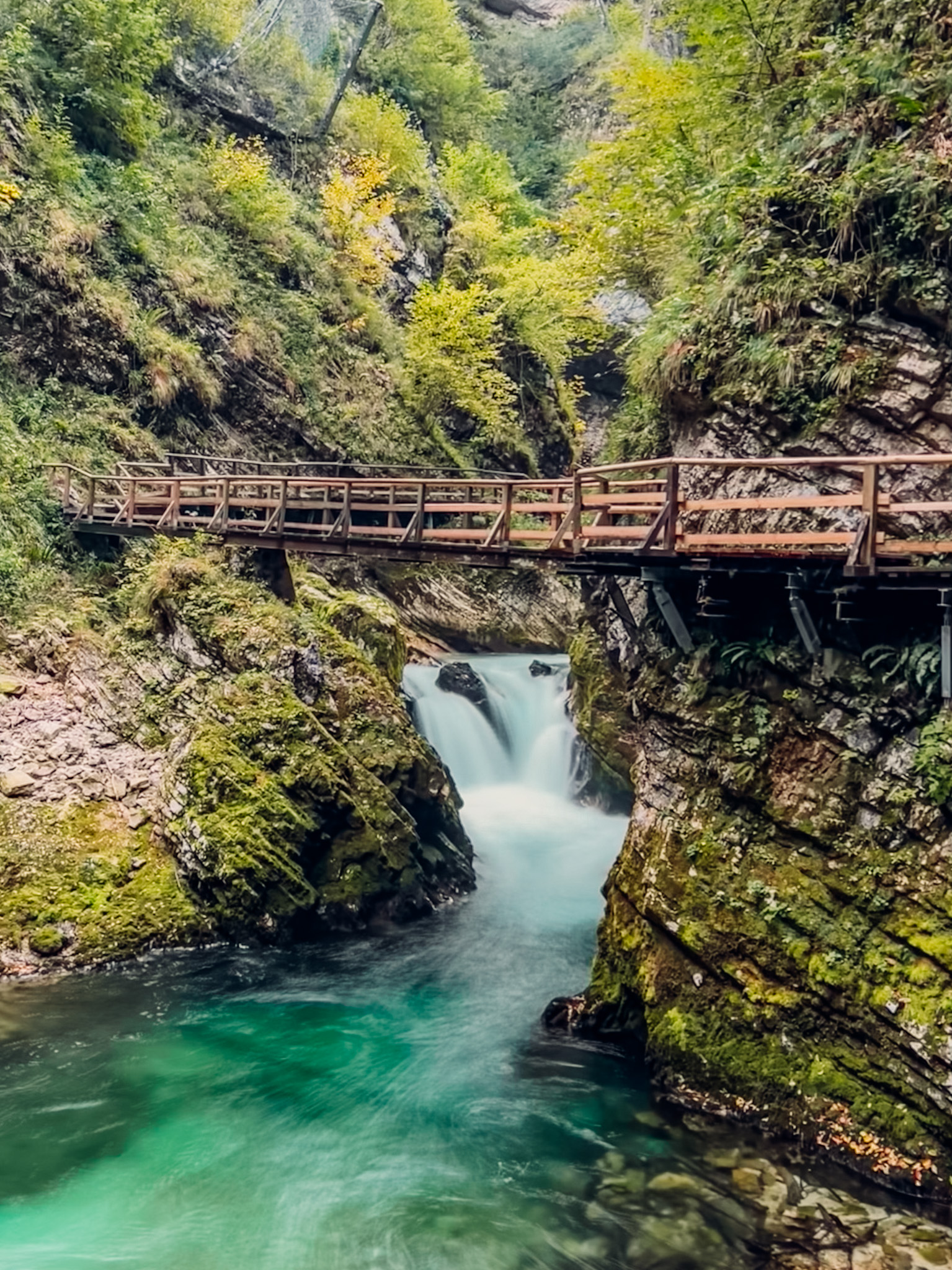
Peričnik was my favourite waterfall of that first trip. The lower cascade drops in front of an overhanging rock face, with a path that lets you walk behind the falling water when conditions allow. I had wanted to do that since watching Disney’s Robin Hood as a child. The film had neglected to explain quite how wet the experience could be.
We stopped while travelling between Bled and Kranjska Gora, which made it a useful addition to the journey. Treat the approach as a proper walk, with grippy footwear and attention to conditions, rather than a quick roadside photograph. I would allow time to enjoy the waterfall and its surroundings instead of planning an arrival immediately before your next booked activity.

5. The Soča Valley: For River Scenery That Makes You Question Your Camera Settings
The Soča Valley contains some of the scenery I most associate with Slovenia: bright water, pale rock, forested slopes and mountains rising behind everything. On my first visit, we explored part of it on a road trip from Kranjska Gora. I loved it, but travelling there and back in one day left me wanting a stay in the valley itself.
The main decision is how far along the valley you want to explore. Bovec works well for outdoor activities and the upper valley; Kobarid brings together river scenery, food and First World War history; Tolmin puts you closer to the Tolmin Gorges. These are connected places, but treating the whole valley as a single attraction makes it easy to underestimate the time involved.
You don’t need to fill your visit with adrenaline activities to enjoy it. During that first trip, we ate trout, stopped beside the river and watched fish through water so clear it barely seemed to be there. A partner declining every suggestion involving a wetsuit turned out to be quite helpful: it forced me to appreciate the valley at a slower pace.
Where Should You Go Beyond the River Viewpoints?
Kozjak Waterfall near Kobarid and the Tolmin Gorges give you two distinctive outings beyond the upper valley. Kozjak is enclosed within a rocky chamber, while the Tolmin Gorges follow the waterways through a different landscape farther south. Choose according to your route and available time; you don’t need to visit every gorge in Slovenia to establish that the country has excellent water.
My recommendation would be at least two nights in the valley, with longer for walking or organised activities. That gives you room for a booked outing and some less structured exploring. It also reduces the temptation to drive a mountain road twice simply because your accommodation is on the other side, something my first itinerary managed with considerable enthusiasm.

6. Bovec: For Rafting, Kayaking and Canyoning
Bovec is where I would base myself if rafting, kayaking or canyoning features on your Slovenia wish list. You’re here for the rivers, mountains and adventures, with somewhere convenient to eat and recover afterwards. I would give it two or three nights so you can enjoy the surrounding Soča Valley without trying to squeeze every activity into one exhausting day.
My recommendation for water-based adventures is Ultimate Alps. There’s a personal connection here too: I stayed in their mum’s apartment and received some of the best hospitality I’ve ever experienced. That warmth is a big part of what I remember about Bovec. The scenery gets you there, but the people can be what makes you start planning your return.
Choose your activity carefully, because rafting, kayaking and canyoning offer quite different experiences. Rafting is a shared river adventure, kayaking involves more individual control, and canyoning takes you through streams, rock formations and waterfalls. Speak to Ultimate Alps about your confidence, swimming ability and appetite for adventure, particularly if the prospect of jumping or abseiling makes you question your holiday choices.
Leave some flexibility around weather and river conditions, and avoid scheduling your most demanding outing immediately after a long drive. There’s plenty to enjoy between adventures, including walks, waterfalls and riverside stops. My guides to things to do in Bovec and Bovec canyoning, kayaking and white-water rafting will help you decide what deserves a place in your itinerary.
And if you fancy an adventure that doesn’t involve getting wet, then check out Europe’s longest zipline!

7. Vršič Pass: For a Scenic Journey Between Kranjska Gora and the Soča Valley
Vršič Pass is a journey worth planning around, rather than simply the road your satnav happens to select. It connects Kranjska Gora with Trenta through Triglav National Park, taking you between mountain scenery that repeatedly had me asking whether we could stop. My travelling companion’s enthusiasm for another photograph was slightly less consistent than mine.
We drove it in early October, when autumn colour made the slopes particularly beautiful. I spent much of the journey staring through the window, then discovering that photographs taken from a moving car were remarkably poor evidence. If this road is part of your itinerary, allow time for designated stopping places and short outings instead of treating the estimated driving time as the whole experience.
What Should You Check Before Driving Vršič Pass?
Check current access, traffic management and parking arrangements before setting off. Weather and roadworks can also affect your plans, so consult the official local information close to your travel date. My driving in Slovenia guide covers the wider practicalities of hiring a car and exploring the country by road, helping you prepare for more than just the hairpins.
If you’re nervous about narrow mountain roads, there is no obligation to turn your holiday into a driving assessment. Look into seasonal public transport or a guided excursion instead. I loved the scenery, but I enjoyed it partly because I was able to look at it; whoever is driving needs to concentrate on rather more immediate matters.

8. Piran: For Venetian Streets and a Proper Change of Pace
Piran was the place where I realised I should have booked another night. We arrived from the mountains, ate lunch beside the sea and wandered through narrow streets lined with pastel buildings and painted shutters. Laundry hung above the alleyways, scooters were tucked beside doorways, and even the slightly crumbling buildings had character. After days of alpine scenery, it felt like arriving in another holiday.
The old town is best explored slowly. Start in Tartini Square, wander towards the waterfront, then work your way uphill for a different perspective. The town walls gave us my favourite view, looking across the tightly packed roofs towards the sea. That combination of street-level detail and a wider view makes Piran rewarding even if you aren’t particularly interested in museums.
We ate squid for lunch, followed by ice cream because the weather had made an excellent case for it. The real pleasure, though, was having lunch outside and then walking without a particularly ambitious objective. Piran is somewhere I would deliberately put towards the end of an active trip, when another steep mountain path has begun to lose its appeal.
Is Piran Better as a Day Trip or an Overnight Stay?
A day trip gives you enough time to see the centre, have lunch and visit a viewpoint. I would stay overnight if your budget allows, so you can enjoy the evening without watching the clock. That was my main regret: I had prioritised easier parking and cheaper accommodation elsewhere before understanding how much I would like the town.
If you arrive by car, check the accommodation’s precise parking and luggage instructions before booking. Historic coastal centres and convenient parking aren’t natural companions, and a bargain room becomes less appealing when you’re hauling a suitcase farther than expected. Choose Piran for atmosphere; choose your exact accommodation according to how much luggage, walking and logistical patience you bring.

9. Škofja Loka: For a Medieval Town You Can Enjoy in Half a Day
We visited Škofja Loka when rain was forecast elsewhere, which turned out to be a very good change of plan. The compact centre, castle above the town and attractive riverside setting made it an easy place to enjoy without much preparation. It was a welcome reminder that Slovenia’s appeal isn’t limited to mountains, lakes and the handful of places everyone recognises.
I would allow a few hours for wandering, a café stop and a walk towards the castle, adding longer if you want to visit the museum. It works particularly well as a contrast to consecutive outdoor days. You still get somewhere interesting to explore, but you don’t need walking poles, an early alarm or a conversation about whether your legs have recovered.
Škofja Loka is also practical to reach from Ljubljana, making it a useful option if you have an extra half-day around the capital. I wouldn’t force it into a packed five-day itinerary, but with a week or longer it earns consideration. Sometimes a smaller town is most enjoyable precisely because you haven’t assigned it the task of being the highlight of your entire holiday.
10. Škocjan Caves: For an Underground Landscape on a Completely Different Scale
We chose Škocjan Caves on a rainy day after agreeing that neither of us wanted more hills. I had somehow developed the impression that descending underground would be followed by an obliging mechanical return to the surface. My travelling companion was therefore less delighted than I was when it became apparent that stairs would feature quite prominently in the experience.
What impressed me was the scale. The visit moves beyond the familiar stalactites-and-stalagmites experience into an enormous underground canyon shaped by the Reka River. It’s the kind of place where a photograph struggles to communicate what you’re looking at, because the missing ingredient is a person standing there to demonstrate quite how small you suddenly feel.
Škocjan is a UNESCO World Heritage site, and visits should be planned around the official guided tour arrangements. The park recommends purchasing tickets online in advance because of demand. I would reserve half a day for the visit and surrounding logistics, particularly if you’re fitting it between accommodation changes rather than travelling from a nearby base.
Is Škocjan Suitable for Everyone?
Check the current route description carefully if stairs, gradients or walking distances affect your plans. My main practical advice is to avoid assuming that “cave visit” means an effortless rainy-day activity. Bring suitable shoes and a layer, then choose based on the actual experience you want. For me, the underground canyon was worth the effort; my legs were entitled to a separate opinion.

11. Lipica: For Horses, Heritage and a Different Side of Slovenia
As someone with a horse-industry background, I was always going to be interested in Lipica. The stud farm dates to 1580 and is the original home of the Lipizzaner breed. Even so, I was pleasantly surprised by how much there was to appreciate beyond the horses themselves: the estate, historic buildings and tree-lined avenues gave the visit a strong sense of place.
During our visit, we watched a presentation featuring horses at different stages of training, building towards the movements most people associate with classical riding. What interested me was seeing the progression, rather than just the finished performance. My non-horsey companion enjoyed it too, although the absence of another mountain climb may have contributed to his unusually cooperative review.
I would choose Lipica if horses interest you, or if you want something different between caves, towns and the coast. Check the programme before choosing a date, because an estate visit and a performance are different experiences. Give it half a day, and resist adding it simply because it happens to be near something else you’ve already booked.

12. Postojna Cave and Predjama Castle: For Another Karst Option
Postojna Cave and Predjama Castle are worth considering if you want a different combination of underground scenery and history. Postojna is known for its cave railway, while Predjama Castle occupies an extraordinary position against a cliff and cave entrance. They offer a different experience from Škocjan’s underground canyon, so the choice should come down to your interests rather than which name appears most often.
I visited Škocjan on my first trip, so I wouldn’t pretend this comparison comes from having personally toured both cave systems. For my own return, Postojna and Predjama would be candidates rather than compulsory additions. If you only have a week, choosing one major cave experience leaves you more time elsewhere; you don’t have to develop a comprehensive knowledge of Slovenian limestone before you’re allowed to go home.

Where Else Should You Consider With More Time?
My first trip concentrated heavily on western Slovenia, so this list reflects that experience. If you have longer, I would use the extra days to explore another region rather than keep adding short stops to an already busy western loop. Goriška Brda is one option, particularly if villages, local food and vineyard scenery appeal more than another lake or mountain viewpoint.
Maribor is another possibility if you want a second city and a different regional focus. Slovenia’s tourist board highlights its wine heritage, including its famous old vine, which makes it a different proposition from an alpine stay. These are places I would research for a future trip, rather than claim as personal favourites alongside somewhere I’ve already explored.
For a full list of my favouite things and places to visit in Slovenia check out my article on the best things to do in Slovenia.
How Should You Combine the Best Places to Visit in Slovenia?
The biggest planning mistake is assuming that a small country automatically means short, effortless journeys. Mountain roads take time, attractive viewpoints encourage stops, and changing accommodation has its own overhead. I would build your route around a few bases, then choose the nearby outings you care about most. You’ll enjoy Slovenia more if every day doesn’t begin by repacking a suitcase.
What Would I Prioritise With Five Days?
With five days, I would choose Ljubljana and one alpine base, usually Bled or Bohinj, then add a carefully chosen outing if the timing works. You could spend your first day in Ljubljana, give Bled a full day, and use the remaining time around Bohinj. That leaves space for an actual walk or activity instead of simply driving between names on a list.
If rafting and canyoning are the main reason you’re going, I would build those five days around Bovec and the Soča Valley instead. Trying to combine Ljubljana, both lakes, Kranjska Gora, Bovec, a cave and Piran would give you a comprehensive collection of car parks. My Slovenia five-day itinerary is the better starting point if you want a more detailed short-trip route.

What Would I Prioritise With Seven to Ten Days?
Seven to ten days gives you more room to combine the capital, the Alps and either the coast or the Soča Valley. With the longer end of that range and a car, a route through Ljubljana, Bled or Bohinj, Kranjska Gora, the Soča Valley and Piran becomes more realistic. I would still choose your activities before deciding how many nights each place needs.
On my first trip, I spent just over a week exploring and came away delighted, but very aware of what I had rushed. If I repeated it, I would give Bohinj more time, sleep in the Soča Valley and stay overnight in Piran. Those changes would mean fewer return journeys and more evenings in the places I had actually travelled to enjoy.
Do You Need a Car to Visit These Places?
A car was useful on my first trip because I wanted scenic roads, smaller stops and the freedom to change plans with the weather. It also introduced paid parking, narrow roads and several occasions when the satnav displayed more confidence than the terrain justified. For a varied road trip, I would consider one; for every possible Slovenia holiday, I wouldn’t call it essential.
Without a car, choose fewer bases and check the actual connections for your dates before committing to accommodation. A well-located stay becomes more valuable when you depend on buses, trains or organised excursions. Seasonal mountain transport needs particular attention. My driving in Slovenia guide covers the practical side if you decide that flexibility outweighs the parking fees.
If you opt for hiring a car I recommend comparing the best options on Discover Cars. Not only can you check local and international rental companies, you can compare by price, perks and reviews!
When Is the Best Time to Visit These Places?
I’ve visited Slovenia in both spring and autumn, and I’d happily return in either season. My first trip ran from late September into early October, when the changing leaves added another excuse to stop for photographs. I returned in May and gave Bovec much more time. Everything was in bloom, and the valley looked beautiful: a different backdrop to the Slovenia I’d first fallen for.
For an outdoor trip, May and September would both be on my shortlist, but choose your dates around what you actually want to do. Exploring the valleys is different from hiking high in the mountains, where spring conditions can limit your options. Likewise, a trip built around lakeside swimming needs different planning from one focused on walking, scenic drives or skiing.
Check seasonal transport, activity availability and attraction opening times before committing to your itinerary. On my autumn trip, we encountered reduced schedules and maintenance closures, so fewer visitors came with a few compromises. Neither visit convinced me there’s one perfect month for everywhere in Slovenia, but both reminded me how much the season changes the experience, even when the destination stays the same.
Which Places Would I Choose for a First Visit?
If you want my shortest shortlist, choose Ljubljana for a city introduction, Bled for the classic view, Bohinj for time outdoors, the Soča Valley for river scenery and Piran for the coast. Give Kranjska Gora more time if the mountains are your priority, then fit a cave visit around the route. That creates variety without requiring you to treat every destination as equally essential.
Bled might get you interested in Slovenia, but I suspect something else will make you want to return. For me, it was sitting above Bohinj in the sunshine, watching autumn colour from a mountain road and realising too late that I wanted an evening in Piran. Leave enough room in your itinerary to discover which place does that for you.

Comments will load here
Be the first to comment