
The Blog

How to Organise Transport for a Small Group Trip in Europe: Coach, Train or Private Transfer?
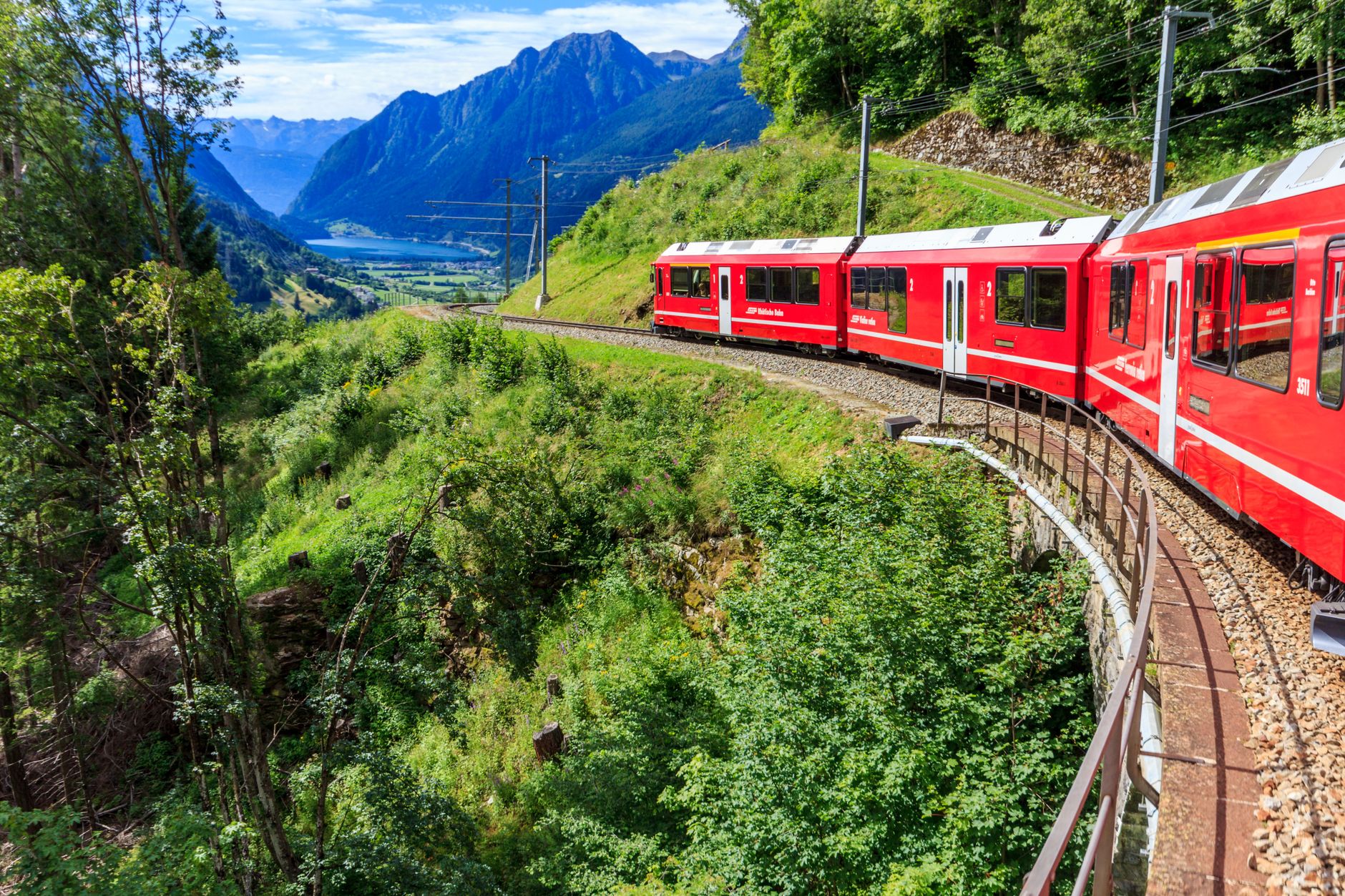
Organising transport for a small group trip in Europe sounds relatively straightforward until you actually start doing it. On paper, the train might take three hours and a minibus four. Easy decision, right?
Not necessarily.
Add ten people, ten suitcases, a hotel that is nowhere near the station and a connection involving everyone dragging their luggage from one platform to another, and suddenly that extra hour in a private vehicle starts looking rather appealing.
When I plan group travel, I rarely think there is one form of transport that is automatically better than another. Trains are fantastic for some journeys. Private transfers make life considerably easier for others. And there are days when having your own minibus or coach is worth every penny.
The trick is choosing your transport based on the actual journey rather than deciding that your entire trip needs to be done by train, coach or private transfer.

Disclaimer: This post may include affiliate links. If you click on the link and make a purchase, I will receive a small commission at no extra cost to you. Affiliate links help cover the cost of running my website so that I can continue inspiring my readers to explore the world.
What's in this post:
Train, Coach or Private Transfer: Which Is Best?
There are four things I would look at first: how many people are travelling, how much luggage you have, where you are going and how complicated the journey is.
Price matters, obviously, but I wouldn’t make a decision based on price alone. The cheapest option stops feeling like a bargain surprisingly quickly when ten people are standing on a railway platform trying to work out where carriage 14 is with two minutes until departure.
Travelling Europe by train as a group
For smaller groups travelling directly between major European cities, trains are often my first choice.
European rail travel can be wonderfully easy. You normally arrive and depart from somewhere relatively central, there is no airport-style security palaver, and on high-speed routes it can be quicker than travelling by road.
Book early enough and fares can also be very reasonable, particularly when you are travelling in a smaller group.
The problems usually start when the journey becomes more complicated. Changing trains with luggage isn’t much fun, some regional services have surprisingly limited luggage space, and the railway becomes considerably less useful when the places you actually want to visit aren’t anywhere near a station.
So, Madrid to Barcelona? I’d be looking at the train.
A day exploring several villages along the Basque coast? Definitely not.

When a Minibus or Coach Makes More Sense
This is where private transport really comes into its own.
With a chartered minibus or coach, everyone leaves from the same place, luggage goes underneath or in the back, and you can build the day’s transport around what you actually want to see rather than around a railway timetable.
It is particularly useful when an itinerary includes several stops.
If I wanted to take a group from Bilbao to San Sebastián with stops in places such as San Juan de Gaztelugatxe, Bermeo and Gernika along the way, for example, trying to recreate that journey using public transport would turn the transport itself into the day’s main activity.
With a private vehicle, the journey becomes part of the itinerary instead.
For groups travelling through several countries or organising more complicated itineraries, it can also be easier to use one company to coordinate the transport rather than finding a different local supplier every time you cross a border. A transport management company such as https://bcs-bus.com/ can arrange coach and minibus hire through local carriers across Europe, giving you one point of contact for the itinerary rather than dealing separately with multiple transport companies.
That doesn’t mean I would automatically book a coach for the entire trip. Often, the best solution is to use one only on the days when having your own vehicle genuinely makes the trip easier.

Don’t Rule Out Private Transfers
Private transfers sit somewhere between public transport and hiring a vehicle with a driver for the entire day.
For a group of four, six or eight people, they can be particularly useful for airport arrivals and departures. They are also worth considering if you have a very early flight, a late arrival or accommodation that is awkward to reach using public transport.
After a long travel day, there is something rather lovely about walking through arrivals, finding someone holding your name and knowing that nobody needs to work out the local metro system while half asleep.
The downside is cost. One private transfer can be perfectly reasonable; arranging several vehicles for multiple journeys throughout a trip can become expensive surprisingly quickly.
How Group Size Changes the Equation
There isn’t a magic number at which you should suddenly abandon trains and hire a coach, but the economics do change as your group gets bigger.
For two to eight people, I would usually investigate trains between well-connected cities and private transfers where they make logistical sense.
Once you reach roughly nine to nineteen people, a minibus becomes much more interesting, particularly for countryside journeys, airport transfers and days involving several stops.
For groups of twenty or more, I would seriously compare the cost and convenience of having a coach for much of the itinerary.
The important thing is to compare the total cost rather than simply looking at the advertised ticket price.
Ten €40 train tickets cost €400, but what happens if you then need three taxis to the station and another three at the other end? Suddenly the €550 minibus that collects everyone from one hotel and delivers them directly to the next one doesn’t look particularly expensive.

The Thing Everyone Forgets: Luggage
This sounds obvious, but seats are only half the equation.
A vehicle advertised for eight passengers does not necessarily have room for eight passengers carrying eight enormous suitcases, eight cabin bags and several backpacks.
And people bring an astonishing amount of stuff on holiday.
When requesting a quote, tell the transport company exactly how many people are travelling and give them a realistic idea of the luggage. If somebody is bringing a wheelchair, pushchair, bicycle, golf clubs or anything else unusually bulky, mention that too.
It is much better to discover that you need a larger vehicle while requesting quotes than while standing outside the hotel on departure morning.
Remember That Drivers Need Breaks Too
Another mistake when planning private group transport is creating an itinerary that looks perfectly reasonable on Google Maps but doesn’t actually work with professional driving regulations.
Within the EU, driving and rest periods are regulated. For many passenger transport journeys, drivers are required to take breaks after specified periods behind the wheel and there are limits on daily driving time.
This becomes particularly important on long touring days. If you want an early departure, several hours of driving, sightseeing stops, dinner somewhere else and then another drive to the hotel, your transport company may tell you that the itinerary requires a second driver or needs to be adjusted.
Listen to them.
I would much rather change the itinerary slightly than create a day that only works if everything goes perfectly.

Historic European Cities Can Be Awkward for Coaches
Another thing worth checking before promising guests that they will be collected “from the hotel” is whether a coach can physically, and legally, get there.
Many European historic centres have pedestrianised streets, low-emission zones, narrow roads and restrictions on large vehicles.
Your gorgeous little hotel in the medieval centre might therefore require everyone to walk five minutes to a designated coach pick-up point.
That’s absolutely fine. What isn’t fine is discovering this at 7am when twenty people are waiting outside reception and the driver is half a kilometre away.
Confirm the exact collection and drop-off points before sending final transport information to your group.
Avoid Making the Itinerary More Complicated Than It Needs to Be
One of the biggest lessons I’ve learnt from organising group travel is that convenience has value.
Saving €100 by booking five different transport companies isn’t necessarily saving €100 if you then have five companies to coordinate, five sets of booking details and five different people to contact when something changes.
This becomes even more important when flights are involved.
Flights get delayed. Luggage disappears. People miss connections. Plans change.
If several days of an itinerary require private transport, having one point of contact can make the operational side considerably easier.

So, Should You Choose a Coach, Train or Private Transfer?
Probably all three.
Rather than deciding how you’re going to travel around Europe and then forcing the itinerary to fit that decision, plan your route first and look at each journey individually.
Take the train when it provides an easy, direct connection between cities. Use private transfers when they remove unnecessary hassle from airport arrivals and departures. And consider a minibus or coach when you’re travelling with a larger group, carrying lots of luggage, visiting rural areas or trying to fit several stops into one day.
Most importantly, don’t automatically assume that the cheapest ticket gives you the best value.
When you’re travelling alone, an awkward connection might simply be mildly annoying. When you’re responsible for ten, fifteen or twenty people and all their luggage, simplicity becomes considerably more valuable.
Sometimes the best transport option isn’t the fastest or the cheapest.
It’s the one that gets everyone, and all their suitcases, to the right place without turning you into a stressed-out shepherd along the way.

Comments will load here
Be the first to comment