
The Blog

10 Best Places to Visit in the World (2027): My Favourite Adventures
Ask 100 travellers to name the 10 best places to visit in the world, and you’ll probably get 100 completely different answers. That’s rather the point. I don’t think there is an objective list of the world’s best destinations, any more than there is an objective best food. Although anyone who says it’s a plain cheese sandwich is clearly wrong.
So, this isn’t a ranking based on visitor numbers, Instagram hashtags or whichever destinations happen to be trending this year. These are ten places I’ve travelled to that genuinely stayed with me: places where the wildlife, landscapes, people or experiences made me think, yes, this is why I travel.
There are some conspicuous absences. No Maldives. No Paris. No Santorini sunset with 4,000 other people trying to take exactly the same photograph.
Instead, my 10 best places to visit in the world include tracking gorillas through a Ugandan rainforest, sleeping in bear country in Romania, horse riding through Kyrgyzstan, looking for jaguars in Brazil and throwing myself into an icy Slovenian river.
Some are once-in-a-lifetime trips. Others are surprisingly easy to reach. All ten are places I would happily return to tomorrow.

Disclaimer: This post may include affiliate links. If you click on the link and make a purchase, I will receive a small commission at no extra cost to you. Affiliate links help cover the cost of running my website so that I can continue inspiring my readers to explore the world.
What's in this post:
What are the 10 best places to visit in the world?
If you want the short version, these are my ten:
- Serengeti, Tanzania – best for an African safari and extraordinary wildlife
- Bwindi Impenetrable Forest, Uganda – best for gorilla trekking
- Carpathian Mountains, Romania – best for European wilderness
- Spanish Pyrenees, Spain – best for hiking, food and accessible adventure
- Kyrgyzstan – best for mountains, horses and genuinely adventurous travel
- Egypt – best for ancient history and cultural immersion
- The Pantanal, Brazil – best for jaguars and South American wildlife
- Patagonia, Argentina – best for enormous landscapes and iconic hiking
- Alaska, USA – best for wilderness on an almost ridiculous scale
- Bovec, Slovenia – best for outdoor adventure in Europe
But choosing where to go is only half the question. The right destination depends on what you actually want from your trip, so let’s look at why each deserves its place on this list.

1. Serengeti, Tanzania: The best place in the world for safari?
There are places you visit once and feel satisfied that you’ve seen them. The Serengeti is absolutely not one of them. I have been back repeatedly, now work with a Tanzanian-owned safari company and host my own group tours here, and I still find myself ridiculously excited every time we drive through the gates. Safari does that to you. There is always something you haven’t seen before.
Most people associate the Serengeti with the Great Migration, when enormous herds of wildebeest and zebra move through the wider Serengeti-Mara ecosystem. Seeing thousands of wildebeest spread across the plains is extraordinary, and watching a river crossing is pure chaos. But I would never suggest planning your entire Serengeti safari around crossings. They are wild animals, not actors working to a timetable, however inconvenient that may be for your itinerary.
The Serengeti is brilliant even when you are nowhere near the migration. Central Serengeti is one of my favourite places for big cats, and some of my most memorable encounters have involved lions wandering directly past the vehicle, cheetahs scanning the plains and leopards draped across branches. Then there are elephants, giraffes, hyenas, hippos and hundreds of bird species filling in the gaps between the headline acts.
How long should you spend in the Serengeti?
I would ideally give the Serengeti at least three nights, particularly if you’re travelling there by road. Tanzania is enormous, and one of the biggest safari-planning mistakes I see is trying to squeeze the Serengeti into an itinerary simply because it feels compulsory. If you only have three or four days in northern Tanzania, I would actually concentrate on Tarangire and Ngorongoro rather than spend half your holiday driving.
With seven to ten days, everything changes. You can combine the Serengeti with Tarangire, Ngorongoro and cultural experiences without racing between them. Between roughly July and September, I particularly like itineraries that move from Central Serengeti towards the north rather than treating the park as one destination. My 10-day Tanzania itinerary gives you an idea of how that can work.
I organise both small-group Tanzania tours and private safaris, working alongside Migration Tanzania Safari, a Maasai-owned Tanzanian safari company. Private trips can be built around your dates, budget and interests rather than forcing you into a generic itinerary, while my group tours are for people who want the adventure without having to organise every last lodge, transfer and toilet stop themselves.
Best for: Wildlife, photography, first-time safari-goers and anyone who has ever watched a wildlife documentary and shouted “LOOK!” at the television.
Best time to visit: There is no single best month. Where you should stay depends heavily on what you want to see, particularly if the Great Migration is important to you. For a full breakdown of what to expect each month, check out my When To Visit Tanzania Guide.

2. Bwindi Impenetrable Forest, Uganda: The best place for gorilla trekking
Bwindi has one of those names that tells you quite a lot about what you’re getting yourself into. Nobody called it Bwindi Mildly Inconvenient Forest. It is dense, steep, humid and gloriously wild, and somewhere within all that vegetation live mountain gorillas. Trekking through the forest to find them is one of the most extraordinary wildlife experiences I think you can have anywhere in the world.
Gorilla trekking isn’t like a traditional safari. There are no vehicles and no guide conveniently pointing towards an animal 20 metres from the road. You head into the forest with trackers and guides, following signs left by the gorillas while negotiating roots, mud and vegetation. Depending on where the gorillas have moved, you might find them relatively quickly or spend several hours trekking.
And then you find them.
What makes the experience so powerful isn’t simply being close to a gorilla. It’s watching the family interact. A youngster might be causing havoc while an adult eats with magnificent indifference. You start recognising relationships and personalities rather than simply ticking “gorilla” off a wildlife list. The allotted time disappears alarmingly quickly. And suddenly you’re walking back through the forest wondering how an hour managed to feel like ten minutes.
Is Uganda worth visiting just for the gorillas?
Yes, but I wouldn’t.
That sounds contradictory, but Uganda has far too much to offer to fly in, trek gorillas and immediately leave. Combine Bwindi with chimpanzee trekking in Kibale, a safari through Queen Elizabeth or Murchison Falls National Parks and some of Uganda’s phenomenal birdlife. Even the drives between destinations become part of the experience as the landscapes, villages and vegetation constantly change.
I work closely with Wild Roars Uganda, a Ugandan safari company, and Uganda also features in my group-tour plans. One reason I enjoy working with local operators is that your experience doesn’t stop at wildlife sightings. The guides know the communities, roads, birds, animals and tiny roadside places you would otherwise sail straight past without ever realising you’d missed something.
Best for: Primates, wildlife lovers, photographers and travellers wanting a more active safari.
Best time to visit: Gorilla trekking operates year-round, although the drier periods generally make forest trails easier. Do not interpret “drier” as “dry”. It is a rainforest. The clue is very much in the name.

3. Carpathian Mountains, Romania: One of Europe’s last great wildernesses
Romania completely challenged my understanding of what wilderness in Europe could look like. I travelled into the Făgăraș Mountains with Travel Carpathia expecting beautiful scenery and some wildlife watching. What I found were enormous forests where bears, wolves, lynx and European bison still move through functioning ecosystems, villages where cattle wander home through the streets each evening and landscapes that feel refreshingly uninterested in performing for tourists.
The Carpathians don’t deliver wildlife like an African safari. You might spend hours walking through forest without seeing a large animal at all. Instead, you start noticing evidence: paw prints pressed into mud, claw marks on trees, scat on trails and trunks ripped apart by bears searching for food. It changes how you walk. Suddenly, a muddy footprint becomes far more exciting than it has any reasonable right to be.
I travelled with Travel Carpathia, the ecotourism arm supporting the wider conservation work of Foundation Conservation Carpathia. That connection matters. Tourism here helps support an ambitious attempt to protect and restore a huge wilderness landscape while creating economic opportunities for surrounding communities. It is a model I found fascinating precisely because it doesn’t pretend conservation is simple or that protecting wildlife happens independently from the people living alongside it.
Can you see wild bears in Romania?
Yes, and Romania is one of the best places in Europe to do it, but choose your experience carefully. I strongly prefer wildlife encounters that don’t encourage animals to associate roads, cars or humans with food. My guide to ethical bear watching in Romania goes into this in much more detail.
For a deeper trip, I would combine wildlife watching with hiking, rural Transylvania and time in the Făgăraș Mountains. My guides to wildlife tours in Romania, the Făgăraș Mountains and the best things to do in Romania will help you plan beyond the usual castle circuit.
Best for: Wildlife, conservation, hiking and travellers who think Europe has become a little too polished.
Best time to visit: Spring through autumn for hiking and wildlife-focused trips, with each season creating a very different experience.

4. Spanish Pyrenees: The best European destination for hiking and food
Spain receives an enormous number of international visitors, yet remarkably few seem to make it into the Pyrenees. Barcelona? Absolutely. Mallorca? Obviously. Queue two hours for something in Madrid? Apparently irresistible. But drive north into Navarra, Aragón or Catalonia and suddenly you can find yourself surrounded by enormous mountains, forests and tiny villages wondering where everybody went.
The Spanish Pyrenees stretch from the Atlantic towards the Mediterranean, and the landscapes change significantly as you travel across them. There are lush forests in the west, dramatic high mountains through Aragón and countless lakes, valleys and villages further east. I particularly love that you don’t need to be an elite mountaineer to enjoy them. There are serious multi-day routes, but also beautiful day hikes accessible to normal humans with functioning knees.
Then there is the food. This is where the Pyrenees have an unfair advantage over many famous hiking destinations. You can spend the day walking beneath enormous peaks and finish it eating regional cheeses, grilled meat, mushrooms, hearty mountain dishes and very good bread in a village restaurant. Hiking feels considerably more attractive when you know lunch isn’t going to be a crushed protein bar extracted sadly from the bottom of your backpack.
Where should you go in the Spanish Pyrenees?
That depends on your priorities. Aragón delivers some of the biggest mountain scenery, particularly around Ordesa and Monte Perdido, while Navarra combines mountains with wonderful forests and traditional villages. Catalonia offers another huge network of mountain landscapes further east. You could easily build several different holidays without repeating the same experience.
I now live in Navarra, so these mountains are somewhere I can keep returning to rather than a destination I visited once and declared myself an expert on. My complete guide to hiking in the Spanish Pyrenees breaks down the different areas, trails and practical considerations in much more detail.
Best for: Hiking, road trips, food, mountain villages and active holidays without long-haul flights from Europe.
Best time to visit: Late spring to early autumn for most hiking. Although altitude matters enormously and high routes can retain snow much later than you expect.

5. Kyrgyzstan: One of the world’s best adventure destinations
Kyrgyzstan is the sort of destination that reminds you what the word “adventure” meant before it became attached to everything from luxury hotels to mildly energetic brunches. Much of the country is mountainous, journeys can take longer than expected, infrastructure becomes increasingly basic as you travel remotely, and some of the best experiences involve horses, yurts and landscapes with remarkably little evidence that humans exist at all.
The Tian Shan mountains dominate the experience. You can trek through valleys surrounded by snow-covered peaks, ride horses towards alpine lakes and sleep in yurts where comfort levels vary but hospitality rarely does. Song-Köl is one of the country’s best-known destinations, but Kyrgyzstan becomes particularly rewarding when you stop treating individual sights as the objective and start enjoying the journey between them.
Horse culture is woven deeply into Kyrgyz life, which makes riding here feel very different from booking a two-hour tourist trail ride somewhere else. Horses remain part of transport, sport and rural livelihoods, particularly in mountain communities. If you’re comfortable riding, multi-day horseback journeys allow you to reach landscapes that would otherwise require serious trekking. If you aren’t, there is still plenty to experience without pretending you’re suddenly a nomadic equestrian.
Is Kyrgyzstan difficult to travel around?
It can be, but that is part of its appeal. This isn’t the destination I would choose if your perfect holiday requires everything to operate with Swiss precision. Roads can be rough, plans change and journeys take time. Travelling with a good local guide or driver opens up considerably more of the country, particularly if you want to reach remote communities rather than stick to the easiest tourist circuit.
What Kyrgyzstan delivers in return is space. Proper, enormous, uninterrupted space. It remains one of the destinations I recommend when somebody tells me they want somewhere that still feels adventurous rather than somewhere where “adventure” means booking the slightly longer zipline.
Best for: Horse riding, trekking, mountains, cultural immersion and travellers comfortable with a little unpredictability.
Best time to visit: Summer is generally best for accessing high mountain areas and yurt camps. Although lower-altitude trips are possible outside the main season.

6. Egypt: The best destination for history that actually feels alive
It is almost impossible to talk about the world’s greatest travel destinations without Egypt eventually barging into the conversation carrying several thousand years of history. The Pyramids of Giza alone would justify the journey, but reducing Egypt to the pyramids is rather like visiting Italy, eating one slice of pizza at the airport and announcing that you have completed the country.
Cairo is noisy, enormous, chaotic and utterly fascinating. Beyond Giza, there is Saqqara, Dahshur, Coptic Cairo, Islamic Cairo, markets, neighbourhoods and some seriously good food. Further afield you have Luxor, Aswan, Abu Simbel, the Nile, the Red Sea and desert landscapes that feel like you’ve accidentally driven onto another planet.
My own experience in Egypt also taught me how dramatically the people you meet can shape a destination. I had an uncomfortable experience shortly after arriving in Cairo as a solo woman, which I have written about openly. Then I met Rami and his family, moved into their guest house and experienced a completely different side of Egyptian hospitality. Both experiences are true, and I think pretending otherwise would make my advice considerably less useful.
Should you hire a guide in Egypt?
For some places, absolutely. Ancient sites become infinitely more interesting when somebody can explain what you are looking at rather than leaving you to admire 4,000-year-old stones while quietly wondering whether you have reached the important bit yet.
I recommend Rami’s Insight Tours. Rami’s enthusiasm for Egyptian history is infectious. But what I value most is the more personal side of travelling with him and his team. You can read my guide to the best tour guides in Cairo and my favourite day trips from Cairo before planning your trip.
And please arrive hungry. Koshary, ta’amiya, mahshi and Egyptian street food deserve considerably more attention than they receive. I have an entire guide to what to eat in Cairo because apparently ancient civilisation wasn’t enough content for one country.
Best for: History, archaeology, food, culture and travellers who enjoy destinations with energy.
Best time to visit: The cooler months are far more comfortable for sightseeing, particularly if your itinerary involves long days exploring archaeological sites.

7. The Pantanal, Brazil: The best place in the world to see jaguars
Everyone talks about the Amazon when discussing wildlife in Brazil. But if actually seeing wildlife is your priority, I would choose the Pantanal. This enormous tropical wetland spreads across Brazil and into neighbouring Bolivia and Paraguay. And its relatively open landscapes make animals considerably easier to spot than they are beneath a dense rainforest canopy.
The headline animal is the jaguar. The Pantanal is one of the best places on Earth to see them in the wild, particularly around the northern Pantanal and waterways near Porto Jofre. Searching by boat means covering riverbanks where jaguars hunt, rest and move through their territories. There is still absolutely no guarantee (this is wildlife, not Deliveroo). But your chances are remarkably good in the right season.
And jaguars are only part of the story. Giant otters, capybaras, caimans, monkeys and an almost absurd variety of birds turn virtually every journey into a wildlife drive. Capybaras rapidly go from “OH MY GOD, A CAPYBARA!” to “morning, Dave” because they seem to be everywhere. I mean that entirely as a compliment. I never want to become too sophisticated to be excited by an oversized semi-aquatic rodent.
When is the best time for a Pantanal safari?
The dry season is particularly popular for wildlife watching because falling water levels concentrate animals around remaining waterways and make more areas accessible. If jaguars are your priority, choosing the right area, season and specialist wildlife operator matters considerably more than simply booking a generic Brazil itinerary.
My Pantanal safari guide covers how to plan the trip, what wildlife you can realistically expect and the practical decisions that make a difference. If you’re already considering an African safari, the Pantanal also makes a fascinating comparison: you’re still spending your days searching for wildlife, but the landscapes, species and boat-based experiences make it feel completely different.
Best for: Jaguars, birding, photography and serious wildlife enthusiasts.
Best time to visit: The dry season is generally the easiest period for wildlife viewing, particularly if seeing jaguars is your main objective.

8. Patagonia, Argentina: The best place for landscapes that make you feel tiny
Patagonia seems to have been designed by somebody who decided normal-sized scenery was getting boring. Mountains become sharper, glaciers become enormous, lakes turn improbable shades of blue and distances between places start looking faintly ridiculous on Google Maps. The region stretches across both Argentina and Chile. But Argentine Patagonia alone can fill an entire trip without you ever feeling remotely short-changed.
For hikers, El Chaltén is the obvious playground. Trails lead towards some of Patagonia’s most recognisable mountain scenery. Including views of Fitz Roy, and you can tackle everything from relatively manageable day walks to much more serious adventures. The wonderful thing is that several excellent trails begin close to town. So you don’t necessarily need complicated transfers every morning just to reach the mountains.
Then there is Perito Moreno Glacier near El Calafate. Glaciers occasionally suffer from the problem that photographs make you think you understand their scale. You don’t. Standing opposite a wall of ice while pieces crack away with a noise that rolls across the water is a completely different experience from looking at somebody else’s very nice photograph of it on Instagram.
How long do you need in Argentine Patagonia?
At least a week if you are concentrating on one area, but I would prefer ten days or longer if you’re travelling a significant distance to get there. Patagonia punishes rushed itineraries. Distances are large, weather changes rapidly and hiking plans occasionally need adjusting. Building spare time into the trip is considerably smarter than creating an itinerary where one windy day causes complete administrative collapse.
It is also worth remembering that Patagonia isn’t one destination. Trying to “do Patagonia” in a few days makes about as much sense as trying to “do the Alps”. Pick the experiences you care about most. Give them time and accept that leaving something for another trip is not a personal failure.
Best for: Hiking, glaciers, road trips, photography and enormous landscapes.
Best time to visit: The Southern Hemisphere summer offers the easiest conditions for most hiking trips. Although Patagonia’s weather remains gloriously uninterested in your plans.

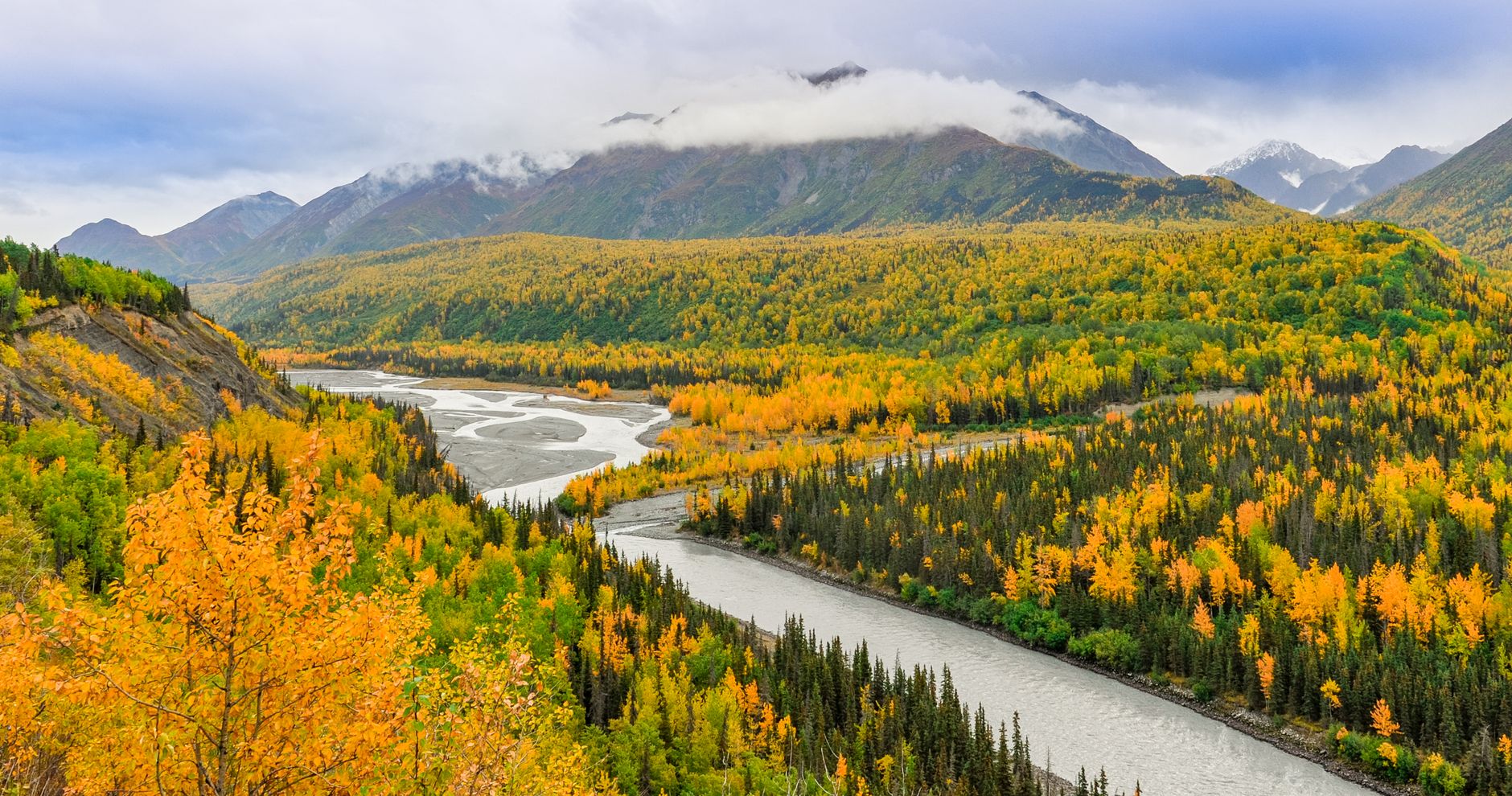
9. Alaska, USA: The best place for sheer wilderness
Alaska operates on a scale that makes most other destinations feel as though somebody accidentally selected “shrink to fit”. Mountains are enormous. Glaciers spill towards the sea. Roads cross huge stretches of virtually empty land. Moose appear where normal countries would put pedestrians. Even the distances on a map require recalibrating what you consider a perfectly reasonable day’s drive.
Wildlife is one of the biggest reasons to visit. Depending on where you go, there are opportunities to see brown bears, black bears, moose, caribou, whales, sea otters, bald eagles and countless other species. But Alaska isn’t somewhere I would reduce to a wildlife checklist. The landscape itself is the main event, and sometimes simply travelling through it is enough.
Denali is an obvious draw, but Alaska rewards people who resist trying to cram every famous location into one holiday. A road trip allows you to slow down, hike, stop at smaller communities and actually absorb the distances involved. Alternatively, combining time on land with boat trips gives you access to glaciers, marine wildlife and coastlines that you simply cannot experience from the road.
Is Alaska worth the cost?
Alaska is not a cheap destination, particularly once accommodation, transport and wildlife excursions start accumulating. I would rather save for the experiences that genuinely matter than travel all that way and then avoid everything because each excursion makes your bank account whimper.
Prioritise. If seeing bears is the dream, build around that. If hiking beneath enormous mountains matters more, spend your money there. If whales are the reason you booked the flight, get on the boat. You do not need every expensive excursion simply because somebody put it on a “must-do Alaska” list.
Best for: Wildlife, road trips, hiking, glaciers and travellers craving genuine scale and space.
Best time to visit: Summer offers the easiest access and longest days. Meanwhile, the shoulder seasons can bring fewer visitors but more variable conditions.

10. Bovec, Slovenia: The best place in Europe for outdoor adventure
Bovec is proof that you don’t need to travel halfway around the world to have a proper adventure. Sitting in Slovenia’s Soča Valley beneath the Julian Alps, this small mountain town gives you access to hiking, canyoning, kayaking, rafting, waterfalls, mountain roads, historic sites and an emerald river so outrageously green that photographs of it look as though somebody has become overenthusiastic with the saturation slider.
I keep returning to Bovec because it works for almost every level of adventurousness. You can spend the morning hiking to a waterfall and the afternoon eating cheese without putting yourself in remotely any danger. Or you can squeeze yourself into a wetsuit and spend several hours jumping, sliding and abseiling down a canyon while reconsidering the decisions that brought you to this point.
The Soča River is the centre of much of the action. Kayaking gives you time to appreciate just how beautiful the valley is between bouts of trying to make your boat travel in the intended direction, while white-water rafting turns complete strangers into a surprisingly enthusiastic team. Canyoning is the choice for anyone who looks at a waterfall and thinks, yes, but could I slide down it?
Who should you book adventure activities with in Bovec?
I recommend Ultimate Alps, a locally run company founded by Diego and Blažka. Small groups make a huge difference with adventure activities, particularly if you are nervous or inexperienced. And I have repeatedly been impressed by the balance between safety, encouragement and actually having fun.
My complete guide to things to do in Bovec includes hiking, waterfalls, food and quieter activities as well as the adrenaline-fuelled options. I also have a dedicated guide to canyoning, kayaking and rafting in Bovec if getting wet is very much part of the plan.
Bovec also works brilliantly as part of a wider Slovenia road trip. The country is compact enough that you can combine the Soča Valley with Lake Bled, Kranjska Gora, Ljubljana and other parts of the Julian Alps without spending your entire holiday staring through a windscreen. My guide to the best things to do in Slovenia can help you piece the wider trip together.
Best for: Canyoning, rafting, kayaking, hiking and active European holidays.
Best time to visit: Late spring through early autumn for the widest range of outdoor activities, with July and August being the busiest months.

Which of the 10 best places to visit in the world should you choose?
Choosing between these destinations becomes much easier once you stop asking which is “best” and start asking what you actually want to experience.
If wildlife is the priority, I would look first at Tanzania, Uganda or Brazil. Choose the Serengeti for a classic African safari with an extraordinary variety of wildlife, Bwindi if seeing mountain gorillas is the dream, and the Pantanal if jaguars are sitting stubbornly at the top of your wildlife bucket list.
For hiking and mountains, Patagonia delivers the biggest drama, Kyrgyzstan the greatest sense of expedition. And the Spanish Pyrenees perhaps the easiest combination of excellent hiking, food and accessibility. Bovec sits somewhere in between: mountains everywhere, but with the option to swap your walking boots for a wetsuit whenever your legs demand a change.
If you want wilderness without flying to the other side of the world from Europe, Romania deserves far more attention than it receives. The Carpathians are one of the few places I have visited in Europe where the ecosystem itself became as interesting to me as the individual animals I hoped to see.
And if culture and history matter as much as landscapes, Egypt is the obvious choice. It can be challenging and chaotic, but that intensity is also part of what makes it so memorable. Go with enough time to experience modern Egyptian life alongside the ancient sites rather than treating Cairo as an inconvenient airport attached to the pyramids.
What makes somewhere one of the best places in the world to visit?
For me, it isn’t perfection.
Some of the places on this list are difficult to reach. Some are expensive. Some involve terrible roads, unpredictable weather, early mornings, mud, mosquitoes or toilets that encourage you to reconsider how badly you really need to go. A destination doesn’t have to be effortless to be extraordinary.
What connects my 10 best places to visit in the world is that each offers something bigger than a collection of attractions. The Serengeti gives you a glimpse into an ecosystem operating at an extraordinary scale. Bwindi brings you face-to-face with another primate. Romania challenges assumptions about European wilderness, while Kyrgyzstan reminds you just how much empty space still exists.
They are also places where how you travel matters. Choosing locally owned guides, staying longer, spending money within communities and treating wildlife as wildlife rather than entertainment can fundamentally change the impact of a trip. Increasingly, those considerations influence not only where I travel, but which experiences I recommend once I get there.
I have no doubt this list will change. I hope it does. The whole reason I keep travelling is because somewhere I have never considered will inevitably surprise me and rudely demand a place in my top ten.
For now, though, if you offered me a plane ticket back to any of these tomorrow, I’d have my bag packed before you finished the sentence.

FAQs about the best places to visit in the world
What is the number one best place to visit in the world?
There isn’t one destination that will be best for everybody. But if I had to choose just one from this list, I would choose the Serengeti in Tanzania. The density and variety of wildlife are extraordinary, every game drive is different. And a longer trip can combine the Serengeti with Ngorongoro, Tarangire and meaningful cultural experiences.
What are the best places in the world to visit for wildlife?
My top choices are the Serengeti in Tanzania, Bwindi Impenetrable Forest in Uganda, the Pantanal in Brazil, the Carpathian Mountains in Romania and Alaska. They offer completely different wildlife experiences, from African big cats and mountain gorillas to jaguars, European brown bears and North American megafauna.
What are the best places to visit in the world for adventure?
For a trip built around outdoor adventure, I would choose Kyrgyzstan, Patagonia, Bovec or the Spanish Pyrenees. Kyrgyzstan is best for a more expedition-style journey, Patagonia for hiking and huge landscapes, Bovec for water sports and the Pyrenees for an accessible combination of mountains, villages and food.
Which destination is best for a first big adventure?
Slovenia is one of my favourite recommendations if you want adventure without making travel unnecessarily difficult. Bovec offers hiking, canyoning, rafting and kayaking. But Slovenia is compact, infrastructure is good and you can easily combine the mountains with lakes, towns and a wider road trip.
If your dream is wildlife rather than outdoor sports, I would choose Tanzania. A well-planned private safari takes care of most of the logistical complexity while still delivering the kind of experience that makes you wonder why you waited so long to go.

How do I choose where to travel next?
Start with the experience rather than the country. Decide whether you most want wildlife, hiking, culture, food, relaxation or proper adventure, then consider your available time, budget and the season you can travel.
The best trip isn’t necessarily the most famous destination or the furthest you can afford to fly. It’s the one that makes you ridiculously excited every time you think about going.

Comments will load here
Be the first to comment