
The Blog

16 Things To Do In Pamplona During San Fermin
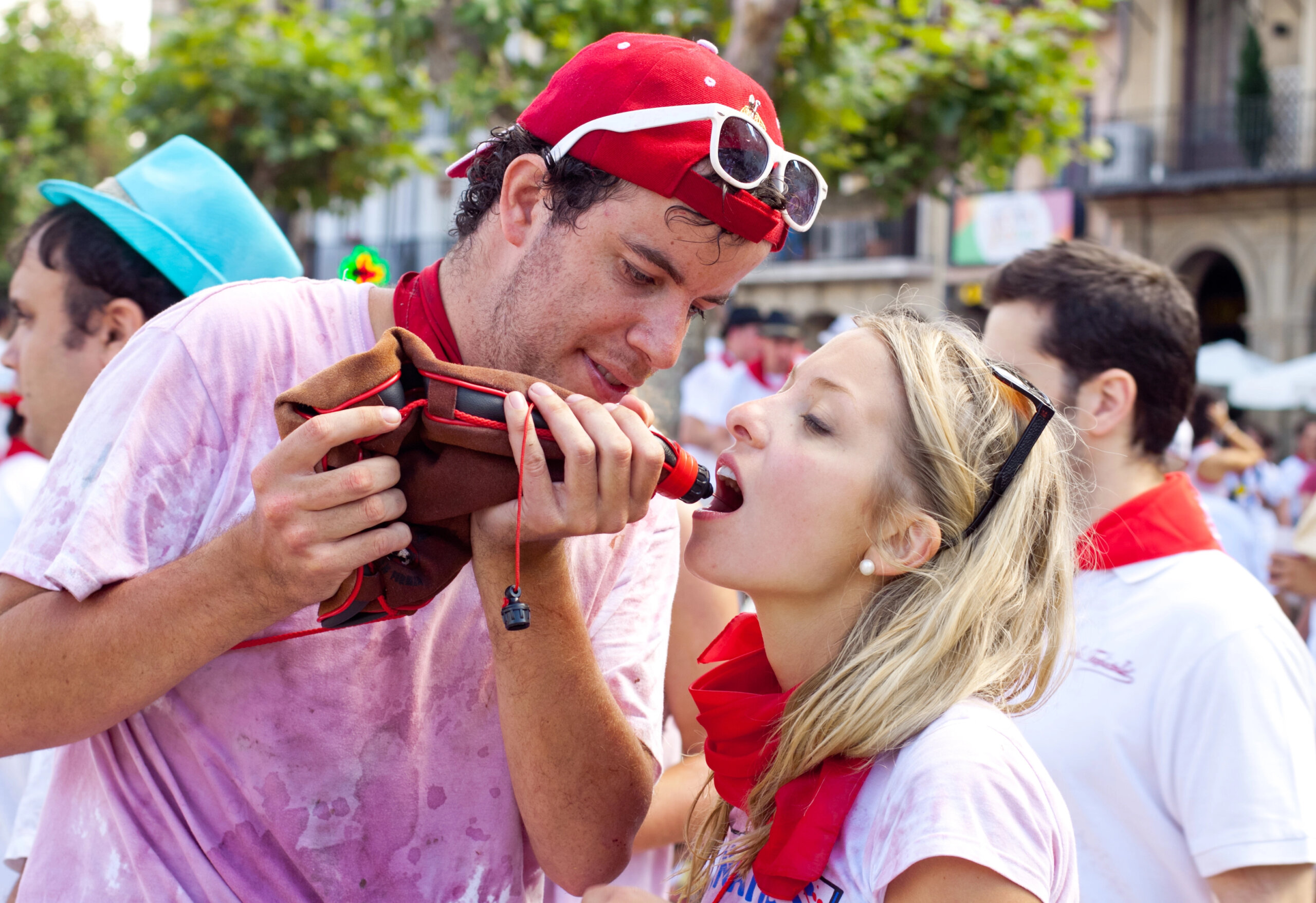
If you are looking for things to do in Pamplona during San Fermin, the good news is that you have considerably more choice than watching people run away from bulls. For nine days every July, Pamplona turns into one enormous festival, with marching bands appearing around corners, people dressed head-to-toe in white and red, enormous papier-mâché figures dancing through the streets and seemingly somebody playing a trumpet at almost any hour of the day.
I live in Navarra, but my real San Fermín expert is my partner, Steve. Twenty years ago, he accidentally rented a flat on Calle Estafeta without realising he had moved onto one of the most famous bull-running streets in the world. He didn’t even know what San Fermines was. Twenty fiestas later, he manages accommodation during the festival, organises balconies for the encierro and has accumulated the sort of San Fermín knowledge that can only come from two decades of experiencing it… including quite a few lessons learnt the hard way.
Between us, then, this isn’t a list cobbled together from the official festival programme. These are the things we’d actually recommend doing.
The San Fermín festival programme includes hundreds of organised events, from fireworks and concerts to traditional dances and children’s activities, while plenty more happens spontaneously in the streets. You could quite easily spend 24 hours in Pamplona without going anywhere near a bull and still come away feeling as though you had experienced San Fermines properly.

Disclaimer. This post may contain affiliate links, which means that if you make a purchase using one of my links I will receive a small referral fee at no extra cost to you. This small fee helps me continue to create content to help intrepid travelers like you plan their next trip!
What's in this post:
15 Things To Do In Pamplona During San Fermin
1. Watch the Chupinazo open San Fermín
San Fermín officially begins at midday on 6 July, when a rocket is fired from the balcony of Pamplona’s Town Hall. This is the Chupinazo, and within seconds Plaza Consistorial and the surrounding streets erupt into celebration. Red neckerchiefs go on, music starts and nine days of San Fermines are officially underway.
Getting into Plaza Consistorial itself is not something I would recommend to everybody. It becomes extraordinarily crowded, and you certainly don’t need to be directly beneath the Town Hall balcony to enjoy the atmosphere. Big screens and celebrations elsewhere in the centre allow you to experience the countdown with considerably more breathing room.
One important detail: locals traditionally don’t tie their red pañuelo around their neck until the rocket has been fired. Before midday you will see people wearing it around their wrist or carrying it instead. Once the Chupinazo goes off, tie it on and prepare to keep it there until Pobre de Mí closes the festival.

2. Watch the encierro
The encierro, or running of the bulls, takes place at 8am each morning from 7 to 14 July. The route begins at the corrals on Cuesta de Santo Domingo, continues through Plaza Consistorial, Mercaderes and Estafeta, and finishes inside Pamplona’s bullring. The entire bulls run is over remarkably quickly, which tends to surprise first-time visitors.
Watching from street level is not as straightforward as simply turning up at 7:55am and finding a space. The barriers fill early and visibility can be poor, particularly if you don’t know where to position yourself. A balcony overlooking the route is considerably more comfortable and gives you a much better view, although these need to be booked well in advance. If you need help booking a balcony, please reach out to Steve.
Another option is to watch from inside the bullring itself. The encierro is shown on big screens before you see the runners and bulls enter the arena at the end of the route. Afterwards, the vaquillas, young cows, are released into the ring with participants, which turns it into a much longer morning experience than the few seconds of the run you will see from any one point along the route. You’ll need a ticket, and these can sell out, so this is another one to organise in advance.
An important note
There is also something important to understand before deciding whether you want to watch. The bulls running the encierro are being taken to the bullring because they will be fought there later that day, where they are normally killed. The morning bull run and the afternoon bullfight are not separate traditions; they are two parts of the same one. If you avoid bullfighting because of concerns about animal cruelty, I think it is worth knowing that watching the encierro still supports and participates in that wider tradition.
Personally, I don’t run and I don’t watch. The encierro is undeniably an important part of San Fermín and something visitors come from all over the world to see, but I don’t think we should pretend the animal welfare question disappears simply because the killing happens later. If you do decide to watch or participate, do so knowing what the event involves rather than treating it simply as eight minutes of adrenaline before breakfast.

3. Organise an almuerzo after the encierro
One of the most Navarrese things you can do during San Fermín has nothing to do with bulls, concerts or staying out until sunrise. It is actually to enjoy an almuerzo. After the encierro, groups of friends gather around tables for a substantial mid-morning meal, and during San Fermines this is far more than grabbing breakfast because you happen to be hungry. It is a social event in its own right.
And when I say substantial, forget a croissant and coffee. A proper almuerzo might involve eggs, txistorra, fried peppers, potatoes, ajoarriero or something equally capable of making you question whether lunch will ever be necessary. Depending on the group, it can also involve wine, beer or patxaran, because apparently 9am is merely a state of mind during San Fermín.
If you are visiting with friends, I would genuinely organise one rather than simply looking for somewhere serving breakfast. Book a table if you can, order several dishes to share and give yourself time to sit around afterwards. It is one of those San Fermín traditions that receives far less international attention than the encierro but tells you considerably more about how local people actually experience the fiesta.

4. Walk the encierro route when there aren’t any bulls on it
One of the best ways to understand the encierro is to walk its route later in the day. Start at the corrals on Cuesta de Santo Domingo, continue towards the Town Hall, turn onto Mercaderes and then follow Calle Estafeta towards the bullring.
It is only when you walk it that you appreciate how narrow parts of the route are, how sharp the famous Mercaderes corner is and just how little space runners actually have. Look for the small statue of San Fermín in the wall on Santo Domingo, where runners sing to the saint before each encierro.
You can walk the route independently, but a guided tour is worthwhile if you want to understand what you are looking at rather than simply following a series of streets. Outside the chaos of the morning run, this is also a good opportunity to appreciate Pamplona’s beautiful Casco Antiguo.
5. Find the Gigantes y Cabezudos
If I had to choose one San Fermín tradition that visitors often underestimate, it would probably be the Gigantes y Cabezudos. The Comparsa consists of 25 enormous and wonderfully strange papier-mâché figures, including giants, cabezuds (big heads), kilikis and zaldikos, accompanied through the streets by traditional musicians.
The giants dance; the cabezudos parade around looking wonderfully disproportionate; and the kilikis chase children while carrying foam batons. The children’s reaction is somewhere between absolute delight and mild terror, which frankly makes the whole spectacle even better.
Their route changes each day, so check the official programme rather than expecting to stumble across them. Although you very possibly will stumble across them anyway. On 14 July, the Comparsa has its emotional farewell outside the Town Hall, and if you have children with you, this is one San Fermín tradition I would make a particular effort to see.

6. Experience the San Fermín procession on 7 July
The religious origins of San Fermín can get slightly lost amongst the sangria-stained white clothing and brass bands, but 7 July is the feast day of San Fermín himself. The procession through the old town is one of the best opportunities to see the traditional side of the festival.
The procession brings together the saint, the municipal corporation, musicians, dancers and the Gigantes y Cabezudos before making its way through the historic centre towards the Chapel of San Fermín in the Church of San Lorenzo. It feels very different from the nighttime street parties and is a reminder that San Fermines is not simply a week-long party invented for tourists.
If you are interested in local culture rather than only the headline events, make time for it. You don’t need to be religious to appreciate the music, clothing and traditions, and it is one of those occasions when Pamplona feels very distinctly Navarrese.
7. Follow the peñas through Pamplona
You will hear the peñas before you properly understand what they are. These local social clubs are a huge part of San Fermín, filling the streets with music, banners, dancing and the kind of energy that makes standing still in Pamplona during July surprisingly difficult.
Each peña has its own identity and traditions, but as a visitor you don’t need to understand all of that to enjoy the atmosphere they create. When a txaranga comes marching down the street, follow it for a while. Some of my favourite moments during San Fermines have nothing to do with scheduled events; they happen because music appears and an ordinary street suddenly becomes a party.
This is also why I wouldn’t plan every hour of your visit. San Fermín works best when you leave enough space to get distracted.

8. Have pintxos in the Old Town
At some point you need to eat, and preferably before your diet becomes entirely composed of bocadillos consumed while standing up. Pamplona has excellent pintxo bars, and during San Fermín the streets around Calle Estafeta, San Nicolás and Plaza del Castillo are packed.
My advice is not to choose one restaurant and settle in for the evening. Do what locals do and move between bars, ordering a pintxo or two in each. It gives you a chance to try more food and, during San Fermín, means you become part of the movement through the city rather than watching it from behind a restaurant window.
Bear in mind that everywhere is significantly busier than normal. If food is an important part of your trip, also consider eating slightly outside the most obvious peak times rather than expecting a peaceful dinner at 9pm in the middle of the old town.
And if you find everywhere is fully booked, head to an Indian or Chinese restaurant, they are always empty during San Fermines.
9. Spend an evening in Plaza del Castillo
If Pamplona has a living room, it is Plaza del Castillo, and during San Fermín somebody has invited several thousand extra people over.
The square becomes one of the main gathering places during the festival, surrounded by bars, cafés and terraces and regularly hosting live music. It is a good place to head if you don’t have a precise plan for the evening because something is almost always happening either in the square itself or within a couple of streets.
It is also worth returning at different times of day. Morning Pamplona, when people are emerging from the encierro and others are somehow still finishing the previous night, bears very little resemblance to the city you will find here after dinner.

10. Watch the nightly fireworks
One of the easiest San Fermín traditions to enjoy is the nightly fireworks display. Pamplona hosts an international fireworks competition during the festival, with displays launched from the Ciudadela and visible from several parts of the city.
The lawns around Vuelta del Castillo are a popular place to watch, and this is one activity where arriving with something to sit on is an excellent life decision. After hours of walking on cobbled streets, your feet will appreciate the gesture even if nobody else does.
The fireworks are also a good way to structure an evening. Have dinner beforehand, watch the display and then decide whether you have enough energy to continue into the night. During San Fermines, the answer around you will almost certainly be yes.
11. Listen to the Dianas
If you are awake at 6:45am during San Fermín, there are two possibilities: you have got up extremely early for the encierro, or you have made a series of decisions that resulted in you never going to bed.
Either way, you may encounter the Dianas. These early-morning musical parades are performed by La Pamplonesa and other musicians as the city prepares for another encierro. They are one of my favourite examples of how music is woven into San Fermín rather than reserved for formal concerts.
There is something wonderfully surreal about brass-band music echoing through Pamplona before breakfast while runners, families, partygoers and people clutching coffee all converge on the old town. If you want to understand why San Fermín feels different from a normal city festival, this is part of it.
12. See traditional Basque and Navarrese sports
San Fermín isn’t only about bulls. The programme normally includes demonstrations and competitions involving traditional rural sports, known as herri kirolak, which developed from agricultural work carried out across the Basque Country and Navarra.
Depending on the programme, you might see competitors chopping enormous logs, lifting stones or taking part in other feats of strength that make your gym session suddenly look rather unimpressive. There are also pelota matches and traditional dance performances throughout the festival.
These events are particularly worth seeking out if this is your first visit to Navarra. They give you some cultural context beyond the international image of San Fermín and are usually much easier to watch than the festival’s most famous events.

13. Go to a free concert
You do not need to buy tickets to find live music during San Fermín. The official programme includes concerts and DJs across several locations, while bands, txarangas and other musicians perform throughout the centre.
In recent programmes, major music areas have included Plaza del Castillo, Plaza de los Fueros and Plaza de la Compañía, with everything from local performers to nationally and internationally known artists. The exact line-up changes each year, so this is one occasion when planning your trip around an old blog post would be a mistake. Check the current year’s programme shortly before travelling.
Even if none of the headline acts appeal to you, you’ll find music almost everywhere. Some of the best entertainment is simply following whatever band happens to be coming down the street.
14. Experience the encierrillo
The encierrillo is much less famous than the encierro and almost its complete opposite. Each evening, the bulls that will run the following morning are quietly moved from the Corrales del Gas to the corrals at Santo Domingo.
There is no running, shouting or music. Spectators must remain silent, photography is prohibited and the whole thing lasts approximately a minute. In 2026, access was free but limited to people who had obtained passes through a ballot, so check the arrangements for the year you visit rather than assuming you can simply turn up.
It is fascinating precisely because it contrasts so strongly with everything else happening in Pamplona. One minute you are surrounded by one of Europe’s loudest festivals; the next, hundreds of people are standing completely silently as six bulls pass through the darkness.
15. Explore Pamplona beyond the festival streets
It is very easy to spend several days at San Fermín and see remarkably little of Pamplona itself. If you have time, step away from the busiest streets for a couple of hours and explore the city walls, the Cathedral of Santa María la Real, the Ciudadela and some of the quieter corners of the old town.
This is particularly worthwhile in the middle of the day when you need a break from crowds. Pamplona is a genuinely lovely city outside San Fermín, and there is far more to it than Estafeta and Plaza de Toros.
I have a separate guide to the best things to do in Pamplona Spain if you want to build some normal sightseeing into your visit. I would recommend doing exactly that, particularly if you are staying for more than two nights.

16. Stay for Pobre de Mí
If the Chupinazo is Pamplona collectively pressing the start button, Pobre de Mí is everybody reluctantly admitting that eventually they have to go home.
At midnight on 14 July, crowds gather outside the Town Hall for the official end of San Fermín. People remove their red neckerchiefs, hold candles and sing Pobre de mí, pobre de mí, que se han acabado las fiestas de San Fermín, lamenting that the festival has finished.
It is considerably more emotional than you might expect after nine days of near-continuous celebration. The red scarves come off, the festival officially ends and Pamplona begins the rather substantial job of returning to normal. If your dates allow you to experience both the Chupinazo and Pobre de Mí, you get to see the complete arc of the festival rather than simply dropping into the middle.
Bonus: Don’t dismiss San Fermín if you are travelling with children
I think international coverage gives people a slightly distorted impression of San Fermín as nine days of drinking and running with bulls. There is certainly plenty of both, but the official programme also contains a huge number of activities specifically designed for children and families.
The Gigantes y Cabezudos are an obvious highlight, but there are also games, performances, children’s versions of festival traditions and dedicated family spaces. In 2026 alone, Pamplona’s official programme contained 516 events, with children’s activities given an increased role.
You do need to think carefully about crowds, timings and where you take children, particularly around the Chupinazo and encierro route. But I wouldn’t automatically rule out San Fermín as a family experience. In many ways, seeing children grow up with these traditions is one of the loveliest sides of the festival.

How To Plan Your San Fermin Experience
San Fermín rewards a bit of planning, but I wouldn’t create an hour-by-hour itinerary. There are too many spontaneous things happening, and crossing the old town can take considerably longer when several thousand people and a brass band have simultaneously decided to use the same street.
Before travelling, read my san fermin travel tips, particularly if this is your first visit. There are practical things about crowds, clothing, accommodation and the encierro that are much easier to understand before you arrive than while standing in the middle of Calle Estafeta wondering why everybody else seems to know what they are doing.
Choose your non-negotiables first.
If you want to see the Chupinazo, procession, encierro or Pobre de Mí, build your trip around those because they happen at fixed times and, in some cases, only once during the festival.
Check the current year’s official programme.
San Fermín has recurring traditions, but concerts, performances, children’s activities and individual schedules change. Don’t rely on the timetable from somebody’s trip three years ago.
Book accommodation extremely early.
Pamplona gets very busy and prices rise accordingly. If you want to stay in the centre, especially somewhere overlooking the encierro route, this is not a trip I would leave until the last minute.
Consider an apartment if you are travelling as a group.
My partner Steve manages accommodation in Pamplona specifically during San Fermines, ranging from individual rooms in shared apartments to complete apartments sleeping groups of up to 15 people. For families and groups of friends, having a kitchen, living space and somewhere to retreat from the festival can be considerably more practical than several hotel rooms. Email Steve to find out what availability he has left.
Don’t try to do everything.
You don’t need to attend every concert, procession and traditional event to experience San Fermín. Pick two or three priorities each day and leave room for whatever you encounter between them.
Use quieter parts of Pamplona as a reset button.
The old town can be intense. Walk around the Ciudadela, city walls or parks when you need some space before heading back into the festivities.
Think about sleep before you arrive.
San Fermín runs from early morning until very late at night. If you want to watch an 8am encierro and experience the nightlife, an afternoon siesta may become less of a cultural experience and more of a survival strategy.
Wear the white and red.
You don’t have to, but almost everybody does, and joining in makes you feel considerably more part of the festival. Just don’t bring your favourite white trousers and expect them to return home looking like they did when they arrived.
Plan food as well as events.
Restaurants and bars become extremely busy. Eat at slightly unusual times, book proper meals where possible and don’t wait until you are starving before attempting to find somewhere.
Allow time for Pamplona itself.
If you are staying several days, spend at least a few hours seeing the city beyond the festival. San Fermín is extraordinary, but it shouldn’t leave you knowing Pamplona only as somewhere people run down Calle Estafeta.
My Final Thoughts
San Fermín can look completely chaotic from the outside, and to be fair, occasionally it is. But underneath that chaos is a festival full of traditions that local families have grown up with: the first rocket on 6 July, children fleeing from kilikis, early-morning Dianas, the procession to San Lorenzo, the peñas filling the streets with music and the final red neckerchiefs coming off on 14 July.
The encierro may be what brings San Fermín international attention, but it isn’t the thing that makes me recommend experiencing the festival. Give yourself enough time to get beyond the bull run, follow the music when you hear it and accept that whatever itinerary you make will probably be interrupted at some point by a giant papier-mâché king coming down the road.
That is usually when San Fermín gets interesting.

Comments will load here
Be the first to comment