
The Blog

What Happens During San Fermin? A Guide to Pamplona’s Biggest Festival
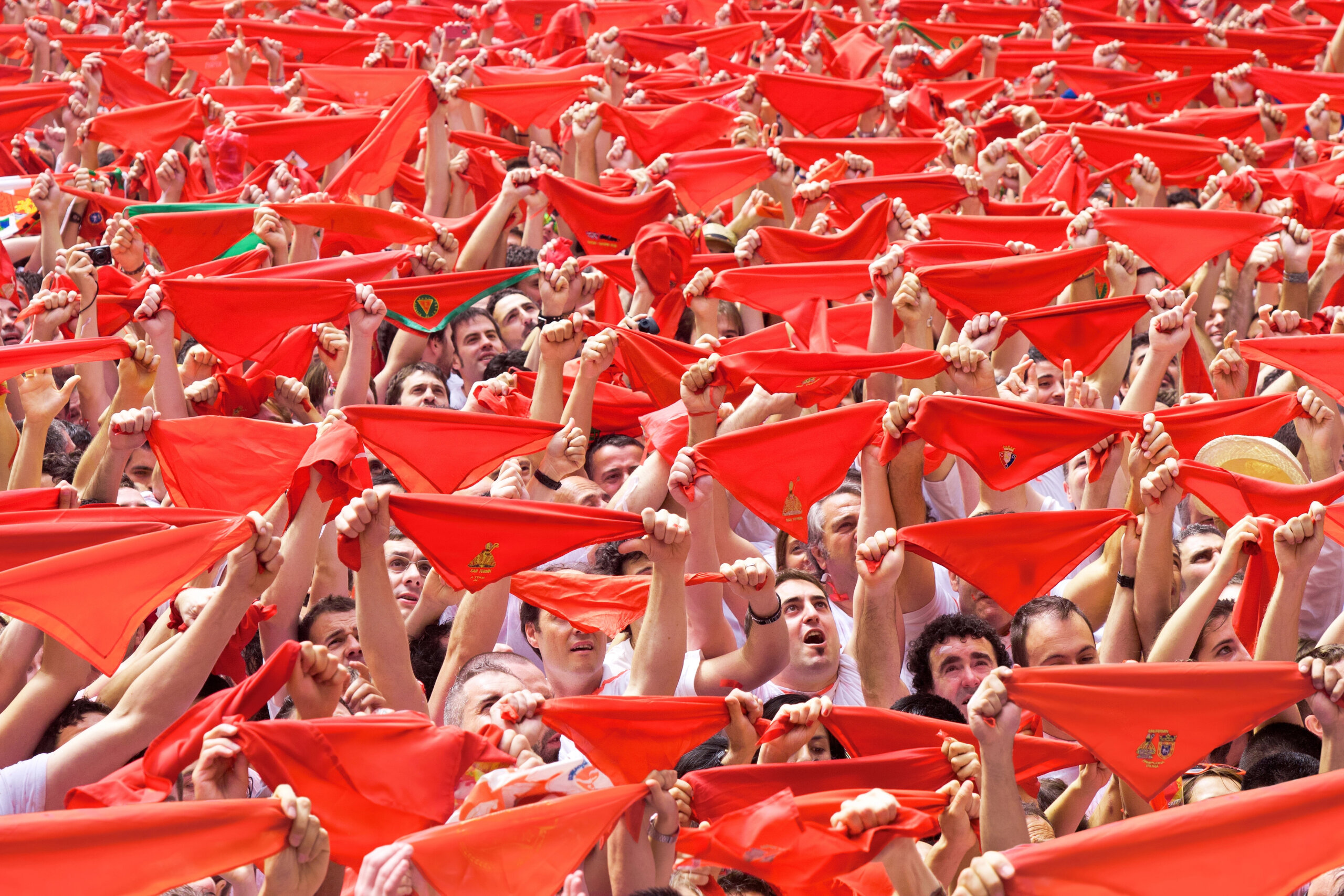
If you have only ever seen San Fermín on television, you could be forgiven for thinking it is eight mornings of people making questionable decisions in front of bulls. But what happens during San Fermin is much bigger than the famous encierro. For nine days every July, Pamplona’s streets become the setting for religious ceremonies, enormous parades, brass bands, concerts, fireworks, family traditions and a street party that seems to operate on its own timezone.
I live just outside Pamplona, and San Fermín is one of those festivals that makes far more sense once you experience it here. The running of the bulls gets most of the international attention. But for the people of Pamplona, the festival is made up of hundreds of smaller traditions and momenticos: watching the giants dance, hearing a txaranga coming before you can see it, meeting friends for lunch, squeezing through the Old Town and somehow finding yourself dancing behind a brass band.
So, if you are wondering what actually happens during the San Fermin festival, this guide takes you through it.

Disclaimer. This post may contain affiliate links, which means that if you make a purchase using one of my links I will receive a small referral fee at no extra cost to you. This small fee helps me continue to create content to help intrepid travelers like you plan their next trip!
What's in this post:
What Happens During San Fermin?
San Fermín officially begins at midday on 6 July and finishes at midnight on 14 July. During those nine days, Pamplona essentially changes personality. Everyone dresses in white with a red neckerchief, streets are closed to traffic, temporary stages appear across the city and the Old Town becomes the centre of a festival that runs from early morning until very, very late at night (well, until the next morning).
There is also no single San Fermín experience. Someone can wake up early to watch the bulls encierro, have breakfast, follow the Gigantes y Cabezudos through the streets with their children, go home for lunch and return for the fireworks. Someone else can sleep until midday and spend the afternoon listening to live music before partying until sunrise.
That variety is what I think gets lost when San Fermín is reduced to the running of the bulls. The 2026 official programme contained more than 500 scheduled activities, ranging from concerts and traditional dance to children’s events, theatre, rural sports, religious ceremonies and fireworks. And that doesn’t include everything that happens spontaneously in the streets.
For additional information, see my guide for things to do in Pamplona during San Fermin.
If you are visiting outside the festival too, my guide to things to do in Pamplona Spain covers what else is worth seeing in the city.
Why Is San Fermin Celebrated?
San Fermín is, at its heart, a religious festival honouring Saint Fermín, the co-patron saint of Navarra. The oldest known records of celebrations in his honour date to the 12th century, following the arrival in Pamplona of a relic of the saint from Amiens in France in 1186. Over time, those religious celebrations became intertwined with livestock fairs, bullfighting and other festivities taking place in the city.
That evolution explains why modern San Fermín can sometimes feel like several completely different festivals happening simultaneously. There is still a genuinely important religious side, particularly around 7 July. But alongside it you have concerts, street drinking, traditional dances, children’s events, bull-related traditions and huge public celebrations.
It is worth understanding this before visiting because San Fermín isn’t simply a party that happens to be named after a saint. Religious traditions remain woven into the san fermín festivities, even though many of the hundreds of thousands of people who participate today are there for cultural or social reasons rather than religious ones.

How Is San Fermin Celebrated?
There isn’t really one way to celebrate San Fermín. That is part of its charm. You can build your days around traditional events, concerts, food, family activities or the party, and barely overlap with somebody having a completely different San Fermín experience.
There are, however, several events and traditions you are almost guaranteed to encounter.
The Chupinazo Opens San Fermín
At exactly midday on 6 July, a rocket is fired from the balcony of Pamplona’s Ayuntamiento in Plaza Consistorial. This is the Chupinazo, and it marks the official beginning of San Fermín.
Thousands of people pack into the small square dressed in white, holding their red neckerchiefs above their heads. After the traditional cry of “Viva San Fermín! Gora San Fermín!”, the rocket goes up, the scarves go on and the city erupts. The current tradition of launching the Chupinazo from the City Hall balcony dates to 1941.
You absolutely do not have to stand in Plaza Consistorial to experience it. In fact, unless being compressed between several thousand sweaty strangers is high on your bucket list, you may actively prefer not to. Screens broadcast the ceremony at other locations around Pamplona and celebrations happen throughout the centre.

The Encierro Takes Place Every Morning
From 7 to 14 July, the running of the bulls takes place at 8am. Six fighting bulls, accompanied by steers, run from the corrals at Santo Domingo through the Old Town to Pamplona’s bullring, with runners attempting to run alongside or ahead of them.
The encierro may only last a few minutes, but it shapes the entire morning. Barriers go up, spectators claim viewing spots long before 8am and the streets around the route become increasingly busy as the start approaches.
I’ll explain exactly what happens during the running of the bulls further down because, unsurprisingly, this particular tradition needs more than one paragraph.
The Procession Honours San Fermín
On 7 July, the religious heart of the festival becomes much more visible when the statue of San Fermín is carried through Pamplona in procession.
This is one of the moments when you really understand how many layers San Fermín has. The procession is accompanied by city representatives, musicians, dancers and traditional figures, and the atmosphere is completely different from the scenes of partying you may have witnessed just a few hours earlier. The official procession begins in the morning, following the first encierro of the day.
Even if you aren’t religious, it is worth seeing because it provides important context. San Fermín didn’t begin as an excuse to wear white trousers while drinking sangria at 10am. The religious traditions came first.
The Gigantes y Cabezudos Parade Through Pamplona
One of my favourite parts of San Fermín has nothing to do with bulls.
The Comparsa de Gigantes y Cabezudos is made up of 25 enormous and wonderfully strange papier-mâché figures, including giants, big-heads, kilikis and zaldikos. They parade through Pamplona accompanied by traditional musicians, following a different route each day from 6 to 14 July.
If you’re visiting with children, this is one of the traditions I would prioritise. Although I should warn you that the kilikis carry foam batons and chase children with them, which is apparently tremendous fun when you grow up here and slightly more alarming when nobody has explained the concept to you.

Music Takes Over the Streets
You don’t really need to go looking for music during San Fermín. It tends to find you.
There are organised concerts across Pamplona, but some of my favourite musical moments happen away from the main stages. Txarangas (lively brass bands closely associated with fiestas in this part of Spain) move through the streets, often followed by crowds dancing behind them. You will also hear traditional Basque and Navarrese music, DJs, street performers and occasionally something completely unexpected coming from a balcony.
The result is that Pamplona never really sounds quiet during San Fermín. You can turn a corner expecting to walk home and accidentally become part of a parade.
Fireworks Fill the Sky Every Night
Fireworks are another major part of the San Fermin festival and one of the easiest traditions to enjoy if you don’t fancy squeezing yourself into the Old Town.
Displays take place at night from the area around the Ciudadela, with people gathering across the surrounding parks and streets to watch. It is one of those rare parts of San Fermín where sitting down is not only possible but actively encouraged, which by day five starts to feel like quite the luxury.
Peñas Keep the Party Moving
You will hear plenty about Pamplona’s peñas during San Fermín. These are social groups with their own premises, traditions, banners and txarangas. And they are a huge part of the atmosphere of the festival.
They bring music and colour into the streets and play a particularly visible role around the bullring. The Ayuntamiento describes the peñas as the “soul” of the fiesta, and once you’ve seen a band and several hundred people dancing their way through the Old Town behind an enormous banner, that description makes considerably more sense.

Pobre de Mí Closes the Festival
At midnight on 14 July, San Fermín ends almost as suddenly as it began.
Thousands gather outside the Ayuntamiento carrying candles and singing Pobre de mí, pobre de mí, que se han acabado las fiestas de San Fermín, essentially lamenting that the festival is over. Red scarves are removed and the mayor formally closes the festivities, inviting everyone to return the following year.
After nine days of noise, music and streets full of people, Pobre de Mí feels surprisingly emotional. You don’t have to have grown up in Pamplona to understand that something important to the city has just finished.
What Happens During the Running of the Bulls?
The encierro takes place every morning from 7 to 14 July at 8am. The bulls leave the corrals at Santo Domingo and run through Santo Domingo, Plaza Consistorial, Mercaderes, Estafeta and Telefónica before entering the callejón leading into the Plaza de Toros. Official sources put the route at roughly 850–875 metres, depending on the exact measurement used.
Shortly before the run begins, runners gather beneath a small image of San Fermín on Santo Domingo and sing to the saint, asking for his protection. Rockets then communicate the progress of the encierro, including the release of the bulls from the corrals.
A typical run lasts only a few minutes. Pamplona’s 2026 programme gives an average duration of around three and a half minutes, with approximately 2,000 runners on a normal day and considerably more at weekends.
And yes, it is dangerous.
That is important context because videos can make the running of the bulls look like a slightly chaotic fun run with added livestock. It isn’t. These are fighting bulls, the streets are crowded and serious injuries happen. If you are considering running rather than watching, read my san fermin travel tips first and make sure you understand the rules and risks.
It is also worth knowing that the encierro isn’t an isolated tourist spectacle. The bulls running that morning are traditionally the animals appearing in the bullfight later that day. If you have ethical concerns around bullfighting, that connection matters when deciding which San Fermín traditions you personally want to participate in.

How Long Is The San Fermin Festival?
The official San Fermín festivities last nine days, beginning with the Chupinazo at midday on 6 July and ending with Pobre de Mí at midnight on 14 July. The encierros take place on the eight mornings from 7 to 14 July.
Those nine days don’t all feel the same. The opening on 6 July is an explosion of anticipation and energy. The 7th is particularly significant because it is the feast day of San Fermín and includes the procession. Weekends tend to bring even bigger crowds, while weekdays can feel marginally more manageable. However, “quiet” would be an ambitious description of Pamplona during San Fermín.
As the festival progresses, you also start to notice its daily rhythm. Early risers and people who simply haven’t gone to bed yet converge around the encierro route before 8am. Families appear for the Gigantes y Cabezudos. Lunch stretches into the afternoon. The streets fill again for evening events and fireworks. Then the nighttime crowds take over.
You certainly don’t need all nine days to experience San Fermín. For a first visit, a few carefully planned days can give you a much better introduction than attempting the entire festival and discovering on day six that your feet, ears and liver have collectively submitted their resignation.
Where Should You Stay During San Fermín?
If you’re planning to come for San Fermín, I would book accommodation as early as possible. Pamplona gets extremely busy during the festival and staying somewhere central enough to walk is a huge advantage, particularly when roads are closed and taxis aren’t always the easiest option.
My partner Steve manages a number of apartments in Pamplona specifically during San Fermín, ranging from individual rooms in shared apartments to entire apartments sleeping groups of up to 15 people. So, if you’re struggling to find somewhere suitable, particularly if you’re travelling as a group, contact Steve to find out his availability.
And because these are apartments we actually manage rather than accommodation I’ve pulled from a booking platform, you can also ask us questions about the location before booking. During San Fermín, being a few streets closer to where you want to spend your time can make a surprisingly big difference.

Is San Fermín Worth Experiencing If You Don’t Want to See the Bulls?
Absolutely, but with an important caveat.
You can attend San Fermín without watching the encierro or a bullfight. There is enough happening across Pamplona that you could fill several days with music, parades, food, fireworks, traditional dancing and religious events without deliberately attending a bull-related activity.
But I don’t think it is honest to pretend the bulls are an insignificant side event. Bull imagery is everywhere, the encierro is one of the central traditions and bull-related elements appear throughout the wider festival. You can choose not to participate in them, but you cannot completely separate San Fermín from its bullfighting history.
For me, that complexity is part of understanding the festival rather than a reason to ignore everything else happening around it.
What Does San Fermín Actually Feel Like?
This is the bit that’s hardest to explain until you’ve been here.
Yes, San Fermín is crowded and loud. At times it is chaotic. You will probably get something spilled on you, discover that your white clothes are no longer white and hear the same song enough times that it follows you home.
But there is also far more tradition than the international coverage suggests. You see grandparents bringing children to watch the same giants they watched as children themselves. Friends meet for annual lunches. Bands appear in tiny streets. Religious ceremonies happen alongside parties. Entire generations of families have their own rituals for where they stand, what they watch and who they meet.
That, much more than any single event, is what happens during San Fermin. Pamplona doesn’t simply host a festival for nine days. The city participates in it.
And once you understand that, San Fermín stops looking like one crazy bull run in Pamplona, Spain, and starts making considerably more sense.

Comments will load here
Be the first to comment