
The Blog

Lake Bohinj Travel Guide: What to Do, Where to Stay and How to Visit
Lake Bohinj had a difficult act to follow. I had started the morning watching sunrise over Lake Bled, with mist rolling through the valleys and the mountains turning pink. I wasn’t convinced the day could get much better. Then we drove towards Bohinj, past wooden Alpine houses with balconies overflowing with flowers, and I spent most of the journey wishing we could stop again.
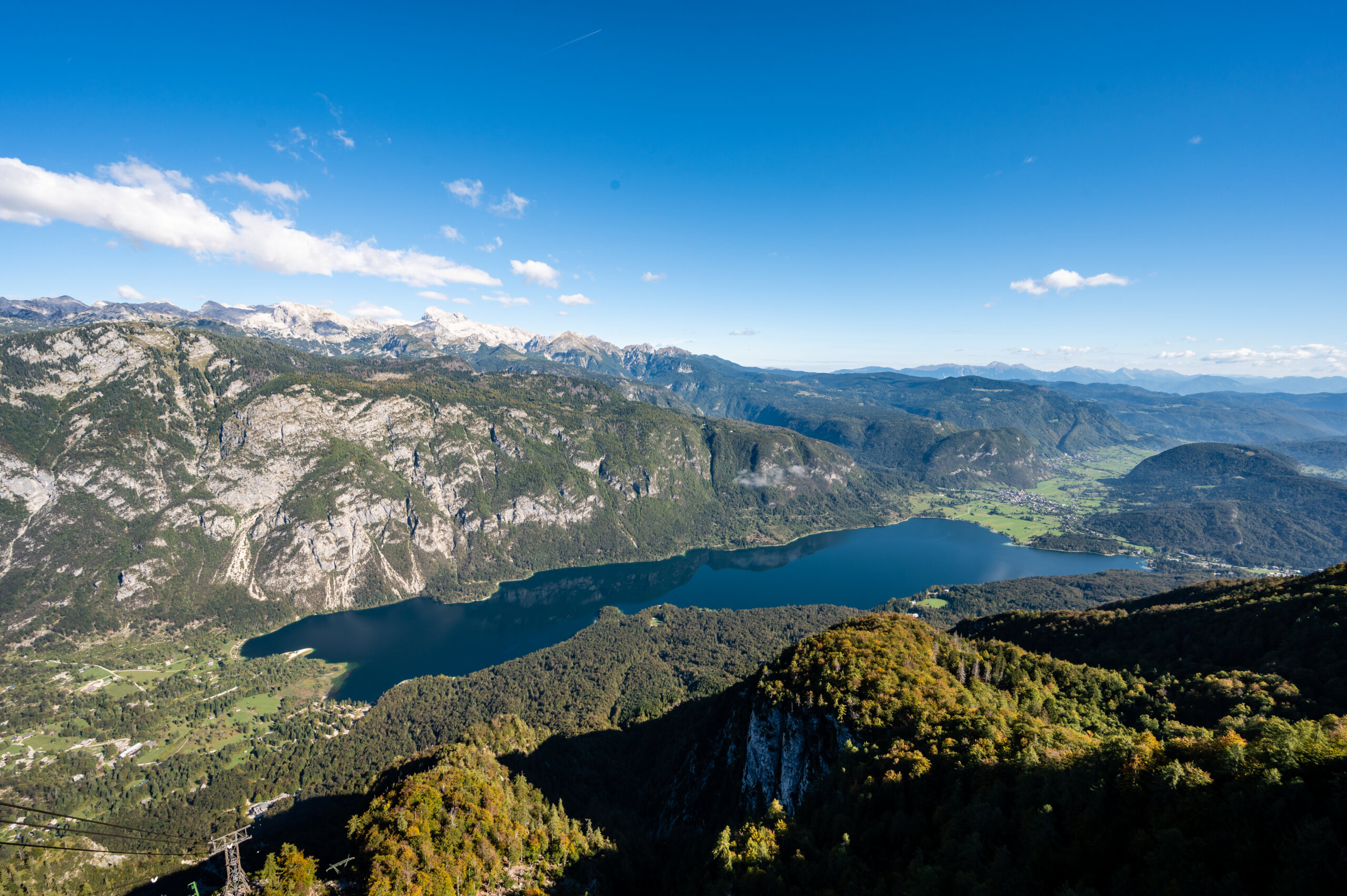
By the time we reached Vogel, I was completely sold. We took the cable car up above the lake and spent at least an hour sitting in the sunshine, looking across the Julian Alps. There were walking trails to explore, but for once I wasn’t particularly interested in moving. Slovenia was making a very strong case for extending the holiday indefinitely.
If you are planning a visit to Lake Bohinj, Slovenia, this guide covers the decisions that actually shape your trip: whether to stay overnight, which end of the lake to choose, how to get there, and which activities deserve your time. I visited in late September, so my experience comes with autumn colours and sunshine rather than a personal verdict on the summer swimming.
Disclaimer: This post may include affiliate links. If you click on the link and make a purchase, I will receive a small commission at no extra cost to you. Affiliate links help cover the cost of running my website so that I can continue inspiring my readers to explore the world.
What's in this post:
Where Is Lake Bohinj, and Why Visit?
Lake Bohinj sits in Triglav National Park, in northwestern Slovenia’s Julian Alps. It is the country’s largest permanent natural lake, a distinction worth making because seasonal Lake Cerknica can be larger. The attraction is the setting: a long stretch of water beneath steep mountains, with woodland, walking trails and villages around it rather than a continuous lakeside resort.
Bohinj is also the name of the wider area, which matters when booking accommodation. Somewhere described as being “in Bohinj” might be beside the water, in a nearby village or in Bohinjska Bistrica, several kilometres away. None is automatically a bad choice, but if your holiday revolves around walking to the lake before breakfast, check the actual address before falling for the balcony photographs.
Bohinj is one of the places I would build a Slovenia trip around, particularly if you love being outdoors. For help choosing what to combine it with, my Best Places to Visit in Slovenia guide takes you from the Julian Alps to the coast, with the places I would happily return to and the reasons to include each one.
Lake Bohinj at a Glance
| Planning question | My recommendation |
|---|---|
| How long should you spend? | One full day for an introduction; two or three nights for a more relaxed outdoor stay |
| Best base without a car? | Ribčev Laz, near the eastern end of the lake |
| Best base for a quieter setting? | Ukanc, at the western end |
| My personal highlight? | The views from Vogel |
| Can you swim? | Yes, with designated bathing areas at Fužinski Bay and Ukanc |
| Can you visit from Bled? | Yes, by car or bus |
| Is it free to visit? | There is no general lake entrance fee; parking and individual activities cost extra |
Lake Bled or Lake Bohinj: Which Should You Choose?
Lake Bled gives you the island church, the castle above the water and a town with plenty of places to eat. Bohinj gives you a bigger mountain setting and more reason to build your day around walking, paddling or sitting by the shore. Both are beautiful, but they suit slightly different holidays. I would choose Bled for a short sightseeing break and Bohinj for several days outdoors.
When I visited, Bled felt noticeably more touristy, while Bohinj felt more closely connected to the surrounding mountains. That doesn’t make Bohinj a secret. Summer brings plenty of visitors here too, and a busy car park can puncture the wilderness fantasy fairly quickly. My preference is for Bohinj’s landscape, but I wouldn’t tell someone to skip Bled without knowing what they wanted from the trip.
My honest answer is that I would visit both. Bled gave me that extraordinary sunrise; Bohinj gave me an afternoon when I could barely drag myself away from the mountain views. My honest take on whether Lake Bled is worth visiting will help if you are still undecided, while my guide to things to do in Bled covers what to do once you get there.

How Many Days Do You Need at Lake Bohinj?
One full day is enough for the lake and one or two nearby attractions. We visited from Bled and combined Vogel with Savica Waterfall, which gave us a lovely introduction. However, that is different from having time for a substantial hike, an afternoon on the water and a slow wander through the villages. Those require either more nights or a firm decision to leave something out.
For an outdoor holiday, I would allow two or three nights. That gives you some flexibility to choose the clearest day for Vogel and rearrange walking plans around the weather. If you only have a day, decide what matters most before arriving: mountain views, swimming or hiking. Trying to give equal attention to all three is how a relaxing lake visit becomes an exercise in clock-watching.
If Bohinj is one stop on a wider adventure, my five-day Slovenia itinerary gives you a starting point for joining the places together. I would happily stretch it with extra nights here, especially if your idea of a good holiday involves walking boots, swimming costumes and considerably less time spent packing your suitcase.
How to Get to Lake Bohinj
Lake Bled to Lake Bohinj
For planning purposes, allow roughly 30–45 minutes to drive from Bled to Ribčev Laz in ordinary traffic, with longer needed in busy periods or if you are continuing towards Ukanc. Treat that as an estimate rather than a promise. Our journey was part of the pleasure, with flower-filled balconies and mountain scenery providing regular reasons to wish someone else was doing the driving.
Buses also connect Bled with Bohinj. Check the stop as well as the departure time: the eastern lakeside stop is commonly listed as Bohinj Jezero, while services continuing west can serve Ukanc. A bus to Bohinjska Bistrica alone does not deliver you to the shore. Use the current bus timetable and check your return journey before setting off.
Ljubljana to Lake Bohinj
By car, allow approximately an hour and a half from Ljubljana to the eastern end of the lake, depending on traffic. By bus, allow around two hours or more and check the specific service rather than relying on a generic journey estimate. Direct services run via Bled and Bohinjska Bistrica towards the lake, so a change at Bled is not automatically necessary.
The railway station is in Bohinjska Bistrica, not beside Lake Bohinj. Arriving by train therefore means continuing by bus or taxi. For a straightforward day trip from Ljubljana, I would compare the direct bus first; the train becomes more interesting when the railway journey fits your wider route. The official transport guide links to bus, rail and car-train information.
Do You Need a Car, and Where Can You Park?
You can enjoy Bohinj without a car, particularly if you stay near the lake and use buses for longer journeys. My guide to driving in Slovenia covers the practicalities if you decide to hire one. A car offers flexibility for exploring the wider region, but it also introduces parking costs and the prospect of searching for a space when everyone else has had the same excellent idea. Choose your accommodation with your transport plans in mind, especially outside the main season.
Park only in marked spaces and check the official Bohinj parking information for current charges, availability and seasonal transport options. If you are staying locally, ask whether your accommodation offers parking and whether the Julian Alps: Bohinj Card would help with your plans. There is little point paying for a room with parking and then spending the holiday paying to move the car elsewhere.

Best Things to Do at Lake Bohinj
1. Take the Lake Bohinj Cable Car to Vogel
ogel was the highlight of my visit, and considering I had started the day watching sunrise over Lake Bled, that is saying something. The cable car takes you from near Ukanc to around 1,500 metres, where suddenly you are looking across the Julian Alps, with Lake Bohinj stretched out below. These were the mountains that had stolen my heart from the plane, and now I was sitting among them.
We spent at least an hour just basking in the September sunshine and admiring the view. No rushing off to the next attraction, no particularly meaningful conversation, just a lot of looking and the occasional “wow”. I normally have the attention span of an excited spaniel when exploring somewhere new, so persuading me to sit still for that long is quite an achievement.
There are walking routes from the upper station, so you can turn the trip into a mountain outing or simply enjoy a shorter wander and lunch with a view. An additional chairlift was closed when we visited, but we still had a lovely walk through the first autumn colours. For me, the cable car alone had already delivered everything I had hoped for.
The Vogel website has tickets, webcams and lift information. The webcams are particularly useful for choosing a day when you will actually be able to see those magnificent mountains.

2. Walk Around Lake Bohinj, or Choose One Shore
A walk beside Lake Bohinj is one of the easiest ways to appreciate its scale. From the shore, the mountains feel enormous, and every change in perspective gives you another reason to stop. The full circuit is just over 11 kilometres, taking roughly three to four hours before you account for photographs, picnic stops and the inevitable discovery of somewhere you would quite like to sit for a while.
For a shorter outing, walk one shore and combine it with the panoramic boat between Ribčev Laz and Ukanc when services are running. I love this combination for a holiday: a decent walk, time on the water and a different view on the return journey. It also leaves more of the afternoon available for swimming, lunch or whatever else catches your attention.
Walking shoes will make the uneven sections more comfortable, and after prolonged heavy rain it is worth asking locally about the shoreline path. If you would rather cycle, Bohinj has designated routes through the wider valley; the northern lakeside path is reserved for walkers. That gives you two different outings to choose from, depending on whether you fancy exploring the shore or the villages.
3. Go Swimming in Lake Bohinj
Swimming in Lake Bohinj means getting into that extraordinary clear water with the Julian Alps rising around you. On a warm summer day, I can see why this could easily become the main event rather than something squeezed between sightseeing stops. Bring a towel, find your spot and give yourself an afternoon with very little on the agenda beyond getting in and drying off again.
The designated bathing areas are at Fužinski Bay near the eastern end and Ukanc in the west. I can’t offer a personal verdict on which is best because, with October approaching, I admired the water very enthusiastically from dry land. It looked beautiful, but I hadn’t come to Slovenia for a cold-water immersion challenge. Sitting in the sunshine felt like a perfectly satisfactory way to appreciate it.
If swimming is high on your wish list, summer is the obvious choice, although an Alpine lake is still likely to provide a fairly enthusiastic wake-up call. You can find current conditions on the official swimming page. Keep your swimming plans focused on Lake Bohinj itself; swimming isn’t permitted in the national park’s high mountain lakes or the Mostnica.

4. Explore the Lake by Kayak, Canoe or Paddleboard
If swimming gets you into the scenery, paddling lets you spend longer exploring it. A kayak, canoe or paddleboard gives you a view back towards the shore and the mountains towering behind it, with the freedom to make the outing as leisurely as you like. This would be particularly tempting after a day of hiking, when your legs might appreciate someone else taking a turn.
Equipment is available to hire locally, making this an easy activity to add to your stay. A kayak or canoe would be my starting point for exploring, while a paddleboard adds the possibility of an entirely unplanned swim. Choose a calm spell and ask the rental team which direction they recommend, then enjoy seeing Bohinj from somewhere other than the path.
If you are travelling with your own equipment, the boating information explains the designated launch points and permissions. Otherwise, hiring on arrival keeps things straightforward and gives you the benefit of local advice on the day.
If this gives you a taste for getting on the water, Bovec is another place to put on your itinerary. My guide to canyoning, kayaking and rafting in Bovec covers the adventures I have tried there. It is a brilliant next stop if you fancy swapping leisurely lake paddling for a river outing with a little more squealing involved.

5. Visit Savica Waterfall
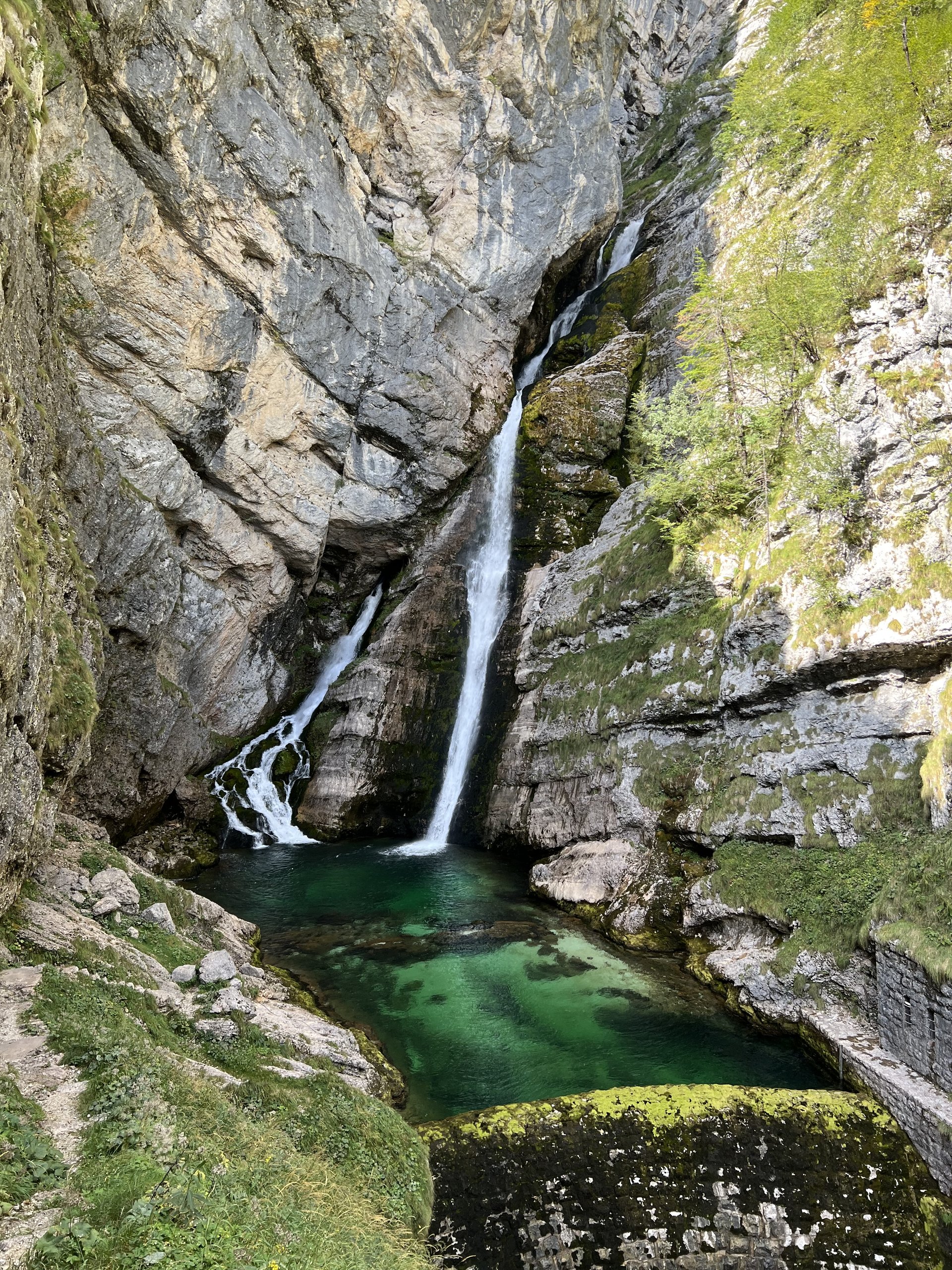
Savica is tucked into the mountains above the western end of Lake Bohinj, reached by a stepped path through the woodland. The 78-metre waterfall splits as it tumbles towards a pool of striking green water, framed by steep rock walls. It makes a lovely addition to a day around Ukanc, particularly if you enjoy having a destination at the end of your walk.
I liked Savica, although I should admit that having visited Iguazú had left me with slightly unreasonable waterfall expectations. The colour of the water impressed me most: that clear, green-blue shade that Slovenia seems to produce with ridiculous ease. I would happily include it alongside Vogel, while leaving enough time to enjoy the lake itself.
Our visit also became the final outing for a drone. The plan was for it to rise dramatically out of the gorge; instead, there were cries of “mayday” before it found its forever resting place below. RIP Mavic. We left with considerably less equipment than we arrived with, although thankfully the waterfall is perfectly photogenic from the viewing area.
There is an entrance fee, with parking charged separately. The official Savica page has current prices and opening hours, making it easy to work the visit into your day.
6. Walk Through Mostnica Gorge and the Voje Valley
Mostnica Gorge is another reason to give Bohinj more than a quick day trip. Starting from Stara Fužina, the route follows clear water through a wooded gorge, where the river has carved wonderfully shaped pools and rock formations. If you enjoy the combination of forest paths and water so clear you keep trying to photograph the bottom, this is likely to appeal.
You can explore the gorge on a shorter outing or continue into the Voje Valley towards the waterfall for a longer walk. The extension brings meadows and a more open mountain setting into the day, giving you a different side of Bohinj from the lakeshore. Pick the shorter or longer version depending on how much walking you fancy.
I didn’t make it here on my first visit, and it is one of the places I would most like to return for. It would fit beautifully into a second day after Vogel and the lake. The official Mostnica guide has admission details; bring cash for the entrance.

7. Explore Ribčev Laz and the Nearby Villages
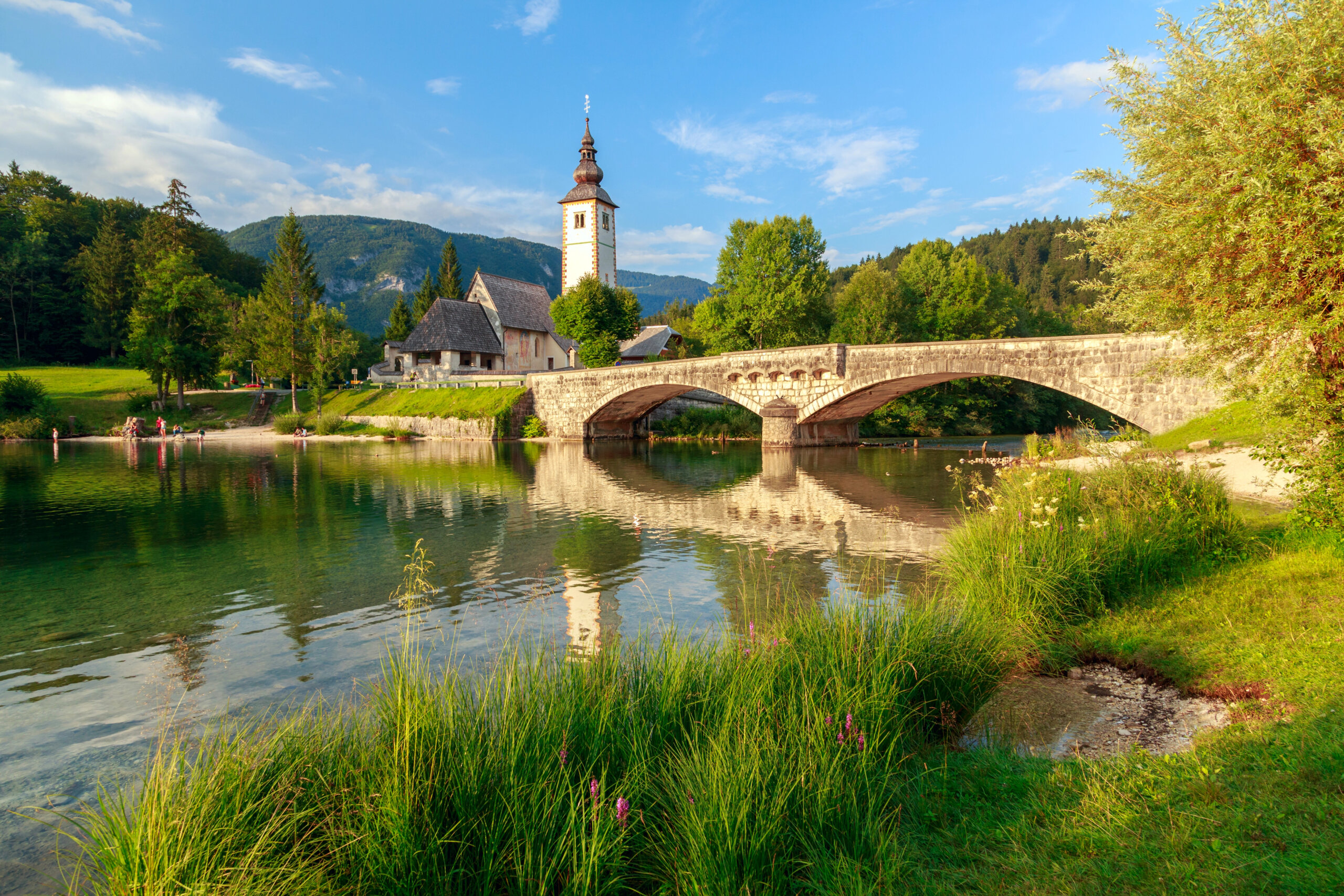
Ribčev Laz, at the eastern end, is a useful place to start getting your bearings. The bridge and Church of St John the Baptist form one of the lake’s recognisable views, and you can follow a short lakeside section without committing to the full circuit. If you have arrived after a long journey, this is a perfectly respectable first afternoon rather than a failure of adventurous ambition.
Leave room for the villages beyond the immediate shoreline too. The wooden houses, steep roofs and balconies spilling with flowers were part of what made the journey so enjoyable for me. Bohinj’s appeal extends beyond its headline attractions, and staying overnight gives you more opportunity to notice those details. You don’t need a sightseeing schedule for every hour to feel that you have used the time well.
Where to Stay at Lake Bohinj
For accommodation at Bohinj Lake, location would be my first filter, followed by price and facilities. Check walking distances, bus stops and parking before booking; a mountain-view room can be wonderful and still be inconvenient for the holiday you have planned.
| Area | Best suited to | What to consider |
|---|---|---|
| Ribčev Laz | First visits and stays without a car | Convenient for the eastern shore and transport; a popular arrival point |
| Stara Fužina | Village stays and walking towards Mostnica | Check the distance from your property to the lake |
| Ukanc | A quieter setting near Vogel and the western shore | Check meal options and transport for your dates |
| Bohinjska Bistrica | Rail access, town facilities and a wider accommodation search | You will need to travel to the lake |
For a hotel stay, Hotel Bohinj would be my first choice, particularly on a first visit. Its location near the eastern end puts you close to the lake and makes a lovely base for days spent exploring, followed by an evening somewhere comfortable.
Hotel Jezero is another strong choice if location is your priority, while ALPIK Chalets in Ukanc would be my pick for a self-catering stay. I would lean towards Ukanc for a quieter break near the western shore and Vogel. Choose Hotel Bohinj for a hotel escape, or ALPIK if your ideal holiday involves your own space and leisurely breakfasts before heading out into the mountains.
Lake Bohinj Camping: Where Should You Book?
For Lake Bohinj camping with the water close by, Camp Bohinj in Ukanc would be my starting point. The attraction is easy to understand: wake up at the western end of the lake, spend the day walking or paddling, and return to the same mountain setting in the evening. If the lakeside location is the reason you are camping, this is the one to investigate first.
Camp Danica offers a different setting, beside the Sava Bohinjka in Bohinjska Bistrica. It is a good option for combining camping with access to town facilities and days out around the wider area. You will travel to Lake Bohinj from here, so the choice comes down to whether you would prefer a lakeside base or a riverside stay near town.
I haven’t stayed at either, but those locations provide a useful starting point for deciding between them. For summer dates, book ahead where reservations are available. Camping here is in established campsites, and campervan travellers can find additional designated overnight options on the official campsite and motorhome page.

When to Visit, and What Is Lake Bohinj Weather Like?
Late September was glorious when I visited. We sat in warm sunshine at Vogel, walked among the first autumn colours and drove through villages that looked ready for a calendar shoot. It is the time I would personally choose again, especially for a trip centred on walking and scenery. I would happily trade warmer swimming water for another afternoon like that one.
Summer has a different appeal: longer days, swimming and more opportunity to build your holiday around the lake itself. Spring brings a greener valley, while autumn shifts the focus towards colourful woodland and walking. Winter is another experience again, with snowy scenery and activities around Vogel when the resort is operating.
| When to visit | What makes it appealing |
|---|---|
| Spring | Green landscapes, lower-level walks and exploring the villages |
| Summer | Swimming, paddling and long days beside the lake |
| September–October | Autumn colours, walking and lingering over the mountain views |
| Winter | Snowy landscapes and winter activities around Vogel |
For day-to-day planning, let the Lake Bohinj weather help you choose the order of your outings. Save the clearest spell for Vogel, and use another day for the villages or a lower-level walk. The mountain forecast and Vogel webcams are useful alongside the lakeside forecast; a warm layer means you can linger comfortably once you get up there.
A One-Day Lake Bohinj Itinerary
For a first visit, I would start with Vogel if the forecast is clear and the cable car is operating. Give yourself time for the views and a suitable walk near the upper station, then head back down for lunch around Ukanc. This follows the part of our day I enjoyed most, without assuming you need to spend the entire morning marching between viewpoints.
Choose one main afternoon plan: Savica Waterfall, a shorter lakeside walk or swimming and paddling if conditions suit. Finish around Ribčev Laz before returning to Bled or Ljubljana. If you choose a longer Lake Bohinj hike instead, let that become the main event. The full circuit plus Vogel plus Savica is a much busier day than the word “lake” might initially suggest.

How to Spend Two or Three Days at Lake Bohinj
With two full days, I would devote one to Vogel and the western end of the lake, then use the second for a shoreline walk or Mostnica Gorge. Add swimming or paddling if that is what drew you here, and leave a proper gap for lunch. There is enough variety to keep the days interesting without spending the holiday moving between car parks.
The panoramic boat between Ribčev Laz and Ukanc opens up another lovely combination: walk along one shore and return across the water. With a third day, you could choose a longer hike, explore more villages or simply revisit your favourite lakeside spot. Staying longer gives you the luxury of deciding what you feel like doing when you wake up.
For higher mountain walks, the local tourist information centres can help you choose a route that suits your experience and the conditions. That is also an excellent excuse to ask which walk they would do themselves. A specific local recommendation can be far more useful than staring at a map full of equally tempting trails.
Where Should You Go After Lake Bohinj?
The Soča Valley would be high on my list, especially if Bohinj has left you wanting more mountains and outrageously coloured water. My Soča Valley Travel Guide covers where to base yourself, what to see and how to make the most of the area. This is another part of Slovenia where I would enthusiastically argue the case for staying longer.
Bovec makes a particularly good base for an activity-filled stay, but there is plenty to enjoy between adventures too. My guide to things to do in Bovec includes waterfalls, walks and places to explore alongside the water activities. I keep coming back for a reason, and it certainly isn’t because I have run out of other places to visit.

What About Food Around Lake Bohinj?
Our lunch after Savica provided entertainment we hadn’t ordered. A sausage arrived with something greyish-brown beside it, which we both took turns tasting while trying to identify the mystery meat. Pork? Beef? Something more adventurous? Eventually we resorted to Google and discovered it was buckwheat. Neither of us was going to be recruited as a food critic on the strength of that performance.
Meanwhile, my cheese dumplings arrived with sugar and jam. I had imagined a savoury lunch, so being presented with something resembling pudding was quite the plot twist. I wasn’t particularly taken with my choice, but the meal did give us a good laugh. There is plenty to be said for trying something unfamiliar, even when the resulting story is better than your ordering skills.
What Should You Pack for Lake Bohinj?
Pack for a day that could involve a walk, a swim and rather longer than expected staring at mountains. Comfortable walking shoes, swimwear, a towel and a refillable water bottle cover the obvious activities. Add a waterproof and warm layer for changing weather, particularly if you are heading up Vogel, plus sun protection for those afternoons when the sunshine persuades you to stay outside.
A picnic would also be high on my list, especially for a lakeside walk where you can stop when the view takes your fancy. Bring some cash for smaller purchases and attractions, and download your route if you have a particular hike planned. Beyond that, what you need will depend on whether your ideal day involves a mountain trail or a towel beside the water.

Is Lake Bohinj Worth Visiting?
Absolutely, particularly if mountains and time outdoors are what draw you to Slovenia. Bled gave me a sunrise I still remember vividly, but Bohinj gave me the kind of day that made me wonder how much trouble extending a holiday would actually cause. The views from Vogel were the highlight, though the journey through the villages was part of the pleasure rather than dead time between attractions.
For ideas beyond the lakes, my guide to the best things to do in Slovenia will help you build the wider trip. My advice is to give Lake Bohinj enough space in your itinerary to enjoy whatever brought you here. Go up Vogel when the mountains are clear, choose a walk you actually want to do and leave time beside the water. You don’t need to see every attraction in the valley. I certainly didn’t, and it still became one of the best days of my first Slovenia trip.
Some of the photos on this article have been provided by Deposit Photos.

Comments will load here
Be the first to comment