
The Blog

Best Things To Do in Bilbao (2026) – A Local’s Guide
If you’re looking for the very best things to do in Bilbao, you’ve come to the right place. I grew up here, back when Bilbao was still defined by shipyards, steelworks and the industries that lined the Nervión River. It wasn’t the polished, design-led destination that visitors know today. It was gritty, hard-working and, if we’re being honest, not somewhere many people came for a city break.
I’ve had the privilege of watching Bilbao reinvent itself. While the opening of the Guggenheim undoubtedly transformed the city’s international reputation, the real story goes far beyond one iconic building. Old warehouses became cultural spaces, former industrial neighbourhoods found a new lease of life, and the river that once powered Bilbao’s industry became the heart of a vibrant city that perfectly balances innovation with its Basque identity.
Although I no longer live in Bilbao, I return several times a year. Sometimes it’s to spend time with friends and family. Other times I’m exploring new restaurants, joining walking tours, discovering independent shops, or working alongside the Bilbao Tourism board and local businesses to uncover experiences I’d never have found on my own. Every visit reminds me that this is a city that constantly evolves while somehow never losing its character.
That’s why this isn’t just another list of attractions. Alongside Bilbao’s famous highlights, I’ll share the local businesses, unforgettable food experiences, viewpoints and hidden corners that have made me fall in love with my hometown all over again. Whether it’s your first visit or your fifth, these are the experiences I genuinely think deserve a place on your Bilbao itinerary.

Disclaimer! All of my blogs may contain affiliate links. This means that if you click on the link and make a purchase I may receive a small amount of commission for the referral at no extra cost to you.
What's in this post:
The 15 Best Things to Do in Bilbao (From a Local Who Grew Up Here)
Bilbao may be famous for the Guggenheim, but there’s so much more to discover than its iconic museum. Over the years, and especially through countless return visits, I’ve come to appreciate the city for its incredible food scene, colourful neighbourhoods, independent shops and the people who give it so much character.
These are the experiences I genuinely recommend, from world-famous landmarks to local favourites I only discovered after exploring the city with guides, chefs and small business owners. If you only have a couple of days in Bilbao, start here.
1. Visit the Guggenheim Museum (Inside and Out)
It might seem strange to start a guide to Bilbao with its most obvious attraction, but there’s a reason the Guggenheim appears on every itinerary. More than just a museum, it completely transformed the city’s future.
I actually remember when it was being built. As a child, I was convinced Bilbao was getting a giant rollercoaster, so discovering it was “just a museum” was a huge disappointment! Looking back, I couldn’t have been more wrong. The Guggenheim didn’t simply change Bilbao’s skyline; it helped change how the world saw the city. If you’re interested in that story, don’t miss my article explaining the Guggenheim Effect and how one building sparked the regeneration of an entire city.
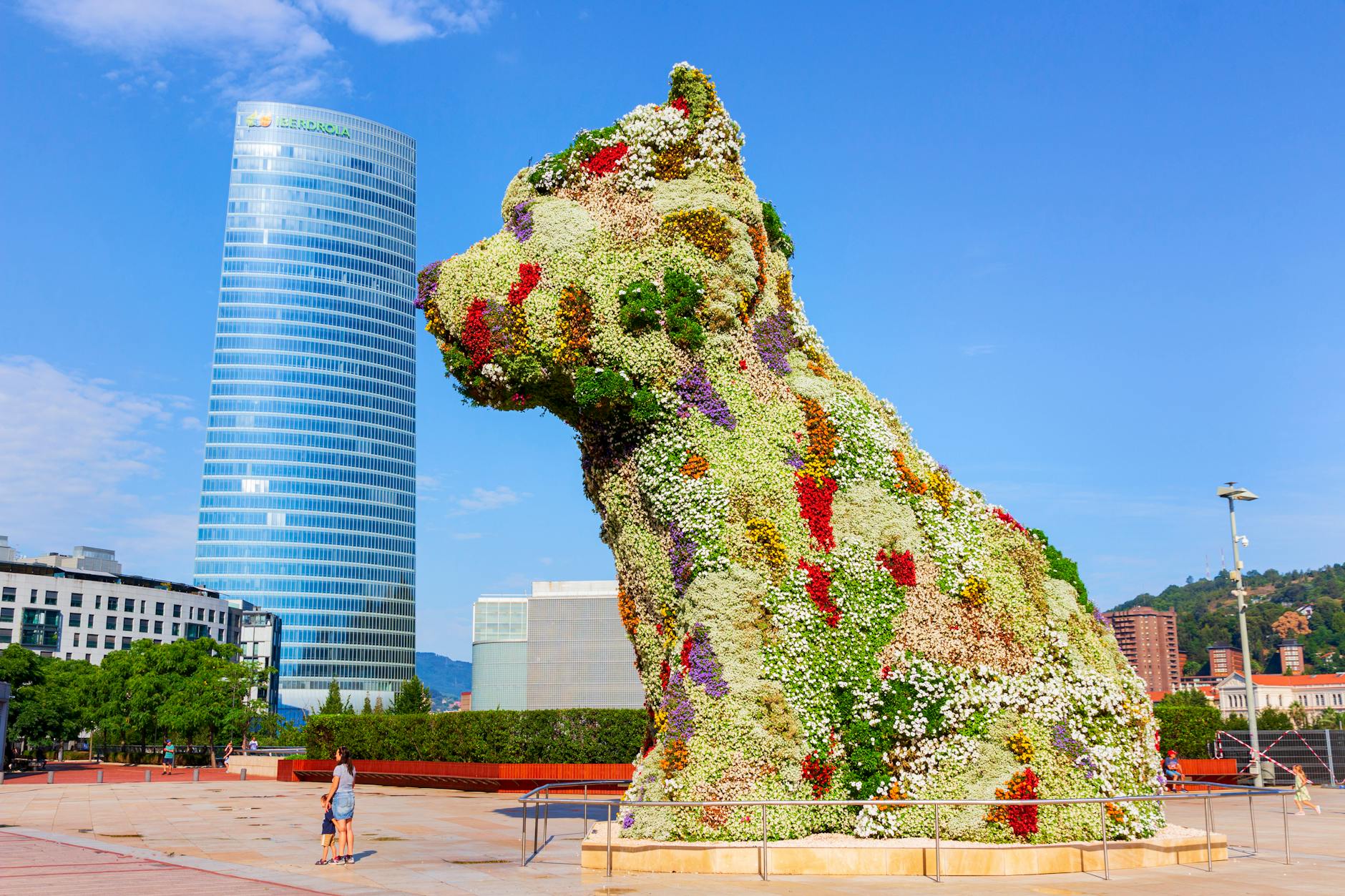
Even if modern art isn’t really your thing, I still think the Guggenheim is worth visiting. Some of my favourite artworks are actually outside the museum, including Puppy by Jeff Koons, Maman (the spider) by Louise Bourgeois, Tall Tree & The Eye by Anish Kapoor (better known locally as the bubbles), and the neighbouring sculpture The Walking Man, whose shadow seems to stretch across the pavement.
What I only discovered after exploring the area with a local guide is that almost everything surrounding the Guggenheim has a story. From why the sculptures were chosen to how the architecture interacts with the river and the city’s industrial past, there’s far more meaning here than first meets the eye. You can certainly admire it on your own, but if you really want to understand why the Guggenheim became the symbol of Bilbao’s transformation, I’d highly recommend joining a guided tour at least once.
Best Guggenheim Viewpoints
For the best photographs, head onto La Salve Bridge, the one with the striking red arch, or cross to the opposite bank of the Nervión River for a wider perspective. Another of my favourite viewpoints is from the footbridge linking the Guggenheim to the University of Deusto, although I’d recommend visiting early in the morning or towards sunset when the light is much softer. If you’re photographing Puppy, walk a third of the way down the street directly opposite the museum before turning around. The buildings create beautiful leading lines that naturally draw your eye towards the sculpture.
My biggest tip
One final tip that many visitors miss: step inside the museum entrance, even if you don’t plan to buy a ticket. Immediately on the right is a small theatre that’s free to access, showing archive footage of what this part of Bilbao looked like before the Guggenheim existed. For me, it’s one of the most fascinating parts of the visit because it perfectly illustrates just how dramatically the city has transformed.

2. Join a Pintxo Tour Before Exploring on Your Own
If there’s one piece of advice I give almost everyone visiting Bilbao, it’s this: don’t make your first pintxos experience a DIY one.
That might sound strange coming from someone who grew up here, but despite returning to Bilbao countless times and eating in plenty of bars on my own, I discovered just how much I still had to learn once I started exploring with local guides.
I’ve now taken two very different pintxo tours, and both completely changed the way I eat in Bilbao.
Option 1: Best for Meeting Other Travellers
The first was with Best of Basque, an award-winning group tour with well over 1,000 five-star reviews. If you enjoy meeting fellow travellers and want a lively introduction to Basque food, this is the one I’d recommend. Rather than simply ordering whatever looks good on the counter, the guides know exactly which specialities need to be ordered fresh from the kitchen, the dishes many visitors don’t even realise exist.
⭐⭐⭐⭐⭐ from me!
Option 2: A More Personal Experience
More recently, I joined a private tour with Marina, which felt less like a guided experience and more like catching up with a knowledgeable friend over dinner. We visited just three bars, taking our time to enjoy a couple of pintxos at each while chatting about Basque food, local traditions and the stories behind the neighbourhood. I booked Marina through Romotour (make sure to ask for her!).
What surprised me most was that, despite eating my way around Bilbao for years, I was still discovering places I’d somehow overlooked. Gure Toki and El Globo had long been among my recommendations, but my guides introduced me to Victor Montes and Aitaren Boulevard, two bars I’d walked past countless times without ever stepping inside. They’ve since become firm favourites and perfectly illustrate why I think it’s worth exploring with a local before setting off on your own.
Of course, you can absolutely create your own pintxos crawl, and I’ve put together a guide to my favourite pintxo bars in Bilbao if that’s your preference. But if your budget allows, I’d genuinely recommend spending your first evening with a local guide. You’ll leave with a much better understanding of Basque food, discover bars you might otherwise miss, and have the confidence to spend the rest of your trip eating like a local rather than a tourist.

3. Wander Through Casco Viejo, the Heart of Bilbao
If there’s one part of Bilbao I never tire of returning to, it’s Casco Viejo. While the Guggenheim may have transformed the city’s international reputation, this is where Bilbao’s heart still beats. It’s where friends meet over pintxos, where locals continue to shop at independent businesses, and where centuries of history sit comfortably alongside modern Basque culture.
I almost always find myself drawn back to Plaza Nueva, whether it’s for a relaxed drink in the sunshine or another round of pintxos. Just a few streets away stands the beautiful Santiago Cathedral, while the recently reopened Basque Museum is well worth a visit if you’d like a deeper understanding of the region’s unique history, language and traditions.
What I’ve come to appreciate even more in recent years, though, is Casco Viejo’s independent shopping scene. Through Bilbao Dendak and its HemenGO Shopping initiative, I discovered a completely different side of the neighbourhood. Rather than encouraging visitors to head for the familiar high street brands, the project celebrates the family-run businesses, artisans and creative entrepreneurs that give Bilbao its character. They regularly organise guided shopping experiences, introducing both locals and visitors to businesses they might otherwise walk straight past.
My Favourite Stores
Eguzkilore Joyeros creates beautiful contemporary jewellery inspired by Basque culture. My favourite pieces included a heart-shaped necklace based on the map of Casco Viejo, elegant interpretations of the eguzkilore (the traditional Basque sun flower believed to protect homes from evil spirits), designs inspired by the Flysch cliffs, Puppy, and even pintxo skewers. These aren’t tourist souvenirs; they’re pieces I’d happily wear every day.


Carre d’Artistes was another wonderful discovery. The gallery showcases work by local and international artists, but I was especially drawn to the paintings of Bilbao by local artist Begoña and the beautiful city scenes created by French artist Olivier. If you’re looking for artwork that genuinely captures the city’s character, this is the place.
Although it’s just outside Casco Viejo on Calle Hernani, I also loved ALTAFLAMA, where owner Irene creates handcrafted candles inspired by Basque culture. Some have even been commissioned by the Basque Museum, but my favourites were her Basque Mythology collection, fragrances inspired by the legends and landscapes of Euskadi that offer a wonderfully different souvenir to take home.
Of course, Casco Viejo is full of hidden cafés, bars and independent shops, which is exactly why I recommend slowing down here. Wander the side streets, step inside places that catch your eye and don’t rush from one attraction to the next. Some of my favourite discoveries in Bilbao have happened when I stopped following the map.
4. Take a Walking Tour at the Start of Your Trip
I love walking tours. No matter how well I think I know a place, I almost always come away having learnt something new, and Bilbao was no exception.
I lived in Bilbao for 10 years, yet my most recent walking tour took me to streets I’d never explored before and completely changed how I see parts of my hometown.
Irala Neighbourhood
One of my favourite discoveries was Irala, a neighbourhood I’d somehow never explored despite growing up in Bilbao and returning countless times since. Around Calle Zuberoa, rows of colourful houses immediately reminded me of the terraced streets you often find in England.

Street Art
I also loved learning the meaning behind some of Bilbao’s street art. One mural that particularly stayed with me sits beneath La Salve Bridge, just beside the Guggenheim. It depicts two women from visibly different backgrounds deep in conversation and was inspired by the Dalai Lama’s belief that many of the world’s problems could be solved if people simply talked to one another.
Without a guide, I would have admired it purely for its scale. Understanding the story behind it transformed it into one of my favourite pieces of public art in Bilbao and reminded me that, in this city, there’s often much more to discover than first meets the eye.
Industrial History
Perhaps the biggest surprise, though, was how much I still learnt about Bilbao’s industrial past. Growing up here, I’d always assumed I understood the city’s history, but hearing how different neighbourhoods evolved and how Bilbao reinvented itself gave me a completely new appreciation for the place.
If you’re visiting Bilbao for the first time, I’d actually recommend making a walking tour one of the first things you do. Everything else, from the Guggenheim to Casco Viejo and Bilbao La Vieja, makes far more sense once you understand the stories behind the city.
Bilbao has several excellent free walking tours where you simply tip what you feel the experience was worth. If you’d prefer something more personal and tailored to your interests, I can highly recommend Romotours, whose local guides helped me discover a side of Bilbao I thought I’d already known.

5. Learn to Cook Basque Cuisine
Basque cuisine is one of the main reasons people visit Bilbao, but eating it and truly understanding it are two very different things.
As someone who grew up in the Basque Country, I thought I already knew my local cuisine. Then I spent an afternoon at Gastronomía Bilbao, and realised how much I still had to learn.
What made this class so memorable wasn’t simply preparing a fantastic five-course meal. It was chef Mikel Larrañaga’s storytelling. Every dish came with a story that brought Basque culture to life. I discovered why the iconic Gilda pintxo owes its name to a Hollywood film, how generations of fishermen cooked marmitako aboard boats in the Bay of Biscay, and why a perfectly aged txuleta needs little more than Añana salt to become unforgettable.
Unlike some cooking classes where you’re left endlessly chopping vegetables or simply watching a chef demonstrate, everyone gets involved from start to finish. By the end of the afternoon we’d prepared a complete Basque feast together before sitting down to enjoy it with local wines, good conversation and plenty of laughter.
I left with far more than a handful of recipes. I came away with a much deeper appreciation of Basque culture and an understanding of why these dishes exist, not just how to cook them. For me, that’s what transformed this from an enjoyable cooking class into one of my favourite experiences in Bilbao.
If food is one of the reasons you’re visiting the Basque Country, I can’t recommend this experience highly enough. I’ve written a full review of the class, including everything we cooked, practical information and why I think it’s one of the best cooking classes in Bilbao.

6. Ride Up to Artxanda for the Best View in Bilbao
If you want to understand Bilbao in one glance, Artxanda is the place to do it. Perched above the city, this viewpoint gives you a full panorama of the Guggenheim, the river snaking through town, the old industrial areas, and the green hills beyond, all in one sweep. You can hike up if you’re feeling energetic, but most people take the funicular, which whisks you up in minutes and makes the reveal feel slightly cinematic.
It’s one of those places where the city suddenly clicks, how compact it is, how close the mountains are, and how deliberately Bilbao has reinvented itself. Go during the day for clarity, or at sunset if you want the full “wow, this place is special” moment.

7. Visit Mercado de la Ribera
No visit to Bilbao is complete without wandering through Mercado de la Ribera. Sitting on the edge of Casco Viejo, it was once recognised as the largest covered market in Europe and, while it no longer has quite the same variety of stalls, it remains an important part of the city’s food scene.
Today, much of the market is dedicated to fishmongers, butchers and pintxos bars. It’s also where many of Bilbao’s top chefs continue to source their ingredients, a testament to the quality of the local produce.
For me, though, the biggest draw is the food. I love grabbing a few pintxos and a drink before finding a seat overlooking the Nervión River. It’s a fantastic place to sample Basque flavours in a more relaxed setting than the bustling bars of Plaza Nueva, and somewhere I almost always end up whenever I’m back in my hometown.
Arrive before lunch if you want to see the market at its liveliest, then stay for pintxos once you’ve finished exploring the stalls.

8. Walk the Nervión River (Especially Around Golden Hour)
One of the most underrated things to do in Bilbao is simply follow the Nervión River. The river has shaped the city’s history for centuries, and today its wide promenades are perfect for slowing down and appreciating just how much Bilbao has transformed.
As you wander along the waterfront, you’ll come across some fantastic public art, but my favourite is Las Sirgueras by Basque sculptor Dora Salazar. The four iron figures pay tribute to the sirgueras (or “rope girls”), the women who once hauled heavy boats along the estuary using little more than ropes and their own strength. It’s a powerful reminder of Bilbao’s industrial past and one of those sculptures that’s easy to walk past without understanding its significance.
Whether you’re strolling between the Guggenheim and Casco Viejo or simply looking for a peaceful way to spend an hour, take your time along the river. Some of Bilbao’s best views, sculptures and stories are found here, not inside its museums.

9. Discover Bilbao La Vieja
If you’d visited Bilbao twenty or thirty years ago, locals might well have told you to avoid Bilbao La Vieja. Once known as the city’s rougher side and often associated with its unofficial red-light district, it has undergone an incredible transformation in recent years.
Today, it’s one of Bilbao’s most creative neighbourhoods, where colourful murals, independent galleries, cafés and lively bars have brought new life to streets that were once neglected.
A Reminder of the Past
For me, though, the most fascinating feature isn’t the street art at all. It’s the solitary brick chimney that still stands as a reminder of Bilbao’s industrial and mining past. Surrounded by modern cafés and creative spaces, it’s a powerful symbol of how the city has chosen to preserve pieces of its history rather than erase them. I love that Bilbao hasn’t forgotten where it came from.

Personal Tip
Bilbao La Vieja is well worth exploring, especially during the day or in the evening when its bars and restaurants come alive. Just be aware that it borders San Francisco, a neighbourhood that still experiences higher levels of petty crime and pickpocketing than much of the rest of Bilbao. There’s no need to avoid the area altogether, but I’d recommend keeping valuables secure and staying aware of your surroundings. I’d personally avoid wandering into San Francisco after dark unless you know the area.
10. Step Inside Azkuna Zentroa (and Stare at the Columns Like Everyone Else)
If someone told you one of Bilbao’s most striking cultural spaces used to be a wine warehouse, you probably wouldn’t believe them. Yet that’s exactly what Azkuna Zentroa was before being transformed into the vibrant arts and leisure centre it is today.
The highlight is undoubtedly the breathtaking entrance hall, where 43 uniquely designed columns support the building above. No two are the same, each drawing inspiration from different cultures, architectural styles and periods of history. It’s one of those places that encourages you to stop, look up and appreciate the incredible attention to detail.
Beyond the architecture, Azkuna Zentroa hosts changing art exhibitions, cinema screenings, concerts and cultural events throughout the year, so there’s often something new to discover.
Even if you only have ten minutes, I’d still recommend popping inside. It’s free to enter, beautifully designed and perfectly encapsulates Bilbao’s ability to reinvent its industrial heritage without losing sight of its past.

11. Visit San Mamés
You don’t have to be a football fan to appreciate San Mamés, but it certainly helps. Home to Athletic Club, one of only three clubs never to have been relegated from Spain’s top division, it’s a stadium that represents far more than football. Athletic’s unique philosophy of only fielding players with Basque ties has made the club a powerful symbol of regional identity and something locals are incredibly proud of.
Even if there’s no match on, it’s worth walking around the striking exterior of the stadium, especially in the evening when it’s illuminated. If you’re interested in football, you can also take a stadium tour, visit the museum and learn more about the club’s remarkable history and traditions.
If you do get the chance to experience a match here, don’t hesitate. The atmosphere is unforgettable and offers a fascinating insight into just how deeply football is woven into Basque culture.

12. Discover Bilbao’s Bridges
One of my favourite ways to explore Bilbao is simply by crossing the Nervión River. Each bridge offers a different perspective of the city, and together they tell the story of Bilbao’s evolution from an industrial port into a modern cultural capital.
The most famous is Zubizuri, Santiago Calatrava’s elegant white footbridge. While its sleek design divides local opinion (its original glass walkway proved rather slippery on rainy days!), it remains one of Bilbao’s most recognisable landmarks.
Just a short walk away is La Salve Bridge, instantly recognisable by its giant red arch framing the Guggenheim. It’s one of my favourite places to photograph the museum and one of the best viewpoints in the city.
Don’t overlook the older bridges either. San Antón Bridge, beside the church of the same name, has stood in various forms since medieval times and appears on Bilbao’s coat of arms. Together, these bridges beautifully connect Bilbao’s past, present and future.

14. Enjoy Bilbao’s Museums
The Guggenheim may steal the headlines, but Bilbao has plenty of other museums that are well worth your time, especially if the famous Basque weather decides not to cooperate.
If you want to understand the region’s unique identity, start with the recently reopened Basque Museum, which explores everything from Euskera, one of Europe’s oldest languages, to traditional sports, customs and everyday life. For art lovers, the Bilbao Fine Arts Museum houses an impressive collection spanning everything from Old Masters to contemporary Basque artists, while Itsasmuseum tells the story of the river and maritime industries that helped shape the city.
Rather than trying to visit them all, I’d choose the museum that best matches your interests. You’ll get far more from a deeper visit than rushing between them.

15. Take a Day Trip Beyond Bilbao
As much as I love Bilbao, one of its greatest strengths is its location. Within an hour or two, you can swap world-class museums for dramatic coastlines, medieval fishing villages, rolling vineyards or places that tell the story of the Basque Country’s past.
If it’s your first visit, Gaztelugatxe should be at the top of your list. The spectacular islet, connected to the mainland by a winding stone bridge and 241 steps, became famous as Dragonstone in Game of Thrones, but it’s every bit as impressive in real life. Although free to visit you need to pre-book your entries.
For a deeper understanding of Basque history, spend a day in Gernika, home to the Peace Museum and the Assembly House, where the famous Oak of Gernika remains one of the most important symbols of Basque identity.
If you’re craving the coast, head to Getxo for elegant architecture, beaches and the iconic UNESCO-listed Vizcaya Bridge, or continue to Bermeo, a colourful fishing town where you can experience a more traditional side of the Basque Country.
Wine lovers are spoilt for choice. Head south to Rioja Alavesa for centuries-old wineries, picturesque villages and some of Spain’s finest red wines, or stay closer to Bilbao and discover txakoli, the Basque Country’s crisp, lightly sparkling white wine. Visiting a family-run winery such as Txomin Etxaniz, where the vineyards tumble towards the Bay of Biscay, offers a completely different experience and is one of my favourite day trips from the city.
I’ve explored all of these destinations myself, so if you’re planning to spend more than a couple of days in Bilbao, don’t miss my complete guide to the best day trips from Bilbao, where I cover these destinations in much more detail, along with plenty of other ideas.

The Best Things to Do in Bilbao with Kids: Fun-Filled Adventures for the Whole Family
If you are in Bilbao with kids and want to avoid the dreaded “I’m bored” chorus, you are in luck! Bilbao might be known for its architecture, pintxos, and cultural charm, but if you’re travelling with kids, you’ll be happy to know that this city is also packed with exciting, hands-on activities to keep young adventurers entertained.
Spain, and especially the Basque Country, is incredibly kid-friendly, thanks to strong community and family values, children are always welcome wherever you go. Whether you’re in a restaurant, a museum, or just strolling through the streets, expect friendly locals, relaxed attitudes, and plenty of spaces designed with families in mind.
Whether your little ones love exploring museums, running wild in green spaces, or getting up close to nature, there’s something here for every age. Here’s a look at the best things to do in Bilbao with kids, fun, interactive, and guaranteed to make your trip memorable.

1. Set Sail at the Museo Marítimo Ría de Bilbao
If your kids have ever dreamed of being a pirate, a sailor, or the captain of their own ship, this maritime museum is the perfect place to spark their imagination. Located right on the Nervión River, the Museo Marítimo Ría de Bilbao brings the city’s seafaring history to life with hands-on exhibits, real boats to explore, and interactive activities that make learning feel like an adventure.
Highlights for kids:
- Climb aboard real ships, dock outside the museum, and explore what life was like for sailors.
- Interactive exhibits where kids can try out navigation skills, learn about Bilbao’s shipbuilding history, and even discover the underwater world of the Bay of Biscay.
- Outdoor play area with huge ship replicas for kids to climb, pretend, and burn off some energy.
It’s a great mix of education and fun, making it a must-visit for families. Plus, parents will enjoy the stunning riverfront views while the kids run wild.

2. Discover a Fairytale Forest at Doña Casilda Park
Sometimes, the best thing to do in a city with kids is find a big, green space where they can just run free. And that’s exactly what you get at Doña Casilda Park, Bilbao’s answer to Central Park, but with a Basque twist.
Why kids love it:
- Huge playgrounds with swings, slides, and climbing frames for all ages.
- Duck pond where little ones can watch the ducks and swans.
- Space for cycling and scootering, perfect if you’ve packed some wheels.
- Mini train rides and a vintage carousel (seasonal) for an extra dose of fun.
For parents, this is a great spot to grab a coffee and relax while the kids burn off some energy. And if you’re visiting in summer, keep an eye out for outdoor performances and family-friendly events in the park.

3. Get Hands-On at the Euskal Museoa (Basque Museum)
Bilbao is the heart of Basque Country, and no trip is complete without learning about its unique culture. While some museums might bore kids, the Euskal Museoa keeps things engaging with interactive exhibits, historical artefacts, and hands-on activities.
Fun things for kids to explore:
- Giant whale bones, because what child doesn’t love something that looks straight out of a dinosaur movie?
- Traditional Basque houses, kids can step inside and see how people lived centuries ago.
- Festivals and folklore exhibits showcasing the giant parade figures used in Basque celebrations.
If your kids love stories, myths, and hands-on experiences, this is a fantastic way to introduce them to the region’s history in a fun and accessible way.

4. Ride to the Clouds on the Artxanda Funicular
All kids love a good cable car ride, and Bilbao has one that leads straight to the best panoramic views in the city. The Artxanda Funicular is a short but exciting ride up Mount Artxanda, where families are rewarded with jaw-dropping views of Bilbao, the Nervión River, and the surrounding mountains.
Why kids love it:
- The funicular ride itself—watching the city shrink below them is always a thrill.
- Playground at the top so they can run around after the ride.
- Ice cream breaks with a view—there are cafés and snack spots where you can grab a treat while enjoying the scenery.
If you’re looking for an easy, low-effort outing that feels like an adventure, this is a great option.

Want to Explore More?
Planning a bigger road trip? Check out my 7-Day Basque Country Itinerary for the ultimate Basque adventure!
Where to Stay in Bilbao
Choosing where to stay in Bilbao can completely shape your experience. Do you want to step straight out into the lively pintxos bars of Casco Viejo? Wake up beside the Guggenheim in the city’s modern district? Or base yourself in a quieter neighbourhood where you’ll get a feel for everyday life in Bilbao?
The good news is that Bilbao is surprisingly compact, with excellent public transport and a very walkable city centre, so there aren’t many bad choices. The best area really depends on what kind of trip you’re planning.
Rather than trying to cover every neighbourhood here, I’ve put together a dedicated guide comparing the best areas to stay in Bilbao, along with my favourite hotels for every budget. Whether you’re visiting for food, culture, nightlife or simply want the most convenient base for exploring the Basque Country, it’ll help you find the perfect place to stay.
➡️ Read my complete guide to where to stay in Bilbao.

A Few Basics to Maximise Your Stay
Before you dive headfirst into Bilbao’s pintxos bars and architectural wonders, here are a few essentials to help you make the most of your time in the city.
Best Time to Visit
Bilbao is a year-round destination, but spring (April–June) and early autumn (September–October) hit the sweet spot with pleasant weather and fewer crowds. If you’re here in August, expect a party, Aste Nagusia, the city’s biggest festival, takes over with street performances, concerts, and general revelry.
How to Get Around
Bilbao is wonderfully walkable, but for longer distances, the metro is your best friend. It’s clean, efficient, and takes you all the way to the coast if you fancy a beach day. Buses and trams also cover the city well, and taxis are reasonably priced. If you’re feeling eco-friendly (or just want to pretend you’re a local), grab a bike from one of the city’s rental stations.
If you are going further afield car rental is very affordable from Bilbao Airport.

Local Customs & Tipping
Bilbainos are friendly, but a little reserved at first. Greet themwith a casual Kaixo (hello) or Egun on (good morning) if you want to impress. When it comes to tipping, it’s not expected, but leaving small change (5-10%) for great service in restaurants or cafés is always appreciated. At bars, rounding up the bill is the norm.
Language Basics
Bilbao is proudly Basque, and while Spanish is spoken everywhere, you’ll see and hear Euskara, the Basque language, often. Locals appreciate even the smallest effort, so here are a few words to get you started:
• Kaixo – Hello
• Eskerrik asko – Thank you
• Mesedez – Please
• Agur – Goodbye
Safety
Bilbao is one of Spain’s safest cities, and solo travelers will feel comfortable here. The usual travel smarts apply: keep an eye on your belongings in crowded areas, especially Casco Viejo, and be mindful of late-night walks in quieter parts of town. But overall, Bilbao is a city where you can relax and enjoy. There is only one area I would avoid, and that is San Francisco.
For more in-depth tips on getting around, safety, and hidden gems, check out my full guide to visiting Bilbao here!

Final Thoughts: Why Bilbao Deserves a Spot on Your Travel List
Growing up in Bilbao, I don’t think I fully appreciated what I had on my doorstep. Like many locals, I took the city for granted. It wasn’t until I moved away and began returning as both a visitor and a travel writer that I started to see Bilbao through fresh eyes.
Every time I come back, I discover something new. A bar I’d somehow never noticed, a story hidden behind a mural, a family-run shop preserving Basque traditions, or a guide sharing a perspective I’d never considered despite spending so much of my life here. That’s what I love most about Bilbao. It never stands still.
Of course, you’ll want to see the Guggenheim, ride the Artxanda Funicular and eat your weight in pintxos. But I hope this guide also encourages you to slow down, wander beyond the obvious attractions and take the time to understand the people, history and culture that make this city so special.
For me, Bilbao isn’t just somewhere I grew up. It’s a city I continue to rediscover, and I have a feeling that if you give it the chance, you’ll leave wanting to come back too.

Frequently Asked Questions About Visiting Bilbao
Is Bilbao worth visiting?
Absolutely. Bilbao is one of those cities that quietly exceeds expectations. It combines world-class architecture (hello, Guggenheim), an outstanding food scene, walkable neighbourhoods, and easy access to both coast and mountains. Many travellers arrive for a day and leave wishing they’d stayed longer, which is usually the sign of a very good destination.
➡️Read my “Is Bilbao Worth Visiting?” article for a full explanation of why!
How many days do you need in Bilbao?
Two to three days is ideal for seeing the city properly.
- 1 day: highlights only (Guggenheim, Casco Viejo, river walk).
- 2 days: city sights + food + viewpoints.
- 3+ days: add a museum deep dive or a day trip to places like Getxo or Gernika.
➡️Read my guide to “How many days in Bilbao do you really need?”
Is Bilbao walkable?
Yes, and pleasantly so. Most of the main things to do in Bilbao are within walking distance, especially around the Guggenheim, Casco Viejo, Abando, and the river. For anything further afield, the metro, tram, and funicular are clean, efficient, and easy to use.

What’s the best area to stay in Bilbao?
That depends on your vibe:
- Casco Viejo – lively, atmospheric, best for food and nightlife
- Abando / Ensanche – central, polished, great all-round base
- Guggenheim area – modern, scenic, quieter at night
If it’s your first visit, staying central will save time and transport faff.
➡️ Read my complete guide to where to stay in Bilbao.
Is Bilbao expensive?
Compared to San Sebastián, Bilbao feels very reasonable. Pintxos are good value, public transport is cheap, and there are plenty of free or low-cost attractions. Museums are the main splurge, but even then there are free days and discounts.
➡️Check out my “Is Bilbao Expensive” article for a breakdown of costs.
What’s the best time of year to visit Bilbao?
Spring (April–June) and early autumn (September–October) are the sweet spots: mild weather, fewer crowds, and great walking conditions.
August is fun but busy thanks to Aste Nagusia, Bilbao’s biggest festival. Winter is quieter and cooler, but still very doable for museums, food, and city wandering.
➡️Read my guide on the best time to visit Bilbao

Is Bilbao good for travelling with kids?
Yes, and often underrated for it. Bilbao has parks, riverside walks, hands-on museums, playgrounds, and a generally relaxed, family-friendly culture. Restaurants are welcoming to children, and getting around with kids is easy.
What if it rains in Bilbao?
Good news: Bilbao is brilliant in bad weather. This is a city made for rainy days: museums, markets, food halls, cafés, and cultural centres mean you’ll still have plenty to do. Just bring a decent jacket and lean into it.
Do you need a car in Bilbao?
No. You definitely don’t need a car in the city. Public transport is excellent, and walking covers most sights. A car only becomes useful if you’re planning multiple day trips into the countryside or along the coast.
Is Bilbao safe?
Bilbao is one of the safest cities in Spain. Standard city awareness applies (watch your belongings in busy areas), but solo travellers, couples, and families generally feel very comfortable here, even in the evenings.
The most dangerous thing will be avoiding tempting pintxos!

Do people speak English in Bilbao?
Spanish is widely spoken, and you’ll also see and hear Euskara (Basque). English is common in hotels, restaurants, and tourist areas, though not universal. Learning a few basics like kaixo (hello) and eskerrik asko (thank you) goes a long way.
Is Bilbao just about the Guggenheim?
Not even close. While the Guggenheim put Bilbao on the map, the city’s appeal goes far beyond one museum, from historic streets and food markets to viewpoints, football culture, and creative neighbourhoods. Many people come for the Guggenheim and stay for everything else.
What is Bilbao best known for?
Bilbao is best known for the Guggenheim Museum, the iconic titanium-clad building that helped transform the city from an industrial powerhouse into one of Europe’s leading cultural destinations. However, there’s much more to Bilbao than its famous museum. The city is renowned for its incredible pintxos scene, its proud Basque culture, fascinating industrial heritage and the remarkable regeneration that has taken place over the past three decades. It’s also home to Athletic Club, one of Spain’s most historic football teams and the only club in La Liga to maintain its long-standing philosophy of only fielding players with Basque ties. Together, these experiences make Bilbao one of Spain’s most rewarding city breaks.
What are the best free things to do in Bilbao?
You don’t need a big budget to enjoy Bilbao. Some of my favourite free activities include admiring the Guggenheim’s outdoor sculptures, wandering through Casco Viejo, walking along the Nervión River, exploring the colourful streets of Bilbao La Vieja and riding the lifts up to viewpoints across the city (although the Artxanda Funicular itself isn’t free). I also love simply wandering between the city’s bridges, discovering public art and browsing the independent shops of the Old Town. If you’re looking to keep costs down, check out my full guide to the best free things to do in Bilbao.

Should I visit Bilbao or San Sebastián?
If you can, visit both. Although they’re less than 90 minutes apart, they offer completely different experiences.
Bilbao is the better choice if you’re interested in architecture, museums, contemporary culture and learning about the Basque Country’s fascinating history. It also has an excellent food scene and makes a fantastic base for exploring the rest of the region.
San Sebastián, meanwhile, is all about beautiful beaches, elegant architecture and world-famous gastronomy. It’s smaller, more relaxed and perfect if you’re looking for a coastal escape.
Personally, I wouldn’t choose between them. Spend a couple of days in Bilbao before heading to San Sebastián and you’ll experience two very different sides of the Basque Country.
➡️Check out my guide to things to do in San Sebastian
Is Bilbao worth visiting if I don’t like modern art?
Absolutely. While the Guggenheim is Bilbao’s most famous attraction, it’s only one small part of what makes the city special. Even if modern art isn’t your thing, the building itself is an architectural masterpiece and the outdoor sculptures are well worth seeing. Beyond that, Bilbao offers outstanding pintxos, beautiful riverside walks, fascinating industrial history, lively neighbourhoods, excellent shopping and some of the friendliest people you’ll meet in northern Spain. I know plenty of visitors who barely stepped inside the Guggenheim and still left Bilbao calling it one of their favourite cities in Spain.
What food should I try in Bilbao?
No trip to Bilbao would be complete without sampling pintxos, the Basque Country’s famous bite-sized creations served in bars across the city. Don’t miss a classic Gilda, often considered the original pintxo, or txuleta, the region’s famous dry-aged steak cooked simply with salt. If you’re visiting during bonito season, order a bowl of marmitako, the traditional fishermen’s tuna stew. For dessert, try Burnt Basque Cheesecake, which originated just along the coast in San Sebastián, before washing it all down with a glass of crisp txakoli, the Basque Country’s signature white wine.
➡️Check out my Bilbao food itinerary!
What shouldn’t I miss in Bilbao?
If I only had one day back in my hometown, I’d start by exploring the Guggenheim and its outdoor sculptures before joining a pintxo tour to understand Basque food culture. Afterwards, I’d wander through Casco Viejo, stopping in Plaza Nueva and Mercado de la Ribera, before taking the Artxanda Funicular for panoramic views over the city. I’d finish the day with a stroll along the Nervión River, admiring Bilbao’s bridges and riverside sculptures as the city lights begin to reflect on the water. It perfectly captures everything I love about Bilbao.
What’s the most underrated thing to do in Bilbao?
Without question, I’d say joining a walking tour. Despite growing up in Bilbao and returning countless times since, I still discovered neighbourhoods I’d never explored, stories I’d never heard and bars I’d somehow overlooked. It completely changed the way I see my hometown. Rather than simply pointing out landmarks, a great guide helps you understand why Bilbao looks the way it does today, from its industrial heritage to its remarkable regeneration and thriving street art scene. If you only book one activity in Bilbao, this would genuinely be my recommendation.

Comments will load here
Be the first to comment