
The Blog

2 Days in Bilbao: How to Experience the City (Not Just See It)
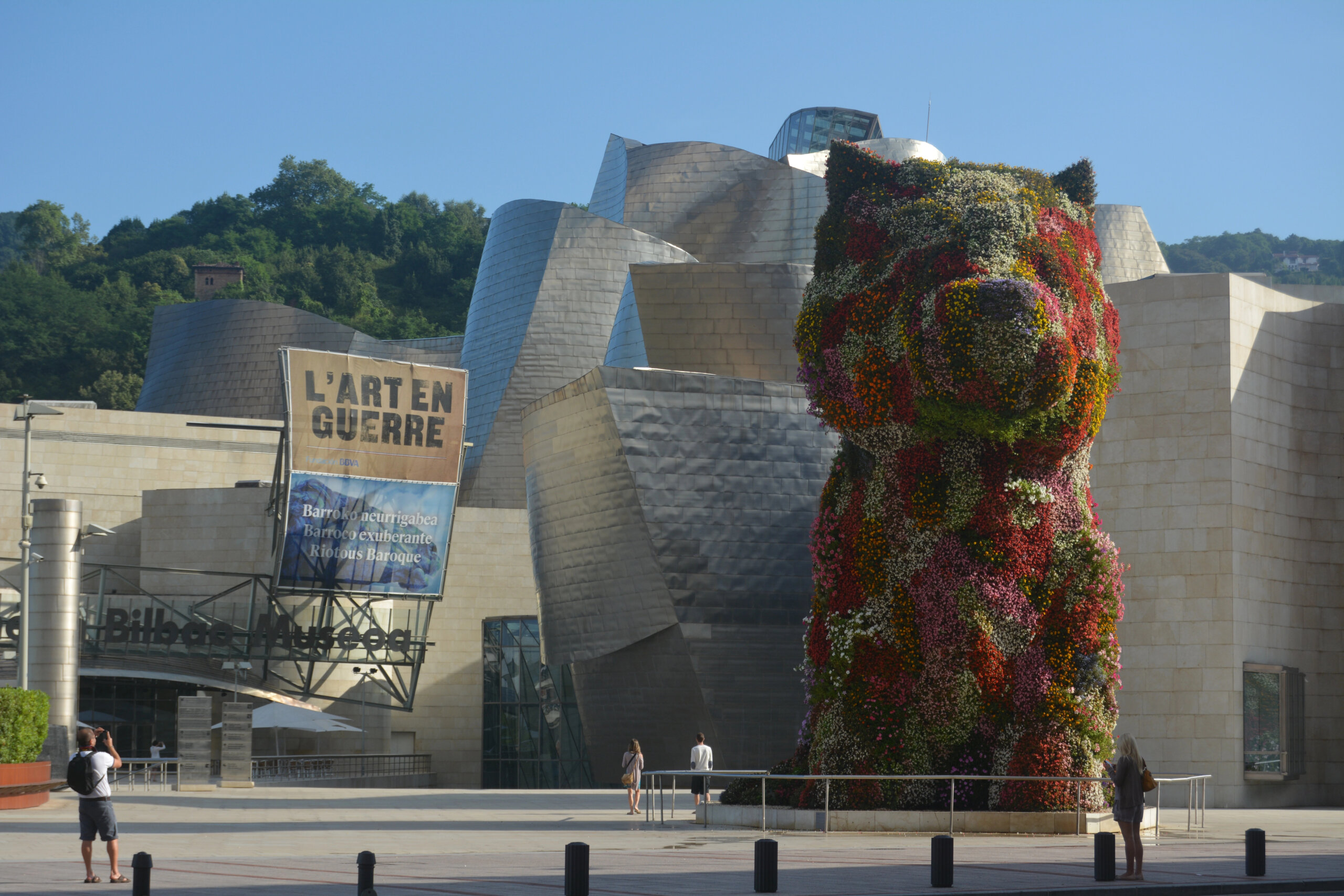
If you’ve got 2 days in Bilbao, you’ve got just enough time to fall in love with the city… or completely miss the point of it.
That sounds dramatic, but Bilbao isn’t a place that rewards rushing. It’s not Madrid, it’s not Barcelona, and it’s definitely not somewhere you “tick off” between San Sebastián and your next destination. Bilbao is quieter than that. Subtler. It doesn’t shout for your attention, but if you slow down just enough, it pulls you in.
This itinerary is not a checklist. You won’t be sprinting between landmarks or trying to “see everything.” Instead, you’ll understand why Bilbao is the way it is through its food, its transformation, and the rhythm of daily life.
You’ll start your mornings like a local. You’ll see the Guggenheim twice (on purpose, not by accident). You’ll eat well (non-negotiable). And by the end of your 2 days in Bilbao, you won’t just have seen the city, you’ll have felt it.

Disclaimer! All of my blogs may contain affiliate links. This means that if you click on the link and make a purchase I may receive a small amount of commission for the referral at no extra cost to you. This commission is what allows me to continue creating guides to help travellers plan their next trip!
What's in this post:
Is 2 Days in Bilbao Enough?
Yes… but only if you approach it differently.
Most people get this wrong. They arrive with a long list of things to do, rush through the Guggenheim, grab a few pintxos, and leave thinking Bilbao is “nice.”
Nice.
It’s the most underwhelming word in the English language, and also the fastest way to describe a place you didn’t really understand.
Bilbao isn’t about volume. It’s about layers.
Two days is enough to:
- See the highlights (without queuing your life away)
- Understand the city’s transformation
- Experience its food culture properly
- And, most importantly, feel the atmosphere shift between morning, afternoon, and evening
But only if you let it breathe.

How This 2 Days in Bilbao Itinerary Is Designed
Before we jump into the itinerary, here’s the thinking behind it, because this is where most guides fall apart.
This isn’t random.
- Mornings are slow and local → coffee, pastries, quiet streets
- The Guggenheim is visited at the right times → early morning and (optionally) golden hour
- Food is structured intentionally → light lunch, heavier evenings
- There’s space built in → because Bilbao punishes overplanning
There are also options depending on how you travel:
- Prefer structure? → Take a guided tour
- Prefer freedom? → Follow the route and explore at your own pace
Either way, the goal is the same: to experience Bilbao properly.

Day 1 of Your 2 Days in Bilbao: Coffee, Culture & Following the River
Start Like a Local: Coffee & Bollo de Mantequilla
Forget hotel breakfasts. This is your first small but important shift.
Find a local café. Order a coffee. And get a bollo de mantequilla: a soft, slightly sweet pastry/bread filled with buttercream that feels indulgent in the way only northern Spain seems to get away with.
This isn’t just about eating.
It’s about observing.
People popping in before work. Conversations that feel unhurried. The rhythm of a city that hasn’t fully woken up yet.
This is Bilbao before the noise.

The Guggenheim (Morning Visit Done Properly)
Here’s where most itineraries go wrong: they tell you to visit the Guggenheim, but not how to visit it.
Timing matters.
Option 1: Go Inside (Best Time = Early Morning)
If you’re planning to go inside, do it now.
Queues are lower. The space feels calmer. You’re not fighting crowds for a view of something you don’t fully understand anyway.
And this is important:
If you go inside, do it with a guide.
Ideally, a local artist.
Because otherwise, you’ll walk around nodding thoughtfully at installations you don’t really “get.” And that’s fine, but it’s also a missed opportunity.

Option 2: Don’t Go Inside (My Personal Preference)
I’ll be honest, I’ve only been inside once… on a school trip.
For me, the building itself is the experience.
Walk around it. Notice how it changes depending on where you stand. Take in the scale of Puppy, the presence of the spider sculpture and the way the titanium reflects the light.
This is architecture as a statement. And as a turning point.
Morning is still the best time to visit if you want to get good photos. Not only is the light better, but often you will only be sharing the Guggenhim with the odd jogger.
Walk the River to Casco Viejo (Bilbao’s Story in One Walk)
From the Guggenheim, don’t rush off.
Slow down, turn towards the river, and start walking.
On the surface, this is just a pleasant riverside stroll. But if you know what you’re looking at, it becomes something else entirely; a timeline of Bilbao’s transformation, told through art, architecture, and quiet details most people walk straight past.
And this is exactly why I recommend doing this section as part of a guided walking tour.
Because otherwise, you’ll see things… without understanding them.

What to Look Out For Along the Way
Start at the Guggenheim and take a moment with Maman, the giant spider sculpture by Louise Bourgeois.
It’s not just there to look impressive (although it does that very well). It represents strength, protection, motherhood. Slightly unsettling. Completely intentional. And already, you’re being asked to feel something, not just observe it.
As you continue along the river, you’ll pass The Man and His Shadow, a sculpture that most people barely notice, but once pointed out, becomes impossible to ignore. It’s subtle, almost hidden, and that’s kind of the point. Bilbao doesn’t hand everything to you.
Bilbao’s Sense of Humour
Then you reach the Zubizuri Bridge, designed by Santiago Calatrava. Clean, white, elegant… and (controversially) not the most practical when it rains. Which tells you something about the tension between design and real life in a city that reinvented itself through architecture.

Keep walking and you’ll come across a sculpture of a man frozen mid-lift in herri kirolak, the traditional Basque sport of picking up things that really shouldn’t be picked up.
The stone alone is impressive.
But it’s not the only thing that tends to grab people’s attention.
There’s a well-known local joke about Bilbaínos and their… confidence. Spend enough time here, and you’ll understand it. The statue certainly leans into the narrative.
And then there are works like Las Sirgueras, three women pulling a boat along the river, a tribute to the real women who once did this physically demanding work before mechanisation. It’s a reminder that long before Bilbao became “cool,” it was built on hard, often invisible labour.
Follow the river all the way into Casco Viejo, where the modern edges soften into something older, narrower, and full of life.
Because Bilbao doesn’t change all at once.
It unfolds.
Book your free walking tour here.

Mercado de la Ribera: Where Bilbao Still Feeds Itself
Before diving into pintxos, stop at the market.
Mercado de la Ribera is one of the largest covered markets in Europe, and it’s still very much part of daily life.
You’ll see:
- Fresh fish laid out with precision
- Locally grown produce
- People shopping with intention, not convenience
That last part matters.
Because while supermarkets and fast food exist (of course they do), the importance of quality ingredients hasn’t disappeared yet.

Casco Viejo: Pre-Lunch Pintxos (Keep It Light)
Now, pintxos.
But not all the pintxos.
This is where people get carried away.
You’re not here for a full meal, you’re here to understand how it works.
A couple of small bites. A drink. Move on.
Observe:
- How people order
- How they stand, eat, and chat
- The rhythm of hopping from bar to bar
This is reconnaissance.

Lunch: Keep It Simple (Bocadillo Done Right)
We have big plans tonight, so instead of sitting down for a heavy meal, keep it simple.
My favourite? A bocadillo de lomo adobado con pimientos y queso (marinated pork, peppers, cheese, in good bread). It is one of those things that sounds basic but somehow isn’t.
Afternoon: Follow Your Curiosity (Not a Checklist)
This is where most itineraries would overload you with “must-sees.”
We’re not doing that.
Instead, choose your direction:
- Wander through Ensanche and take in the architecture
- Explore Bilbao La Vieja for a slightly edgier, creative feel
- Head back along the river
- Simply sit somewhere and watch the city move
- Or embrace the siesta culture
Bilbao rewards curiosity, not efficiency.

Evening: Pintxos Done Properly (Now It Counts)
This is it.
If the morning felt calm and the afternoon felt exploratory, the evening is where Bilbao comes alive.
The energy shifts. The streets fill. Conversations spill out of bars. Plates move quickly. Glasses clink. There’s a rhythm to it, and if you don’t understand that rhythm, it can feel chaotic rather than exciting.
And this is exactly why I strongly recommend doing a pintxos tour with a local guide.
Because pintxos isn’t just about eating. It’s about knowing:
- Which bars to go to (and which ones to walk straight past)
- What to order in each place (every bar has its speciality)
- How to order (it’s not always obvious)
- When to move on (arguably the most important skill)
Without that knowledge, most people either:
- Stay in one bar too long
- Order the wrong things
- Or leave thinking, “that was nice”… instead of unforgettable

With a local guide, everything changes.
You’re taken to places you wouldn’t find on your own. You’re told why something matters. You understand the culture behind what you’re eating, not just the taste.
And instead of guessing your way through the experience, you step into it with confidence.
Could you do it yourself? Yes.
Will you get more out of it with someone who lives and breathes it? Also yes.
If you’re only spending 2 days in Bilbao, this is one of the best experiences you can invest in, because it transforms something you could easily get wrong into something you’ll talk about long after you’ve left.
And once you’ve done it once?
That’s when you’re ready to go out the next night and do it yourself.
I’ve tried multiple of the food tours available in Bilbao and The Best of Basque is my top recommendation!

Day 2 of Your 2 Days in Bilbao: Understanding the City Beyond the Surface
Morning: The Maritime Museum (Where Everything Clicks)
If Day 1 was about experiencing Bilbao, Day 2 is about understanding it.
Head to the Itsasmuseum Bilbao (the Maritime Museum).
This is where the story comes together:
- Bilbao as an industrial powerhouse
- The decline
- The reinvention
Suddenly, the Guggenheim makes sense.
The river makes sense.
The entire city starts to feel more intentional.

Midday: Artxanda Viewpoint
Next, take the funicular up to Artxanda.
At the top, you get a view of Bilbao that shifts everything.
You see:
- The curve of the river
- The contrast between old and new
- The way the city is held by mountains
It’s one of those moments where you stop, look, and go, ah… now I get it.
If you are feeling energetic (or like you need to burn some calories, then you can always also walk up!). Just one word of warning, the Basque Country doesn’t do gentle hills!

Lunch: Menú del Día (The Most Underrated Experience in Spain)
Today is the day for a proper sit-down lunch.
A menú del día isn’t just about value (though it’s excellent value). It’s about tradition.
Multiple courses. Set menu. No fuss.
This is how people actually eat here.
And after a full morning, you’ve earned it.
Afternoon: San Mamés & Understanding Athletic Club
Even if you’re not a football fan, go to San Mamés Stadium.
Because Athletic Club is not just a football team.
It’s identity.
Players are Basque. The connection to the community is real. The pride is tangible.
Understanding this gives you insight into something deeper: what it means to be a bilbaíno.

Optional: Escape to the Coast (Getxo & the Bizkaia Bridge)
If you’re the kind of traveller who always wants to see what’s just beyond the city, this is your moment.
Jump on the metro and head out to Getxo, about 30 minutes from the centre.
This is where Bilbao breathes.
Cliffs instead of buildings. Sea air instead of city hum. Wide promenades where people walk slowly, not purposefully.
You can:
- Walk along the coast between Las Arenas and Algorta
- Cross the iconic Punte Colgante (a UNESCO listed “hanging” bridge still in use today)
- Or just sit and do absolutely nothing while looking out at the Atlantic
But here’s the thing:
If you go, commit to it.
Don’t rush out, tick the bridge, and rush back.
Go because you want a contrast; to see Bilbao not just as a city, but as part of a wider landscape.
If you’d rather stay in Bilbao and go deeper instead of wider?
That’s just as valid.

Final Evening: Choose Your Ending
You’ve got options, and both are good.
Option 1: Go All In (Michelin or Upmarket Dining)
Bilbao doesn’t just do pintxos well, it does serious food exceptionally well.
And if there’s one moment in your 2 days in Bilbao to slow things down, sit properly, and appreciate Basque cuisine at its most refined, this is it.
Here are a few places I’d genuinely recommend:
Minimalist. Precise. Almost surgical in its approach to flavour.
This is where food becomes an experience rather than just a meal. It’s also inside the Guggenheim, which makes it feel like a natural extension of everything you’ve already seen and learned.
A great chance to return and see the Guggenheim at golden hour.

Small. Intimate. Overlooking the river.
You don’t choose from a menu here, you trust the chef. And that’s part of the magic. It feels personal, almost like being invited into someone’s home… if that someone happened to be exceptionally talented.
Ideal if you like food with personality and a bit of theatre.
Not Michelin-starred, but don’t let that fool you.
This is Basque cuisine done properly, rooted in tradition, but elevated just enough to feel special. It’s a great option if you want something authentic without going full tasting menu.
Ideal if you want high-quality without the formality.
Elegant, modern, and beautifully executed.
This is the kind of place where everything feels considered, from the plating to the pacing. It’s refined without being intimidating, which is harder to pull off than it sounds.
Ideal if you want a classic fine dining experience with a contemporary edge.

Option 2: One Last Pintxos Crawl (Now You Know What You’re Doing)
This time, it’s different.
You’re not figuring it out, you’re participating.
You know how to order. Where to go. What to look for.
And that shift, from outsider to participant, is the real takeaway from your 2 days in Bilbao.
Where to Stay for 2 Days in Bilbao
Keep it simple:
- Casco Viejo → for atmosphere, charm, proximity to food
- Ensanche → for space, comfort, central location
My 3 Top Picks
Hotel Tayko Bilbao (Casco Viejo) – If you want character without sacrificing comfort, this is the one.
NYX Hotel Bilbao (Casco Viejo) – Slightly more fun, a bit more vibrant, and often better value.
Hotel Carlton Bilbao (Ensanche) – A Bilbao institution.It’s grand, elegant, and sits right on Plaza Moyúa.
Either works. It just depends on your style. For more recommendations check out my Where to Stay in Bilbao Guide.

Getting Around Bilbao in 2 Days
- Walk as much as possible
- Use the tram and metro for convenience
- Take the funicular up to Artxanda
Bilbao is compact, but varied enough to keep things interesting.
Common Mistakes to Avoid in 2 Days in Bilbao
Let’s save you from the usual ones:
- Trying to do too much
- Only visiting the Guggenheim once (if you like photography I recommend going morning and evening)
- Eating too heavily at lunch (unless you are planning a siesta)
- Skipping evenings (this is when Bilbao shines)
- Treating it like a checklist city

2 Days in Bilbao Isn’t About Time, It’s About How You Use The Time You Have
Two days is enough.
Not to see everything, but to understand something.
Bilbao doesn’t overwhelm you. It doesn’t demand attention. It reveals itself slowly, in layers.
Through a coffee in the morning.
Through a walk along the river.
Through a bar full of people sharing food and conversation.
And if you’ve done it right, you won’t leave thinking, that was nice.
You’ll leave thinking, I get it now.
Further Reading: Explore Bilbao Beyond the Guggenheim
If this has sparked your curiosity about Bilbao, here are a few guides to help you explore the city beyond its most famous landmark.

Comments will load here
Be the first to comment