
The Blog

Bilbao Food Guide: What to Eat in Bilbao Like a Local
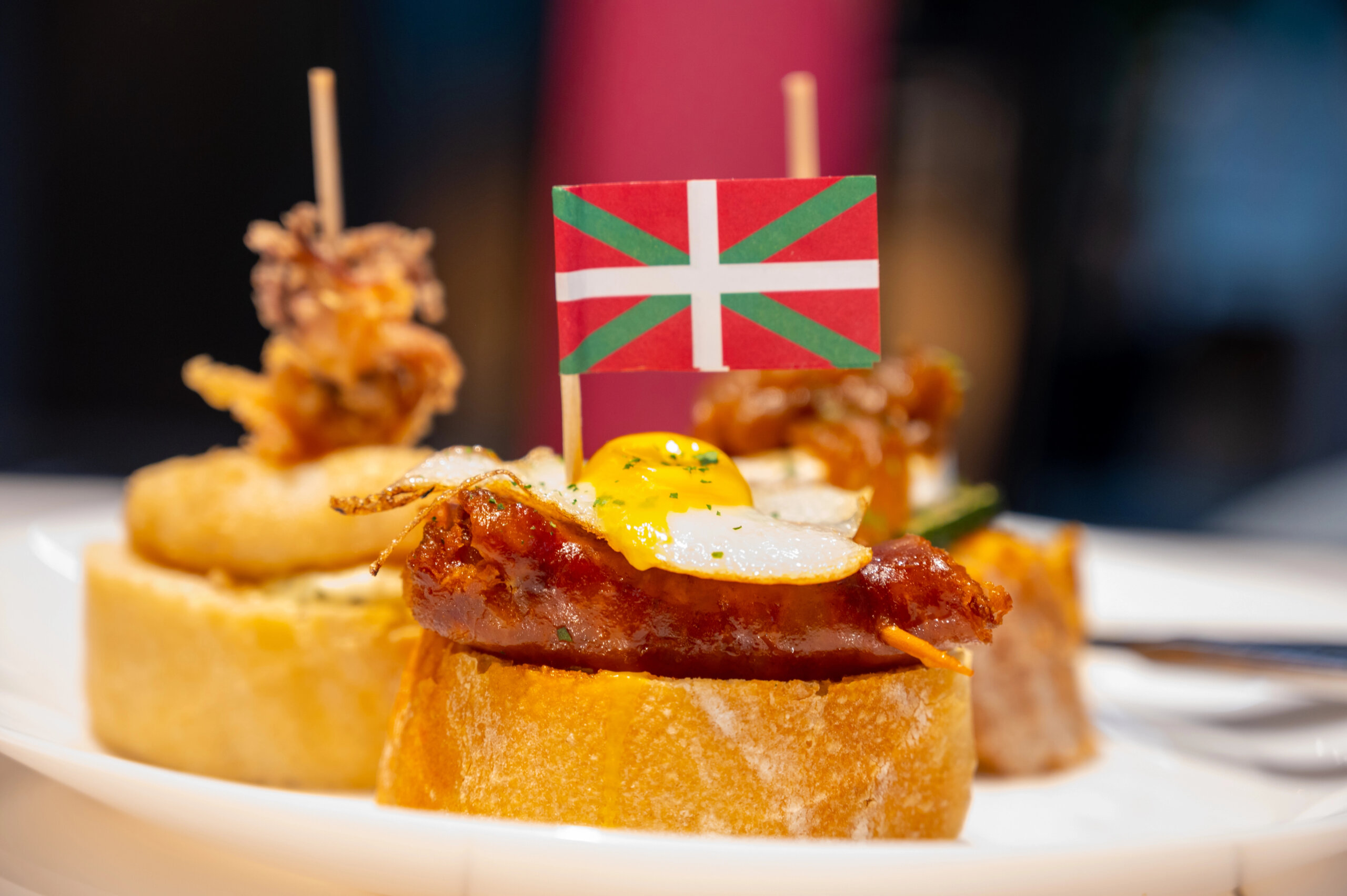
If you’re looking for a Bilbao food guide, the first thing you need to know is that Bilbao doesn’t eat like most cities.
There are places where food is something you book, schedule, and neatly organise around your day. Bilbao is not one of them. Here, food happens in movement: in bars with no free tables, in quick lunch breaks that still somehow involve three courses, in bakeries you only meant to “have a look” in, and in Plaza Nueva on a Sunday, when the smell of tortilla and fried rabas hangs in the air before you’ve even decided whether you’re hungry.
That’s why most guides get Bilbao wrong.
They treat it like a checklist: a series of pintxos to try, bars to pin, maybe one or two restaurants if you’re feeling organised. But food in Bilbao isn’t just about what you eat. It’s about how you eat it, when you eat it, and the rhythm behind it. Get that right, and you’ll have one of the best food experiences in Europe. Get it wrong, and you’ll leave thinking, that was nice, but I don’t really get the hype.
I grew up here. I’ve eaten my way through Sunday rabas, after-school pastries, weekday menú del día lunches, and more pintxos bars than I could possibly count. I’ve also watched plenty of visitors walk into a bar, panic-order the first thing they recognise, and miss everything that actually makes Bilbao special.
So this isn’t going to be a bland list of foods you “must try.”
This is Bilbao, done properly

Disclaimer! All of my blogs may contain affiliate links. This means that if you click on the link and make a purchase I may receive a small amount of commission for the referral at no extra cost to you.
What's in this post:
First, Let’s Get One Thing Straight: Food in Bilbao Is a Culture, Not a Checklist
Before we get into specific dishes, we need to talk about mindset.
Because pintxos are not tapas.
That distinction matters.
Tapas are often something you sit down for. Pintxos in Bilbao are something you move through. You go into a bar, order a drink, have one pintxo, maybe two if they’re exceptional, and then you leave. Then you do it again somewhere else. And again. And maybe again after that.
The magic isn’t in finding one perfect bar and settling in for the evening. It’s in the drift between them. The stop for a marianito. The quick plate of rabas. The argument over which tortilla is best. The bar you only intended to spend ten minutes in and somehow leave forty-five minutes later.
Locals don’t approach it like a buffet. They don’t heap up plates. They don’t spend the whole night in one place unless they have a very good reason to. They float. They chat. They lean against the bar like they might be about to leave but don’t. They repeat rituals they’ve repeated for years.
That rhythm is Bilbao.
Miss that, and you can still eat well. But you won’t really understand what makes eating here so special.
The Pintxos You Actually Want to Try (And Why They Matter)
You could spend three days in Bilbao eating nothing but pintxos and still not cover everything worth trying. So rather than overwhelm you, let’s focus on the ones that actually tell you something about the city.
The Classics (Start Here or You’re Missing the Point)
Gilda
This is the original pintxo: olive, anchovy, and pickled guindilla pepper on a stick. Salty, sharp, a little aggressive.
It’s also history. One of those tiny bites that says far more than it looks like it should. It was named after Rita Hayworth’s character in Gilda because it’s “green, salty, and a little spicy.”
Start here.
Even though, in the interest of honesty, I should tell you that I don’t actually like them.
That does not make them any less important. It just means I am willing to suffer for journalistic integrity.

Where to try it:
Café Bar Bilbao does the classic version properly, without fuss. Los Fueros is also worth considering if you want somewhere that bridges old-school Bilbao with a slightly more modern touch.
Tortilla
Bilbao takes tortilla absurdly seriously, which is exactly as it should be.
A simple combination of eggs, potatoes and onion should not inspire this level of devotion, and yet here we are. Wobbly, silky, firm, slightly caramelised, served hot, served cold, eaten at breakfast, mid-morning, lunch, merienda, dinner, late at night… tortilla in Bilbao is less a dish and more a running theme.
And no, there is not one universally agreed “best.” That would be too easy.
Where to try it:
Café Bar Bilbao is a solid classic. La Viña del Ensanche does a reliably excellent one. Taberna Basaras is also worth your attention for a juicy version, and if you want something made to order, Baster is a strong shout.
Try more than one. You will leave with opinions.

Jamón Ibérico
Yes, it’s ham.
No, that is not the same thing.
Good jamón ibérico should feel almost indecently soft. Slightly glossy, melting at the edges, rich without being heavy. It’s one of those things that reminds you how much can depend on quality rather than complexity.
Where to try it:
This is less about a specific pintxo bar and more about whether the place respects ingredients. La Viña del Ensanche is a good bet. Casa Rufo is also excellent if you want that deli-meets-restaurant, produce-first kind of confidence.

Croquetas
If there’s one thing you’ll find in almost every bar in Bilbao, it’s croquetas.
And for good reason, they’re one of the safest bets on any counter.
Golden and crisp on the outside, soft and creamy on the inside, they’re the kind of thing you order without thinking… and very rarely regret.
The classic flavours are:
- jamón (the default, and usually the best place to start)
- chicken
- bacalao, which is especially popular in Bilbao
But this is where it gets more interesting.
Plenty of places go beyond the basics, and you’ll find versions filled with things like squid in its ink or slow-cooked stew, both of which are worth seeking out if you want something a bit more local and a bit more memorable.
Where to try them?
Honestly, this is one of the few things in Bilbao where you don’t need to overthink it. Most bars do them well.
That said, is a personal favourite, and if you’re already there for their rabas, it would be a mistake not to order them. You are allowed to break the one bar one pintxo rule once in a while 😉
But wherever you are in the city, if you see croquetas on the counter, you’re safe.

Txangurro
Spider crab is where things start to get properly Basque. Slightly sweet, rich, unmistakably northern.
This is the kind of thing that nudges you out of generic Spain mode and into local territory.
Where to try it:
El Globo isprobably the most famous spot for txangurro pintxos, and one of the few times a popular place actually lives up to the reputation. Cork near San Mamés is a strong option if you want a more thoughtful, less predictable food stop. Gure Toki also does seafood-based pintxos well.
Bacalao
Cod is everywhere here for a reason. It’s not just common. It’s cultural.
Bilbao and the wider Basque Country have a long, deep relationship with cod, and that shows in how many ways it appears, from pintxos to serious sit-down dishes.
Where to try it:
Monty is a great option because their pintxos are actually fresh rather than just sitting around since the morning, which already puts them ahead of half the city. Café Bar Bilbao is also a dependable classic.

Anchovies: Anchoas vs Boquerones
Same fish. Completely different mood.
Anchoas are cured, salty, intense.
Boquerones are marinated in vinegar, lighter, brighter.
Both deserve your attention.
Where to try them:
Taberna Basaras is a great pick for Cantabrian anchovies. Cork is another good option if you’re already there for the wine and want something that proves they care just as much about what’s on the plate.

Foie Gras Pintxos
The Basque Country has a quiet obsession with foie, and honestly, once you see what they do with it, it stops feeling that quiet.
You’ll find it with caramelised onion, fruit, sweet contrasts, buttery textures, all of it unapologetically indulgent.
Where to try it:
Gure Toki is a good place for more creative combinations. Irrintzi is also worth a look if you want something less traditional and a bit more playful.
Txistorra
If you see txistorra, order it.
This thin, slightly spicy Basque sausage is usually served hot, often tucked into a small piece of bread, and eaten quickly before you realise you probably should have ordered two.
It’s simple, slightly greasy in the best way, and exactly the kind of thing that makes sense in a bar with a drink in hand.
This is not a “try once” pintxo. This is a “why didn’t I order another one” pintxo.
Where to try it:
You’ll find txistorra almost everywhere, and it’s one of the safer things to order without overthinking it.
- Café Iruña – a great spot for traditional flavours done properly
- Sorginzulo – reliable, and worth ordering alongside their rabas. They often serve it with a quail egg on top.

Battered Hake
This is one of those pintxos that doesn’t try to impress you, and then quietly does.
Fresh hake, lightly battered and fried so it stays soft and flaky inside, crisp on the outside. No heavy sauces, no overcomplication, just good fish treated properly.
It’s easy to overlook because it doesn’t shout for attention.
Don’t overlook it.
Where to try it:
- Cork – excellent quality fish and one of the best versions in the city
- Monty – a strong option if you want something freshly made rather than sitting on the counter
Bilbainito
This one feels very Bilbao.
A simple combination of boiled egg, shrimp, and mayonnaise, usually served on bread. It shouldn’t work as well as it does, but somehow it does.
It’s not refined. It’s not modern. It’s just something people here have been eating for years without questioning it.
And that’s usually a good sign.
Where to try it:
- Taberna Basaras – one of the best places to try it, alongside their tortilla and anchovies

The Ones That Tell You You’re Actually in Bilbao
Some pintxos are delicious. Some are distinctly Basque. And some are the point where you stop being “someone eating in Spain” and start understanding where you actually are.
Kokotxas
These are cod or hake cheeks, and they do not sound appealing until you eat them.
Then suddenly the texture makes sense. Soft, silky, slightly gelatinous, rich without heaviness. This is proper Basque food. Not adapted. Not simplified. Not made easier for visitors.
Where to try them:
Sorginzulo is a very good place to start. Bikandi Etxea is even better if you want them in a proper sit-down context with all the old-school depth that comes with it. Asador Indusi is another strong option for hake kokotxas in salsa verde.

Pinchos Morunos at Café Iruña
These may not be originally Basque, but in Bilbao they’ve become a right of passage.
At Café Iruña, the pinchos morunos are an institution. Spiced skewers of marinated pork, cooked fresh, smoky, straightforward, and somehow always more memorable than they sound on paper.
This is not elevated food. It’s not trying to be. It’s tradition, repeated often enough that it’s become part of the city’s own language.
Go. Order them. Don’t overthink it.
Rabas
If there is one thing I’d fight for in this guide, it’s rabas.
Not Michelin stars. Not foam. Not whatever someone is doing with tweezers in a tasting menu somewhere.
Rabas.
Golden fried strips of squid, ideally eaten with lemon, something cold to drink, and no attempt to make them more refined than they are. On a Sunday in particular, they’re part of Bilbao’s social fabric. A ritual. A reflex.
Where to try them:
Sorginzulo is one of the best places for rabas in Bilbao. Full stop.
If you want a more modern spin on calamari, Gure Toki also does a fried calamari sandwich in squid ink that’s worth your attention.

Bonito con Divisa (at Bodega Joserra)
This is one of those things you probably wouldn’t order if no one pointed it out to you, and that would be a mistake.
Bonito (tuna), simple, done properly, often served in a bocadillo that looks unassuming and tastes far better than it has any right to.
It’s not trying to impress you. It’s just quietly excellent.
Where to try it:
- Bodega Joserra – a slightly under-the-radar spot that feels more local than curated.
Prawns (Gambas a la Plancha)
Not everything in Bilbao comes on bread.
Sometimes the right order isn’t a pintxo at all, it’s a ración to share.
Prawns are a perfect example. Grilled simply, served hot, slightly messy, and best eaten standing at the bar with a drink in your hand.
This is one of those moments where Bilbao stops being about variety and becomes about quality.
Where to try them:
- Los Fueros – one of the oldest bars in Bilbao, where tradition still matters and the prawns are exactly what you want them to be

Ensaladilla Rusa (Russian Salad)
Every city has a version of this.
Bilbao has opinions.
Creamy, rich, deceptively simple, and very easy to get wrong, but when it’s good, it’s one of those things you keep going back to without really thinking about it.
This is not a showstopper dish. It’s a quiet one. And that’s exactly the point.
For full disclosure, I hate this dish! In fact, it was this dish that gave me nightmares about mayonnaise as a kid…. But the locals love it!
Where to try it:
- Monty – widely considered one of the best versions in the city

The Pintxos That Go a Step Further (Without Losing the Plot)
Not every pintxo in Bilbao is traditional.
And not every modern pintxo is worth your time.
But there’s a middle ground, places that take what already exists and push it just enough to make it interesting, without turning it into something unrecognisable.
This is where Bilbao shows a bit of creativity… without forgetting who it is.
Smoked Sardines with Tomato Gel (Cork)
This is not your standard pintxo.
Smoked sardines, intense and salty, balanced with a fresh tomato gel that cuts through just enough to keep everything in check.
It’s thoughtful. It’s precise. And it’s a good reminder that simple ingredients don’t have to be treated simply.
Where to try it:
- Cork – come for this, stay for the wine list

Grillos (Los Fueros)
This is one of those pintxos that makes you pause slightly when it arrives.
Boiled potato, raw onion, and a crisp lettuce leaf stacked together in a way that somehow crunches like a cricket, hence the name grillo (cricket in Spanish).
It shouldn’t work. It absolutely does.
This is Bilbao being playful without being pretentious.
Where to try it:
- Los Fueros – one of the city’s oldest bars, quietly reinventing itself without losing its roots
Duck Confit with Crispy Apple (Irrintzi)
This is where pintxos start leaning into something a bit more indulgent.
Duck confit, rich and soft, sandwiched between crispy fried apple, sitting on bread that somehow holds it all together.
It’s sweet, savoury, and just slightly over the top.
Where to try it:
Not everything needs reinventing. But when it is… this is how you do it.

The Dishes You Sit Down For (Because Pintxos Are Not Always Enough)
Eventually, Bilbao asks you to sit down.
Not because the bars stop being good, but because there’s a whole other layer of food here that doesn’t live on a counter. It lives in sauces that take time. In stews. In dishes your grandmother would recognise. In things that aren’t trying to impress you because they’ve never needed to.
If pintxos are the flirt, this is the long-term relationship.
Bacalao al pil pil
Cod cooked gently in olive oil, garlic and chilli until the gelatin emulsifies into that signature silky sauce.
Simple in theory. Not simple in practice. A great dish to learn to make in a cooking class!
Where to try it:
Bikandi Etxea is an excellent choice. Monty also serves bacalao al pil pil if you want something slightly more casual.

Bacalao a la Vizcaína
This is Bilbao on a plate.
Salt cod in a rich red sauce made with choricero peppers, onion and garlic. If pil pil is delicate and technical, vizcaína is bolder, deeper, more unapologetically itself.
Where to try it:
Bikandi Etxea is again a strong option, especially if you’re already there for their old-school cazuelas and slow-cooked dishes.
Txuleta
Basque steak is not subtle, and thank God for that.
Thick-cut, aged, cooked over fire, seasoned properly, served rare enough to alarm some people and delight others.
Where to try it:
Txakoli Simón is perfect if you want to turn it into a whole outing: take the funicular or cable car up to Artxanda, order txakoli and a sizzling txuleta, and enjoy the fact that Bilbao knows exactly how to reward effort.
For something more traditional in town, Asador Indusi is a strong pick.

Marmitako
A fisherman’s stew of tuna, potatoes, peppers and paprika. Honest, warming, and deeply maritime. This is not show-off food. It’s food with roots.
But here’s the thing, you won’t find it everywhere, all year round.
Marmitako is traditionally tied to tuna season, which runs roughly from June to September. That’s when it starts appearing on menus, especially on menú del día boards across the city.
Outside of those months, you might still find it, but it’s not the same. This is a dish that makes the most sense when it’s cooked with fresh tuna, in season, the way it was always intended.
So if you see it on a menu, especially during summer… order it.
That’s Bilbao doing what it does best: cooking what’s available, when it’s at its best, without overcomplicating it.

Alubias a la Vizcaína
This is weekday-winter-Bilbao food. Beans, slow-cooked and served with all the sacramentos: chorizo, morcilla, pork, the whole glorious lot.
A dish with no interest whatsoever in being light.
Where to try it:
Rio-Oja is exactly the kind of place I’d trust with a dish like this.
Merluza en salsa verde
If bacalao a la vizcaína is bold, hake in green sauce is more restrained. Garlic, parsley, olive oil, often clams, and a reminder that Basque food can be elegant without becoming fussy.
Albóndigas (Meatballs)
Not everything in Bilbao needs to be complicated.
Some of the best dishes are the ones that feel like they’ve been made the same way for generations, and albóndigas fall firmly into that category.
Soft, rich, cooked in a deep, flavourful sauce that’s usually better than anything you’d attempt at home, these are the kind of meatballs that don’t try to impress you… and end up doing exactly that.
This is proper, no-nonsense cooking. The kind that leans heavily on time, patience, and knowing exactly what you’re doing.
Where to try them:
- Rio-Oja – this is where you go for stews. Proper ones. The kind that feel like they’ve come straight out of a Basque grandmother’s kitchen. Their albóndigas are exactly what you want them to be

Chipirones en su tinta
Small squid cooked in their own ink. Black sauce, briny depth, stronger flavour than the appearance suggests.
This is one of those dishes people hesitate over until the first bite, after which they suddenly understand why it’s survived every trend in modern dining.
Where to try it:
Bikandi Etxea does this beautifully.
Porrusalda
No one puts porrusalda on postcards, which is probably why I like it.
Leeks, potatoes, sometimes cod. Quietly traditional. Quietly comforting. The kind of dish that feels closer to someone’s kitchen than a performance of regional cuisine.

Menu Del Dia – Your Chance To Truly Embrace Local Life
If you skip the menú del día, you’re missing one of the most important parts of how Bilbao actually eats.
Because this isn’t a tourist deal. It’s not a “cheap option.” It’s just… lunch.
During the week, restaurants across the city fill up with locals stepping out of work, sitting down, and eating properly before heading back to the rest of the day. No rushing through a sandwich at your desk. No grabbing something on the go. A proper meal.
And it follows a structure that hasn’t really changed in decades.
You’ll get:
- a primer plato (usually something lighter: salad, vegetables, pasta, rice, lentils or beans)
- a segundo plato (typically meat or fish, this is where you’ll often see Basque dishes like bacalao al pil pil)
- a dessert (anything from flan or arroz con leche to cheesecake or fruit)
Plus bread, and a drink (normally water or wine). If you’re in a group, don’t be surprised if they just bring a bottle to the table.
Prices usually sit somewhere between €18 and €35, depending on where you are. Not as cheap as they once were (or as they still are outside the city), but still one of the best-value meals you’ll find anywhere in Europe.
And while the structure is predictable, the menu itself isn’t.
It changes daily. Often it’s not written down. Someone will just list the options at speed and expect you to keep up.
You won’t always succeed but it is one of the most authentic experiences you can try!

Where to Try a Good Menú del Día
This is one of those things where you could walk into almost any local restaurant and do well.
But if you want somewhere that actually stands out:
- Bikandi Etxea – if you want something properly traditional, this is the one to plan around. Small, local, and built around proper Basque cooking
- La Pizarra – a slightly more modern take, but still rooted in tradition (and worth it for the desserts alone)
- Monty – they specialise in keeping workers energised with tuna in tomato sauce, bacalao al pil pil and meatballs.
- Mettxa – one of the best value-for-quality options in the city
- El Txoko Berria – a great choice in the Old Town if you want something more traditional
- Grand Prix – small, under-the-radar, and exactly the kind of place you’d walk past if you didn’t know better
A Few Things Worth Knowing
- If you see the word “menú”, that’s the set meal.
- If you see “carta”, that’s individual dishes (and usually more expensive).
- The best places don’t need to advertise it, they’ll just be full.
- And if you hear salda dago in winter… it means there’s hot broth available. Which usually means you’re in the right place.
If pintxos are how you explore Bilbao, menú del día is how you understand it.

The Sweet Side of Bilbao
Bilbao doesn’t just do sweet things well. It knows exactly when to eat them.
This isn’t a city where dessert is the only moment sugar shows up. It runs through the whole day quietly, habitually, and usually alongside a coffee.
You’ll see it:
- first thing in the morning, with pastries
- mid-afternoon, when people stop for a merienda
- and at the end of a proper meal, in the form of postres caseros
And once you start paying attention, you realise it’s not random. It’s rhythm.
A Quick Reality Check (From My Childhood)
Before food was something people photographed, it was just… food.
Breakfast, for me, was often a big bowl of Cola Cao with yesterday’s bread. Slightly stale, so you’d smother it in butter, add sugar, and then dip it until it softened just enough to be worth eating.
No one questioned it. No one called it a “concept.”
It just worked.
Merienda was usually something savoury, a bocadillo with chorizo, jamón york or mortadela. But every now and then, if you were lucky, it turned into something better.
A bocadillo of nocilla (Nutella).
Or, even better, a bar of chocolate inside a baguette.
Don’t knock it until you’ve tried it!

What to Have With Your Coffee (Pastries)
This is where it usually starts.
Walk into a bakery in Bilbao and you’ll see people doing exactly the same thing: ordering coffee and something small, often without even looking.
That “something small” is rarely small.
Bollo de mantequilla is the classic. Soft bread filled with buttery cream, slightly sweet, completely unpretentious, and very Bilbao.
You’ll also find a steady rotation of pastries like croissants, palmeras, cakes… depending on where you go. But the important thing isn’t finding the “best” one.
It’s understanding that this is a daily ritual.
Coffee is rarely on its own.

Desserts That Actually Matter (Postres Caseros & Classics)
Dessert in Bilbao isn’t about one headline dish.
It’s about two worlds: the slightly more “special” desserts, and the ones that feel like they’ve come straight out of someone’s kitchen.
The Ones Worth Seeking Out
These are the desserts people talk about:
- Pantxineta – flaky pastry filled with custard and topped with nuts
- Torrija – Spain’s answer to French toast, usually richer and better
- Carolinas – colourful, slightly chaotic, and very Bilbao
- Basque cheesecake – yes, it’s more of a San Sebastián thing originally, but Bilbao does it well enough that you don’t need to go anywhere else
These are the ones you order when you want something a bit more memorable.

The Ones That Feel Like Home (Postres Caseros)
Then there are the ones that don’t try to impress you.
They just exist. Quietly. Consistently. And almost always done well.
- Natillas – thick custard, usually with a biscuit and cinnamon
- Flan – soft, silky, closer to crème caramel than any English flan
- Cuajada – simple, slightly tangy, often served with honey
- Arroz con leche – creamy rice pudding, usually served cold
These are the desserts that show up on menú del día. The ones people order without thinking about it.
And that’s exactly why they matter.
Merienda & Treats (When You Feel Like It… Not When You Should)
Merienda is a mid-afternoon snack that no kid functions without… and neither do some adults either!
It’s not always sweet. It’s not always necessary. But it’s always a good idea.
And this is where things get a little less routine and a little more indulgent.
Palmera de chocolate (filled with nata)
This is not subtle. It’s messy, excessive, and completely worth it. The pastry I missed most while living in England.
Churros
Let’s be clear.
People will say churros con chocolate as if the chocolate is the main event.
It’s not.
The churros are.
Crisp, soft, slightly greasy, and very easy to keep eating without noticing how many you’ve gone through. The chocolate is just there to justify ordering more.
And honestly, one of the most traditional ways to eat them, especially during fiestas, is without chocolate at all. Just hot, sugared, and perfect.

Where to Eat in Bilbao (Without Falling Into Tourist Traps)
Let’s be honest, Bilbao is not short on places to eat.
You could walk into almost any bar, point at something, and you’d probably eat well. The standard here is high, and that’s part of what makes the city so good for food.
But that doesn’t mean every experience is the same.
Because there’s a difference between eating well and eating somewhere that actually feels like Bilbao.
Some places are built for turnover: quick bites, quick drinks, constant flow. Others are where locals linger, where the food has a bit more intention behind it, where you’re not just another person passing through.
And then, of course, there are the places that look right… but somehow miss the mark.
So instead of giving you a never-ending list of “top restaurants,” this is about helping you choose the right kind of place for the experience you want.
Whether that’s standing at a crowded bar with a glass of txakoli, sitting down for a proper meal, or finding something in between, this is where to start.

Best Pintxos Bars (Start Here, Then Wander)
If you’re new to pintxos, the instinct is to find the place and settle in.
Don’t.
The whole point is to move. One bar, one drink, one or two pintxos… and then on to the next. That’s how you build the experience.
If you want a deeper dive (and a few more very opinionated recommendations), I’ve put together a full guide to the best pintxos bars in Bilbao but if you just need a starting point, these won’t let you down:
- Café Bar Bilbao – classic, no-frills, and exactly what you want your first stop to feel like
- El Globo – slightly more refined, with pintxos that look as good as they taste
- Gure Toki – creative, modern takes without losing the Basque identity
- Café Iruña – come for the pinchos morunos, stay because you ordered another round without meaning to
- Sorginzulo – if you’re ordering rabas anywhere, make it here
But here’s the part people get wrong:
Don’t stay in one place.
Even if it’s good. Especially if it’s good.
Because Bilbao isn’t about finding the best bar, it’s about everything that happens in between them.

Best Food Tours (If You Want to Skip the Guesswork)
You can do Bilbao on your own.
You can walk into bars, point at things, hope for the best, and eventually figure it out.
But here’s the difference a food tour makes:
Instead of spending your first night wondering what you’re looking at, you start your trip actually understanding it.
A good pintxos tour isn’t about convenience, it’s about context.
It’s someone showing you:
- what you’re eating
- why it matters
- how to order without hesitation
- and which places are worth your time (and which aren’t)
It fast-tracks everything.
You go from “slightly overwhelmed and guessing” to confidently walking into a bar, ordering like you’ve done this before, and actually enjoying the experience instead of overthinking it.
And once you’ve got that? You don’t need the tour anymore. You just need more time.
If you’re going to do one, I’d recommend The Best of Basque. It’s exactly what a food tour should be: local, informative without being boring, and focused on helping you understand the food, not just eat it.
Think of it less as a tour… and more as your shortcut to doing Bilbao properly from day one with a newfound local friend.

Best Restaurants by Budget
You can eat well almost anywhere in Bilbao. That’s not the problem.
The problem is choosing somewhere that matches the kind of experience you want, because a €15 lunch and a €120 dinner here are both “good,” but they’re not trying to do the same thing.
Budget-Friendly (Where Locals Actually Eat During the Week)
For quick, satisfying, low-fuss food, Huba is a great bocadillo stop. Next door is the famous El Eme who’ve been making “triangulos” (sandwiches) since the 50s. But if I’m honest, they have too much mayonnaise for my liking. Give me a traditional bocadillo any day of the week (and Huba does that well!).
Café Bar Bilbao and Bar Monty are good if you want something casual without overthinking it.
Mid-Range (Where You Sit Down and Do It Properly)
This is Bilbao’s sweet spot.
- Bikandi Etxea if you want old Bilbao in cazuelas and sauces.
- Rio-Oja if what you want is hearty, glorious, grandmotherly cooking. Their stews deserve a better love story than most people have ever had.
- Asador Indusi for serious traditional cooking with dishes like grilled turbot, kokotxas in salsa verde, oxtail stew and lamb trotters.
Treat Yourself (Because Bilbao Does This Very Well)
This is where things get serious.
Bilbao, and the wider Basque Country, has one of the highest concentrations of Michelin-starred restaurants in the world. And while you don’t need to do one, if you’re into food, it’s worth it.
- Nerua Guggenheim Bilbao – minimalist, ingredient-focused, and very Basque in its philosophy
- Etxanobe Atelier – elegant, precise, and a proper experience from start to finish
- Mina – small, intimate, and built entirely around seasonal tasting menus
You don’t need to spend a fortune to eat well in Bilbao. But if you do… at least you’re in the right place for it.

Best Hidden Gem Restaurant in Bilbao?
If you want something that doesn’t feel curated, polished, or designed for visitors… go here:
This is the kind of place that doesn’t try to get your attention, and doesn’t need to.
Small, unpretentious, and usually full of people who already know exactly why they’re there, Bikandi feels like stepping into a version of Bilbao that existed long before food became something to photograph.
There’s no performance here. No reinvention. Just clay pots lined up along the counter, slow-cooked stews, and dishes that have been done the same way for years because… they work.
This is where you go for things like:
- kokotxas with clams
- chipirones in their ink
- proper, no-shortcuts sauces that take time
It also does one of the most honest menú del día experiences in the city: simple, generous, and quietly exceptional.
And fair warning: getting a table isn’t always easy. Not because it’s trendy, but because the people who know it… keep coming back.
If you want to understand Bilbao beyond pintxos, this is where you start.

Best Places for Something Specific
Sometimes you don’t want options.
You don’t want to “explore to “see what you find.”
You want steak. Or seafood. Or something quick that you know will be good.
If that is the case, then this is where to go.
For Steak (Txuleta Done Properly)
If you’re going to do steak in Bilbao, do it properly. This is not the place for sauces, overcooking, or anything remotely subtle.
- Asador Etxebarri – technically just outside Bilbao, but worth mentioning because it’s one of the best steakhouses in the world. If you can get a reservation, go.
- Asador Indusi – more accessible, traditional, and exactly what you want for a proper txuleta experience
- Amaren – slightly more refined, but still rooted in that Basque grill culture
Order the txuleta. Don’t overthink it.

For Seafood (Because You’re Close to the Sea, Use It)
Bilbao might not be on the coast, but it behaves like it is.
- Serantes – a go-to for seafood, especially if you want something classic and well-executed
- Casa Rufo – not exclusively seafood, but a brilliant mix of quality produce, including excellent fish
This is where you order gambas, hake, or whatever looks best that day, and trust it’ll be fresh.
For Quick Bites (When You Don’t Want to Commit to a Full Meal)
Not every meal needs to be a sit-down event.
Sometimes you just want something fast, good, and satisfying.
- El Eme – iconic sandwiches, quick, messy, and exactly what you need between pintxos rounds (although I prefer Huba next door)
- Café Iruña – for those pinchos morunos that turn into more than you planned
- Sorginzulo – if you want something quick but local, their rabas alone are worth the stop
And if you’re in the Old Town, honestly? Walk in somewhere busy and trust the process.
How to Do Pintxos Like a Local (This Will Change Everything)
This is the difference between a good experience and a great one.
- Don’t pile your plate
- Don’t stay in one bar – on pintxo, one drink and move on
- Stand at the bar if you can
- Go later than you think
Drink pairings:
- Txakoli (slightly sparkling white)
- Vermouth (pre-dinner classic)
- Rioja (because you’re in Spain)
- Zurito (a small beer)
- Marianito (Bilbao’s version of vermouth, usually mixed with a splash of Campari, sometimes gin or bitters, and treated with far more seriousness than it probably should be. Every bar has its own recipe)
And most importantly: slow down.

Common Mistakes People Make in Bilbao
- Treating pintxos like a buffet
- Only eating in the Old Town
- Skipping menú del día
- Playing it too safe
- Eating too early – they eat late in Bilbao! Lunch is 2:30-3:30 and dinner doesn’t start until 9pm!
A Simple Bilbao Food Plan (If You Want Me to Take Control)
- Breakfast: coffee + bollo de mantequilla
- Lunch: menú del día
- Afternoon: merienda (grab a pintxo)
- Evening: food tour or Michelin meal
If you want me to map that out properly, here’s my full Bilbao food itinerary with exactly what to eat and when.
Final Thoughts: Bilbao Isn’t About the Food, It’s About the Way You Eat It
You can eat well in a lot of places.
But Bilbao isn’t just about eating well. It’s about ritual. About standing at a bar not entirely sure what you’re doing, then slowly realising that nobody else seems in much of a rush either. About movement, repetition, appetite, and tiny decisions that somehow become a whole day.
It’s a city that used to run on industry and now, in many ways, runs on food. Or at least organises itself around it with impressive commitment.
And once you stop trying to “do” Bilbao and start eating the way Bilbao eats, that’s when the city really starts to make sense.
Further Reading: Explore Bilbao Beyond the Guggenheim
If this has sparked your curiosity about Bilbao, here are a few guides to help you explore the city beyond its most famous landmark.

Comments will load here
Be the first to comment