
The Blog

Best Pintxo Bars in San Sebastian: Where I Actually Go for Pintxos
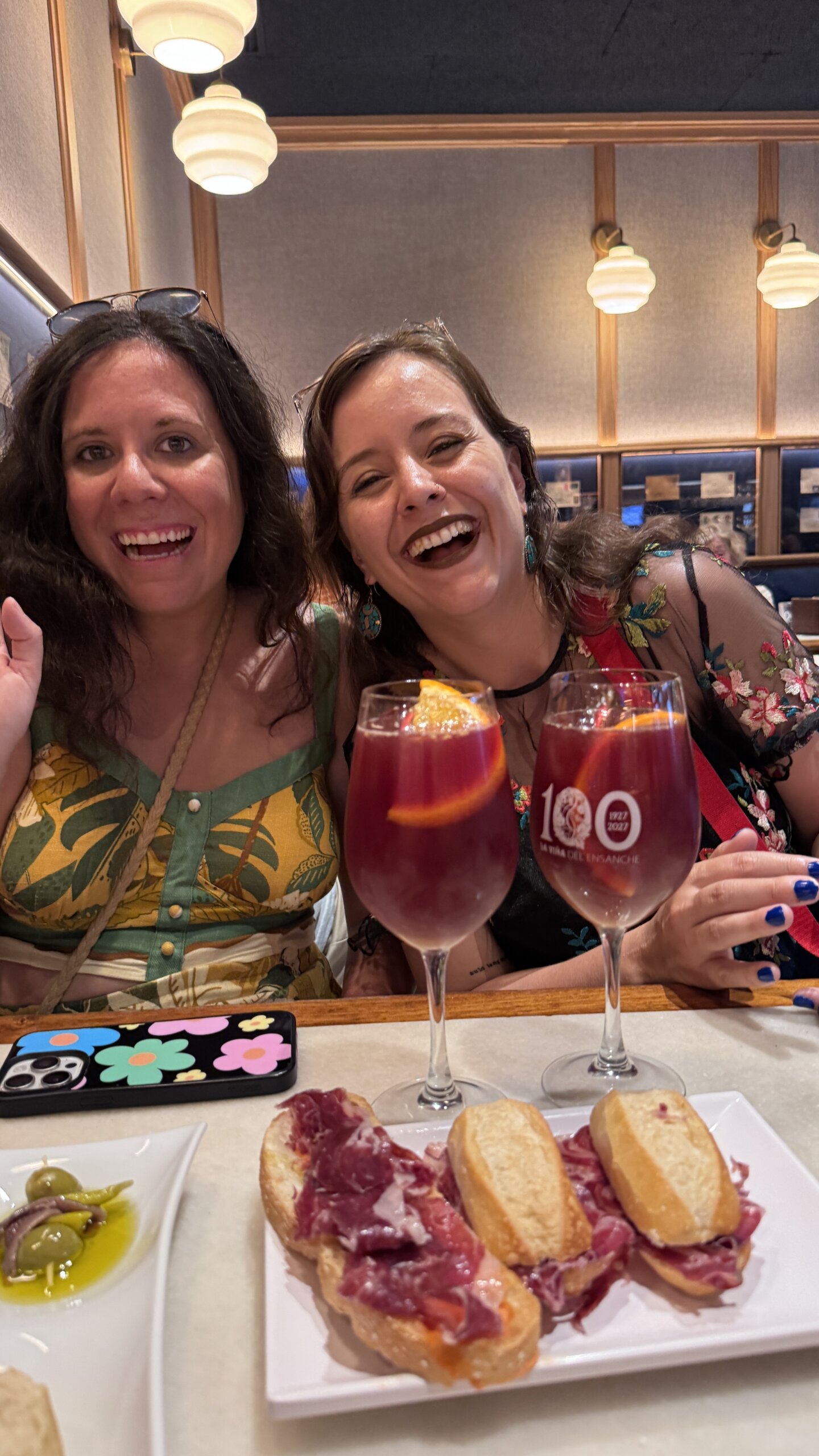
If you’re searching for the best pintxo bars in San Sebastian, you’re certainly not short of recommendations. San Sebastian’s pintxo scene is world-famous, which is both its greatest strength and, increasingly, its biggest problem. Everyone knows where to go, so some of the Old Town’s best bars can feel as though half of Instagram has decided to order dinner at exactly the same time.
I grew up in the Basque Country and have been to San Sebastian more times than I can remember, often for the express purpose of eating. Going from bar to bar, ordering one or two pintxos in each, remains one of my favourite things to do in the city.
Some of San Sebastian’s famous pintxo bars are famous for a reason, and I’ll happily battle the crowds for their signature dishes. But over the years, sometimes exploring alone and sometimes with local guides, I’ve also discovered bars beyond the usual Instagram circuit.
So this isn’t simply a list of the most famous pintxo bars in San Sebastian. It includes those worth joining the queue for, the places tourists regularly walk past, and some brilliant alternatives in Gros when the Old Town gets too much.

Disclaimer! All of my blogs may contain affiliate links. This means that if you click on the link and make a purchase I may receive a small amount of commission for the referral at no extra cost to you. This commission is what allows me to continue creating guides to help travellers plan their next trip!
What's in this post:
Where Are the Best Pintxo Bars in San Sebastian?
If this is your first pintxo crawl in San Sebastian, start in the Parte Vieja, or Old Town. It has an extraordinary concentration of bars within a tiny area, particularly around Fermín Calbetón and Calle 31 de Agosto. You could spend an entire weekend eating here without walking far enough between bars to make even the slightest dent in the calories.
Calle 31 de Agosto is worth knowing for reasons beyond food. During the siege of San Sebastian in 1813, much of the city was destroyed by fire. The houses on the even-numbered side of this street were the only ones to survive the devastating blaze, and the street was later renamed after the date of the city’s destruction.
Today, both Fermín Calbetón and 31 de Agosto are lined with pintxo bars, but don’t restrict yourself to those two streets. Some of my favourite discoveries are tucked elsewhere in the Old Town, while Gros, across the Kursaal bridge, has an excellent pintxo scene of its own.
One important tip before we begin: don’t try to eat everything in one bar. The joy of pintxos is moving around. Order the speciality, have a drink if you want one, then move to the next place. Consider it a very slow-moving tasting menu with significantly more standing up.
What Are the Best Pintxo Bars in San Sebastian Old Town?
La Mejillonera: Come for the Mussels, Stay for the Bravas
With a name like La Mejillonera, you would reasonably assume I’m sending you here for mussels. I’m not.
I come for the brava sauce.
Their patatas bravas are some of my favourites in the entire Basque Country, and the txipirones bravas (squid served with that same glorious sauce) are even better. This isn’t refined, Michelin-adjacent pintxo dining. It’s busy, inexpensive, messy and exactly the sort of place I love.
There are several different mussel dishes if you want to honour the name above the door, but don’t leave without trying something covered in brava sauce. You’ll understand.

Sirimiri Gastroleku: Try the Black Squid-Ink Croquettes
At Sirimiri Gastroleku, order the black squid-ink croquettes. They arrive looking slightly alarming if you’re accustomed to croquettes being reassuringly beige, but don’t let the colour put you off. They’re creamy, intensely savoury and one of the pintxos I regularly return for.
Their mushroom risotto also gets a lot of love. Steve thinks it’s excellent; I find the mushroom flavour too strong. I mention this because I’d rather tell you what I actually think than declare every recommended dish life-changing. If you’re a serious mushroom fan, you’ll probably side with Steve.

Borda Berri: Go for the Ribs
Borda Berri is one of those San Sebastian pintxo bars where the hot dishes coming out of the kitchen are the reason to visit. My choice is the pork ribs. They’re ridiculously tender, falling away from the bone without requiring the sort of battle that makes eating ribs in public an embarrassing experience.
If you’re feeling adventurous, try the pork ear. I did. The flavour was actually very good; the texture defeated me. Apparently I have limits.
The Idiazabal cheese risotto with mushrooms is another popular choice, and this is also somewhere to look for bacalao al pil-pil, one of the Basque Country’s classic cod dishes.

Bar Sport: Sea Urchin and Excellent Txistorra
Bar Sport is another Old Town institution and a useful reminder that trying local specialities doesn’t necessarily mean you’re obliged to love them.
I tried the sea urchin here. I didn’t enjoy it. Sorry, sea urchin.
What I would happily order again is the txistorra, the thin, paprika-spiced sausage you’ll find throughout the Basque Country and Navarra. Bar Sport is lively, informal and generally busy, so squeeze yourself in, order something from the bar and embrace the chaos.

Bar Gandarias: One for Meat Lovers
If your idea of happiness involves very good beef, put Bar Gandarias on your list. The two pintxos I return for are the txuleta and the solomillo. Both of which showcase what Gandarias does particularly well: good-quality meat without unnecessary messing around.
This is firmly on the well-known pintxo trail. So don’t expect to discover an empty bar filled only with appreciative Donostiarras. You probably won’t. But this is one of those occasions when a place is popular because the food warrants it.

Jose Mari Taberna: One Tourists Often Miss
Jose Mari Taberna is exactly the sort of place I want this guide to help you find. It’s in the Old Town, but doesn’t attract anything like the attention of some of its famous neighbours, making it easier to experience something closer to a traditional pintxo bar rather than an international food convention.
Try the txangurro, the Basque for spider crab, or the Iberian pork cheeks. It’s an excellent stop to add between the bigger names, particularly when you’ve reached the point where you’re tired of queuing three people deep at every bar.

Bar La Cepa: Traditional Pintxos and Excellent Jamón
Bar La Cepa is another good choice if you want traditional pintxos without chasing whatever happens to be trending on social media that week. The jamón is excellent, and there’s a broad enough selection here that it’s particularly useful when everyone in your group wants something different.
I also really like the tortilla here. More importantly, there’s a reasonable chance you’ll actually be able to eat some.
That’s not always guaranteed at San Sebastian’s most famous tortilla stops.

Bar Nestor: Is the Famous Tortilla Worth the Queue?
I need to make a confession before recommending Bar Nestor: I haven’t eaten there yet.
Its tortilla has become legendary, but availability is limited and you generally need to get there early to put your name down for a portion. The queues have always been enough to make me decide there are approximately 7,000 other delicious things I could eat instead.
Maybe I’m missing out. I’ll eventually sacrifice myself in the name of research and report back.
Until then, if you want very good tortilla without organising your morning around securing a slice, Bar La Cepa and Antonio are two of my alternatives.
La Cuchara de San Telmo: Tiny, Packed and Worth It for the Suckling Pig
La Cuchara de San Telmo is tiny. It’s also extremely popular, and finding it can feel as though someone has deliberately hidden one of San Sebastian’s best-known pintxo bars down an alley just to see who is committed enough to locate it.
Once you’re in, order the suckling pig.
It’s rich, crisp in all the right places and one of those dishes that explains why people continue squeezing themselves into this little bar despite having hundreds of alternatives within walking distance.

Which San Sebastian Pintxo Bars Haven’t Been Overrun by Tourists Yet?
This is where things get interesting. The famous bars above deserve their reputations, but San Sebastian’s pintxo culture doesn’t begin and end with the places appearing repeatedly on Instagram.
Some of my favourite recent discoveries have been bars I had previously walked past without noticing. Exploring with someone who knows the city particularly well also changes how you eat: instead of asking which bar is famous, you start asking what does this particular bar do best?
That’s the real secret to eating pintxos well.
Bar Martínez: Try the Stuffed Pepper
Bar Martínez has been serving traditional Donostiarra-style pintxos on Calle 31 de Agosto for generations, but it’s surprisingly easy to overlook when everyone is charging between the street’s better-known names.
Its speciality is the pimiento relleno de bonito: a Lodosa pepper stuffed with bonito tuna, served with tartare sauce and a Jerez vinegar dressing. It’s prepared to order rather than simply waiting on the counter, which makes a noticeable difference.
Look out for pencas, too. If you’re wondering what on earth those are, they’re the thick stalks of Swiss chard. They’re a wonderfully old-school ingredient and exactly the sort of thing I enjoy finding on a pintxo crawl because you’re unlikely to have travelled to San Sebastian dreaming of chard stalks.
Zazpi at San Telmo Museum: Pintxos With a Terrace
Here’s one that is ridiculously easy to miss: there’s a bar inside San Telmo Museum.
Zazpi is a particularly good option when the narrow bars and crowds of the Old Town are starting to become overwhelming. You can eat excellent pintxos and enjoy its terrace rather than attempting to balance a plate, drink and handbag while someone squeezes past you every eleven seconds.
Even if you’re not visiting the museum itself, it’s worth knowing that it’s there.

Bar Txepetxa: The Place for Anchovies
If you think you don’t like anchovies because your reference point is a salty little fish extracted from a tin and dumped on a pizza, Bar Txepetxa may change your mind.
Anchovies are the speciality here, served with combinations you probably wouldn’t think to put together yourself. Look out for versions topped with centollo, or spider crab, and even blueberries. It sounds peculiar until you remember that San Sebastian has built an international culinary reputation partly by ignoring the person who first said, “You can’t put those together.”
If you like anchovies, make this one a priority.
Bar Gorriti: Traditional Pintxos That Constantly Change
Bar Gorriti feels very different from the polished, internationally famous pintxo bars elsewhere in the Old Town, and that’s exactly why I like it.
The selection changes constantly according to what is available, with close links to traders at the market. That means this isn’t necessarily somewhere I’d send you with instructions to order one exact dish. Look at what’s there, ask what’s good that day and be willing to experiment.
It’s a glimpse of pintxo culture as something living rather than a fixed menu of famous dishes tourists arrive expecting to photograph.

Antonio: Another Excellent Place for Tortilla
If Bar Nestor’s tortilla logistics sound like more commitment than you were planning to give an egg, go to Antonio.
It’s another of my preferred places for tortilla and a good example of why I don’t think you need to become fixated on eating the single “best” version of every famous San Sebastian dish. There are so many excellent kitchens in this city that sometimes the better experience is simply eating a very good tortilla without spending half your morning trying to secure it.
Tamboril: A Quieter Alternative to Ganbara
Ganbara is deservedly famous and Michelin-recommended, which inevitably means plenty of other people know about it too. If it’s heaving, Tamboril is one to remember.
It’s associated with Ganbara but remains considerably further below the tourist radar. This gives you a chance to enjoy excellent pintxos without quite the same scrum around the counter.
This is precisely the sort of place I look for more and more in San Sebastian: not an inferior “hidden gem” recommended purely because it’s quiet, but genuinely good food in a bar that hasn’t yet become a compulsory stop on everyone’s itinerary.

Goiz Argi: Order the Gamba Buruntzia and Mari Juli
Goiz Argi makes choosing remarkably straightforward because its menu is ordered according to popularity. When you’re six bars into an evening and decision-making skills are beginning to deteriorate, this is extremely helpful.
Start with the gamba buruntzia, a skewer of prawns, then try the Mari Juli: salmon, green pepper and anchovy served on bread. The pintxo takes its name from the woman who created it, which somehow makes me like it even more.
This is uncomplicated, traditional pintxo eating done very well.
Should You Take a Pintxo Tour in San Sebastian?
Yes, and not just if it’s your first visit.
I’ve now done five different pintxo tours in San Sebastian, with another already lined up for November, and every single one has taught me something new. That’s despite growing up in the Basque Country and having visited San Sebastian more times than I can count.
Each tour has introduced me to bars I hadn’t discovered before, taught me something new about Basque food and pintxo culture, or convinced me to order something I probably wouldn’t have chosen myself. Some of the recommendations in this guide exist precisely because a local guide took me somewhere I’d previously walked straight past.
That’s why I’d recommend a pintxo tour even if you’ve been to San Sebastian before. The city has hundreds of bars, menus change, chefs move around and there is always another speciality to discover. You’re not paying someone to show you where the bars are; you’re paying for their local knowledge of what to order, where to order it and why.
There’s another, rather practical advantage: guides tend to get served remarkably efficiently. When the Old Town is packed and you’ve been attempting to catch a bartender’s eye for ten minutes, watching your guide somehow materialise with six pintxos feels like witnessing a minor superpower.
If it is your first visit, I’d do a tour early in your trip. You’ll understand far more about what you’re eating and how pintxo culture works. And you’ll have a list of bars and dishes you can return to independently afterwards. If you’ve been before, don’t assume you’ve already “done” San Sebastian’s pintxo scene. Five tours in, I’m still discovering things I didn’t know.

What Are the Best Pintxo Bars in Gros?
Gros deserves far more attention than it gets from first-time visitors. Cross the river from the Old Town and you’ll find a neighbourhood with its own excellent pintxo scene. And, generally, fewer groups following exactly the same list of famous bars.
I should be transparent here: I haven’t explored Gros as meticulously as the Parte Vieja (yet). That’s changing, and I continuously update this guide as I return to San Sebastian and discover somewhere worth adding.
For now, these are the places I’d have on my list.
Bar Bergara: Try the Txalupa They Said
Bar Bergara is one of those names that comes up constantly when you ask about the best pintxo bars in Gros. Even an older local couple I got chatting to on the beach told me we should go. When you walk in, it certainly looks the part too: smart, polished and with a counter full of beautifully presented pintxos.
Naturally, we ordered the famous Txalupa, because seemingly everyone tells you to. It’s a puff-pastry shell filled with a creamy mushroom mixture and topped with cheese, but if I’m honest, it wasn’t really my thing. Our in-house croqueta connoisseur, Jessie, aged eight, was equally unconvinced by the croquetas. Her official assessment: “too thick.” I can’t argue with such rigorous culinary criticism.
There was, however, one dish that won all of us over: the mushroom risotto. It was rich (definitely one to share if you’re planning several stops) but absolutely delicious. So while Bar Bergara didn’t impress me as much as I expected given its reputation, I’d return for that risotto. Sometimes researching the “best” pintxo bars means discovering that the dish everyone recommends isn’t necessarily the one you’ll like best.

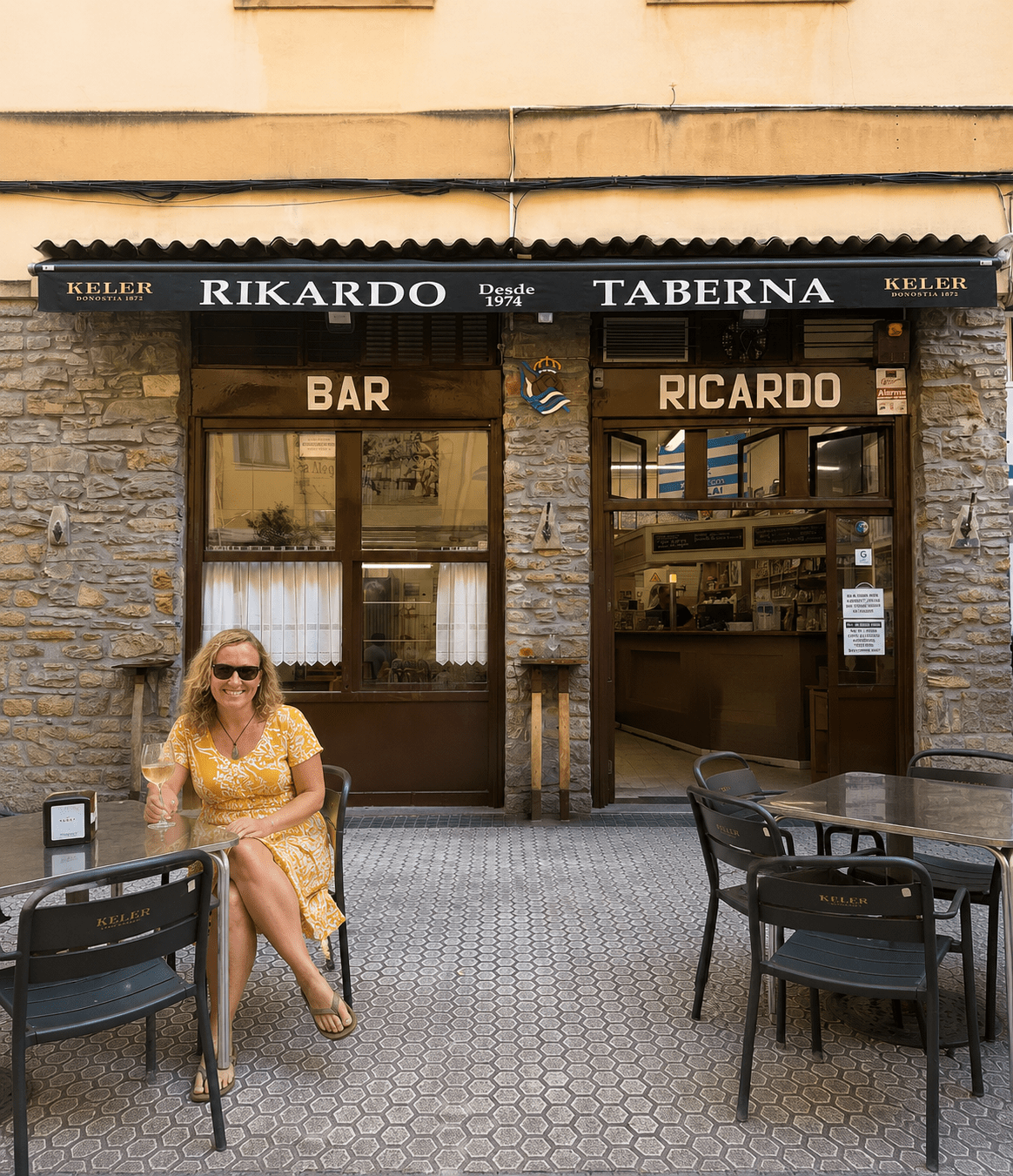
Bar Ricardo: CCome for the Croquetas and Tortilla de Bacalao
The man behind the bar at Bar Ricardo was complaining that people wander in looking slightly lost and order the lomo, which they serve but, in his words, isn’t very good. What they should be ordering, he told us, are the croquetas and tortilla de bacalao. Well, I’m not going to argue with the man behind the bar, so that’s exactly what we did.
We tried both the jamón and mussel croquetas, and while the mussel one was good, the jamón was the clear winner. Jessie, our eight-year-old in-house croqueta connoisseur (currently at the age where croquetas are essentially her default restaurant order) declared it the best croqueta she’s ever had. High praise indeed, and this time I completely agree with her.
The tortilla de bacalao was also damn good. It’s served exactly how I like tortilla: very runny in the middle, full of flavour and, in our case, with onion. You can order it without onion too if you happen to belong to that particular side of Spain’s never-ending tortilla debate.
Bar Zabaleta: Another Tortilla Contender
San Sebastian could probably support an entire article dedicated to tortilla alone, and Bar Zabaleta would deserve a place in it.
Its tortilla is the reason to come. This is another good option if you want to explore the city’s tortilla culture without structuring your day around the most famous slice in the Old Town.
The more tortilla I eat in San Sebastian, the less interested I become in declaring one definitive winner. I’m quite happy continuing the research indefinitely.
Bodega Donostiarra: Order the Indurain
Bodega Donostiarra is one of the Gros institutions I particularly like because it still feels like a neighbourhood bar, packed with locals as well as visitors.
There’s plenty to choose from, but try the Indurain, named after legendary Basque cyclist Miguel Indurain. It combines bonito tuna with piparra peppers, olives, onion and olive oil.
It’s a simple combination compared with some of San Sebastian’s more elaborate modern pintxos, but that’s part of the appeal. Great pintxos don’t need twelve ingredients and a pair of tweezers.
Where Should You Go for Dessert After Eating Pintxos in San Sebastian?
Technically, neither of my next three recommendations belongs in an article about the best pintxo bars in San Sebastian.
I’m including them anyway.
You have to finish somewhere sweet.
La Viña: Is the Famous San Sebastian Cheesecake Worth Trying?
Unless you’ve successfully avoided food-related social media for the past decade, you’ve probably seen La Viña cheesecake.
La Viña had been making its baked cheesecake long before “Basque burnt cheesecake” became an international phenomenon. Today, you’ll find versions inspired by it in bakeries and restaurants around the world, and people queue outside the original bar in San Sebastian to try the source material.
It’s rich, creamy in the middle, deeply browned on top and deliberately much softer than a classic New York-style cheesecake.
Is it touristy? Absolutely.
Would I still tell you to try it? Also absolutely.
Not every famous food experience needs replacing with a secret alternative purely for the satisfaction of saying you found somewhere tourists don’t know about. Sometimes something becomes famous because it’s genuinely very good. Share a portion if you’ve just eaten your body weight in.

Casa Otaegui: Try the Original Pantxineta
For something far more traditionally Donostiarra, head to Casa Otaegui, the oldest artisan pastry shop in San Sebastian. It was founded in 1886 and remains a family business, with its historic Narrika Street shop right in the Old Town.
This is where the pantxineta originated. Created by Emiliana Malcorra in the 1930s, it combines crisp puff pastry, pastry cream and toasted almonds. Casa Otaegui still makes it according to the family recipe.
If cheesecake has become San Sebastian’s international social-media celebrity, pantxineta is the dessert I would choose when you want something with much deeper roots in the city itself.
How Do You Order Pintxos in San Sebastian?
The first thing to understand is that you don’t need to sit down and order an entire meal. Pintxo culture is designed around movement. Walk into a bar, look at what’s available, ask about the hot specialities, order one or two things and then move on.
Don’t assume the best pintxos are necessarily those displayed on the counter. Many of San Sebastian’s best dishes are made to order, and they’re often listed on boards or menus. If everyone around you seems to be eating something wonderful that you can’t see anywhere, ask what it is.
I also wouldn’t automatically order whatever looks most elaborate. Some bars now cater heavily to visitors, and not everything sitting photogenically beneath the lights is necessarily the thing the bar does best.
That’s another reason a pintxo tour can be useful: instead of choosing based on appearance, you’re being directed towards the dish each bar is actually known for.
How Many Pintxo Bars Should You Visit in One Night?
For me, around four to six bars makes a good pintxo crawl, depending on how much you’re eating in each.
One or two pintxos per bar gives you enough variety without reaching the halfway point and discovering you’ve accidentally eaten dinner twice. Some of the modern hot pintxos are substantial enough that one is plenty, while a Gilda or anchovy pintxo barely slows you down.
Most importantly, don’t rush.
San Sebastian isn’t somewhere you “complete.” If you’ve got two evenings, split the Old Town across both rather than trying to eat at twelve bars in three hours. Better still, spend one evening in the Parte Vieja and another exploring Gros.
Your stomach will thank you, even if your step counter remains deeply unimpressed.

Are Pintxos in San Sebastian Expensive?
San Sebastian isn’t the cheapest place in the Basque Country to eat pintxos, particularly in the most tourist-heavy parts of the Old Town. Prices also vary enormously depending on what you’re ordering: a simple traditional pintxo and an elaborate hot dish using premium seafood aren’t really comparable.
However, pintxo hopping can still be a relatively accessible way to experience an extraordinarily good food city because you aren’t committing to a full tasting menu at every stop.
My advice is not to choose bars purely on price. Eat fewer things, but order the speciality in each place. Four memorable pintxos beat eight mediocre ones that happened to be sitting conveniently on the counter.
Is the Old Town or Gros Better for Pintxos?
If you’re visiting San Sebastian for the first time, I wouldn’t skip the Old Town. Yes, it’s busy. Yes, there are tourists everywhere. And yes, I realise the irony of complaining about people following online pintxo recommendations while publishing an online list of pintxo recommendations.
I’m part of the problem.
But places such as Borda Berri, Gandarias and La Cuchara de San Telmo remain worth visiting despite their popularity, while bars like Jose Mari, Martínez and Gorriti show that the Parte Vieja still has quieter corners.
Gros, however, is where I’d send you on your second evening. The atmosphere feels more residential, you’ll encounter more locals going about their normal lives, and bars such as Bergara, Bodega Donostiarra and Zabaleta give you plenty of reasons to cross the river.
The best answer, inevitably, is to eat in both.

What Other San Sebastian Neighbourhoods Are Good for Pintxos?
This is where I’m going to resist the temptation to pretend I’ve exhaustively researched every neighbourhood in San Sebastian.
I haven’t.
There are excellent bars beyond the Parte Vieja and Gros, particularly in Centro, Amara and Antiguo, but I haven’t explored them with the same slightly obsessive dedication yet. I’d rather give you a shorter list of places I’ve actually eaten at than pad this guide with recommendations copied from elsewhere.
So consider this article permanently unfinished in the best possible way.
Every time I return to San Sebastian, I’ll keep exploring, eating and adding the places that genuinely deserve to be here. It’s arduous work, obviously, but I’m willing to make the sacrifice. 😉
What Are My Must-Try Pintxos in San Sebastian?
If you’ve reached this point feeling slightly overwhelmed, I don’t blame you. San Sebastian has hundreds of bars, and attempting to eat every famous pintxo in a weekend is an excellent way to stop enjoying yourself.
For a first visit, I’d prioritise the bravas or txipirones bravas at La Mejillonera, squid-ink croquettes at Sirimiri, ribs at Borda Berri, txuleta or solomillo at Gandarias, txangurro at Jose Mari, suckling pig at La Cuchara de San Telmo, and the gamba buruntzia at Goiz Argi.
Then deliberately choose somewhere that wasn’t on your list.
Walk into the busy little bar where everyone around you seems local. Ask what they’re known for. Order something you can’t quite identify. Pintxo culture became extraordinary because of constant creativity, seasonality and competition between bars, not because everyone ate the same ten dishes recommended online.
And if you’re nervous about doing that alone, take a San Sebastian pintxo tour at the beginning of your stay. You’ll understand far more about what you’re eating, discover places you might otherwise walk straight past and, never underestimate this, have someone who knows how to get served when the bar is six people deep.
The best pintxo bars in San Sebastian aren’t necessarily the secret ones or the famous ones. They’re a mixture of both. La Viña doesn’t suddenly make bad cheesecake because the queue is full of tourists, and a neighbourhood bar isn’t automatically brilliant because nobody has made a Reel about it yet.
For me, the perfect San Sebastian pintxo crawl combines the institutions that earned their reputations with the places that still make you feel as though you’ve discovered something.
And thankfully, despite eating pintxos here for years, San Sebastian still has plenty of those left for me to find.

Comments will load here
Be the first to comment