
The Blog

Please Stop Giving Pencils to Children When You Travel
Please stop giving pencils to children when you travel. I realise that’s an odd way to begin an article about responsible tourism, particularly when giving stationery to children sounds like one of the least controversial things you could possibly do. But after years of travelling through communities where tourism and international aid play a significant role, I’ve become increasingly convinced that good intentions aren’t enough.
I understand the instinct completely. You visit a country where people have considerably less than you do, and you want to help. You bring pencils, notebooks, sweets or clothes. You give a child a dollar. They smile, you feel good, and everybody appears to have benefited.
The problem isn’t that one pencil.
It’s what happens when hundreds of tourists have exactly the same idea.
I’ve seen children run towards safari vehicles asking for money, sweets, pens and gifts. I’ve visited communities where receiving from foreigners has become so normal that not giving can provoke genuine annoyance. And I’ve watched children being taken out of school several times a day to perform for tourists because tourists bring presents.
None of those tourists set out to create that behaviour.
Which is exactly why I think we need to talk about it.

Disclaimer: This post may include affiliate links. If you click on the link and make a purchase, I will receive a small commission at no extra cost to you. Affiliate links help cover the cost of running my website so that I can continue inspiring my readers to explore the world.
What's in this post:
Responsible Tourism: How to Travel Without Causing Harm
Why Can Giving Gifts to Children Be Harmful?
When we run safaris in Tanzania, guests often ask whether they can bring things for children they might meet along the way. It’s an incredibly kind question, but we generally discourage handing out gifts directly.
The reason is simple: repeat something often enough and you create an expectation.
One tourist gives a child a pencil. Another hands out sweets. Someone else gives a couple of dollars. Individually, these are tiny acts of generosity. Multiply them by the number of tourists travelling through popular areas, however, and children quickly learn that passing safari vehicles contain people who might give them something.
You then start seeing children running towards vehicles shouting “give me money”. It changes the interaction before you’ve even met each other. Instead of being two people encountering one another, one person has become the giver and the other the potential recipient.
There are obvious common-sense exceptions. If a child asks us for maji (water) we’re not going to launch into a philosophical discussion about dependency. We’ll give them water. Responsible tourism shouldn’t require abandoning basic humanity.
But there’s an important difference between responding to someone’s immediate need and creating an expectation that foreigners arrive bearing gifts.

What Has International Aid Taught Me About Giving?
I’ve visited Sierra Leone many times, and travelling through the country you become very aware of the scale of international assistance it has received. Signs announce schools, community buildings and projects supported by international organisations, charities and foreign donors. In some places, it can feel as though almost every piece of infrastructure has somebody else’s name attached to it.
Over repeated visits, I began noticing something that made me uncomfortable. In some communities where outside support was particularly visible, there seemed to be a stronger expectation that foreigners would give something. On a handful of occasions, people became noticeably unpleasant when that expectation wasn’t met.
I don’t say that as criticism of Sierra Leoneans, nor do I think you can reduce an incredibly complicated subject like international development to “aid creates dependency”. Emergency aid saves lives, and well-designed development programmes can transform them. Sierra Leone’s history of civil war, Ebola and economic hardship also makes simplistic conclusions particularly inappropriate.
But it did make me question what happens when outside assistance repeatedly positions one group as providers and another as recipients.
Ultimately, surely successful development should increase someone’s ability to make choices for themselves, rather than making an outside organisation permanently indispensable.

Is There a Better Way to Support People?
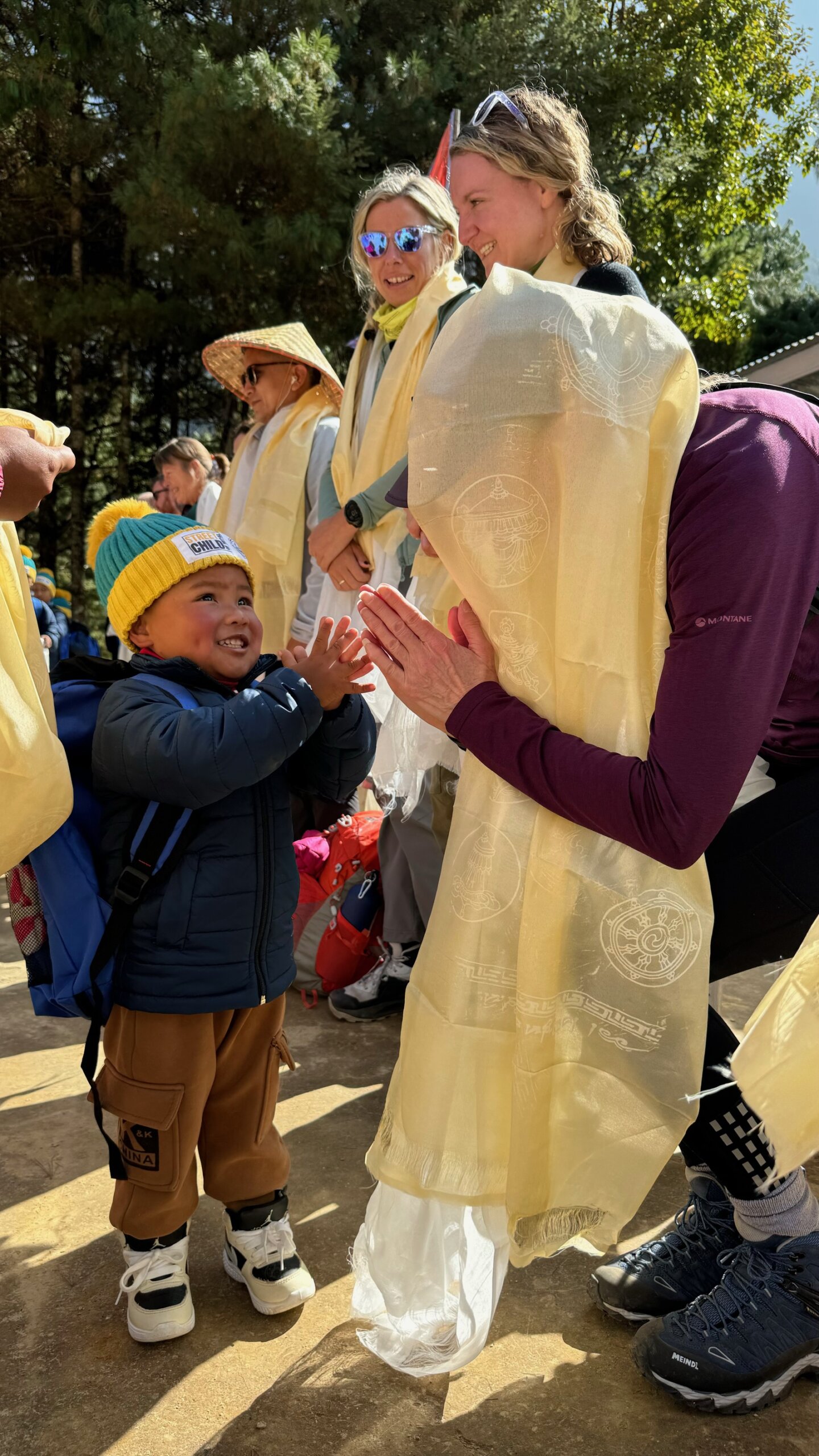
One organisation whose approach I particularly like is Street Child. Rather than simply paying school costs for families indefinitely, some of its programmes work with parents to develop sustainable livelihoods, helping them generate the income they need to keep their own children in education.
That distinction matters enormously to me.
If I continually pay your child’s school fees, I remain important to your child’s education. If I help you create a successful business that allows you to pay those fees, eventually you don’t need me at all.
And isn’t that the point?
The same principle can apply on a much smaller scale when we travel. On the road between Ngorongoro and the Serengeti, for example, you’ll often see Maasai women selling locally produced honey. You might not desperately need a jar of honey while bouncing around the Tanzanian bush, but buying one supports someone’s business.
You’re not saying, “I have something and you don’t, so I’ll give it to you.”
You’re saying, “You have something of value, and I’d like to buy it.”
The financial transaction might be small, but the relationship is completely different.

The School Visit That Changed How I Think About Responsible Tourism
Years ago, before I had thought about any of this in nearly as much depth, I had an experience in Uganda that completely changed how I viewed charitable giving while travelling.
The company we were travelling with asked whether we could bring notebooks and pens for a local school. Of course we could. In fact, we enthusiastically filled a suitcase with supplies we’d bought in England, feeling rather pleased that we were taking something useful with us.
Today, my first question would be: why aren’t we buying those things in Uganda?
Buying locally would support another business, avoid transporting a suitcase of stationery halfway around the world and potentially provide exactly what the school needed rather than what we assumed it needed. But I didn’t understand that then.
I also assumed we’d hand the supplies to the tour company or school and that would be the end of it.
Instead, we were taken to visit the school.

What Happens When Charity Becomes Part of the Tourist Experience?
The headteacher welcomed us and began walking us around the grounds, pointing out buildings that previous foreign visitors had funded.
This kitchen had been paid for by one couple. That classroom had been funded by another. There were plaques recording donors and years, and we were told the amounts people had contributed towards different projects.
Some of the figures made me deeply uncomfortable because I couldn’t reconcile the sums I was being told had been donated with the basic structures I was looking at. I had no evidence of what had happened to that money, so I’m not going to make accusations about it. But it was my first indication that perhaps this wasn’t quite the wholesome school visit I’d imagined.
Then the children were brought out of their classrooms.
They had prepared a song for us.
I can’t remember the exact lyrics years later, so I won’t pretend that I can quote them. But I remember the message extremely clearly. They sang about mzungus (foreigners) bringing gifts, and about singing for the mzungus so they would receive more gifts.
I wanted the ground to swallow me.

Should Children Be Taken Out of School for Tourists?
After the performance, I asked the headteacher how often the children were brought out of their lessons to welcome visiting tourists.
In the low season, he told me, perhaps two or three times a week.
During the high season?
Two or three times a day.
That answer has stayed with me ever since.
We had supposedly come to support children’s education, yet our presence was actively interrupting it. Children were repeatedly leaving their classrooms to perform for foreign visitors and learning that performing for those visitors resulted in gifts.
I remember standing there thinking: this isn’t education. We’re teaching children how to beg.
Nobody involved had presumably set out to create that system. The tourists probably thought exactly what I’d thought when I packed that suitcase: we’re helping.
But good intentions don’t cancel out consequences.

When Does Poverty Become Part of the Attraction?
Things became even more uncomfortable when we entered the headteacher’s office. Information about particularly vulnerable children was displayed where visitors could see it, effectively presenting their personal circumstances as evidence of how much help the school needed.
Those children hadn’t chosen to share their stories with a group of foreign tourists. Their vulnerability had simply become part of the fundraising process.
It made me question something I have thought about many times since: at what point does demonstrating “need” to donors cross over into turning somebody else’s hardship into a product?
There’s an understandable reason organisations want visitors to see where their money goes. Transparency matters. If someone funds a classroom, of course they might want to know that a classroom actually exists.
But the dignity and privacy of the people receiving support have to matter too.
Poverty doesn’t remove someone’s right to either.

Why Does the Power Imbalance Matter?
There was one final detail from that day that I didn’t fully process until afterwards.
The school didn’t normally have security. Yet while we were there, the rangers travelling with us established a perimeter around the visit.
I still don’t know what particular threat we were supposedly being protected from, and perhaps there was a perfectly reasonable explanation. What struck me was the visual message it created.
We had arrived ostensibly because these children mattered. Yet the moment we arrived, we became the people important enough to protect.
The children attended that school every day without the same protection. The foreign visitors appeared, and suddenly a security perimeter was necessary.
It was an almost absurdly literal representation of the power imbalance I’d been feeling throughout the visit.
We had the money. We had the gifts. We had the vehicles. We had the protection.
And they had learned to sing for us.

Why Is Orphanage Tourism So Problematic?
Take this dynamic far enough and the consequences become considerably more serious.
Orphanage tourism is perhaps the clearest example of what can happen when good intentions create the wrong financial incentives. Travellers understandably want to help vulnerable children, so visiting and donating to orphanages becomes popular. Those institutions then have an economic incentive to attract visitors, donations and volunteers.
The uncomfortable question is what happens when having more children means receiving more money.
Research into orphanage tourism has repeatedly raised concerns about children with living parents being unnecessarily placed in residential institutions, sometimes because poverty makes families vulnerable to recruitment. The tourists funding or volunteering in those institutions may genuinely believe they’re helping orphans. Their demand can nevertheless help sustain the system.
This is something we need to understand far better in responsible tourism:
Our intentions don’t determine what our actions incentivise.
You can love children, donate generously and fly home believing you’ve done something wonderful while still supporting a system that shouldn’t exist.
Sometimes the responsible choice isn’t to give more.
It’s to refuse to participate.

Why Do Tourists Want to Visit Hospitals?
There’s another request we occasionally receive in Africa that genuinely baffles me: people wanting to visit hospitals.
There are perfectly legitimate reasons to visit one. If you’re a doctor, nurse, researcher or other healthcare professional and an appropriate exchange has been arranged, that’s completely different.
But otherwise, I struggle to understand what people are hoping to see.
We wouldn’t normally arrive at a hospital at home and ask whether we could wander around looking at sick people. Yet somehow, when travelling in Africa, things we’d recognise as intrusive at home can suddenly get packaged as cultural experiences.
If you’re absolutely desperate to experience the healthcare system, I suppose you could just temp fate by drinking tap water! Although I wouldn’t particularly recommend structuring your holiday around it.
You might also be disappointed.
Hospitals across Africa vary enormously, just as healthcare facilities do everywhere, but the assumption that an African hospital will automatically resemble some desperate scene from a charity appeal is itself worth examining.
Sometimes I wonder whether we’re looking to understand a destination at all, or simply looking for evidence that confirms what we already believe about it.

How Can Travellers Support Local Communities Responsibly?
None of this means I think travellers should stop spending money or contributing to communities. Quite the opposite. Tourism can move money into places and businesses that might otherwise receive very little of it, and we should be thinking about how to maximise that impact.
I just increasingly believe that economic participation is usually better than casual handouts.
Buy the honey. Eat in the locally owned restaurant. Hire the local guide. Buy vegetables from the roadside stall. Purchase crafts directly from the person who made them. Stay at locally owned accommodation where possible. And perhaps don’t spend ten minutes haggling over the equivalent of 50p purely because somebody once told you that’s what travellers are supposed to do.
You don’t even have to desperately want whatever you’re buying.
I’ve bought plenty of things while travelling because I knew the money mattered considerably more to the person selling them than the object did to me. The difference is that they still provided something of value and I chose to purchase it.
They weren’t asking me to rescue them.
They were doing business with me.

Should Tourists Ever Donate to Schools?
Absolutely. The answer isn’t to stop donating; it’s to think more carefully about how we donate.
Through our safari company in Tanzania, we work with local schools and community projects, and when guests want to contribute, we can find out what those organisations actually need rather than guessing on their behalf.
Recently, one school needed bowls and spoons for its porridge programme. So Malaki, our Tanzanian partner, bought bowls and spoons for the entire school. Earlier this year, another school needed desks and chairs, so that’s where the money went.
Neither makes quite as romantic a suitcase-packing story as arriving in Africa laden with gifts.
But they were what people actually needed.
But more importantly think about the lesson to the kids. A successful Tanzanian business man who started with nothing was making the donation. Isn’t that so much more inspiring for the younger generations?
Wherever possible, we also buy those supplies locally. That means the donation helps the school while the money spent purchasing it supports another part of the local economy.
Most importantly, the community identifies the need.
That’s very different from somebody sitting thousands of miles away deciding what “poor African children” probably require and filling a suitcase accordingly.

When Is Direct Aid the Right Answer?
There is also a danger of taking the empowerment argument so far that we forget what aid is actually for.
Someone affected by famine doesn’t need a lecture about entrepreneurship. A family displaced by conflict may need shelter tonight. After a natural disaster, communities can need food, clean water, medicine and financial assistance immediately. Development and emergency humanitarian aid aren’t the same thing, and pretending every problem can be solved by starting a small business would be ridiculous.
Sometimes people simply need help.
Even during ordinary travel, there will be moments when giving directly is the humane thing to do. If someone needs water, give them water. If there’s an emergency and you can help, help.
Responsible tourism isn’t about becoming so frightened of doing the wrong thing that we stop caring about each other.
It’s about recognising that long-term systems and immediate human needs require different responses.

Is Volunteering Abroad Always Helpful?
The same questions apply when we give our time rather than our money.
Before volunteering overseas, I think we should ask ourselves something slightly uncomfortable: would I be qualified to do this at home?
If you wouldn’t be allowed to teach a class, provide childcare, build a school or assist medically in your own country, travelling somewhere poorer doesn’t magically give you those qualifications.
There’s also the question of whether a local person could be paid to do the work instead. Spending thousands flying overseas to perform unskilled labour for free can make considerably less sense than employing somebody locally who already has the skills, understands the community and needs the income.
That doesn’t mean all international volunteering is harmful. Skilled, properly managed programmes can be extremely valuable.
But wanting to help isn’t a qualification.
And somebody else’s community shouldn’t become the place where we practise.

What Does Responsible Tourism Actually Look Like?
The longer I work in tourism, the less interested I become in whether something looks responsible.
I care much more about what happens after the traveller leaves.
Did our money circulate within the local economy? Did somebody gain employment? Did a business become stronger? Did the community decide what it needed? Did children remain in school rather than performing for us? Did we treat people with the same expectations of privacy and dignity that we’d have at home?
Or did we simply have an experience that made us feel generous?
That distinction can be uncomfortable because most of us want to believe that doing something kind automatically produces a positive result. I certainly did when I packed that suitcase full of notebooks and pens for Uganda.
I wouldn’t do it the same way today.
That’s not because I’ve become less generous through travelling.
It’s because travelling has taught me that generosity deserves more thought.

Before You Give, Ask Who Holds the Power
Perhaps the most useful question I’ve learned to ask isn’t, “What can I give?”
It’s: “How can I contribute without making myself the most powerful person in the interaction?”
Sometimes the answer will still be a donation. Sometimes it will mean supporting a properly run community project. Sometimes it means buying a jar of honey you didn’t particularly need. And occasionally it might simply mean recognising that the people you’ve come to meet don’t need anything from you at all.
That’s an important possibility too.
People living in poorer countries don’t exist to provide us with opportunities to be generous. Children aren’t there to make our holidays meaningful. Patients aren’t exhibits. Vulnerability isn’t a tourist attraction, and poverty shouldn’t have to perform for our wallets.
So please don’t stop caring. Don’t stop giving. And definitely don’t stop spending money in the communities you visit.
Just think twice before handing over the pencil.

Comments will load here
Be the first to comment