
The Blog

Driving in Romania: Everything Nobody Warns You About
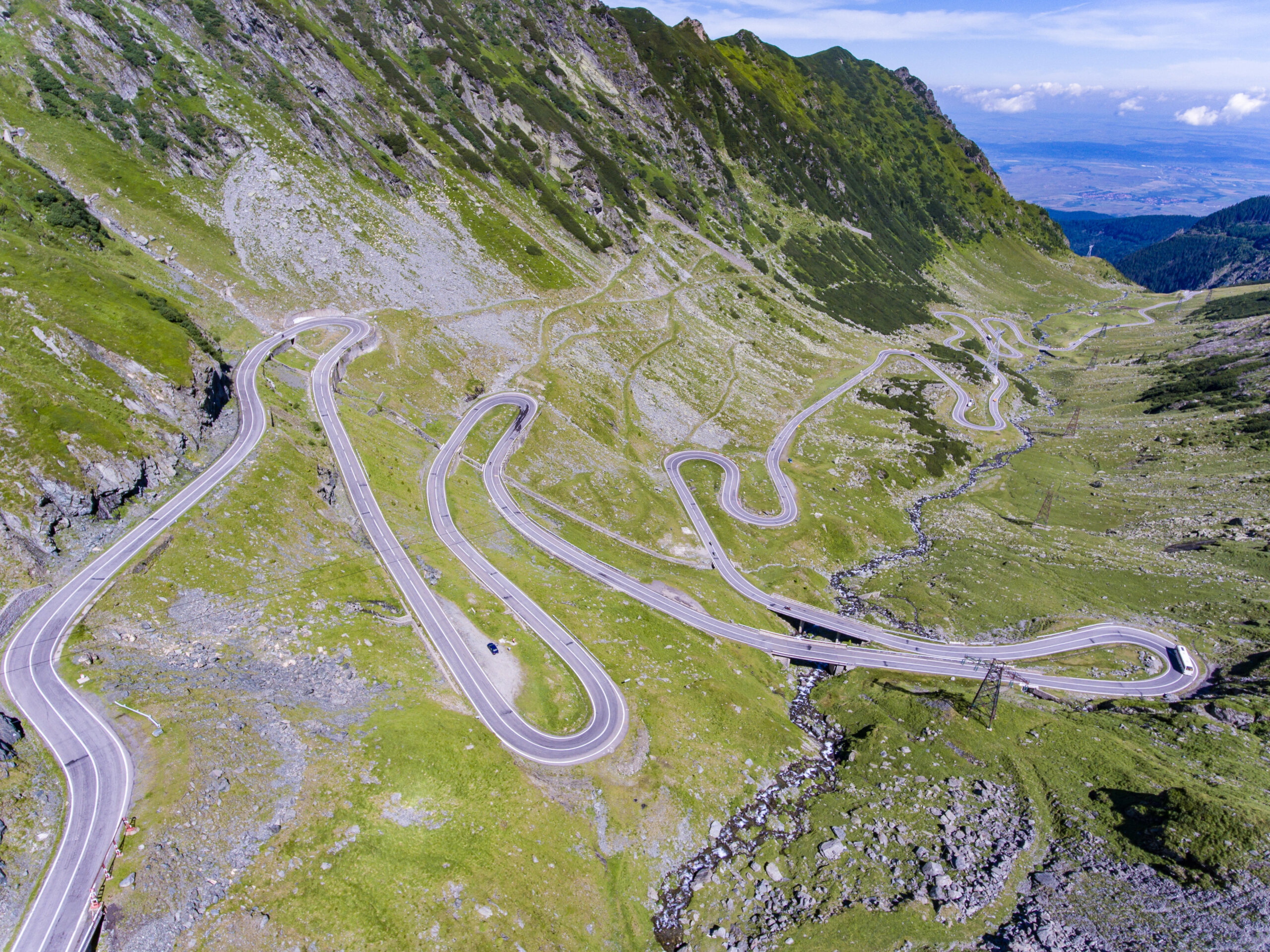
Driving in Romania is one of the best ways to experience the country and one of the fastest ways to question your own mortality, your suspension system, and whether Google Maps has quietly started gambling on human survival for entertainment.
I say this affectionately.
Mostly.
Because somewhere between the wandering cows, the horse carts, the suicidal overtakes, the potholes capable of swallowing a medium-sized Labrador, and a Romanian man overtaking three cars uphill into a blind corner with the confidence of somebody who had already made peace with death years ago, I realised something important:
Romanian driving culture is not chaos.
It is jazz.
Improvised. Emotional. Slightly unhinged. Yet somehow functioning through a series of social agreements invisible to outsiders.
And honestly?
Once you stop fighting it, driving in Romania becomes weirdly enjoyable.
Not relaxing.
But enjoyable in the same way riding a rollercoaster is enjoyable if you temporarily forget your own fragility.
The irony is that Romania might actually be one of the best road trip countries in Europe. The landscapes are extraordinary. The villages still feel alive. The Carpathian Mountains unfold dramatically across huge stretches of countryside. And because so much of the country remains relatively untouched by overtourism, having a car allows you to experience places most visitors never properly reach.
You just need to survive the roads first.

Disclaimer: This post may include affiliate links. If you click on the link and make a purchase, I will receive a small commission at no extra cost to you. Affiliate links help cover the cost of running my website so that I can continue inspiring my readers to explore the world.
What's in this post:
Driving in Romania: Everything Nobody Warns You About
Romania is not difficult to drive in, but it is unpredictable
This distinction matters.
People often talk about driving in Romania as though it is some kind of post-apocalyptic Mad Max experience where everybody operates vehicles entirely through instinct and divine intervention.
That is not true.
Most roads are actually reasonably manageable. Major highways are improving constantly, road signage is generally good, and outside cities the traffic often thins dramatically.
The problem is unpredictability.
Romanian roads contain all the normal driving variables found elsewhere in Europe, plus several additional bonus features nobody really warns you about beforehand.
For example:
You may be driving calmly through beautiful mountain scenery when suddenly an entire herd of cows appears walking directly toward you because, naturally, it is 5pm and they are all heading home independently after a day grazing on communal land.
Nobody panics.
The cows know where they live.
You are the only one confused.
Or perhaps you round a bend and discover a horse cart carrying enough hay to conceal a small bungalow moving at approximately the speed glaciers traditionally evolve.
Or maybe a dog launches itself heroically toward your tyres because defending its village from passing vehicles is apparently now its full-time career.
And then, just as you begin adjusting to all this, somebody in a BMW overtakes six vehicles uphill into a blind corner with the kind of confidence usually reserved for fighter pilots and cocaine dealers.
Welcome to Romania.

The roads are beautiful enough to distract you from the danger
The problem with driving in Romania is that the scenery encourages dangerous optimism.
The Transfăgărășan Highway deserves every cliché ever written about it. It snakes dramatically through the Carpathian Mountains in huge switchbacks beside alpine lakes, waterfalls, and jagged ridgelines that look suspiciously AI-generated.
Jeremy Clarkson famously declared it “the best road in the world,” which immediately guaranteed that every middle-aged man with a mildly concerning sports car would eventually attempt to drive it while imagining himself as an underfunded Formula One driver.
And to be fair, it is spectacular.
But honestly?
Some of Romania’s best driving happens away from the famous roads entirely.
The quieter routes through Transylvania became my favourites. Long stretches of rolling countryside where villages emerge gradually between forests and hayfields while storks perch atop electricity poles like disapproving landlords surveying their kingdom.
Driving here feels immersive in a way much of Western Europe no longer does.
The countryside is not sanitised.
It still functions.
People are living in it rather than merely preserving it for tourism brochures.
And because of that, every drive feels slightly different.

Romanian overtaking culture deserves scientific study
There are moments during driving in Romania where you genuinely begin questioning whether Romanian drivers possess sensory abilities unavailable to the rest of humanity.
Because the overtaking decisions can feel absolutely psychotic to outsiders.
You will be sitting calmly behind a lorry thinking, “Yes, this seems like an entirely sensible speed given we are approaching a blind hill.”
Meanwhile, the Romanian driver behind you has apparently looked into the future, calculated seventeen variables involving road width, engine power, existential philosophy, and perhaps astrology, and decided this is the ideal moment to overtake not only you, but also the lorry and potentially reality itself.
And somehow? Most of the time? They pull it off.
I am not endorsing this behaviour.
At one point during my trip, a BMW overtook directly toward me with such little remaining space that had I not partially moved onto the verge, I suspect we would currently be sharing a deeply emotional insurance claim (or a grave).
But there is undeniably a rhythm to Romanian driving that locals seem to understand instinctively.
The key is remaining alert without becoming emotionally reactive.
If somebody wants to overtake you while seemingly auditioning for Fast & Furious: Balkan Drift, let them go.
This is not the moment to become morally attached to lane discipline.

Village speed limits are not optional
This is perhaps the most important practical advice I can give.
Romanian villages often appear suddenly after faster rural sections, and locals take speed limits through villages very seriously for good reason.
- Children walk beside roads.
- Animals cross constantly.
- Horse carts emerge without warning.
- And yes, police do monitor speed regularly.
More importantly, speeding through villages simply makes you look like an idiot.
These are functioning communities, not obstacles interrupting your scenic road trip.
Slow down.

You absolutely should rent a car in Romania
Despite everything I have just said, I still wholeheartedly recommend renting a car in Romania.
In fact, I think it transforms the experience completely.
Public transport exists between major cities, but the real magic of Romania often lies between destinations rather than inside them.
- The villages.
- The mountain roads.
- The random roadside produce stalls.
- The tiny fortified churches.
The moments where you stop because a shepherd is casually moving 400 sheep across the road while smoking and looking entirely unbothered by modern civilisation.
A car gives you flexibility to experience Romania slowly.
And Romania rewards slowness enormously.

Do you need an International Driving Permit for Romania?
This depends where you are from.
If you are travelling from most EU countries, the UK, USA, Canada, or Australia, you can generally drive in Romania using your normal licence for short tourist stays.
However, some rental companies may still request an International Driving Permit (IDP), particularly for non-EU licences, and requirements can vary depending on your nationality and rental provider.
So honestly?
They are cheap, simple to organise, and significantly less stressful than arguing with a rental desk employee after a long flight while trying to mime “but the internet said I’d be fine.”
You should also ensure you carry:
- passport
- driving licence
- insurance documents
- vehicle paperwork
- reflective vest and warning triangle if required
Romania does occasionally conduct police stops, particularly in rural areas, and having everything organised makes life infinitely easier.

Romanian dogs are either adorable or terrorists
There is almost no middle ground.
Romania has a significant stray dog population, particularly in some rural areas, although the situation varies hugely depending on region. Many village dogs are not technically stray but semi-free roaming community dogs existing somewhere between pet, security guard, and local politician.
Most are completely harmless.
Some are incredibly sweet.
A few appear to believe your tyres personally insulted their ancestors.
Several times during my trip, dogs launched themselves toward the car with astonishing commitment while I tried to calculate whether slowing down would help or simply encourage them further.
Shepherd dogs deserve special mention because they are enormous. Not aggressive necessarily. Just deeply committed to their careers.
If you stop near sheep flocks in rural areas, understand these dogs were specifically bred to protect livestock from wolves and bears.
You are not winning that argument.
Remain respectful.

Fuel stations become cultural experiences
Romanian petrol stations are fascinating little ecosystems.
Some are perfectly modern service stations identical to anywhere else in Europe.
Others appear to operate partly as cafés, community centres, gambling dens, emergency bakeries, and emotional support facilities for exhausted drivers.
The coffee is often surprisingly decent. The pastries can be dangerous.
And after several hours navigating mountain roads behind tractors and existentially ambitious BMW drivers, stopping for coffee while watching village life unfold around you becomes strangely comforting.
Fuel itself is generally cheaper than much of Western Europe, although prices fluctuate.
And thankfully, petrol stations are common enough that running out of fuel rarely becomes a serious issue unless you actively ignore multiple warning signs and basic adult responsibility.
Winter driving is an entirely different conversation
I drove Romania during warmer months.
Winter is another beast entirely.
Snow in the Carpathians can be serious, mountain passes occasionally close, and road conditions deteriorate significantly in some areas.
If driving Romania in winter:
- rent proper winter tyres
- check mountain road closures
- carry extra supplies
- avoid assuming your normal driving confidence applies on icy mountain roads
Romanians themselves tend to be excellent winter drivers.
Know your limits.

Why driving in Romania feels so memorable
The strange thing is that despite all the chaos, Romania never felt sterile.
That is increasingly rare in Europe.
Many countries now feel so regulated, predictable, and infrastructure-perfect that road trips become oddly forgettable. You move efficiently between attractions while experiencing very little actual life in between.
Driving in Romania feels immersive because unpredictability forces you to remain present.
You notice things.
- The old lady selling mushrooms by the roadside.
- The stork nests balancing improbably atop poles.
- The smoke drifting from gardens in villages at dusk.
- The way forests suddenly open into huge mountain panoramas.
- The cattle wandering calmly home every evening as though entirely unaware they are causing mild psychological damage to foreign drivers.
Romania constantly reminds you that landscapes are still lived in here.
Not merely consumed.

Practical tips for driving in Romania
Is driving in Romania safe?
Generally yes, if you remain sensible and alert. The biggest risks are usually overtaking behaviour, road conditions, animals, and unpredictability rather than outright danger.
Should you rent a car in Romania?
Absolutely. Romania is one of Europe’s best road trip destinations and a car gives access to far more authentic experiences. I always book using DiscoverCars.com as it compares both international and local providers. Not only does it show you the cheapest, but also previous reviews… and I recommend reading the reviews to avoid being scammed!
What side of the road do they drive on?
The right-hand side, like the rest of Europe. If you are coming from a left-hand drive country and have never driving on the right before, I recommend renting an automatic.
Are Romanian roads good?
Mixed. Major roads are improving constantly, but rural roads and mountain roads vary hugely. One thing I will say…. they are significantly better than Albania!

Do you need an International Driving Permit?
Sometimes, depending on nationality and rental company. It is best to get one regardless.
Is driving in Bucharest difficult?
Yes. I would rather reverse a horse trailer blindfolded through central Madrid than casually enjoy driving in Bucharest. Traffic is intense and aggressive.
And deeply committed to creative interpretations of lane discipline.
Final thoughts on driving in Romania
Before visiting Romania, I expected beautiful scenery. I did not expect driving itself to become part of the adventure. And honestly, that is probably the best way to describe it.
Driving in Romania is not polished. It is not always relaxing. It occasionally feels like a social experiment examining how much adrenaline the human body can sustainably produce before lunch.
But it is also one of the most immersive and rewarding ways to experience the country. Because once you stop trying to impose Western European expectations onto Romanian roads, something interesting happens.
The chaos starts making sense.
You begin understanding the rhythm of village life, the relationship between landscape and road, the patience required when sharing space with animals and communities rather than simply blasting through them at motorway speeds.
And gradually, somewhere between the potholes, the horse carts, the mountain roads, and the elderly Romanian man overtaking uphill in a Dacia held together almost entirely by confidence and prayer, you realise something important:
Romania is not trying to be convenient.
And perhaps that is exactly why it feels so alive.

Further Reading: Romania Beyond The Steering Wheel
If driving through Romania has convinced you that this country deserves far more than a rushed Dracula-themed weekend, here are a few deeper dives into the landscapes, wildlife, and experiences that completely changed how I saw Romania:
Best Things To Do In Transylvania: castles, fortified churches, wildlife, mountain roads, villages, and the places that deserve far more attention than Bran Castle.
Is Transylvania Worth Visiting?: the side of Romania most tourists completely miss, from medieval Saxon villages to ancient forests and wild bears.
Bear Watching in Romania: The Most Ethical Way to See Bears in Europe: what it’s actually like sleeping in remote wildlife hides deep in the Carpathian Mountains.
Horse Riding Holidays in Romania: Why Equus Silvania Surprised Me: the unexpectedly brilliant riding holiday that made me rethink equestrian tourism entirely.
What Happens When You Try To Save Europe’s Last Wilderness?: the complicated reality of conservation, rewilding, illegal logging, and local communities in the Făgăraș Mountains.
Carpathian Wildlife Tours in Romania: What To Expect In Europe’s Last Great Wilderness: a practical guide to the extended wildlife experience through Romania’s most untouched landscapes.

2 Comments on Driving in Romania: Everything Nobody Warns You About
Be the first to comment