
The Blog

Is Transylvania Worth Visiting? The Side of Romania Most Tourists Miss
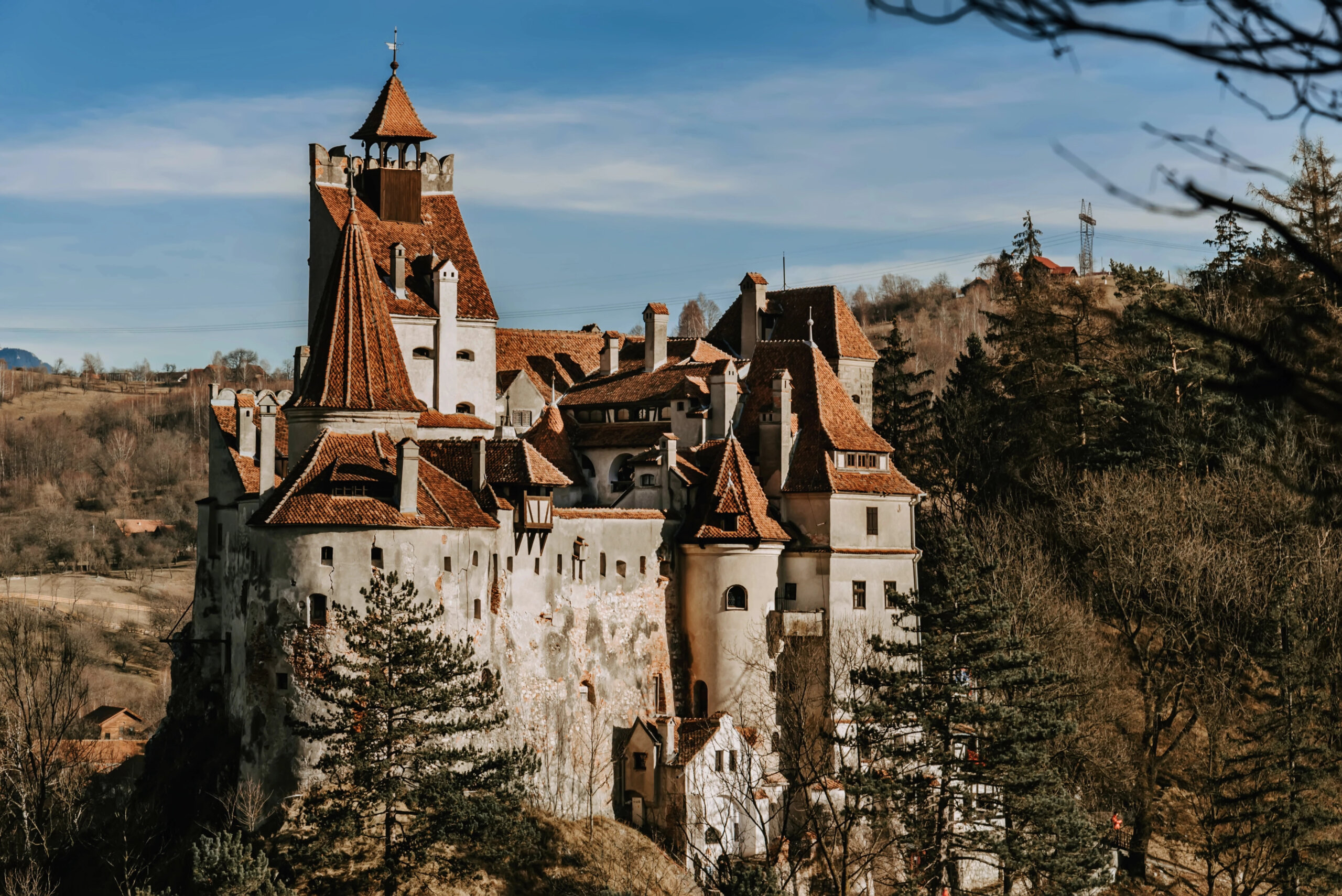
Is Transylvania worth visiting? Before travelling through Romania, I would probably have answered that question with cautious curiosity rather than overwhelming conviction. Like many people, my understanding of Transylvania had been shaped largely by clichés: Dracula, gothic castles, misty forests, and vague vampire-themed tourism that felt suspiciously designed to sell plastic souvenirs to British stag parties.
But the deeper I travelled into the region, the more obvious it became that reducing Transylvania to Dracula is a little like reducing Italy to pizza or Kenya to lions. Technically present, yes. But wildly incomplete.
Because beneath the tourist mythology sits one of the most fascinating, layered, and quietly beautiful regions in Europe.
A place where medieval Saxon villages still function around fortified churches built centuries ago. Where bears and wolves still move through ancient forests beneath the Carpathian Mountains. Where horse carts remain part of daily life. Where local women sell homemade preserves from roadside tables while storks build nests the size of small cars above village rooftops.
And perhaps most surprisingly of all, Transylvania still feels relatively untouched by mass tourism.
Not undiscovered exactly.
But not yet polished into predictability either.
The result is a destination that feels increasingly rare in modern Europe: culturally rich, visually spectacular, ecologically important, and still deeply connected to the people who actually live there.
The more time I spent there, the more obvious the answer to “is Transylvania worth visiting?” became.

Disclaimer: This post may include affiliate links. If you click on the link and make a purchase, I will receive a small commission at no extra cost to you. Affiliate links help cover the cost of running my website so that I can continue inspiring my readers to explore the world.
What's in this post:
Is Transylvania Worth Visiting? The Side of Romania Most Tourists Miss
The problem with Transylvania’s reputation
Transylvania has a branding issue.
Or perhaps more accurately, it has been branded too successfully around a single narrative.
Thanks largely to Bram Stoker’s Dracula, a book written by a man who never actually visited Romania, the region has spent decades trapped beneath a tourism identity built around vampires, gothic fantasy, and castles only loosely connected to the actual history of the area.
Even Bran Castle, perhaps Romania’s most famous tourist attraction, has a surprisingly weak historical connection to Vlad the Impaler himself. Depending on who you speak to, he may never have even visited it.
And honestly?
That disconnect says quite a lot about modern tourism.
We often arrive in destinations searching for the stories we already know rather than the ones the place itself is actually trying to tell us.
Transylvania deserves better than that.
Because once you move beyond the Dracula marketing, the region opens into something far richer and far more interesting: a complicated crossroads of cultures, ecosystems, religions, empires, and wilderness that still feels startlingly authentic in places.

The landscapes are extraordinary
One of the things that struck me most while travelling through Transylvania was how visually dramatic the landscape is without ever feeling performative.
The Alps often feel like they know they are beautiful.
Transylvania does not.
The Carpathian Mountains roll across the horizon in long waves of forest and meadow rather than sharp cinematic peaks designed for postcards. Villages appear gradually between orchards and hayfields while storm clouds drag shadows across hillsides scattered with grazing cattle.
The beauty here feels softer. Older somehow.
And perhaps because much of the region remains relatively rural, the landscapes still feel lived in rather than curated purely for tourism.
Driving through Transylvania often means sharing roads with horse carts, wandering dogs, shepherd flocks, and cows returning home through villages in the evening from communal grazing land. Many villages stretch along single roads lined with gardens, orchards, and small family farms where people still grow much of their own food.
That connection between people and landscape changes the atmosphere of the region entirely.
This is not countryside preserved behind glass for tourists to admire. It is countryside still functioning.

The villages feel genuinely alive
If you are wondering whether Transylvania is worth visiting for culture alone, the answer is probably yes before you even reach the mountains.
One of my biggest frustrations with many “traditional villages” across Europe is how often they feel transformed into open-air museums.
Beautiful, yes. But somehow hollowed out.
Places where authenticity survives mainly as performance for visitors.
Many villages in Transylvania still feel wonderfully real.
Viscri, perhaps one of the most famous Saxon villages in Romania, somehow manages to balance tourism and authenticity surprisingly well despite growing international attention. Traditional houses line quiet roads where geese wander freely while fortified churches rise above terracotta rooftops.
And importantly, daily life continues around you rather than stopping for tourists.
People still live here. Work here. Cook here. Repair roofs here.

The village itself has become part of a broader conversation around heritage preservation, sustainable tourism, and rural identity in Romania. Some locals stayed when others left. Some returned. Tourism brought opportunities, but also new challenges around maintaining authenticity while adapting economically.
Again, Transylvania reveals itself as far more layered than the simplistic fantasy version most tourists initially arrive expecting.
Even the food reflects that complexity.
At various points during my trip, I found myself eating homemade bread made with potato, locally produced vegetable spreads, soups built around forest mushrooms, cheeses from nearby farms, and traditional dishes shaped by centuries of Saxon, Romanian, Hungarian, and broader regional influence.
Nothing felt overly curated. Just deeply local.

Sighișoara is one of the most fascinating medieval towns in Europe
If there is one place that completely shifted my perception of Transylvania, it was Sighișoara.
Yes, it has links to Vlad the Impaler. Yes, there are references to Dracula.
But thankfully, the town remains far more interesting than the vampire mythology surrounding it.
Sighișoara feels like somewhere history layered itself slowly rather than being rebuilt into tourist perfection. Colourful houses climb steep cobbled streets beneath medieval towers while fortified walls still wrap around large sections of the old town.
And unlike many preserved medieval towns across Europe, Sighișoara still feels slightly rough around the edges.
Real life continues inside it.
Our guide explained how the artisan guild system shaped much of the town’s history. To become an artisan, you often needed to marry within the Saxon community and work your way up slowly through apprenticeships involving years of labour and travel across the region to learn different crafts.
These guilds eventually became enormously powerful, influencing trade, politics, and local leadership.
Suddenly the towers stopped being pretty architecture and started feeling like evidence of entire social systems that once governed the city.
That was a recurring pattern throughout Transylvania. The more context you learn, the richer everything becomes.

Transylvania is one of the best places in Europe for wildlife
This was perhaps the greatest surprise of all for me. Most people do not associate Europe with large-scale wilderness anymore.
And yet Transylvania still supports remarkable biodiversity.
Brown bears roam the forests surrounding the Carpathian Mountains alongside wolves, lynx, wild boar, red deer, foxes, beavers, and increasingly, reintroduced European bison.
Some of the best wildlife experiences in Romania now revolve around conservation-focused tourism initiatives led by organisations like Foundation Conservation Carpathia and Travel Carpathia.
And importantly, much of the wildlife tourism here still feels relatively low-volume and experience-led compared to heavily commercialised safari-style operations elsewhere.
I spent time staying in remote wildlife hides deep within the Făgăraș Mountains where bears moved naturally through the forests around us rather than being artificially staged for entertainment.
The atmosphere felt completely different from many wildlife attractions elsewhere in Europe.
- Slower.
- Quieter.
- More respectful.
And perhaps because the wilderness here still feels fragile rather than guaranteed, the wildlife encounters carry a particular emotional weight.
You realise quickly that Europe’s remaining wild ecosystems are far rarer than most people understand.

Horse riding in Transylvania is extraordinary
I genuinely think Transylvania may become one of Europe’s most underrated equestrian destinations over the next decade.
The riding itself is spectacular: long rolling canters through meadows, forest trails beneath the Carpathians, quiet villages connected by dirt roads and open countryside that still feels largely untouched by overdevelopment.
But what makes riding here special is not only the scenery.
It is the rhythm.
Places like Equus Silvania have managed to create riding holidays that feel connected to the surrounding landscape rather than isolated from it. The horses are exceptionally well cared for, the pace encourages slower travel, and the entire experience feels rooted in local culture and conservation rather than simply selling adrenaline.
And honestly, that balance feels increasingly rare.
Too many riding holidays elsewhere either prioritise luxury over horsemanship or reduce horses to tourism tools rather than respected animals within the experience itself.
Transylvania still feels grounded.

Driving through Transylvania is part of the experience
I drove into Romania from Spain, which perhaps explains why I became mildly emotionally attached to Romanian roads despite several moments where I also questioned my survival.
Driving through Transylvania is chaotic in ways that somehow remain oddly charming.
Road conditions vary dramatically. Villages appear suddenly after long forested sections. Speed limits often feel more aspirational than realistic thanks to potholes, roadworks, wandering livestock, and the occasional horse cart appearing around corners with very little warning.
And then there are the cows.
Every evening, entire herds wander calmly back through villages toward their respective homes after spending the day grazing communally. Traffic simply adapts around them.
Nobody seems particularly stressed about this except tourists.
The famous Transfăgărășan Highway deserves its reputation visually. The road snakes dramatically across the mountains in huge switchbacks beneath towering peaks and alpine lakes.
But honestly?
Some of my favourite drives were the quieter ones. The roads where village life spilled slowly into the landscape and Transylvania revealed itself through details rather than spectacles.

Conservation is shaping the future of Transylvania
The more time I spent in the region, the more obvious it became that Transylvania’s future will depend heavily on how tourism, conservation, and local development evolve together.
Illegal logging remains a major issue across parts of Romania. Economic pressures continue affecting rural communities. Wildlife conflicts exist. Tourism growth creates opportunities but also risks around overcommercialisation.
And yet organisations like Foundation Conservation Carpathia are attempting something genuinely ambitious: protecting large-scale ecosystems while ensuring local communities benefit economically from conservation rather than feeling excluded by it.
That work matters enormously.
Because what makes Transylvania special is not only its scenery or wildlife individually. It is the fact that so many interconnected systems still survive together.
- The villages.
- The forests.
- The wildlife.
- The traditional farming.
- The biodiversity.
- The cultural identity.
Destroy one piece and eventually the others begin weakening too.

So, is Transylvania worth visiting?
Absolutely.
But perhaps not for the reasons many people initially think.
If you arrive expecting a giant Dracula theme park, you will probably be disappointed. If you arrive expecting polished alpine luxury tourism, you may also feel slightly confused.
But if you are looking for somewhere that still feels layered, authentic, ecologically important, culturally fascinating, and emotionally immersive, then Transylvania becomes one of the most rewarding destinations in Europe.
It is not always easy. It is not always polished.
And honestly, thank God for that.
Because what makes Transylvania memorable is precisely the fact that it still resists becoming fully packaged for consumption.
- You feel it in the villages where life continues independently of tourism.
- You feel it in the forests where bears still move unseen through ancient trees.
- You feel it driving roads where cows still dictate traffic more effectively than Google Maps.
And increasingly, those imperfections feel valuable.

Practical information for visiting Transylvania
How many days do you need in Transylvania?
Ideally at least 7–10 days.
Many tourists rush through Transylvania in two or three days focusing only on Bran Castle and Brașov, but the region rewards slower travel enormously.
What are the best places to visit in Transylvania?
Some highlights include:
- Sighișoara
- Viscri
- Brașov
- Sibiu
- The Făgăraș Mountains
- The Transfăgărășan Highway
- Wildlife areas within the Carpathians

Is Transylvania expensive?
Compared to much of Western Europe, Romania remains relatively affordable, although prices are rising steadily in more tourist-heavy areas.
Is Transylvania safe?
Yes, generally very safe for travellers. Roads can be unpredictable and wildlife should always be respected, but overall the region feels remarkably safe and welcoming.
Do you need a car?
Honestly, yes.
While trains and buses exist between major cities, having a car transforms the experience completely by allowing access to villages, wildlife areas, and rural landscapes that public transport rarely reaches properly.
And much of Transylvania’s magic exists precisely between the major attractions.
Use DiscoverCars to find the best car hire deals.

Final thoughts: the side of Romania most tourists still miss
By the end of my trip, the question was no longer “is Transylvania worth visiting?” but how much longer places like this can remain this authentic once the wider world catches on.
Before visiting Romania, I thought Transylvania would probably be beautiful.
I did not expect it to feel important.
Important because it still contains functioning wilderness in a continent increasingly disconnected from nature.
Important because villages still feel tied to landscape rather than tourism performance.
Important because conservation projects here are trying to prove that humans and ecosystems might still coexist without completely destroying one another.
And perhaps most importantly, Transylvania matters because it reminds us that Europe still contains places capable of surprising us.
Not through manufactured spectacle. But through depth.
And honestly, that feels far rarer now than dramatic scenery ever could.

Comments will load here
Be the first to comment