
The Blog

The Ultimate Guide to Quirky Spanish Festivals (Fiestas)
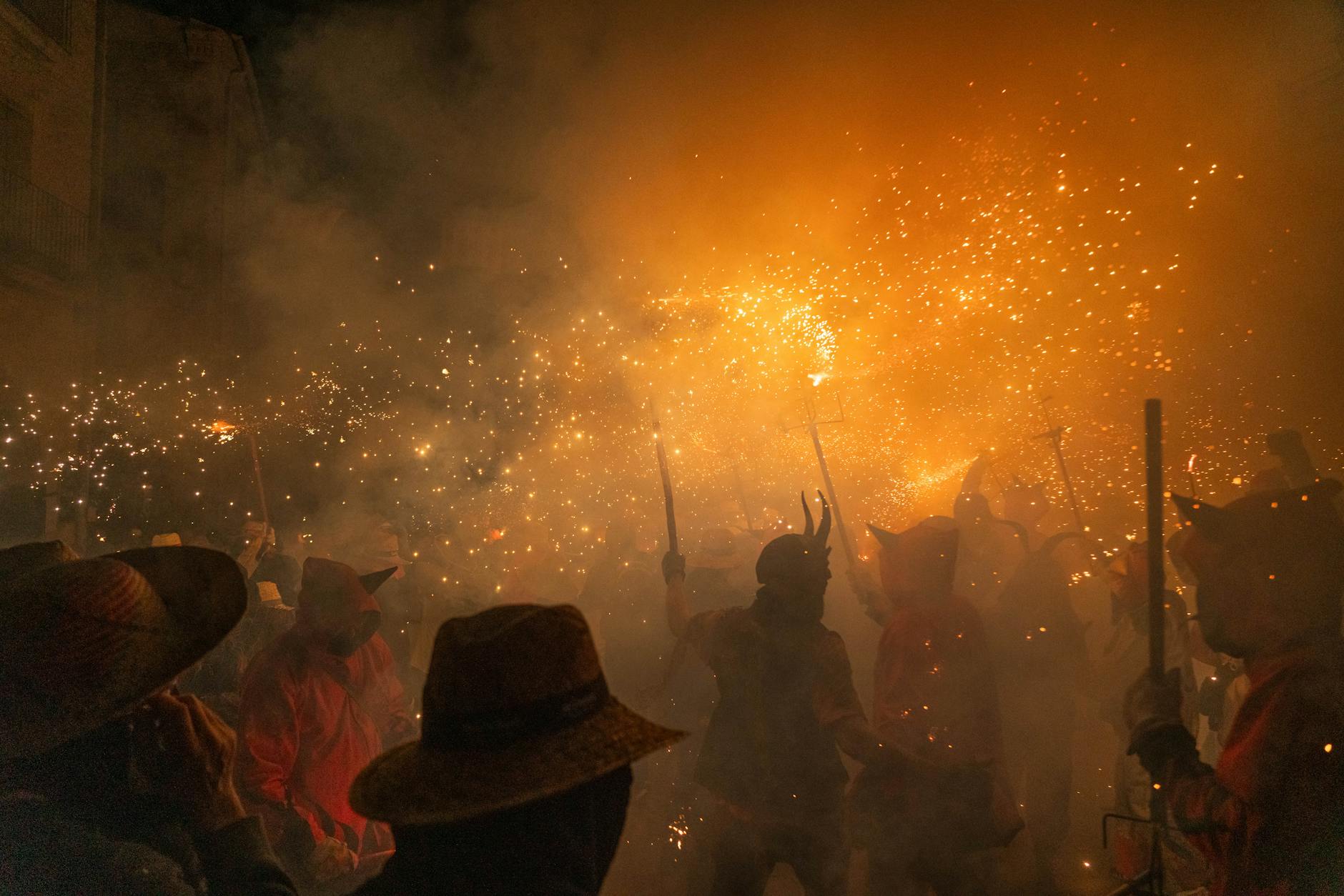
If there’s one thing Spain does exceptionally well, it’s Spanish festivals. I grew up in the Basque Country and now live in Navarra, so fiestas have been part of my life for considerably longer than I’ve been writing about travel. From tiny village celebrations that barely register outside the local area to enormous events like San Fermín, Spain has an extraordinary ability to turn history, religion, food and occasionally something completely ridiculous into an excuse to bring everyone together.
And some of them really are ridiculous. This is a country where you can throw tomatoes at strangers, get drenched in red wine, watch people pelt a man with turnips or see enormous papier-mâché figures ceremoniously set on fire. Spain isn’t just beaches and tapas (although I’m rather fond of both) and I genuinely think its fiestas are one of the best ways to understand the country and the people who live here.
I’ve personally experienced San Fermín in Pamplona, along with countless smaller local fiestas over the years, and this guide combines that experience of living in Spain with plenty of research into celebrations I haven’t attended myself. I’ve updated the entire guide for 2027, including the latest festival dates, practical information, major Spanish ferias and traditional celebrations and holidays throughout the year.
So whether you’re planning an entire trip around one of Spain’s famous fiestas or you’ve simply discovered that something wonderfully chaotic is happening in the town you’re visiting, this guide will help you work out what’s going on, when to go and what to expect.
Pack your sense of adventure, and, depending on the festival, possibly some clothes you never want to wear again.

Disclaimer! All of my blogs may contain affiliate links. This means that if you click on the link and make a purchase I may receive a small amount of commission for the referral at no extra cost to you. This commission is what allows me to continue creating guides to help travellers plan their next trip!
What's in this post:
Spanish Festivals (Fiestas): A Celebration of Community
If there’s one word that defines Spain, it’s fiesta. In this country, celebrating isn’t just an activity—it’s a way of life. From the smallest village perched on a mountainside to the sprawling streets of Barcelona, every corner of Spain bursts into life at least once a year (and often far more) with a festival that brings its community together.
What makes Spanish fiestas so unique is their deep cultural roots. Many stem from religious traditions, while others mark the changing of the seasons, historical events, or, quite frankly, any excuse to have a good time. The energy is contagious: streets transform into stages, kitchens become production lines for communal feasts, and townsfolk of all ages join hands—sometimes literally—to dance, sing, and revel in their shared heritage.
For locals, fiestas are more than fun; they’re a cornerstone of identity and belonging. They serve as an anchor, reminding communities of their history, customs, and the importance of sticking together—whether it’s building giant human towers in Catalonia or throwing flower petals in Tenerife. Even outsiders are welcomed with open arms, proving that Spanish hospitality is as warm as its sunshine.
Fiestas also underscore the Spanish knack for balance: they’re both extravagant and intimate, chaotic yet deeply rooted in tradition. They remind everyone to pause and reconnect—with their neighbours, their culture, and the pure joy of living in the moment.
So, the next time you stumble upon a random parade or hear fireworks at midnight, don’t question it—embrace it. Grab a plate of paella, join the dancing, and let Spain show you how it’s done. Because here, there’s always a fiesta just around the corner—and everyone’s invited.

Spanish Festival Calendar By Month
| Month | Festival | City or Region |
|---|---|---|
| January | Día de los Reyes Magos — 6 January | Throughout Spain |
| January | Jarramplas — 19–20 January | Piornal, Extremadura |
| Jan–Feb | Entroido — 16 January–14 February for Xinzo; key Carnival events in February | Galicia |
| February | Las Candelas — 2 February | Palencia |
| February | Carnaval de Cádiz — 4–14 February | Cádiz |
| February | Los Indianos — 8 February | Santa Cruz de La Palma |
| March | Las Fallas — main events 15–19 March | Valencia |
| March | Semana Santa — 21–28 March | Throughout Spain |
| April/May | Feria del Caballo — 24 April–1 May | Jerez de la Frontera |
| April/May | Fiesta de los Mayos — 30 April–1 May | Albacete |
| Spring | Feria de Abril — 2027 dates TBC | Seville |
| May | El Colacho — expected 30 May | Castrillo de Murcia |
| June | Batalla del Vino — 29 June | Haro, La Rioja |
| July | Rapa das Bestas — first weekend/week of July; dates TBC | Sabucedo, Galicia |
| July | San Fermín — 6–14 July | Pamplona |
| July | Santa Marta de Ribarteme — 29 July | As Neves, Galicia |
| August | Fiesta del Pulpo — expected 8 August | O Carballiño, Galicia |
| August | Feria de Málaga — August; 2027 dates TBC | Málaga |
| August | La Tomatina — expected 25 August; date TBC | Buñol |
| August | Festa da Istoria — main day 28 August | Ribadavia, Galicia |
| September | Fiesta de la Paella — September; 2027 date TBC | Sueca, Valencia |
| September | Cascamorras — 6–9 September | Baza & Guadix |
| October | Día de la Hispanidad — 12 October | Throughout Spain |
| December | Día de Navidad — 25 December | Throughout Spain |
| December | Els Enfarinats — 28 December | Ibi |
| December | Nochevieja — 31 December | Throughout Spain |
The Most Famous Festivals In Spain
La Tomatina (Buñol)
Time of Year: 25 August 2027
History: Originating in 1945 from a playful street fight, La Tomatina became an official festival in the 1950s. Over time, its popularity exploded, and it now draws visitors from around the globe to partake in Buñol’s most famous (and messiest) tradition.
What It Involves: Picture thousands of people crammed into a small street armed with squishy, overripe tomatoes. At the sound of a cannon, the chaos begins: tomatoes fly in every direction, splattering walls, clothes, and faces with vibrant red pulp. Laughter and friendly shouts fill the air as strangers become teammates in an hour-long food fight. Once it’s over, the streets glisten with tomato juice, and participants head to communal showers or local residents’ hoses to rinse off the carnage.
Travelling with Kids? While the famous La Tomatina gets all the glory, the kiddie version is a lesser-known but equally messy prelude. Children don goggles, grab handfuls of squishy tomatoes, and go wild. It’s chaos, but adorable chaos.
Tips: Wear old clothes and sturdy shoes—those streets get slick. Arrive early to secure your spot, and be ready to get hosed down post-fight.
How to Get There: Fly to Valencia, then hop on a train or bus to Buñol. It’s just a 40-minute ride.
Where to Stay: Stay in Valencia for more accommodation options and a chance to wash off the tomato aftermath in style. ABC B&B is a great affordable option right in the centre.

San Fermín (Pamplona)
Time of Year: 6th to 14th July 2027
History: Dating back to medieval celebrations honouring Saint Fermín, this festival gained global fame through Ernest Hemingway’s novel The Sun Also Rises. The Running of the Bulls is the highlight, but the celebration includes music, fireworks and a citywide party that lasts all week.
If you’re wondering what actually fills the other eight days, I’ve broken down what happens during San Fermín, from the Chupinazo that opens the festival to the Pobre de Mí that brings it to a close.
What It Involves:
At dawn, the streets of Pamplona are barricaded for the legendary encierro (Running of the Bulls). Hundreds of adrenaline-seekers, clad in white outfits and red bandanas, gather at the starting line. When the bulls are released, it’s a heart-pounding sprint through narrow streets, with onlookers cheering from balconies above. Beyond the run, the festival is a nonstop spectacle of lively parades, brass bands in the squares, nighttime fireworks, and rowdy street parties that go on until the next morning.
If you’re planning to experience it for yourself, read my San Fermín survival guide before you go. It covers the practical things I wish every first-time visitor knew, from what to wear to where to watch the encierro and how to survive eight days of organised chaos.
Tips: If running with the bulls isn’t your style, enjoy the festivities as a spectator (safer and arguably smarter). Wear white with a red scarf to blend in with the locals.
How to Get There: Pamplona has its own airport, or you can catch a train from Madrid or Barcelona. Alternatively you can fly into Bilbao and get a bus or hire a car. A great excuse to explore the rest of the Basque Country after!
And don’t make the mistake of thinking San Fermín is just the Running of the Bulls. There is an enormous amount happening throughout the day, so I’ve put together a guide to the best things to do in Pamplona during San Fermín, including the events I’d prioritise if you only have a day or two.
Where to Stay: Book as early as you possibly can. Accommodation in central Pamplona becomes extremely expensive during San Fermín, and the best options disappear months ahead. For groups, I recommend Travellers Rest, which has several apartments right in the Old Town. Full disclosure: Travellers Rest is run by my partner, Steve, so this is a personal recommendation rather than an affiliate partnership. He offers Bea Adventurous readers a discount when they book directly. Contact Steve directly via email to check availability.

Semana Santa (Various Cities)
Time of Year: 21st-28th March 2027
History: Rooted in Catholic tradition, Semana Santa processions have been held for centuries, reflecting the story of the Passion of Christ. Cities like Seville, Málaga, and Valladolid host the most famous ones.
What It Involves: Throughout Holy Week, intricate floats—some centuries old—are carried through the streets by costaleros (bearers) who move in synchronised steps. Hooded penitents, known as nazarenos, march solemnly, holding candles or crosses, while brass bands play mournful tunes. Onlookers line balconies and sidewalks in reverent silence. The air is thick with incense, flickering candlelight, and a deep sense of faith. Despite the sombre ambience, the community spirit is palpable as locals open their homes and share traditional Easter sweets with visitors.
Tips: For a more immersive experience, follow the night processions. Arrive early for a good viewing spot and respect the sombre tone—this isn’t the time for selfies.
How to Get There: Major cities like Seville and Málaga are well-connected by flights, trains, and buses.
Where to Stay: Look for hotels near the city centre to stay close to the action. In Seville, Casa Romana Hotel Boutique offers charm and proximity.

Las Fallas (Valencia)
Time of Year: Main celebrations 15–19 March 2027
History: Once a simple carpenter’s tradition of burning old wood before spring, Las Fallas evolved into a grand spectacle in honour of Saint Joseph. Gigantic papier-mâché figures (ninots) satirise current events, celebrities, and politicians. You guessed, Trump has made several appearances!
What It Involves: For days, the streets of Valencia transform into an open-air museum, showcasing towering ninots that can reach heights of over 20 feet. Pyrotechnics are a huge part of Las Fallas, but the famous mascletà isn’t really a conventional firework display at all. Held during the day, traditionally at 2pm in Plaza del Ayuntamiento, it’s designed as much around noise and rhythm as what you can see. Night-time fireworks are another part of the celebrations, culminating in the burning of the fallas during La Cremà. The communal sense of celebration and renewal is infectious, with crowds cheering as the flames leap into the sky.
Tips: Don’t miss the “Mascletà,” a daily daytime firework show that’s all about sound. Bring earplugs and prepare to be awed.
How to Get There: Fly into Valencia and stay centrally to avoid missing any action.
Where to Stay: The Vincci Lys Hotel is a stylish option right in the heart of Valencia.

La Fiesta de la Paella (Sueca, Valencia)
Time of Year: 20th September 2027
History: In the town of Sueca, nestled in the rice fields of Valencia, paella isn’t just food—it’s a religion. The annual Paella Festival celebrates this iconic dish’s humble origins and its rise to global fame. Starting in the 1960s, the festival has become a delicious homage to Valencian culture.
What It Involves: Imagine streets filled with the smoky aroma of saffron, woodfires crackling, and chefs fiercely competing to create the perfect paella. The highlight is the International Paella Competition, where top chefs and passionate locals face off, each vying for the title of paella royalty. But it’s not all serious—there’s live music, dancing, and plenty of taste-testing to keep the crowd happy.
Tips: Arrive hungry and ready to try all the variations of this classic dish. Be sure to ask locals about the art of the socarrat—the crispy, caramelised layer of rice at the bottom of the pan. It’s a flavour revelation you won’t forget!
How to Get There: Fly into Valencia, then hop on a 30-minute train ride to Sueca. Alternatively, buses and taxis are available from the city.
Where to Stay: Base yourself in Valencia for a mix of city charm and festival fun. For a budget-friendly option, check out The Venue Hostel Valencia. Want something closer? Sueca also offers cosy guesthouses.

Spanish Fairs (Ferias) And How They Differ From Fiestas
If you’ve travelled around southern Spain, you’ll also have heard the word feria thrown around almost as often as fiesta. The two overlap, but they’re not quite the same thing. Fiesta is the broader term for a celebration, while Spanish fairs or ferias traditionally developed around fairs, markets or annual civic celebrations and often last for several days.
In Andalucía in particular, a feria usually means a dedicated fairground filled with casetas (temporary bars, restaurants and social spaces) alongside flamenco dresses, sevillanas, horses, decorated carriages, food, drinking, music and a separate funfair. They’re less about watching one particular ritual and more about spending several days joining the party.
If you’re planning a wider trip around the region, have a read of my Andalucía travel guide too.
Feria de Abril (Seville)
2027 Dates: 13th to 18th April, 2027
Seville’s Feria de Abril is the best-known feria in Spain and probably the image most people have in their heads when they imagine an Andalusian fair. For around a week, the Real de la Feria becomes a temporary city of striped casetas, horses and carriages, flamenco dresses, food, fino and people dancing sevillanas well into the night.
There is one important thing to understand before turning up: most casetas at Feria de Abril are private. You need to be invited by a member to enter them, although there are also public casetas that anyone can use. Don’t let that put you off visiting, there is plenty happening outside the private casetas and the public ones allow visitors to experience the feria without knowing someone in Seville.
Feria del Caballo (Jerez de la Frontera)
2027 Dates: 24 April–1 May 2027.
If horses are your thing, I’d choose Jerez. The Feria del Caballo takes over Parque González Hontoria with horse riders, beautifully decorated carriages, equestrian events, sevillanas, food and plenty of Jerez’s famous fino.
Unlike Seville, Jerez’s casetas are generally open to the public, which makes the Feria del Caballo particularly easy for visitors to experience without needing a local invitation. You can wander between casetas, stop for something to eat, watch the horses during the day and stay for the music and dancing later on.
The feria began as a livestock market centuries ago, which explains why horses remain such an important part of it today. If you want a traditional Andalusian feria but are slightly intimidated by Seville’s private-caseta system, Jerez is a very tempting alternative.

Feria de Málaga
2027 Dates: 14th – 21st August, 2027
Málaga’s August feria is another good choice if you’re visiting Andalucía without local connections. Rather than being confined to one experience, the celebrations spread between daytime events in Málaga’s historic centre and the main Real de la Feria at Cortijo de Torres.
Expect live music, verdiales, flamenco, horses, food, fairground rides and casetas that stay busy late into the night. You don’t need an invitation to enjoy the public casetas, making Málaga considerably easier to navigate as an independent visitor than Seville’s Feria de Abril.
Traditional Celebrations And Holidays In Spain
Not every major celebration in Spain is technically a fiesta or feria. Some of the biggest Spanish celebrations are national or religious holidays that you’ll encounter almost everywhere in the country, although the way they’re celebrated can vary enormously from one region to another.
Spain also has national public holidays alongside regional and local holidays. That matters when you’re travelling: a completely ordinary working day in Madrid can be a public holiday somewhere else, with shops, supermarkets and attractions operating reduced hours or closing altogether. Always check the official calendar for the autonomous community and municipality you’re visiting before making plans.
I’ve already covered Semana Santa above, so rather than repeat myself, scroll back to that section if you’re visiting during Holy Week.
Día de los Reyes Magos (Three Kings Day)
Date: 6 January 2027
For many Spanish families, Día de los Reyes Magos, Three Kings Day, is at least as important as Christmas Day. The celebrations really begin on the evening of 5 January, when towns and cities hold a Cabalgata de Reyes: an enormous parade welcoming the Three Kings, who travel through the streets throwing sweets to children.
Children traditionally leave their shoes out before going to bed and wake on 6 January to find presents delivered by Melchor, Gaspar and Baltasar. You’ll also see roscón de Reyes everywhere: a ring-shaped sweet bread decorated with candied fruit and containing hidden surprises.
If you’re travelling in Spain on 5 January, find out where the local cabalgata takes place. Even tiny towns organise them, while cities such as Madrid and Seville stage enormous processions. Just remember that 6 January is a public holiday, so expect many businesses to close.

Carnaval de Cádiz
2027 Dates: 4–14 February 2027
Carnival happens throughout Spain, but Cádiz has turned satire into something approaching an art form. Rather than being primarily about enormous floats or glamorous costumes, Carnaval de Cádiz is famous for its chirigotas, comparsas and other musical groups performing funny, clever and frequently brutal songs about politics, celebrities and whatever else has happened during the previous year.
The official 2027 carnival runs from 4–14 February, although events surrounding the singing competition begin earlier. The best part for visitors is simply wandering around the historic centre and listening to groups perform in streets and squares.
You don’t need to understand every joke to enjoy the atmosphere, although speaking Spanish certainly helps, Cádiz humour moves quickly. Accommodation becomes extremely difficult during the main weekends, so this is one cultural event I’d organise well in advance.
Día de la Hispanidad
Date: 12 October 2027
12 October is Spain’s national day, officially the Fiesta Nacional de España and commonly referred to as Día de la Hispanidad. It commemorates Christopher Columbus’s arrival in the Americas in 1492 and is a national public holiday across Spain.
The most visible official celebrations take place in Madrid, where there is traditionally a large military parade attended by the Spanish royal family and senior political figures. Elsewhere, however, you may notice little beyond businesses being closed and local events taking place.
It is also worth knowing that attitudes towards the day aren’t uniform across Spain. Questions of Spanish national identity are complex, particularly in regions with strong identities and languages of their own, so don’t assume everyone views 12 October in exactly the same way.
For travellers, the practical point is simple: check opening hours and transport schedules before making plans.

La Navidad y Nochevieja
Dates: December 2027; Christmas Day is 25 December and Nochevieja is 31 December
Christmas in Spain stretches well beyond 25 December. Christmas Eve (Nochebuena) is traditionally a big family meal, while Christmas Day itself tends to be quieter. Decorations, markets and elaborate nativity scenes appear throughout December, but the festive season doesn’t really finish until Three Kings Day on 6 January.
Then comes Nochevieja, or New Year’s Eve. The most famous Spanish tradition happens during the final 12 seconds of the year, when everyone attempts to eat one grape with each stroke of midnight. Twelve grapes in twelve seconds sounds easy until you actually try it (if you are going to try it, buy seedless grapes).
Madrid’s Puerta del Sol hosts the country’s best-known countdown, but you’ll find public celebrations throughout Spain. New Year’s Day is a national public holiday, so don’t make ambitious plans for early on 1 January. Spain will still be recovering, and there’s every chance you will be too.
Spain’s Quirkiest Festivals
El Colacho (Castrillo de Murcia)
Time of Year: 30th May 2027
History: Tracing back to the early 17th century, El Colacho blends Catholic and possibly pagan elements, with the figure of the “devil” jumping over infants to cleanse them of original sin.
What It Involves: The spectacle begins as men in brightly coloured devil costumes—wielding whips and castanets—race through the streets, chasing onlookers in good fun. The highlight? Babies are laid on mattresses in a row while “El Colacho” leaps over them. Locals cheer from the sidelines as the devils dart past. This theatrical tradition symbolises purification and protection for the newborns. After the jumping, the town celebrates with music, processions, and communal feasting, turning a seemingly bizarre ritual into a warm community affair.
Tips: Arrive early to snag a good viewing spot. And no, you can’t borrow a baby just to participate.
How to Get There: Castrillo de Murcia is a small village in northern Spain. Fly into Burgos or Valladolid and rent a car for the easiest access.
Where to Stay: Opt for Burgos, where you’ll find comfortable options like Crisol Meson del Cid.

La Batalla del Vino (Haro)
Time of Year: 29th June 2026
History: Originating as a territorial dispute in the 13th century, this “battle” evolved into an annual wine fight that’s more fun than fierce.
What It Involves: Early in the morning, participants, clad in white, ascend the Riscos de Bilibio above Haro. Armed with buckets, water guns, and bottles of red wine, they unleash a purple storm on anyone in sight. Laughter echoes through the hills as drenched revellers dance to upbeat tunes, relishing the sticky, grape-scented chaos. After everyone is thoroughly soaked, the party moves back into town for food, music, and more wine—but this time, served in glasses rather than on your clothes!
Tips: Bring old clothes and a waterproof bag for your essentials. Stay hydrated (with water, not wine).
How to Get There: Haro is in La Rioja. Take a train or drive from Bilbao, which is about an hour away. Before you pick up a car though, I recommend reading Tips for Driving in Spain.
Where to Stay: Stay at the Hotel Los Agustinos, a historic monastery turned into a charming hotel.

Fiesta de Santa Marta de Ribarteme (Las Nieves)
Time of Year: 29th July 2027
History: This festival, honouring the patron saint of resurrection, is one of Spain’s strangest. It’s sometimes called the “Festival of Near-Death Experiences.”
What It Involves: Santa Marta de Ribarteme is traditionally associated with people who believe the saint helped them survive serious illness or a near-death experience. Historically, some devotees fulfilled promises to Santa Marta by being carried through the procession inside coffins, the extraordinary tradition that made the festival internationally famous. However, that element changed in 2026, when the procession took place without devotees being carried inside the coffins. The religious procession and devotion to Santa Marta continue, but don’t travel here expecting the exact spectacle shown in older photographs and documentaries. Check the current year’s programme before visiting.
Tips: Respect the sombre yet celebratory atmosphere. This isn’t a Halloween parade, so save the jokes for after.
How to Get There: Fly into Vigo and take a bus or taxi to Las Nieves.
Where to Stay: Vigo has plenty of options; try Hotel Coia de Vigo for a comfortable stay.

Entroido (Galicia)
2027 Dates: 16 January–14 February 2027 for Xinzo de Limia; 2027 dates for Laza and Verín are still to be confirmed.
History: Entroido is Galicia’s version of Carnival, but calling it simply “Carnival” doesn’t quite do it justice. Celebrated for centuries, particularly in the province of Ourense, it has retained traditions, characters and rituals that are very specific to individual towns. It even continued to be celebrated in parts of Galicia when Carnival festivities were prohibited during Franco’s dictatorship.
If you really want to experience it, head to the so-called Triángulo Máxico do Entroido: the three towns of Laza, Verín and Xinzo de Limia. They’re relatively close together, but each has its own traditions and distinctive masked characters.
Laza
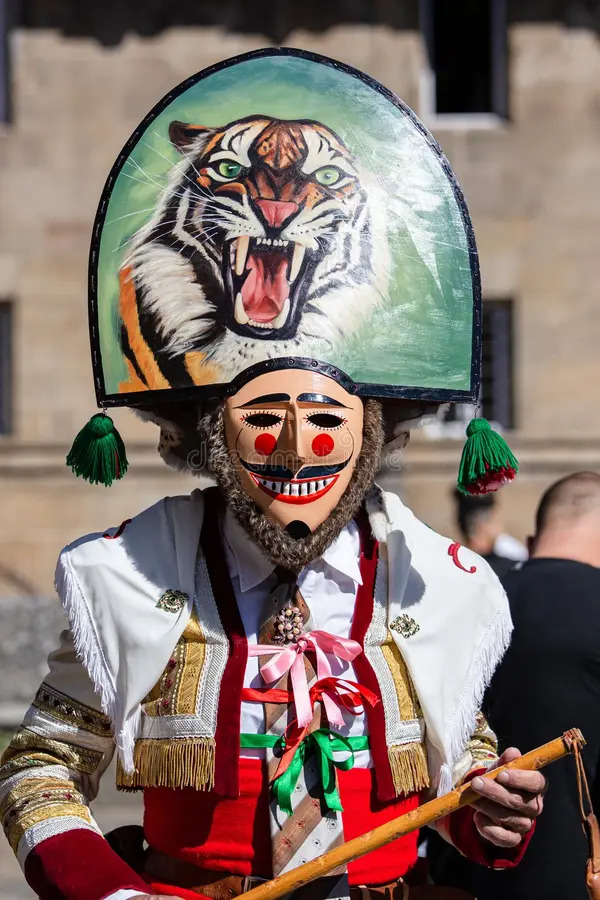
Laza is probably the wildest of the three. Its most recognisable characters are the peliqueiros, who charge through the streets wearing elaborate masks, decorated headdresses and heavy cowbells around their waists.
But the tradition Laza is perhaps most notorious for is the Farrapada, involving muddy rags being thrown through the streets, followed by the Baixada da Morena. This is where things get particularly bizarre: a character wearing a cow’s head arrives in the square while flour and live ants are thrown into the crowd.
Yes. Live ants.
They’re traditionally agitated with vinegar beforehand, just in case you thought being covered in ants wasn’t quite unpleasant enough already.
This is one of those Spanish festivals where I’d strongly recommend knowing what you’re walking into rather than accidentally arriving in the middle of it wearing your favourite outfit.
Tips: Wear old clothes and closed-toe shoes, and don’t stand right in the middle of the action unless you’re genuinely happy to participate.
Verín
Verín’s Entroido is dominated by the cigarróns, masked figures wearing extraordinarily elaborate costumes and belts hung with large bells called chocas. You’ll hear them coming before you see them.
The celebrations build over several days with the Thursdays of Compadres and Comadres, masked balls, parades, music and fariñadas, flour battles that make staying clean rather optimistic.
One of the biggest days is Carnival Sunday, when floats, comparsas, musicians, masks and groups of cigarróns fill the centre of Verín. If Laza appeals because of its stranger traditions, Verín is a good choice if you want the atmosphere of a larger Carnival celebration while still seeing customs that are distinctly Galician.
Xinzo de Limia
2027 Dates: 16 January–14 February 2027
Xinzo de Limia doesn’t limit Carnival to a weekend. Its Entroido stretches across five consecutive Sundays, making it one of the longest Carnival celebrations in Spain.
Each weekend brings something different. Domingo Fareleiro involves a huge flour battle, Domingo Oleiro sees people throwing clay pots filled with water between one another until somebody inevitably drops one, and Domingo Corredoiro marks the arrival of the comparsas in the streets. The celebrations continue through Carnival itself before finally ending with Domingo de Piñata.
The stars of Xinzo’s Entroido are the pantallas, masked characters who run through town carrying inflated dried animal bladders, which they beat together as they move through the streets. Carnival Tuesday brings the main parade of floats, comparsas and pantallas.
If you’re specifically planning a trip around Entroido in 2027, Xinzo is currently the easiest of the three to organise because its dates have already been confirmed.
How to Get There: Laza, Verín and Xinzo de Limia are all in southern Galicia, in the province of Ourense. Fly into Vigo or Santiago de Compostela and hire a car. Having your own transport makes it considerably easier to move between the three towns if you want to experience more than one version of Entroido.
Where to Stay: Ourense makes a practical base if you’re combining Entroido with a wider trip around Galicia, although staying closer to the individual towns will make life considerably easier if you’re planning on joining celebrations that continue late into the night.

La Fiesta de los Enharinados (Ibi)
Time of Year: 28th December 2027
History: Celebrated for over 200 years, this mock coup involves locals in fancy dress staging a playful “takeover” of the town.
What It Involves: Once the coup is declared, participants don outlandish costumes and wield bags of flour and eggs as weapons. The streets erupt into a playful war zone: townspeople and visitors alike get dusted in white as they duck, dodge, and retaliate with glee. “Officials” in comedic military garb patrol the area, issuing faux fines that are paid in good humour (and often in more flour). Laughter echoes through Ibi’s narrow lanes as everyone revels in the absurdity.
Tips: Protective goggles are a must unless you enjoy flour in your eyes. Bring a spare set of clothes, and maybe a sense of humour.
How to Get There: Ibi is near Alicante. Fly into Alicante and take a bus or hire a car and drive to Ibi.
Where to Stay: Stay in Alicante at Hospes Amérigo for a mix of style and comfort.

Spain’s Lesser Known Festivals
Rapa das Bestas (Galicia)
Time of Year: 2nd – 5th July, 2027 (Sabucedo)
History: This centuries-old tradition involves rounding up wild horses from the mountains to groom their manes and tails. It’s as much about community as it is about the horses.
What It Involves: The festival begins with local groups heading into the mountains to gather the free-roaming horses and bring them down to Sabucedo. The most famous, and controversial, part takes place inside the curro, where aloitadores physically restrain the horses without ropes while their manes are cut and the animals are identified. It’s an extremely old local tradition and an important part of Sabucedo’s cultural identity, but the handling of the horses can be confronting to watch. If animal welfare is an important consideration when choosing wildlife or cultural experiences, I’d recommend reading about how the event works before deciding whether it’s something you want to attend.
Tips: Wear sturdy shoes and prepare to get dirty if you want to join the action. Otherwise, enjoy from a safe (and clean) distance.
How to Get There: Head to Galicia. Fly into Santiago de Compostela, hire a car, and then drive to Sabucedo.
Where to Stay: Stay in Santiago at the Casa Anglicana del Peregrino for a touch of historic charm.

Jarramplas (Piornal)
Time of Year: 19th – 20th January 2027
History: Thought to have pagan roots, this festival features a masked figure (Jarramplas) pelted with turnips to symbolise the expulsion of evil.
What It Involves: The Jarramplas, dressed in a colourful, devil-like costume with a horned mask, roams the streets beating a drum. Meanwhile, townspeople bombard him with turnips—yes, turnips by the bagful. It’s chaotic yet deeply symbolic: the crowd’s turnip barrage cleanses the village of misdeeds for the coming year. Though the Jarramplas tries to dodge, he inevitably ends up battered, but the beating is all in festive (if somewhat painful) good fun. The day ends with music, dances, and local feasting.
Tips: If you’re a spectator, stand back unless you want to catch a stray root vegetable.
How to Get There: Piornal is in Extremadura, about three hours by car from Madrid or Seville.
Where to Stay: Try Parador de Plasencia, a converted monastery with lots of character.

La Fiesta del Pulpo (Carballiño)
Time of Year: 8th August 2027
History: This celebration of Galicia’s most beloved dish, octopus, dates back over 50 years and honours the region’s culinary prowess.
What It Involves: Picture huge copper pots brimming with octopus, steamy and fragrant. Local cooks demonstrate their slicing technique—scissors snipping tentacles into bite-sized pieces—before sprinkling paprika, olive oil, and salt on top. Visitors queue for paper plates piled high with the tender delicacy, often washed down with bread and local wine. Meanwhile, bands play traditional Galician tunes, and artisan stalls line the streets, selling everything from cheese to souvenirs. The festival merges culinary passion with a lively communal spirit, making every bite feel celebratory.
Tips: Bring a healthy appetite and a willingness to try the local albariño wine with your octopus.
How to Get There: Carballiño is about 25 minutes from Ourense by train.
Where to Stay: Base yourself in Ourense at Hotel Carrís Cardenal Quevedo for modern comfort.

Los Indianos (La Palma)
Time of Year: 8th February 2027
History: Celebrating the Canary Islands’ connection to Cuba, this festival pays homage to emigrants who returned from the Americas with wealth and stories.
What It Involves: Envision thousands of people dressed head-to-toe in white, tossing talcum powder at each other amid tropical beats. Cuban-influenced music resonates through the streets, with maracas, drums, and lively bands leading conga lines around the colonial-style architecture of Santa Cruz de La Palma. Vendors serve rum and sugarcane cocktails, fuelling the revelry. The talcum clouds create a surreal, ghostly scene, but participants erupt in laughter as every puff of powder signals a friendly greeting. It’s part cultural homage, part playful chaos.
Tips: Wear old white clothes (because powder stains) and bring a mask or scarf for your face.
How to Get There: Fly into La Palma and take a taxi or bus to Santa Cruz.
Where to Stay: Santa Cruz de La Palma has great options, like Hotel Emblemático Holiday Time, a boutique spot with coastal views.

Fiesta de los Mayos (Albacete)
Time of Year: 1st – 3rd May 2027
History: This springtime celebration of fertility and renewal has deep pagan roots, with villagers dressing up in elaborate costumes to honour the season.
What It Involves: In towns throughout Albacete, vibrant displays of flowers and ribbons adorn plazas and poles. Parades of costumed locals fill the streets, accompanied by traditional musicians playing folk tunes. Groups perform circle dances around the Maypoles, their steps representing renewed life and hopes for a bountiful season. Handmade crafts and local delicacies abound in pop-up stalls. As twilight falls, the community gathers for bonfires and storytelling sessions, revelling in the festive glow under star-filled skies.
Tips: Pack a picnic and enjoy the outdoor festivities. It’s a great way to mingle with locals.
How to Get There: Albacete is about two hours from Madrid by train.
Where to Stay: Hotel Palacio Albacete & Spa offers a mix of relaxation and convenience.

Festa da Istoria (Ribadavia)
Time of Year: 27th – 29th August, 2027
History: Festa da Istoria transforms Ribadavia into a recreation of its medieval past, including the history of the town’s Jewish quarter and the cultures that once lived alongside one another here. The modern festival revived an older local tradition and now sees residents dress in period clothing while the historic centre fills with medieval markets, performances and reenactments.
What It Involves: Ribadavia’s narrow cobblestone streets are transported back in time as locals don medieval garb, traders, knights, and artisans selling goods in open-air markets. Traditional Sephardic music resonates through the courtyard, accompanied by the aroma of spiced pastries and honeyed wines. The highlight is the grand banquet, a theatrical production where actors reenact historical events from Ribadavia’s past, bringing tales of love, betrayal, and communal solidarity to life. Lantern-lit tours and artisan workshops make the festival an immersive cultural dive.
Tips: Try roscón de Ribadavia, a traditional pastry, and enjoy a glass of local Ribeiro wine.
How to Get There: Ribadavia is an hour by train from Santiago de Compostela.
Where to Stay: The charming Aldea Rural Pazos de Arenteiro offers an authentic countryside experience nearby.

Fiesta del Cascamorras (Guadix and Baza)
Time of Year: 6th-9th September 2027
History: Legend has it that a sacred statue was discovered in Baza, but both towns claim ownership. To settle the dispute, they created this annual paint-splattered spectacle.
What It Involves: A costumed “Cascamorras” sets out from Guadix to Baza to reclaim the statue. If he manages to remain clean, Guadix wins ownership—but that never happens. Townspeople ambush him with coloured paint, grease, or sometimes even water. The chase weaves through narrow alleys, with squeals of excitement echoing off stone walls. Ultimately, Cascamorras arrives coated in rainbow hues, and the festival ends in a joyous celebration uniting both towns, complete with music, dancing, and shared feasts.
Tips: Wear clothes you don’t mind ruining and bring goggles. Prepare to join in the fun—it’s impossible to stay clean!
How to Get There: Fly into Granada and drive about 40 minutes to Guadix or Baza.
Where to Stay: Stay at Hotel Palacio de Oñate in Guadix for a touch of historic charm.

Fiesta de las Candelas (Palencia)
Time of Year: 2nd February 2027
History: This age-old festival celebrates the purification of the Virgin Mary with a mix of religious rituals and lively cultural events.
What It Involves: By candlelight, parishioners and visitors follow processions through the historic centre, chanting hymns and reflecting on centuries of faith. The soft glow illuminates Palencia’s ornate architecture, creating a serene atmosphere that contrasts with the lively celebrations to come. After the religious rites, the city’s squares fill with local vendors selling hearty chorizo, sweets, and hot chocolate. Traditional dancers perform regional folk numbers, enticing onlookers to clap along. As night deepens, the flicker of hundreds of candles transforms Palencia into a picturesque scene of devotion and communal warmth.
Tips: Don’t miss the chorizo a la sidra (chorizo in cider) at one of the local stalls. Dress warmly!
How to Get There: Palencia is just an hour by train from Valladolid or León.
Where to Stay: Eurostars Diana Palace offers a convenient and cosy base in the city centre.
With these festivals, Spain proves it knows how to throw a party like no other.
To discover more hidden gems in Spain, make sure to check out Spain’s Best Kept Secrets.

Why Cultural Festivals Are the Best Way to Experience Spain (IMO)
Cultural festivals in Spain aren’t just a chance to snap a few photos—they’re immersive experiences that invite you to live, breathe, and dance alongside the locals. Whether you’re pelting tomatoes in Buñol or watching solemn processions during Semana Santa, each festival showcases a different facet of Spain’s soul. And the best part? It’s all about community.
When you step into a Spanish fiesta, you’re not just a spectator; you become part of a centuries-old tradition that unites people across generations. Streets transform into stages for music and dance, laughter booms from packed squares, and long-lost neighbours embrace as if no time has passed. There’s a sense of camaraderie here that’s impossible to fake—everyone’s genuinely thrilled to share in the fun.
From the passionate cries of flamenco to the mouthwatering scent of paella simmering away, these celebrations embody the heart and soul of Spain. They break down barriers, foster connections, and create unforgettable memories. If you truly want to understand a place, join its party—and in Spain, the party is a way of life.

Practical Tips for Attending Festivals
Best Times to Go: There really isn’t a festival season in Spain. Carnaval and Entroido bring some of the wildest celebrations in February, March brings Las Fallas and Semana Santa, spring ushers in Andalucía’s ferias, and summer is packed with local fiestas. Even December has Nochevieja and Els Enfarinats. Rather than choosing a month first, I’d find the festival you most want to experience and build your trip around it.
Booking Basics: Popular fiestas like La Tomatina and Las Fallas can cause hotels and hostels to vanish in a flash. Book accommodation the moment you settle on a date. For transportation, trains and buses fill up fast—so snag those tickets early, too. If you’re headed somewhere off the beaten path, consider renting a car to reach remote village parties.
What to Pack: Layers are your best friend. Days can be scorching, nights breezy, and you never know when a spontaneous water (or wine) fight will break out. Comfortable shoes are non-negotiable if you plan on parading through cobblestone streets (you do). Oh, and pack your sense of humour—fiestas aren’t for the faint-hearted.
Respect the Local Vibe: Spanish festivals might seem chaotic, but they’re rooted in tradition. Follow the lead of locals—if they’re solemn, stay low-key; if they’re dancing on tables, you know what to do. Always ask before snapping photos of ceremonies or participants. A little respect goes a long way toward keeping the festive spirit alive for everyone.

FAQs About Cultural Festivals in Spain
How can I find out about local festivals during my trip?
A little detective work goes a long way. Check local tourism board websites, ask your hotel or hostel staff, and keep an eye on social media, especially local Facebook groups or Instagram pages. You’ll be surprised how many festivals pop up when you least expect them.
Are Spanish festivals suitable for solo travellers or families?
Absolutely! Many fiestas are family-friendly, complete with parades and daytime events that little ones can enjoy. For solo travellers, festivals are a fantastic way to mingle with locals (and other visitors) in a laid-back, welcoming atmosphere. Just pick your vibe, there’s a festival for everyone.
What’s the best way to plan a festival-centric itinerary?
Research, research, research. Once you know which festivals catch your eye (and match your travel dates), book accommodation early to avoid last-minute panic. If you’re hopping between multiple fiestas, consider renting a car or using Spain’s excellent train network for flexibility.
What happens if bad weather disrupts a festival?
Spaniards are a resilient bunch, and most festivals carry on despite the odd shower. However, if the downpour is epic enough to stop a good party, events may shift indoors or get postponed. Keep an eye on official social media channels or ask around locally, someone will know if the show must go on!
What is the difference between a fiesta and a feria?
A fiesta is a broad Spanish term for a celebration, while a feria is traditionally a fair and usually refers to a multi-day event built around a fairground and casetas. In Andalucía, famous ferias such as Feria de Abril combine dancing, food, drinking, horses, traditional clothing and fairground attractions. The terms can overlap, though, so don’t treat this as a rigid linguistic rule.
What are the biggest celebrations in Spain?
San Fermín, Las Fallas, Semana Santa, Feria de Abril and La Tomatina are among the best-known celebrations in Spain. Which is “biggest” depends on whether you mean visitor numbers, cultural importance or international recognition, and some enormous Spanish celebrations, particularly local patron-saint fiestas, remain relatively unknown outside the country.
What are the traditional holidays in Spain?
Traditional Spanish holidays include Christmas, Three Kings Day, Semana Santa and Spain’s national and regional public holidays. Día de los Reyes Magos on 6 January remains particularly important for families, while Semana Santa is celebrated very differently depending on where in Spain you visit.
How many public holidays does Spain have?
Workers in Spain generally have up to 14 public holidays each year, but not all of those dates are identical throughout the country. The calendar combines nationwide, autonomous-community and local holidays, which is why travellers should check the calendar for their particular destination rather than relying on a generic list. For 2027, nine holidays are currently common across all autonomous communities, with additional regional and local days bringing the total up to 14. El País
What month has the most festivals in Spain?
There isn’t one official “festival month”, but late spring through summer has an especially dense calendar of Spanish festivals and ferias. July and August are particularly busy because local patron-saint fiestas coincide with major cultural events and summer holidays, although February and March are also packed thanks to Carnaval, Las Fallas and Semana Santa.

My Final Thoughts on Spanish Festivals (Fiestas)
If there’s one thing Spain knows, it’s how to throw a party—whether it’s hurtling tomatoes at strangers, dodging bulls, or diving into wine-soaked chaos. From world-famous spectacles to delightfully quirky hidden gems, these festivals showcase the country’s flair for blending history, culture, and unapologetic fun.
So, what’s stopping you from joining the madness? Pack your sense of adventure (and maybe an old T-shirt), grab your camera, and dive headfirst into the vibrant, wild, and wonderfully weird world of Spain’s fiestas.

Comments will load here
Be the first to comment