
The Blog

Is Pamplona Worth Visiting? An Honest Guide to Pamplona Beyond San Fermín
Mention Pamplona to most people and they’ll immediately picture thousands of people dressed in white and red, running through narrow streets ahead of a herd of bulls. Thanks to Ernest Hemingway and the international fame of San Fermín, it’s an image that has become almost inseparable from the city. But is Pamplona worth visiting when there aren’t any bulls running down the street?
Absolutely! And I say that as someone who had seriously underestimated the city myself.
Despite growing up in the Basque Country and now living in Navarra, I hadn’t fully appreciated just how much Pamplona had to offer until I joined a walking tour of its historic centre. I discovered a city of medieval streets, extraordinary history, beautiful green spaces and a food culture that could easily justify a visit on its own.
And that’s before we even consider the rest of Navarra, where you can travel from lush forests and dramatic mountains to landscapes resembling the American Wild West.
So, whether you’re trying to decide between Pamplona, Bilbao and San Sebastián, or wondering if Navarra deserves a place on your northern Spain road trip, here’s my honest take on why Pamplona is worth visiting, when to go and how long to stay.

Disclosure: This article contains affiliate links. If you book through one of my links, I may earn a small commission at no additional cost to you. It helps me keep sharing independent travel advice.
What's in this post:
Is Pamplona Worth Visiting?
Yes, Pamplona is absolutely worth visiting, particularly if you love history, good food, walkable cities and discovering places that haven’t been completely transformed by international tourism. It’s a city that rewards curiosity. The more you learn about its history and traditions, the more interesting it becomes.
Pamplona, or Iruña in Basque, is the capital of Navarra, an autonomous community in northern Spain. Home to just over 210,000 people, it has a compact historic centre, remarkably well-preserved Renaissance fortifications, a star-shaped citadel and an important place on the Camino de Santiago pilgrimage route.
What makes Pamplona especially appealing is that you don’t need to spend half your holiday travelling between attractions. You can explore the medieval streets, admire the cathedral, walk along the city walls and enjoy some fantastic pintxos without ever needing a car. It’s a wonderfully manageable city, but one with considerably more history than its size might suggest.
I’d recommend spending two days in Pamplona if you can, although one full day is enough to see the main attractions. If you have three or four days, it also makes an excellent base for exploring Navarra, one of Spain’s most geographically diverse regions.
For a more detailed look at the city, including some of its wonderful little quirks, read my guide to the best things to do in Pamplona.

What Is Pamplona Known For?
Pamplona is internationally famous for San Fermín, but there’s far more to its identity than the annual festival. Some of the things that make the city special include:
- San Fermín and the running of the bulls: Every July, Pamplona hosts one of Spain’s most famous festivals, with processions, music, fireworks, street celebrations and the controversial encierro.
- Ernest Hemingway: His 1926 novel The Sun Also Rises introduced Pamplona and San Fermín to an international audience, and his connection to the city remains visible today.
- The city walls and citadel: Pamplona is home to one of Europe’s most impressive surviving Renaissance military fortification complexes.
- The Camino de Santiago: Pilgrims walking the Camino Francés pass directly through Pamplona’s historic centre.
- Its food culture: From traditional Navarrese vegetables to award-winning pintxos, Pamplona takes eating very seriously.
- Its medieval history: Pamplona was once the capital of an independent kingdom, a past that continues to influence the city’s cultural identity.
Was Pamplona Part of the Basque Country?
This is where things get interesting, particularly if you’re trying to understand northern Spain’s complicated cultural geography.
Pamplona was the capital of the medieval Kingdom of Pamplona, which emerged in the ninth century and later became known as the Kingdom of Navarre. This was an independent kingdom with a history intertwined with the Basque-speaking territories, Castile, Aragon and France. It wasn’t simply another Spanish city waiting for Spain to exist.
Today, Navarra is its own autonomous community, separate from the Basque Autonomous Community, which consists of Álava, Bizkaia and Gipuzkoa. However, Navarra also forms part of the wider cultural and historical concept of Euskal Herria, the seven traditional Basque territories.
You’ll notice this shared heritage in the language, place names, food, sports and traditions. Basque, or Euskara, is co-official with Spanish in the Basque-speaking zone of northern Navarra, and you’ll see and hear it in Pamplona too.
Having grown up in Bizkaia and now living in Navarra, I find these cultural connections fascinating. The two regions share so much, yet each has its own identity, history and traditions. If you’re visiting both, understanding these distinctions adds another dimension to your travels.

Reasons Pamplona Is Worth Visiting
1. The Food and Pintxo Scene Is Fantastic
If there’s one thing I think northern Spain does exceptionally well, it’s food. And while San Sebastián tends to receive all the international attention for its pintxos, Pamplona deserves a great deal more recognition.
Navarra is famous for its exceptional agricultural produce. White asparagus, piquillo peppers from Lodosa, artichokes from Tudela and pochas (fresh white beans) are all integral to the region’s cuisine. These aren’t simply ingredients that appear on menus for tourists. They’re celebrated, talked about and eagerly anticipated when they come into season.
Where to Eat Pintxos in Pamplona
Then there’s the pintxo culture. Like neighbouring Basque cities, Pamplona has a wonderful tradition of moving between bars, enjoying a speciality in each establishment rather than settling into one place for the entire evening. The streets around San Nicolás, Estafeta and Plaza del Castillo are particularly good for this.
One of the best-known places is Bar Gaucho, famous for its creative pintxos, especially its foie gras. Another popular choice is Iruñazarra, on Calle Mercaderes, where traditional pintxo culture meets more contemporary cooking.
If you’re visiting for the first time, I’d recommend arriving hungry, choosing a few bars and ordering their specialities rather than simply picking whatever looks prettiest on the counter. Some of the best pintxos are prepared fresh in the kitchen, so don’t be afraid to ask what the house recommends.
And while this isn’t technically a pintxo recommendation, I can’t write about Pamplona food without mentioning El Panadero de Eugui, one of our favourite places for a bite to eat. Their quiches are delicious: Steve loves the leek and spinach, while I’m particularly partial to the spinach, cheese and bacon. And if you spot their miniature garrotes de chocolate, I highly recommend one. They’re small enough that I maintain they barely count as dessert.
My biggest food-related advice, though, is not to limit yourself to pintxos. Navarra has a wonderful tradition of long lunches, and a proper sit-down meal is a fantastic way to discover more of the region’s cuisine. Order some seasonal vegetables, a traditional stew or beautifully cooked local meat, and give yourself time to enjoy it.
Discover Pamplona’s Pintxo Bars With a Local
If you’re wondering where to start, why not join me for one of my Pintxos with a Friend tours of Pamplona? Rather than a formal sightseeing tour, think of it as heading out for pintxos with a local friend who knows where to eat, what to order and how to navigate the sometimes bewildering selection of food on offer. You’ll discover some of my favourite spots, learn a little about Navarra’s food culture and hopefully leave with a few new favourites of your own. If you’d like to join me, send me an email and we can arrange a date.


2. The Old Town and City Walls Are Full of Surprises
Pamplona’s Old Town, or Casco Antiguo, is the sort of place where you can take a wrong turning and end up finding something more interesting than whatever you originally set out to see.
The historic centre occupies an elevated position above the River Arga, and its narrow streets open onto handsome squares, church façades and remnants of the city’s defensive past. Some of the streets follow medieval layouts, while buildings from different periods sit alongside one another, creating an architectural mixture that rewards a closer look.
One of my favourite things about exploring Pamplona is how quickly the atmosphere changes as you move through it. You can be surrounded by busy bars and shops one minute, then find yourself walking along the city walls with views across the river and the countryside beyond.
The stretch around Rincón del Caballo Blanco and the Paseo de Ronda is particularly beautiful. Here, the stone fortifications rise above the surrounding landscape, offering a completely different perspective on the city. It’s somewhere I’d recommend making time for rather than rushing past on your way to the next attraction.
Pamplona Cathedral is another highlight. Its neoclassical exterior gives little indication of the impressive Gothic interior, and the cathedral complex includes a remarkable cloister. There are centuries of religious, artistic and political history contained within these walls, much of which is easy to overlook without somebody explaining it.
That brings me to something that completely changed my opinion of Pamplona.

The Best Way To Experience Pamplona
I joined a walking tour with a guide called Gus through GuruWalk, and it made me realise just how much I’d been missing. Despite knowing the region, I discovered details and stories I would never have noticed by wandering around alone.
We even had the opportunity to try our hand at jai alai, a traditional Basque ball sport played with a curved wicker basket. It’s the sort of unexpected experience that turns a sightseeing tour into a genuinely memorable afternoon.
Gus was an excellent storyteller, with a real enthusiasm for the city and a wonderful ability to bring its history to life. His English was also excellent. If you’re visiting Pamplona for the first time, I highly recommend booking a walking tour through GuruWalk, ideally with Gus if he’s available.
It’s a tip-based tour, so you pay what you feel the experience was worth. For me, it was one of the best things I did in the city.
If you’d prefer something a little different from a traditional walking tour, there’s also a medieval Pamplona experience led by a knight. Rather than simply looking at historic buildings, this immersive tour brings the city’s medieval past into the experience itself. I particularly like the idea for families, or anyone who enjoys discovering history through storytelling rather than memorising dates and names. It’s an entertaining alternative to a conventional guided walk.

3. The Citadel Is a Wonderful Place to Escape the City Streets
Pamplona’s Ciudadela is one of those places that makes you appreciate how much thought once went into defending a city.
Built during the reign of Philip II in the late sixteenth century, this enormous star-shaped fortress was designed to protect Pamplona’s strategic position close to the French border. Its angular bastions, moats and thick defensive walls are reminders of a period when military architecture was as much about geometry as brute strength.
Today, however, the Ciudadela has a rather more peaceful purpose.
The former military complex is now one of Pamplona’s most attractive public green spaces, with paths, lawns and historic buildings used for cultural activities and exhibitions. Locals come here to exercise, walk and enjoy the outdoors, and visitors can explore the fortifications without the place feeling like a conventional museum.
It’s worth walking around the exterior as well as exploring inside. The scale of the defensive earthworks becomes much clearer when you see how the different sections connect, and the surrounding parkland offers plenty of opportunities to stop and relax.
If you’re travelling with children, the Ciudadela is particularly appealing because they have room to run around after a morning of exploring the Old Town. If you’re travelling without children, it’s equally useful for sitting in the sunshine and doing absolutely nothing for a while.
I’d also recommend nearby Taconera Gardens, where landscaped paths, mature trees and historic fortifications create another lovely green space. Between the Ciudadela, Taconera and the riverside paths, Pamplona has an impressive amount of greenery for a relatively compact city.
4. You Can Follow in Hemingway’s Footsteps
Even if you’ve never read Ernest Hemingway’s The Sun Also Rises, you’ll probably be familiar with his connection to Pamplona.
Hemingway first visited in 1923 and became fascinated by San Fermín, returning several times over the following years. His novel, published in 1926, introduced readers around the world to the festival’s atmosphere and helped establish Pamplona as an international destination.
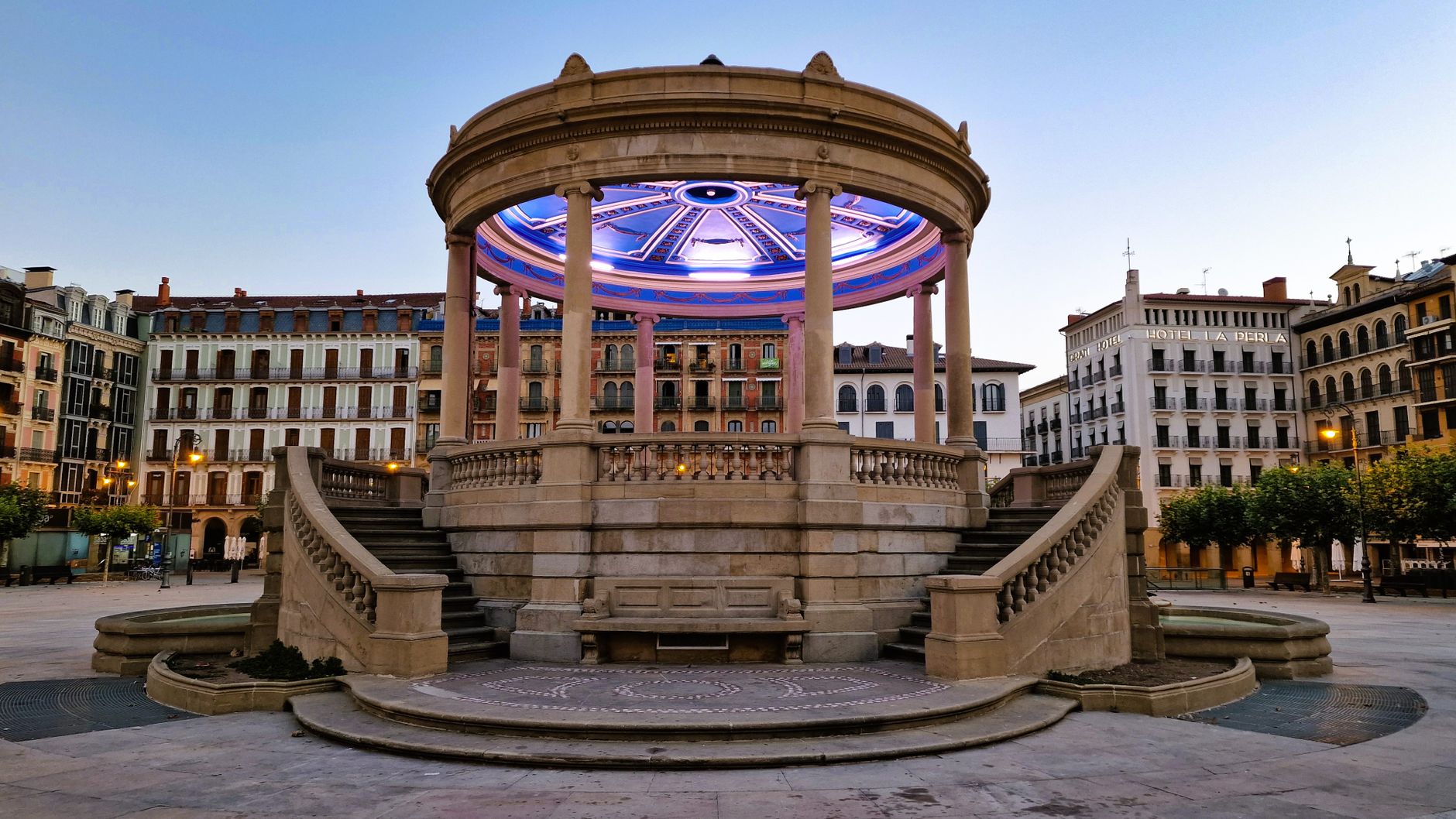
His legacy is particularly visible around Plaza del Castillo, one of the most handsome squares in the city. Surrounded by elegant buildings and outdoor cafés, it’s an ideal place to sit and watch local life unfold.
The most famous Hemingway landmark is Café Iruña, which opened in 1888. Step inside and you’ll find an interior of ornate columns, decorative mirrors and an old-fashioned grandeur that feels far removed from the modern cafés found in most cities. There’s also a Hemingway-themed area towards the back, complete with a statue of the author. Given his fondness for spending time in bars, it’s probably an appropriate tribute.
Now, I wouldn’t suggest travelling to Pamplona solely for its Hemingway connections unless you’re a particular literary enthusiast. But they do add another interesting layer to a city already overflowing with history.
And Plaza del Castillo is worth visiting regardless. It’s one of those spaces where you can happily spend an hour watching the world go by without feeling the slightest need to do anything more productive.

5. The Camino de Santiago Runs Through the Heart of Pamplona
One of the things I love about travelling through northern Spain is how often you encounter the Camino de Santiago. The famous pilgrimage route isn’t simply a walking trail through the countryside. It passes through villages, towns and cities, connecting communities that have welcomed travellers for centuries.
Pamplona is one of the major early stops on the Camino Francés, particularly for pilgrims who begin their journey in Saint-Jean-Pied-de-Port, on the French side of the Pyrenees. Pilgrims enter the city after following the route through the surrounding countryside and cross the Arga at the medieval Magdalena Bridge before making their way into the historic centre.
Once you know what you’re looking for, you’ll start noticing the yellow arrows and scallop-shell symbols marking the route. You’ll also see walkers carrying large rucksacks, sometimes looking wonderfully enthusiastic and sometimes looking as though they would trade their entire worldly possessions for a comfortable chair.
Even if you’re not walking the Camino yourself, its presence adds something special to Pamplona. You’re exploring the same streets that countless pilgrims have passed through on their way to Santiago de Compostela.
If you’re interested in the pilgrimage, consider walking a short section of the route outside the city. You don’t need to commit to several hundred kilometres to appreciate the landscapes and communities that make the Camino such a meaningful journey.

6. Navarra’s Extraordinary Nature Is Right on the Doorstep
This is possibly Pamplona’s greatest selling point, particularly for travellers who enjoy combining cities with outdoor adventures. Navarra is one of the most geographically varied regions of Spain, and Pamplona is extraordinarily well positioned for exploring it.
Head north and the landscape becomes increasingly green and mountainous, with forested valleys, traditional villages and the foothills of the Pyrenees. Travel south and you’ll encounter vineyards, agricultural plains and eventually the extraordinary semi-desert landscape of Bardenas Reales.
The contrast is quite remarkable.
I live in Navarra, and one of the things I appreciate most about the region is just how much variety there is within relatively short driving distances. You can spend one day hiking through a dense beech forest and another exploring a landscape that looks as though it belongs in a Western film.
For hikers, the Pyrenees offer everything from gentle woodland walks to serious mountain routes. If forests appeal more than summits, Irati is an extraordinary place to explore, particularly in autumn when its leaves turn shades of gold, orange and red. And then there are all the lovely villages, medieval towns and historic sites scattered between the mountains and the plains.
If you’re considering a northern Spain holiday that combines food, culture and nature, Pamplona makes a very compelling base. I’ll share my favourite options for day trips further down.

Is Pamplona Worth Visiting Outside of San Fermín?
I would argue that for most travellers, Pamplona is better visited outside San Fermín. That might seem like an odd thing to say about a city whose most famous attraction is a festival, but the experience is completely different.
What Is Pamplona Like During San Fermín?
During San Fermín, held every year from 6 to 14 July, Pamplona becomes one enormous celebration. The streets fill with people dressed in white and red, music plays throughout the day and night, and the atmosphere is unlike almost anything else you’ll experience in Spain.
But there’s a great deal more to the festival than the running of the bulls. There are religious processions, traditional music, the much-loved Gigantes y Cabezudos parades, communal meals, fireworks and celebrations that have been passed down through generations.
If you’re considering visiting during the celebrations, I’ve put together a guide to the best things to do in Pamplona during San Fermín, including plenty of traditional experiences that don’t involve the bulls.
It’s important to understand that the encierro isn’t an isolated spectacle: the bulls are being driven to the bullring, where they are subsequently killed during bullfights. I don’t support bullfighting or the running of the bulls, but I do recognise that San Fermín has a much broader cultural identity than these controversial events.
If you’d like to understand the celebrations in more detail, including their history and traditions, read my guide to what happens during San Fermín.
Outside the festival, Pamplona is a completely different city. The streets return to their everyday rhythm, accommodation becomes more affordable, and you can explore the historic centre without having to negotiate enormous crowds.
You can enjoy a relaxed lunch, wander around the cathedral, visit the city walls and discover the local bars at their best. Rather than seeing Pamplona through the lens of one extraordinary annual event, you get to see the city people actually live in.

When Is the Best Time to Visit Pamplona?
For a combination of pleasant weather, lively streets and opportunities to explore the surrounding countryside, I’d choose May, June, September or October.
Spring brings greener landscapes and generally comfortable temperatures for sightseeing. Autumn is particularly appealing if you intend to visit the forests and countryside around Pamplona, although the weather can become cooler and wetter as the season progresses.
If you visit in late September, you may also catch San Fermín Txiki, a smaller neighbourhood celebration associated with San Fermín de Aldapa. It offers music, traditional festivities and a wonderful local atmosphere without the scale of the July festival.
July and August can also be lovely outside San Fermín, particularly if you enjoy long evenings and outdoor dining. Just bear in mind that inland Navarra can become very hot during summer. Winter is quieter and potentially more affordable, although Pamplona can be cold and damp. Fortunately, that provides an excellent excuse to spend a little longer in its bars and restaurants.
If you’re interested in San Fermín itself, accommodation in the historic centre can become extremely expensive and often books up months in advance. It’s a trip that requires a different budget and a different approach from a normal city break. My partner Steve manages apartments and individual rooms during San Fermín, including accommodation for larger groups, so if you’re struggling to find somewhere suitable, drop him an email. He can let you know what he has available for your dates.
And if you do decide to experience the festival, I’d strongly recommend reading my survival guide to San Fermines, which combines practical advice with twenty years of Steve’s first-hand experience of the festivities.

Who Might Want to Skip Pamplona?
As much as I recommend Pamplona, I wouldn’t suggest that everybody visiting northern Spain should automatically add it to their itinerary.
If you only have three or four days in the region, choosing between Pamplona, Bilbao and San Sebastián depends on what you most enjoy doing.
For travellers dreaming of beaches, dramatic coastal scenery and a combination of exceptional restaurants and seaside walks, I’d probably recommend San Sebastián first. La Concha Bay is one of the most beautiful urban beaches in Europe, and the city has a wonderfully elegant coastal atmosphere. You can read more about why I recommend it in my guide to is San Sebastián worth visiting.
If you’re more interested in contemporary architecture, major art museums, an urban food scene and the atmosphere of a larger city, Bilbao may be the better choice. The Guggenheim is only part of its appeal, but it undoubtedly gives Bilbao a cultural attraction that Pamplona doesn’t have an equivalent for. Here’s my perspective on is Bilbao worth visiting.
Pamplona also wouldn’t be my first recommendation for somebody whose main priority is huge nightclubs or a cosmopolitan nightlife scene. It has lively bars and an excellent social atmosphere, especially at weekends, but that isn’t quite the same as the nightlife of a much larger city.
Where Pamplona really shines is in its combination of history, local culture, food and accessible countryside. It’s a more understated destination, but that doesn’t make it less interesting.
In fact, if you’ve already visited the more famous cities in northern Spain, Pamplona is a particularly rewarding choice for somewhere new.

How Many Days in Pamplona Do You Need?
I’d recommend spending two days in Pamplona, particularly if it’s your first visit. You can see the main attractions in a day, but with two days you have time to explore the city properly, enjoy its restaurants and discover some of the details that make it so interesting.
One of the pleasures of visiting Pamplona is that it doesn’t demand a frantic sightseeing schedule. The historic centre is compact, and many of the best experiences involve wandering, eating or simply spending time somewhere beautiful.
One Day in Pamplona
If you only have one day, I’d start with a walking tour of the Old Town. It’s the quickest way to understand the city’s history, and after my experience with Gus, it’s something I’d strongly recommend.
Afterwards, explore the cathedral area and follow the city walls towards Rincón del Caballo Blanco. Take your time enjoying the views before returning to the streets around Estafeta and San Nicolás for some pintxos.
In the afternoon, head towards the Ciudadela and Taconera Gardens. These beautiful green spaces offer a lovely contrast to the narrow streets of the historic centre, and you can explore them at your own pace.
Finish the day with a proper Navarrese meal or another round of pintxos. Personally, I’d choose whichever option allowed me to try the most local food!

Two Days in Pamplona
With a second day, you can slow the pace and explore some of the attractions that don’t always make it onto a rushed itinerary.
Spend more time inside the cathedral, visit the Museo de Navarra to learn about the region’s past, or follow a section of the Camino de Santiago. The riverside paths around the Arga also offer a wonderful opportunity to appreciate Pamplona’s greener side.
I’d also leave time for a long lunch. Navarra’s food culture deserves more than a hurried sandwich between attractions, and sitting down to enjoy a traditional meal is as much a part of the experience as visiting a historic building.
If you have three or more days, I’d start looking beyond the city. Pamplona’s location makes it an excellent base for exploring some of Navarra’s most beautiful and unusual landscapes.
Where to Stay in Pamplona
Pamplona has accommodation for a range of budgets, from simple guesthouses and private rooms to boutique hotels and self-catering apartments. Personally, I’d recommend staying within walking distance of the Old Town, particularly if you’re visiting for the first time. It’s lovely being able to wander out for pintxos in the evening without worrying about taxis or parking.
Budget-Friendly Rooms for Solo Travellers and Pilgrims
If you’re walking the Camino de Santiago, travelling solo or simply trying to keep costs down, Travelers Rest offers private rooms in shared apartments. It’s a practical alternative to booking an entire apartment when all you really need is somewhere comfortable to sleep after a day of exploring.
Having access to shared facilities also makes it particularly appealing if you’re travelling on a budget and would prefer to prepare some of your own meals rather than eating out every day. Although, given Pamplona’s food scene, I’d strongly recommend saving room in your budget for a few pintxos!
Apartments for Families and Groups
For families, couples or groups of friends, Steve also manages self-catering accommodation in Pamplona throughout the year. An apartment can be especially convenient if you’re staying several nights, travelling with children or planning day trips around Navarra, as it gives you more space and flexibility than a traditional hotel room.
Visiting during San Fermín? This is when I’d particularly recommend contacting my partner, Steve, directly. He manages accommodation for different group sizes during the festival, from individual rooms in shared apartments to entire apartments for larger groups. You can email with your dates and the number of people travelling, and he can explain what’s available.

Best Day Trips From Pamplona
One of the strongest arguments for spending a little longer in Pamplona is everything you can discover within a couple of hours.
Navarra isn’t a particularly large region, but its landscapes change dramatically as you travel through it. Some of my favourite places are relatively close to the capital, making them ideal additions to a city break.
Here are the day trips from Pamplona I’d recommend considering.
Bardenas Reales: A Desert Landscape Unlike Anywhere Else in Northern Spain
Approximately 1 hour 15 minutes by car. A car is strongly recommend.
If I had to choose one place that demonstrates Navarra’s extraordinary variety, Bardenas Reales would be a very strong contender.
The landscape looks almost impossibly out of place in northern Spain. Instead of green valleys and traditional villages, you’ll find sculpted clay hills, deep ravines, flat-topped formations and enormous open spaces. It’s the sort of place where you half expect a cowboy to appear on the horizon.
The most recognisable landmark is Castildetierra, an extraordinary rock formation that has become something of a symbol of the region. However, there’s much more to the natural park than its most photographed feature.
I’d recommend allowing several hours to explore rather than simply driving in for a photograph. The main visitor routes reveal different aspects of the landscape, and the constantly changing shapes and colours make it a fascinating place for photography.
A car is by far the easiest way to visit. Access is regulated, and visitors must stay on permitted routes. It can also become extremely hot during summer, so spring and autumn are particularly appealing.
I’ve written a detailed guide to visiting Bardenas Reales, including what to see and how to make the most of your time there.

Irati Forest: One of Navarra’s Most Beautiful Natural Landscapes
Approximately 1 hour 15 minutes to 2 hours by car, depending on your chosen entrance. A car is strongly recommended.
For an almost complete contrast to Bardenas Reales, head north-east towards the Pyrenees and explore the magnificent Irati Forest.
This enormous woodland, which extends towards the French border, is one of the best-known beech and fir forest landscapes in Europe. It’s a place of winding paths, mountain streams, moss-covered trees and beautiful seasonal colours.
Autumn is especially spectacular. As the leaves change colour, the forest becomes a patchwork of gold, orange and red, creating the sort of scenery that makes you want to stop for photographs every few minutes.
There are walking routes for different abilities, from relatively gentle forest trails to more demanding hikes in the surrounding mountains. However, it’s worth choosing your route based on the entrance you intend to use, as the forest covers a substantial area.
A car is the most practical way to visit, particularly if you want to explore at your own pace. Public transport doesn’t provide a straightforward connection to the main trailheads.
If you don’t have a car, there’s a wonderful alternative: a guided day trip to Irati Forest and Ochagavía from Pamplona. You’ll explore the forest with a local guide before visiting Ochagavía, one of Navarra’s prettiest villages, with its traditional stone houses, narrow streets and beautiful mountain setting. It’s a lovely combination of nature and culture, and means you can enjoy the scenery without worrying about mountain roads or finding your way to the trailheads.
For route ideas and practical advice, read my guide to Irati Forest.

Baztan Valley, Elizondo and Zugarramurdi: Navarra’s Green and Mysterious North
Approximately 50 minutes to Elizondo and 1 hour 15 minutes to Zugarramurdi by car. A car or organised tour is recommended for combining the two.
If you head north from Pamplona towards the French border, you’ll discover a completely different side of Navarra. The Baztan Valley is a landscape of impossibly green hills, traditional farmhouses, beautiful villages and a rich Basque cultural heritage that remains very much alive.
Elizondo, the valley’s main town, is particularly attractive, with handsome stone houses, traditional balconies and the River Baztan running through its centre. It’s a lovely place to wander, stop for a coffee and enjoy the relaxed atmosphere of rural Navarra.
But it’s nearby Zugarramurdi that adds a fascinating and rather darker dimension to this day trip. The village is famous for its association with the Basque witch trials of the early seventeenth century, when accusations of witchcraft led to persecution and trials by the Spanish Inquisition. Today, you can visit the enormous natural caves associated with those events and learn about the beliefs, folklore and history of the area.
For anyone interested in Basque culture, traditional villages and the history of northern Spain, I think this is a particularly rewarding excursion. And the scenery alone makes the journey worthwhile.
If you don’t have a car, there’s a guided day trip from Pamplona to the Baztan Valley, Elizondo and Zugarramurdi, which combines the valley’s landscapes with its historical and cultural highlights. It’s a wonderful option for seeing a side of Navarra that many international visitors never discover.

Olite: A Fairytale Royal Palace
Approximately 35–40 minutes by car. Also accessible by public transport, including rail services.
If you love castles, Olite is one of the easiest and most rewarding day trips from Pamplona.
The town is dominated by the extraordinary Royal Palace of Olite, a medieval royal residence with towers, battlements, courtyards and beautifully restored rooms. It looks like something from a fairytale, and exploring its various terraces and towers is great fun.
Olite was an important royal centre of the Kingdom of Navarre, and its palace offers a fascinating glimpse into the lives of the monarchs who once ruled the region.
The historic town surrounding the palace is also worth exploring, with narrow streets, traditional buildings and a relaxed atmosphere. Olite sits within one of Navarra’s wine-producing areas, so there are opportunities to learn about local winemaking too.
You can visit the palace and explore the town in half a day, although I’d allow longer if you want to enjoy lunch.
It’s also one of the more realistic day trips for travellers without a car, as there are public transport connections from Pamplona.
If you’d like to explore a little further without driving, I recommend considering this guided day trip to Olite and Ujué from Pamplona. As well as discovering Olite’s spectacular royal palace, you’ll visit the beautiful hilltop village of Ujué, where medieval stone houses cluster around a fortified church overlooking the surrounding countryside. It’s one of those places that feels wonderfully removed from modern life, and combining the two towns gives you a fascinating introduction to medieval Navarra.

Rioja Wine Country: Vineyards, Medieval Villages and Beautiful Landscapes
Approximately 1–1.5 hours by car, depending on which part of Rioja you visit. A guided tour is a particularly good option.
You don’t need to be a wine expert to appreciate the beauty of Rioja. Rolling vineyards, medieval hilltop towns, historic wineries and the dramatic backdrop of the Sierra de Cantabria make this one of northern Spain’s most attractive wine-producing regions.
The area is particularly beautiful around Rioja Alavesa, where villages such as Laguardia sit above a patchwork of vineyards. I love Laguardia, with its medieval walls, narrow streets and traditional restaurants serving wonderful local food. Even if wine isn’t your thing, the scenery, history and gastronomy make the region worth exploring.
Of course, for wine enthusiasts, the opportunity to visit a winery and understand the region’s winemaking traditions is a huge part of the appeal. Rioja has everything from small family producers to extraordinary contemporary wineries, and seeing how the different styles of wine are produced adds another dimension to the experience.
If you’d like to explore the region without worrying about driving after a tasting, I’d recommend looking at this guided Rioja wine tour from Pamplona. It’s a convenient way to discover the region’s wine culture while leaving the transport to somebody else.

Hiking in the Pyrenees: Mountains, Valleys and Traditional Villages
Approximately 1–2 hours by car to many popular Navarrese Pyrenean areas. A car is recommended.
If you’re anything like me and find it difficult to visit a mountain region without wanting to go hiking, Pamplona is a fantastic starting point.
The Navarrese Pyrenees have some wonderful walking opportunities, with everything from accessible valley routes to challenging mountain hikes. The scenery is often greener and more wooded than in some of the higher, rockier parts of the Pyrenees further east.
Areas such as Roncesvalles, the Roncal Valley and the surroundings of Ochagavía are particularly appealing. Alongside the natural beauty, you’ll discover traditional mountain villages where local architecture, food and cultural traditions are still an important part of everyday life.
You don’t necessarily need to climb a summit to enjoy the region. Some of the most rewarding walks follow rivers, cross beautiful woodland or connect villages that have been part of the mountain landscape for centuries.
One hike I’d particularly recommend to experienced walkers is Beriain, also known as San Donato. It’s not actually in the Pyrenees, but it is an excellent mountain day trip from Pamplona. From below, the mountain looks like an enormous limestone fortress rising out of the valley, but once you’re up on the summit ridge, the landscape transforms into rolling grasslands, grazing horses and dramatic cliffs. I absolutely loved this hike, although the climb certainly makes you work for those views!
For more inspiration, including longer routes and mountain adventures, see my guide to hiking in the Pyrenees.

Puente la Reina and Estella: Medieval Towns Along the Camino
Puente la Reina is approximately 25 minutes by car; Estella is around 40 minutes. Both are accessible by bus from Pamplona.
For a day trip combining beautiful architecture with the history of the Camino de Santiago, I’d recommend visiting Puente la Reina and Estella.
Puente la Reina, also known as Gares, is particularly famous for its magnificent Romanesque bridge spanning the River Arga. The bridge is one of the most recognisable landmarks on the Camino Francés, and the town has a lovely medieval atmosphere.
Continue west to Estella-Lizarra, another historic town with impressive religious buildings, handsome streets and a strong connection to the pilgrimage route. Its nickname, Estella la Bella, gives you some indication of how highly its beauty has been regarded.
The two towns work wonderfully together as a day trip, particularly by car. However, they’re also among the easier places to explore using public transport, thanks to the bus routes connecting them with Pamplona.
If you enjoy history but prefer smaller towns to major cities, this is an excellent option.
San Sebastián: A Beautiful Coastal Escape
Approximately 1 hour 15 minutes to 1 hour 30 minutes by car. Regular buses also connect the two cities.
And finally, there’s San Sebastián.
If you’re staying in Pamplona for several days and fancy a change of scenery, you can be enjoying the beautiful coastline of the Basque Country in little over an hour.
San Sebastián is one of my favourite cities in northern Spain, with its stunning La Concha Bay, elegant architecture and exceptional food scene. It’s a particularly good day trip if you’re visiting Pamplona during summer and fancy spending some time beside the sea.
You could easily spend a whole day exploring the Parte Vieja, wandering along the promenade, enjoying pintxos and admiring the views from Monte Urgull or Monte Igueldo.
If you’d rather leave the organising to somebody else, there’s also a guided day trip from Pamplona to San Sebastián and the Basque Coast. It’s a lovely option if you want to experience a little more of the coastline without hiring a car, particularly if you’re short on time. The coast around San Sebastián is spectacular, with fishing villages, rugged cliffs and beautiful sea views that are well worth discovering beyond the city itself.
That said, if your itinerary allows, I would actually recommend spending at least a night in San Sebastián. It’s far too lovely to rush, and the evening pintxo culture is one of the highlights of a visit.
For inspiration, take a look at my guide to the best things to do in San Sebastián.

How to Get to Pamplona
Pamplona is relatively easy to reach from several major cities in northern and central Spain, making it a convenient addition to a wider itinerary.
Madrid to Pamplona: Direct Renfe trains typically take around three to four hours, depending on the service. Pamplona also has a small airport with flights connecting to Madrid, although for many travellers the train is the more convenient option once airport travel is factored in.
San Sebastián to Pamplona: The journey takes approximately 75–90 minutes by car, depending on traffic, and there are regular bus connections. It’s a straightforward journey, making Pamplona a realistic day trip from San Sebastián, or vice versa.
Bilbao to Pamplona: Allow approximately 1 hour 45 minutes to 2 hours by car. Buses also connect the cities, although the journey generally takes longer and often involve a stop in either San Sebastian or Vitoria.
Barcelona to Pamplona: Direct trains on some services take approximately four hours, making rail a practical option if you’re travelling across northern Spain.
Once you reach Pamplona, you won’t need a car to explore the city itself. The historic centre is compact and easily walkable, although the train station and bus station are in different locations.
If you’re planning to explore Navarra’s forests, mountains and more remote attractions, however, I’d strongly recommend hiring a car. Some of the region’s most beautiful places are difficult to reach by public transport, and having your own vehicle gives you much more freedom. I always use Discover Cars to book my cars as it allows me to compare local and international firms not just on cost but also reviews, mileage allowance and deposits!
Pamplona also fits wonderfully into a northern Spain road trip, particularly when combined with Bilbao, San Sebastián and some of Navarra’s smaller towns and natural landscapes.

Is Pamplona Safe?
Yes, Pamplona is generally a safe city for visitors, including solo travellers. Like anywhere, it’s worth exercising normal precautions, but there’s no reason to feel particularly concerned about exploring the historic centre or enjoying the city’s attractions.
Pamplona is compact and easy to navigate, which makes it particularly comfortable for first-time visitors. The central streets are generally lively, especially around the bars and restaurants, and you’ll often see people of different ages enjoying the city well into the evening.
The main exception is during San Fermín, when the enormous crowds and alcohol-fuelled celebrations create a very different environment. Pickpocketing becomes more of a concern, and it’s sensible to keep your belongings secure, particularly in crowded areas and during major events.
For women travelling alone, I’d suggest the same precautions I recommend throughout Spain: stay aware of your surroundings, especially late at night, and choose accommodation somewhere convenient to the places you intend to visit.
I’ve travelled extensively around Spain, including independently, and written a separate guide answering is Spain safe for solo female travellers, with advice drawn from my experiences.

Final Thoughts: Is Pamplona Worth Visiting?
I think one of the biggest mistakes travellers make when planning a trip around northern Spain is concentrating entirely on the destinations they’ve already heard of. Bilbao has the Guggenheim, San Sebastián has its beaches and Michelin-starred restaurants, and Pamplona has the running of the bulls. It’s easy to assume that once you’ve identified those headline attractions, you’ve understood what each city has to offer.
But Pamplona taught me a useful lesson about making assumptions.
Despite growing up in the region and spending plenty of time in northern Spain, it took joining a walking tour to make me appreciate just how fascinating this city really is. I discovered history, traditions and architectural details that had been right there all along, waiting for somebody to point them out.
And that’s what makes Pamplona worth visiting. It isn’t a city that relies on one spectacular monument or a famous festival to justify its existence. Its appeal comes from the combination of its medieval streets, welcoming food culture, rich heritage and the extraordinary landscapes waiting just beyond the city.
Would I recommend Pamplona over San Sebastián for somebody visiting northern Spain for the first time? Not necessarily. If beaches and coastal scenery are your priority, San Sebastián will probably win. But if you love discovering places through their history, food and everyday culture, Pamplona is a brilliant choice.
Give it two days, join a walking tour, eat plenty of pintxos and leave some time to explore Navarra beyond the city. I suspect you’ll come away wondering why Pamplona doesn’t receive more attention.
And if you’re putting together a longer trip, my Basque Country itinerary is a great starting point for exploring this wonderful corner of northern Spain.

Comments will load here
Be the first to comment